Ramen Cooking Tokyo now has a new spiritual center—and it’s unlike any decoration you might find in a typical cooking class.
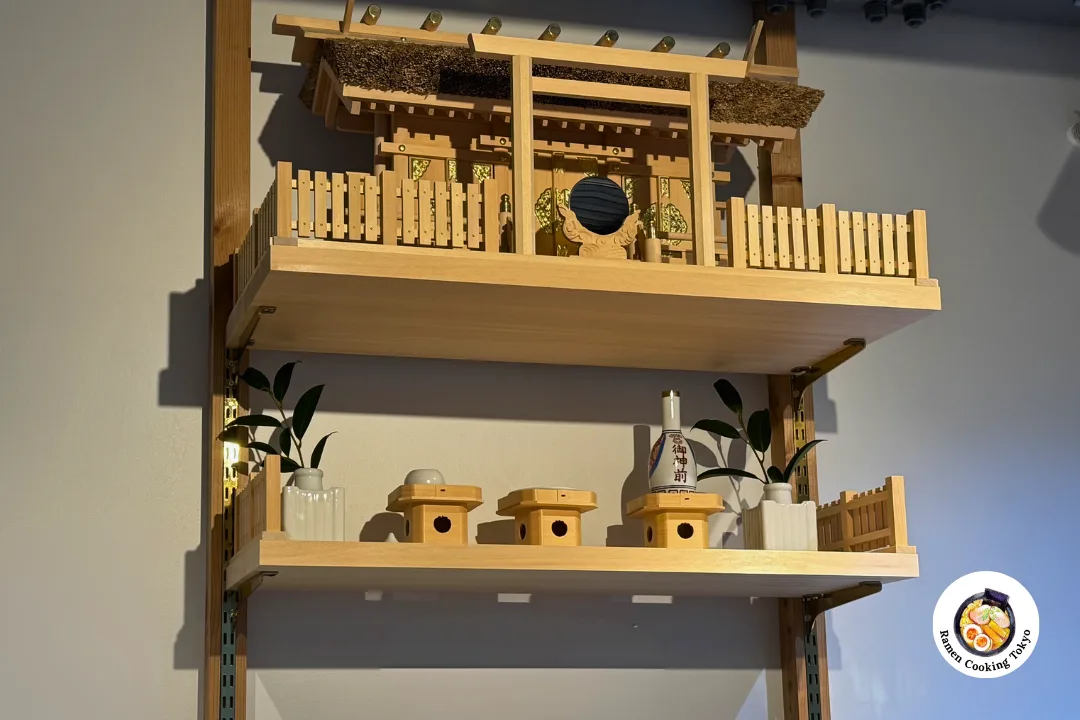
It’s a kamidana (神棚), a traditional Japanese Shinto shrine, handcrafted specifically for our space by an Ise miyadaiku (伊勢宮大工)—a master carpenter from the sacred lineage that builds and maintains Japan’s holiest shrines, including the legendary Ise Grand Shrine.
This kamidana was built entirely without nails, using only traditional Japanese wood joinery techniques passed down through generations of shrine carpenters.
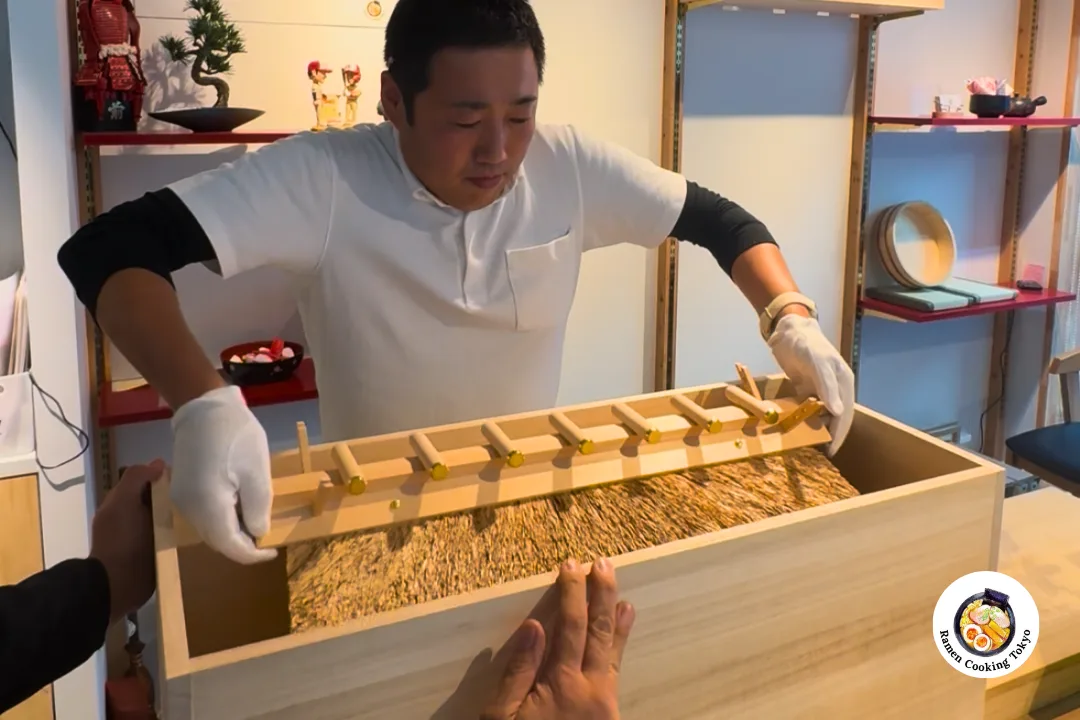
The Moment of Arrival: Receiving a Sacred Object
The kamidana arrived carefully packed in a paulownia wood box (桐箱), the traditional container used to protect precious objects in Japan.
Watching the miyadaiku master gently lift the shrine from its protective casing was not like watching someone unpack furniture. It felt more like witnessing a sacred moment of welcoming—as if a new presence was being invited into our space.
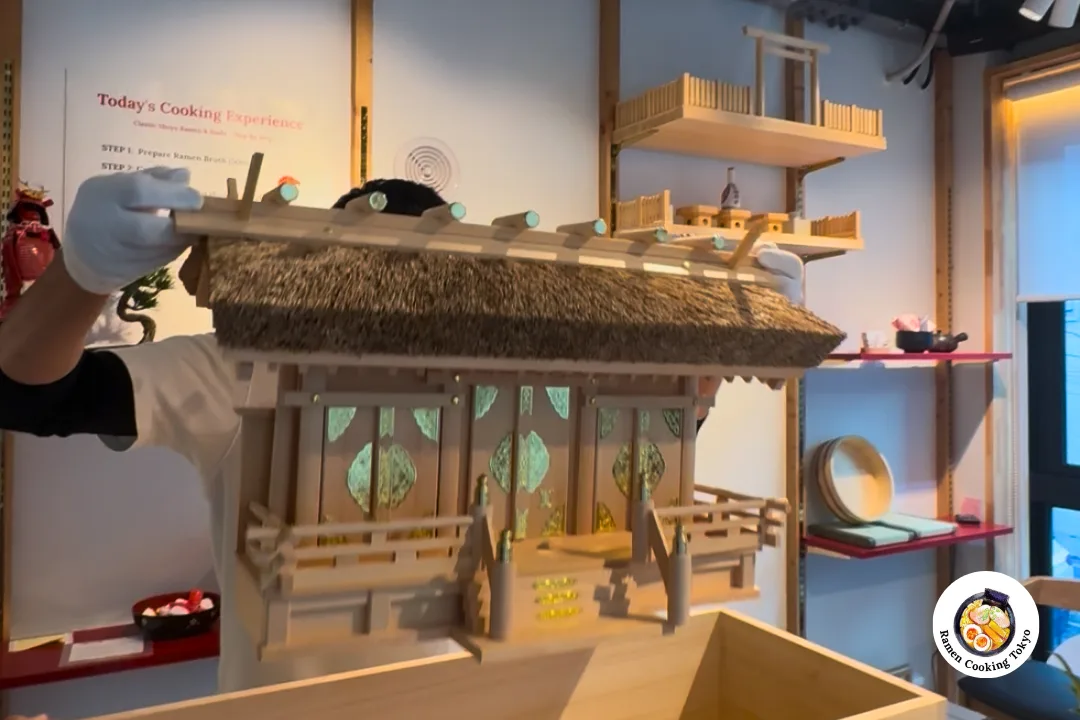
The scent of fresh Japanese cypress (hinoki), the careful movements of the craftsman’s gloved hands, the quiet attention in the room—everything about this moment reminded us that this was not just an installation. It was an act of welcoming.
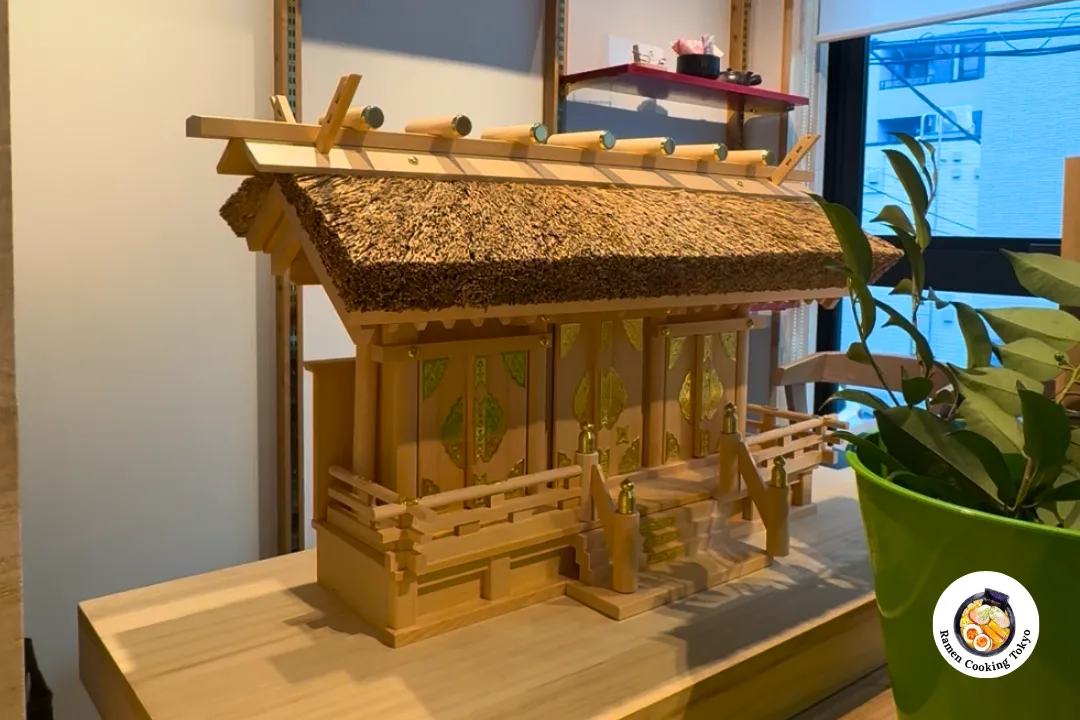
The Miyadaiku Philosophy: Built Without a Single Nail
What makes our kamidana truly extraordinary is how it was made.
The miyadaiku tradition represents the highest level of Japanese carpentry. These master craftsmen are responsible for constructing and rebuilding Japan’s most important Shinto shrines—including the Ise Grand Shrine, which has been ceremonially reconstructed every 20 years for over 1,300 years.
No Nails, Only Joinery
Our kamidana was built using traditional Japanese wood joinery (木組み, kigumi)—the same techniques used in shrine and temple construction for centuries. Every joint, every connection is made through precisely cut wood interlocking with wood. Not a single nail or metal fastener was used.
This isn’t just craftsmanship for the sake of tradition. There’s a deeper philosophy:
- Wood breathes: Without metal, the wood can expand and contract naturally with humidity and temperature changes
- Longevity: Properly joined wood structures can last for centuries—far longer than nailed construction
- Spiritual purity: In Shinto tradition, shrines should be as natural as possible, avoiding artificial materials
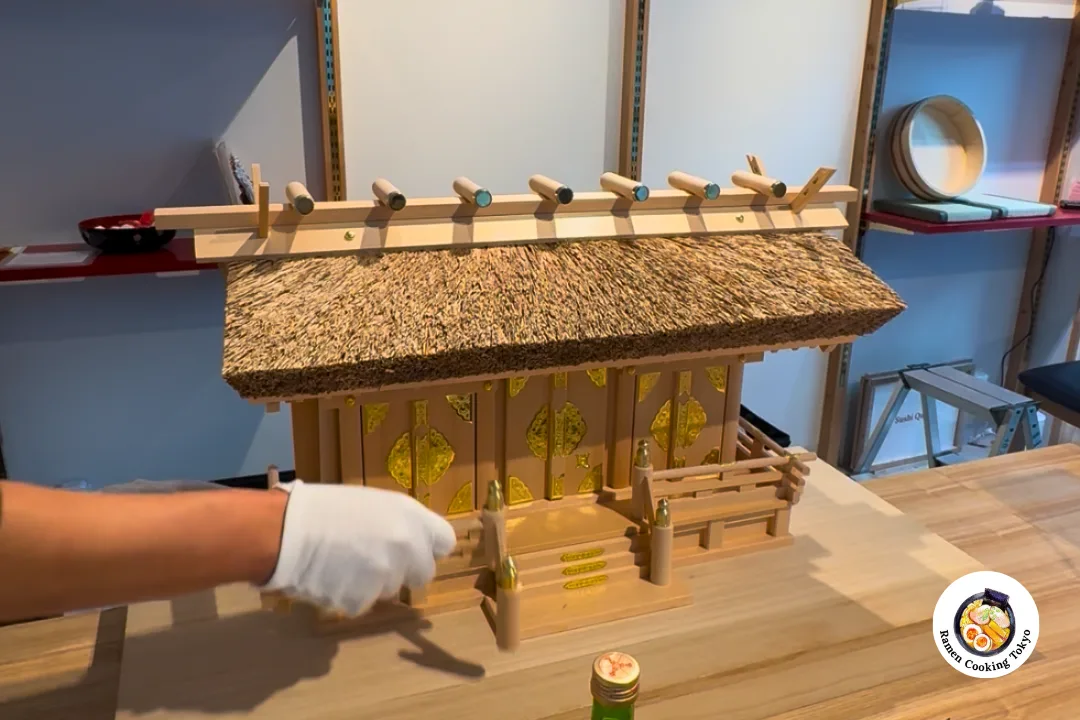
Designed for This Space
The miyadaiku didn’t simply create a miniature shrine. He designed this kamidana specifically for our space—considering the ceiling height, the light, the sightlines from where guests cook, and the overall atmosphere of our kitchen.
As the craftsman explained: “A kamidana is not a miniature replica of a shrine. It is a dwelling place—designed so that the kami (deity) can settle naturally and comfortably in this particular space.”
The main element is not the beautiful wooden structure. It is the ofuda (神札)—the sacred tablet that represents the deity. The kamidana is simply the vessel, the yorishiro (依代), that gives the kami a place to dwell.
The Formal Ceremony: A Shinto Priest from Gifu
Once the kamidana was installed, we invited a Shinto priest from Mukaiyama Shrine (向山神社) in Gifu Prefecture to conduct the formal enshrinement ceremony.
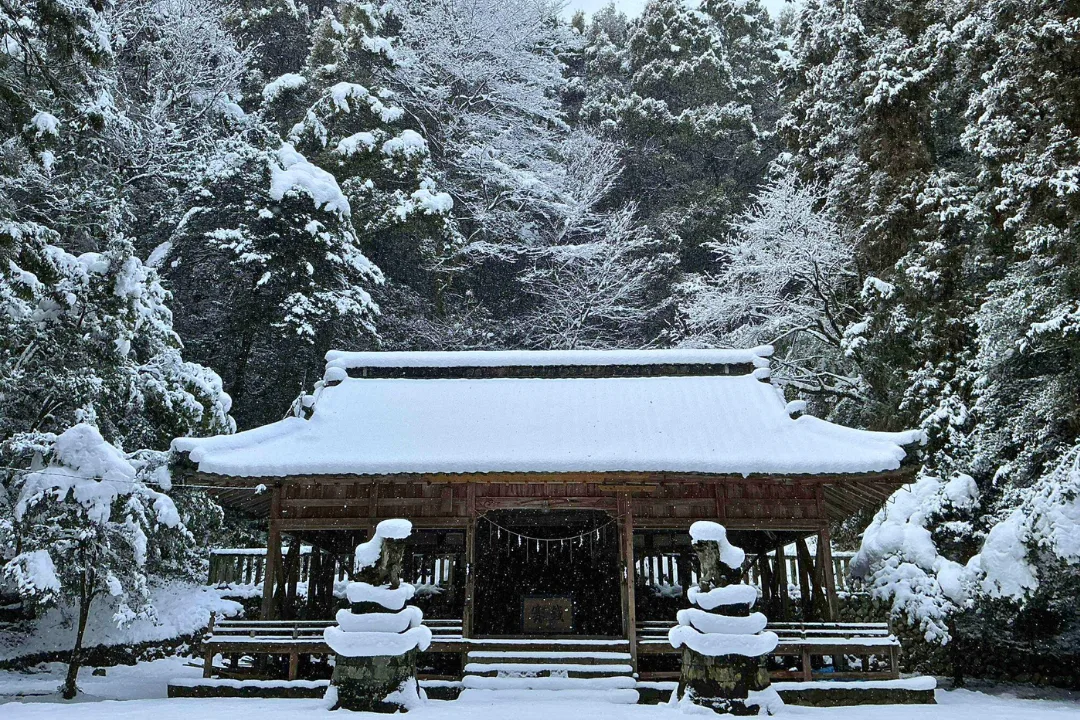
This wasn’t optional. In Shinto tradition, a kamidana becomes truly sacred only after norito (祝詞)—ritual prayers—are offered by a qualified priest. The ceremony invites the kami to take residence in the shrine and blesses the space.
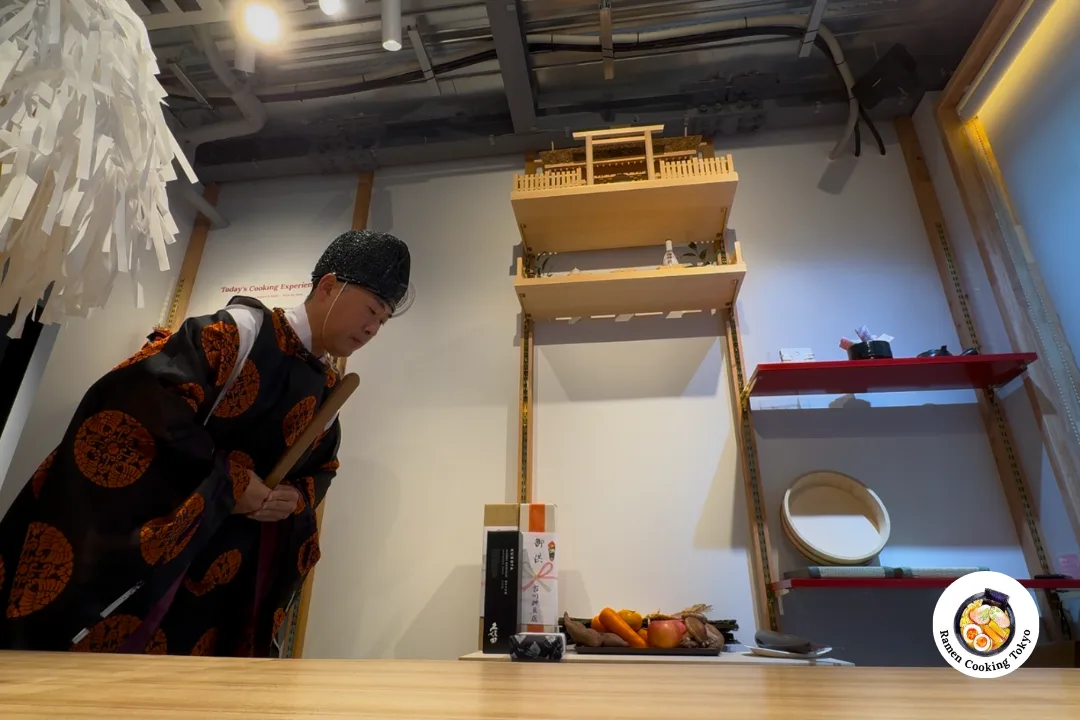
Watching the priest chant the ancient words, surrounded by the scent of incense and the gentle rustling of paper streamers (shide), we could feel the atmosphere of our kitchen transform. What was once simply a cooking space became something more—a place where craft, culture, and spirit intersect.
The Deities We Honor: Amaterasu and Toyouke
At the heart of our kamidana are two kami (deities):
Amaterasu Ōmikami (天照大御神)
The central deity of Japanese spirituality.
Amaterasu represents light, harmony, and the idea that society works best when people support and respect each other. She is not just a “sun goddess” in the Western sense—she embodies the core values of Japanese culture: balance, connection, and collective well-being.
For us at Ramen Cooking Tokyo, Amaterasu represents the warmth and connection we hope every guest feels in our space.
Toyouke Ōmikami (豊受大御神)
The deity of food and daily sustenance.
Toyouke is enshrined at the Outer Shrine of Ise (外宮) and represents everything related to food, agriculture, and the daily acts that sustain life.
In Japan, cooking is not just about technique. It’s considered a meaningful, even sacred act—a way of connecting nature, people, and the rhythms of daily life. Toyouke embodies this philosophy.
For a cooking class that teaches ramen and sushi, there could be no more appropriate deity to honor.
Why This Matters for Our Guests
When you visit Ramen Cooking Tokyo, you might notice the kamidana quietly presiding over our kitchen from above.
We don’t ask guests to pray or follow any religious practice. This isn’t about religion—it’s about culture.
The kamidana is there to share something deeper about Japan:
- Food is sacred: In Japanese thinking, preparing and eating food is not mundane—it’s an act worthy of gratitude and care
- Craft has meaning: The miyadaiku tradition shows that how something is made matters as much as what is made
- Space can have spirit: A kitchen isn’t just a functional room—it can be a place where meaning and connection are cultivated
Many international visitors tell us they’ve visited famous shrines like Fushimi Inari or Meiji Jingu. But seeing a real kamidana in an everyday space—handcrafted by an Ise miyadaiku, formally enshrined by a Shinto priest—offers a different kind of understanding.
This is how Japanese spirituality actually lives in daily life. Not in grand temples visited as tourist attractions, but in small, sincere acts of care in homes and workplaces.
Beyond Cooking, Feel the Connection
At Ramen Cooking Tokyo, we’ve always believed that cooking is about more than recipes and techniques.
When you make ramen in our kitchen, you’re not just learning to prepare noodles and broth. You’re participating in something that Japanese people have valued for generations: the idea that preparing food with care is itself a meaningful act.
Our kamidana is now part of that experience. It represents our commitment to authenticity—not just in our recipes, but in the spirit and intention behind everything we do.
We hope that when you visit, you’ll feel the difference. Not in any mystical or religious sense, but in the simple awareness that this space was created with care, craft, and connection at its heart.
Ready to experience the intersection of Japanese cooking and culture?