Japan is famous for world-class cuisine, but two dishes consistently capture the hearts of travelers: ramen and sushi. Different in style, texture, and history—yet both embody the soul of Japanese food culture.
Most cooking classes in Tokyo focus on one or the other. Only a handful let you experience both.
And among those, very few place equal emphasis on hands-on cooking, cultural exchange with local instructors, small-group intimacy, and premium Japanese sake pairing.
If you’re searching for a sushi making class in Japan that goes beyond a touristy cooking demo, this guide walks you through one of Tokyo’s most unique dual experiences. You’ll discover what the class is like, what you learn, who it’s perfect for, and why this experience consistently earns 5-star ratings from visitors around the world.
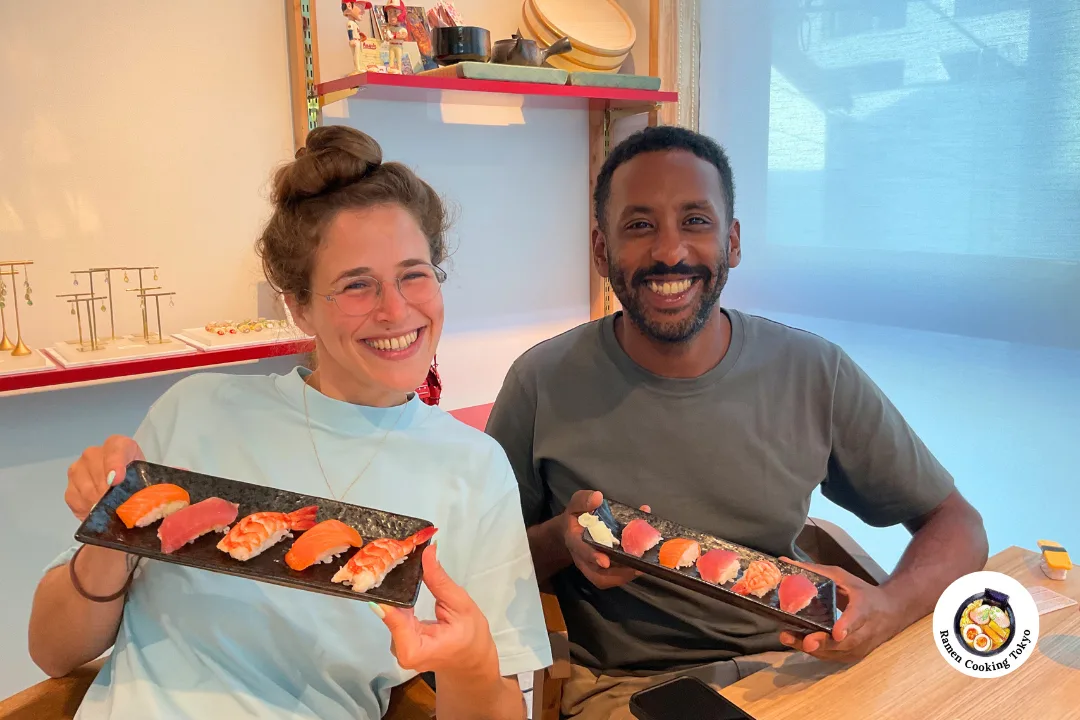
Why Choose a Sushi Making Class That Also Includes Ramen?
Many visitors arrive in Japan with a familiar bucket list: eat sushi, eat ramen, maybe take a sushi-making class, explore Tsukiji or Toyosu fish market.
But here’s the thing—a dual ramen-and-sushi class lets you do ALL of this in a single, immersive session.
Instead of rushing around Tokyo trying to fit multiple activities into a packed schedule, you can:
- Learn how to shape hand-pressed nigiri sushi
- Cook authentic ramen from scratch
- Taste premium Japanese sake
- Enjoy personal conversation with Japanese instructors
All within a relaxed, air-conditioned cooking studio in central Tokyo.
It’s the ultimate “two birds with one stone” style of cultural experience, ideal for travelers who want to go beyond sightseeing and truly connect with Japanese food culture.
A Warm Welcome: What Happens When You Arrive
One thing guests repeatedly mention in their reviews is the warm hospitality of the instructors.
Instead of a corporate or factory-like cooking class, this feels more like being welcomed into a Japanese friend’s home kitchen. You’re greeted with a smile, introduced to your fellow guests, and offered water, tea, or other drinks.
Most sessions begin with:
A friendly introduction round — Guests share where they’re from: Australia, Canada, Singapore, Italy, the U.S., France, and beyond.
A quick overview of the menu — Nigiri sushi, a beautifully balanced ramen bowl, and sake pairing (for guests over 20).
Cultural background — Fun facts like why Japanese sushi rice tastes different, how ramen evolved from Chinese noodles, why sake pairs differently with sushi vs. ramen, and the “omotenashi” spirit behind Japanese hospitality.
It’s gentle, welcoming, and sets the tone for a memorable session.
Hands-On Sushi Making: From Rice to Nigiri
This class stands out because you learn real techniques, not tourist shortcuts.
You’ll start with the foundation of sushi: shari (sushi rice). The instructor explains the proper balance of vinegar, sugar, and salt, and how the rice should feel to the touch.
Then comes the iconic moment—shaping your first nigiri.
Guests often say this is one of the most satisfying parts of the entire experience. You’ll learn:
- The correct hand position for shaping nigiri
- Why sushi chefs dip their fingers in water
- How to apply the right pressure without crushing the rice
- How to form a perfect, glossy pillow of sushi rice
Then the toppings come out—tuna, salmon, shrimp, and more—beautifully sliced and prepped.
Each guest typically makes 8–10 pieces of nigiri, each one more photogenic than the last.
This is where you’ll see big smiles, high fives, and phones snapping photos—because there’s nothing like the feeling of making restaurant-quality sushi with your own hands.
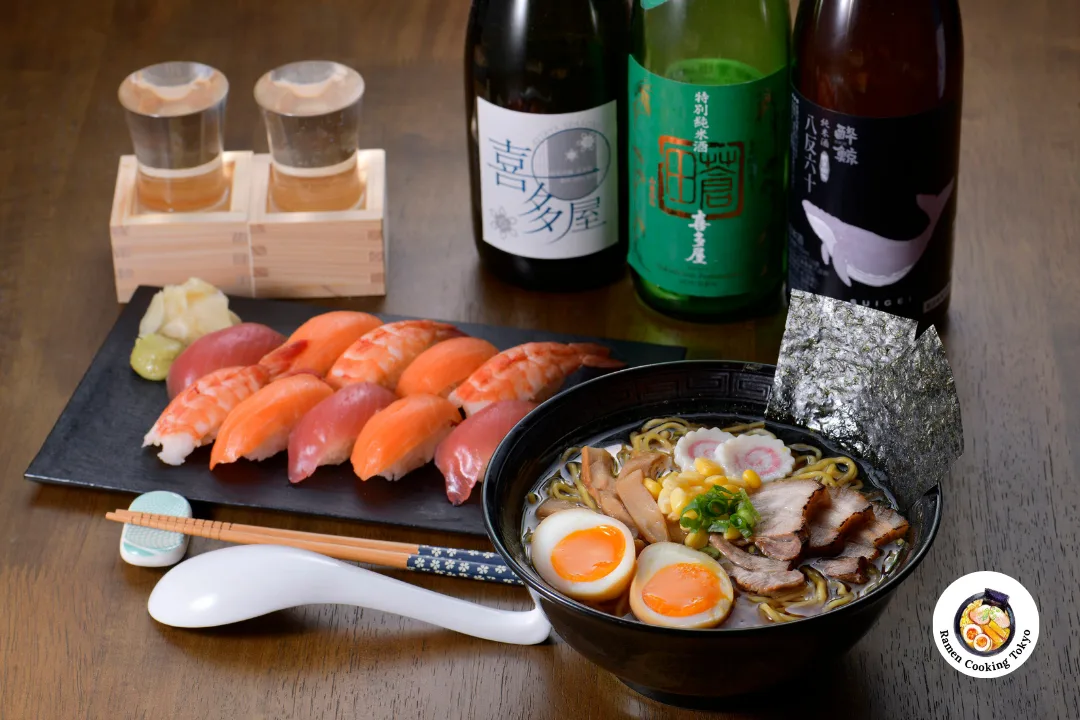
Ramen Cooking: Rich Flavor, Simple Steps
After sushi comes the second half of the experience: ramen making.
Instead of instant noodles or shortcuts, you learn how a proper ramen bowl is constructed.
The broth — You’ll explore the ingredients behind authentic Japanese ramen soup stock and how flavors like soy sauce, miso, or salt form the base.
The toppings — Guests prepare seasoned boiled eggs, chashu pork, scallions, bamboo shoots, corn, and narutomaki (the cute swirly pink fish cake).
Plating — You’ll be surprised at how much personality shows up when everyone decorates their bowl. Some go for symmetry; others treat it like a piece of art.
Finally, everyone sits down together to enjoy both the ramen and the sushi they’ve crafted.
And then comes the highlight for many…
Japanese Sake Pairing: A Special Touch You Won’t Find Elsewhere
Many cooking studios don’t include sake, and even fewer include sake chosen by a certified Japanese sake sommelier.
This class is unique because the sake pairing is carefully selected to enhance:
- The rich umami of ramen
- The clean flavors of sushi
- The overall balance of the meal
Guests often try three or more varieties, such as smooth junmai, aromatic ginjo, or elegant daiginjo.
Even travelers who claim “I don’t usually like sake” discover new favorites here.
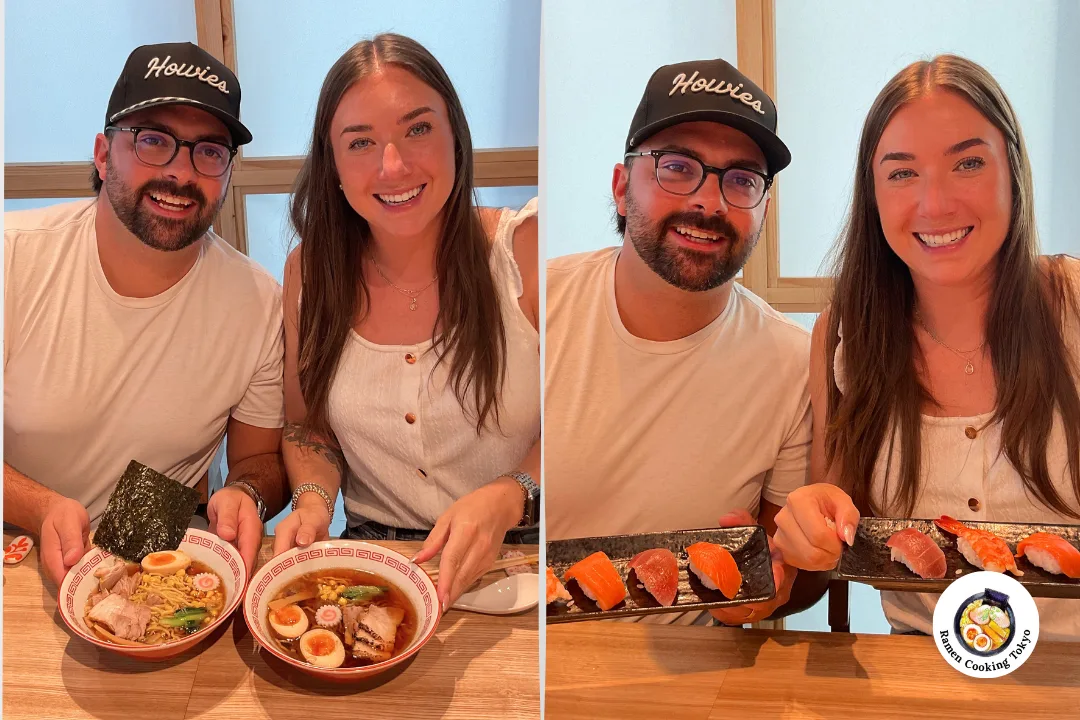
More Than Cooking: Cultural Exchange That Stays in Your Heart
One of the biggest reasons guests rave about this class is the meaningful interaction with Japanese instructors.
Here, cultural exchange isn’t forced or scripted. It happens naturally as you cook, taste, laugh, and chat.
Common topics include:
- Everyday life in Tokyo
- Japanese holidays and traditions
- Travel tips for exploring Japan
- History behind local dishes
- How locals spend time with family and friends
- And surprisingly often… anime, sumo, and baseball
Guests walk away saying: “This wasn’t just a cooking class. It felt like hanging out with friends in Japan.”
That’s exactly why this experience is so special.
Perfect for Couples, Families, Groups, and Solo Travelers
This class attracts a wide range of visitors:
Couples — Perfect for romantic travel photos and shared experiences.
Families — Kids absolutely love shaping sushi and tasting their own creations.
Friends & Small Groups — The class is capped at 8 guests maximum, so it’s cozy and comfortable.
Solo travelers — You’ll meet people from around the world—and never feel alone.
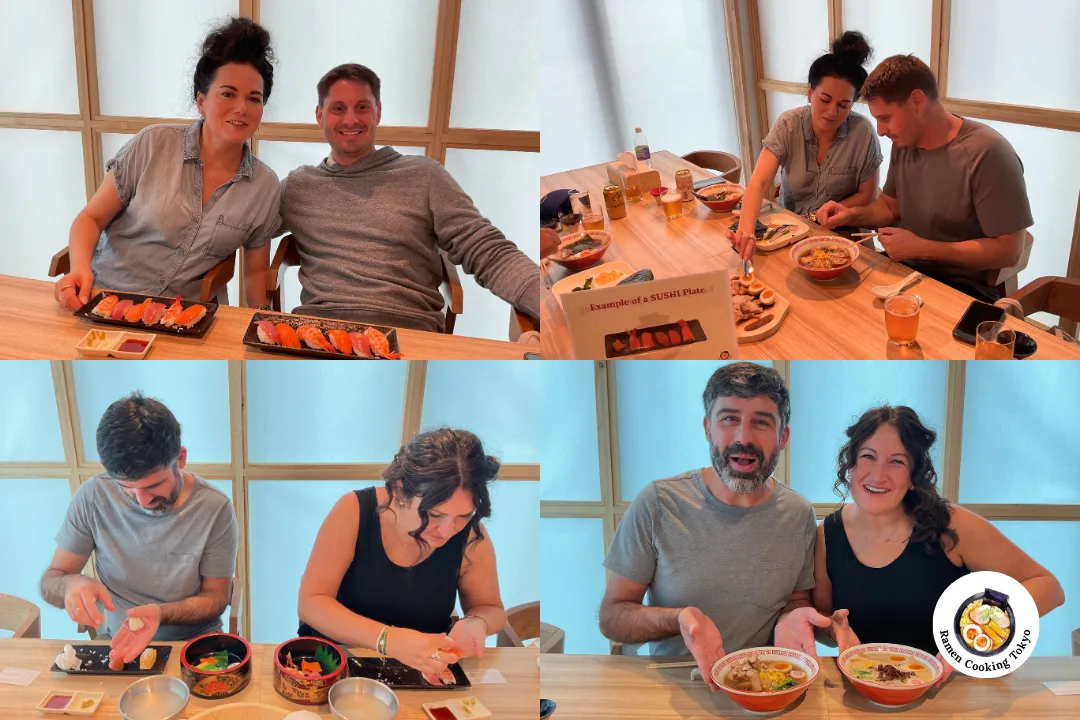
It’s also 100% indoors, making it a great option for:
- Hot summer days
- Rainy days in Tokyo
- Winter travel
- Last-minute itinerary changes
A Relaxed Atmosphere Designed for Travelers
The studio is intentionally built to be bright, clean, airy, modern, and Instagram-friendly.
There’s no pressure, no rushing, and no intimidating chef atmosphere. Just genuine human connection, delicious food, and hands-on fun.
The instructors guide you step-by-step, making it easy even for those who have never cooked Japanese food before.
Class details:
| Item | Details |
|---|---|
| Duration | 2.5–3 hours |
| Group size | Up to 8 guests |
| Sessions | 10:00–13:00 or 14:00–17:00 |
| Location | Tsukishima, central Tokyo |
| Language | English |
Why This Class Has 400+ Perfect Reviews
Travelers consistently mention:
- ⭐ Warm hospitality
- ⭐ Clear English explanations
- ⭐ High-quality ingredients
- ⭐ Unique combination of ramen + sushi
- ⭐ Sake pairing included
- ⭐ Great for photos
- ⭐ Family-friendly
- ⭐ Small-group style
People walk away full, happy, and proud of what they created—often saying it was the best activity of their trip.
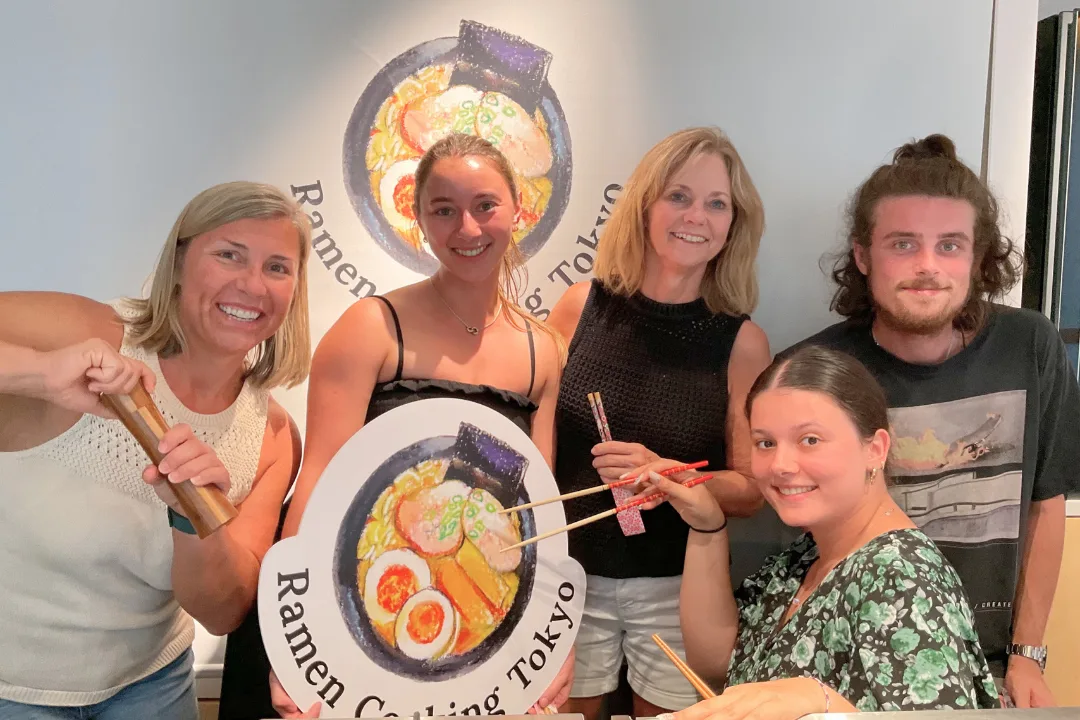
Who This Sushi Making Class Is Perfect For
This sushi making class in Japan is ideal if:
- You love BOTH ramen and sushi
- You want a hands-on cultural experience
- You prefer a small, intimate group
- You value real interaction with local Japanese staff
- You want rainy-day or last-minute options
- You want to learn real techniques, not shortcuts
It’s a “must-do” for food lovers, culture seekers, and travelers who want to experience authentic Japanese hospitality.
Final Thoughts: More Than a Class—A Memory to Take Home
“Sushi Making Class for Ramen and Sushi Lovers in Japan” isn’t just a catchy title—it’s exactly what this experience offers.
You walk in as travelers. You walk out as confident sushi makers, ramen builders, and friends of the instructors who shared their kitchen and stories with you.
If you want one activity that captures the heart of Japanese food culture, this dual cooking class is one of the best choices you can make on your Tokyo journey.
Ready to create your own sushi and ramen memories in Tokyo?