Looking for the perfect way to spend your morning or afternoon before your ramen making class? We’ve got you covered!
Instead of rushing straight to our cooking studio, why not take a scenic walk through one of Tokyo’s most charming historic neighborhoods? This route takes you from Ningyocho — a town steeped in Edo-period history — all the way to our kitchen in Tsukishima, passing through traditional shops, beautiful shrines, and stunning waterfront views.
Ready to discover a side of Tokyo most tourists never see? Let’s go! 🚶♂️
Your Route at a Glance
Start: Ningyocho Station
End: Ramen Cooking Tokyo (Tsukishima)
Distance: Approximately 3 km
Time: 1 to 1.5 hours (depending on how much you explore!)
Route:
Ningyocho Station → Itakuraya (Ningyoyaki) → Amazake Yokocho → Karakuri Yagura Clock Tower → Benitomo (Tableware Shop) → Suitengu Shrine → Ichou Inari Shrine → Kayababashi Bridge → Nihonbashi Hie Shrine → Eitaibashi Bridge → Etchujima Park → Aioibashi Bridge → Ramen Cooking Tokyo
📍 View the full route on Google Maps
Stop 1: Welcome to Ningyocho — Where Tokyo’s History Comes Alive
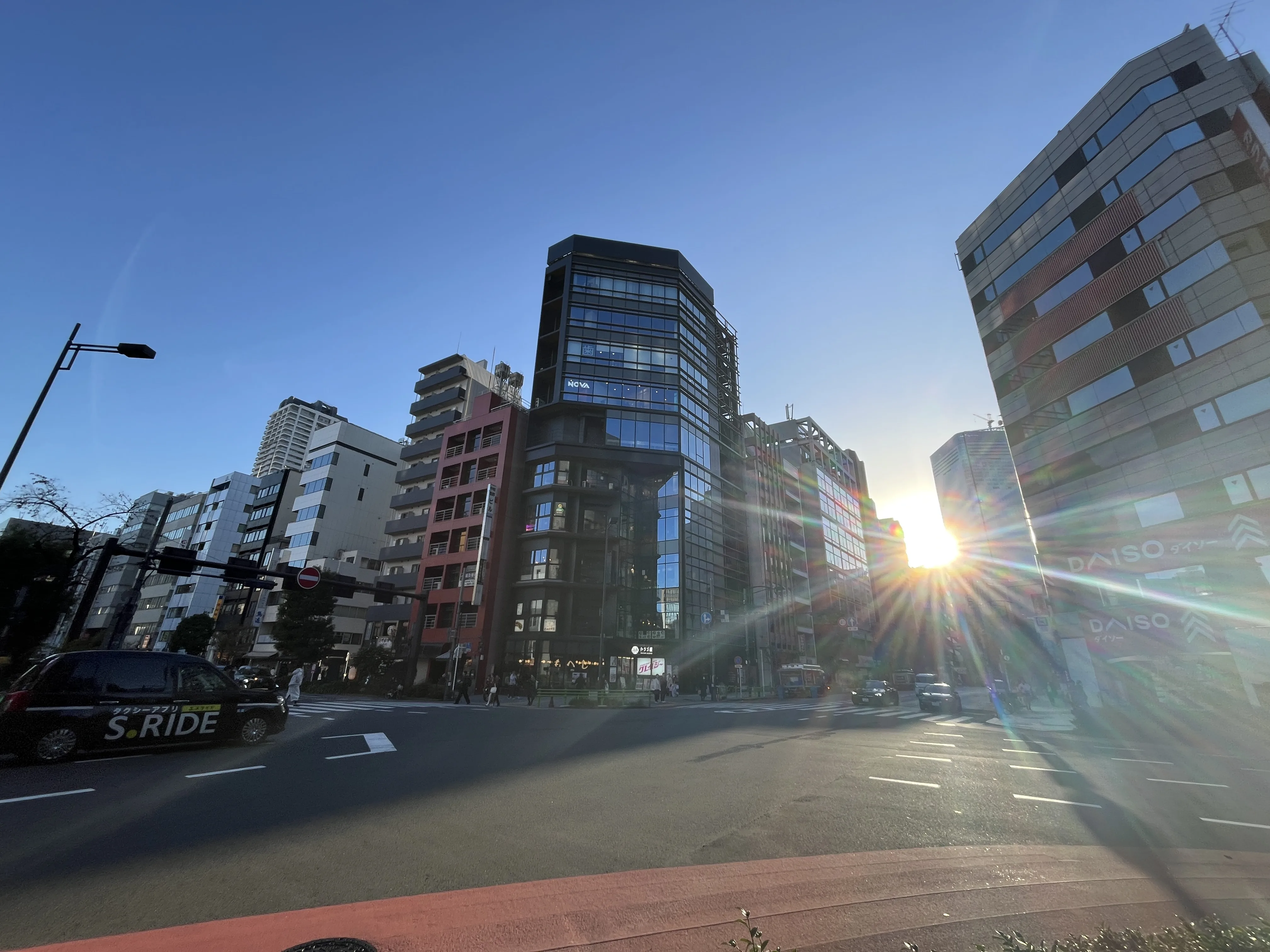
Ningyocho (人形町) literally means “Doll Town” — and there’s a fascinating reason for that name!
During the Edo period (1603-1868), this area was home to numerous puppet theaters and kabuki playhouses. Skilled puppet makers and performers gathered here, creating a vibrant entertainment district. The town became so famous for its dolls and puppets that the name stuck for centuries.
The Birthplace of Ningyoyaki
You may have seen ningyoyaki (人形焼) — those adorable doll-shaped cakes — at Tokyo’s famous Sensoji Temple in Asakusa. But did you know they actually originated right here in Ningyocho?
These sweet treats, filled with red bean paste and shaped like traditional dolls or the Seven Lucky Gods, were first created in this very neighborhood!
Stop 2: Itakuraya — Taste 100+ Years of Tradition
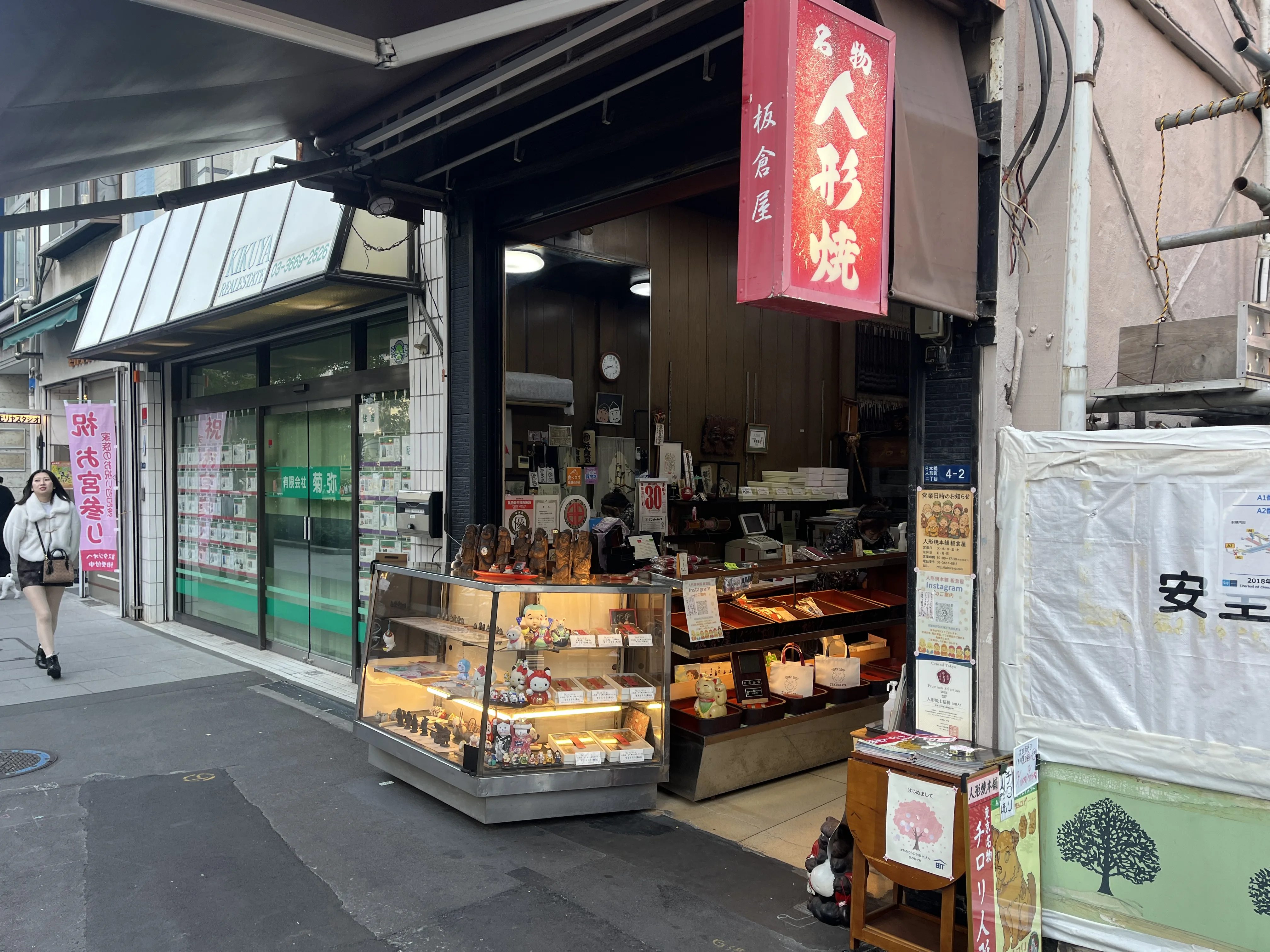
Your first stop should be Itakuraya (板倉屋), a beloved ningyoyaki shop that has been delighting customers for over 100 years.
What makes their ningyoyaki special?
- 🍡 Handmade — Each piece is carefully grilled by hand
- 🫘 Generous filling — Packed with smooth, sweet red bean paste (koshian)
- 🌿 No additives — Made with simple, traditional ingredients
Grab a few warm ones to enjoy as you walk — they’re the perfect snack for your journey!
Stop 3: Amazake Yokocho — A Street Frozen in Time
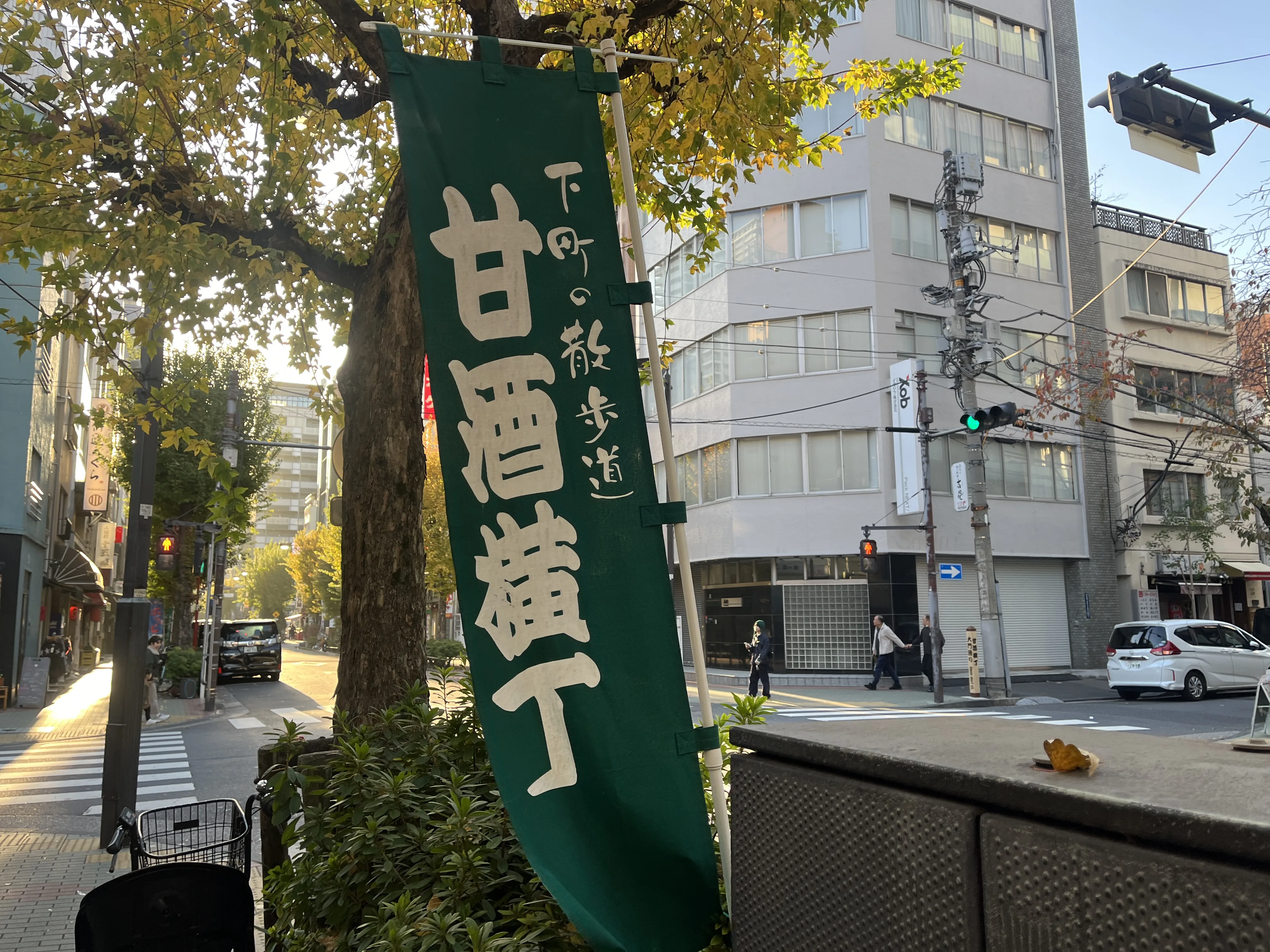
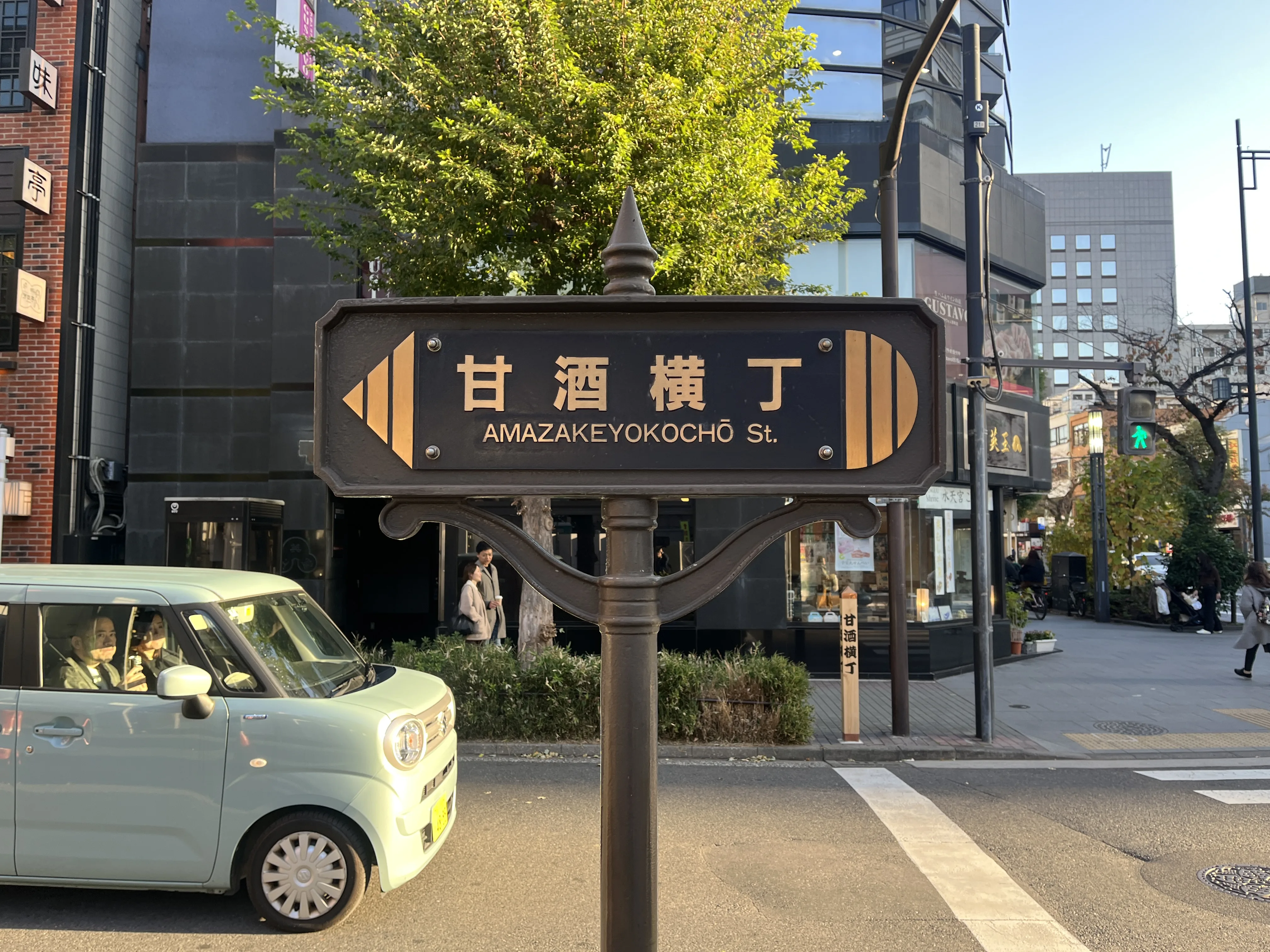
Amazake Yokocho (甘酒横丁) is a delightful shopping street named after amazake — a traditional sweet, non-alcoholic Japanese drink made from fermented rice.
What is Amazake?
Despite having “sake” in its name, amazake contains little to no alcohol! It’s a creamy, naturally sweet beverage that’s been enjoyed in Japan for centuries. It’s often served warm in winter and is considered a healthy energy drink — packed with vitamins and amino acids.
Shops Worth Exploring
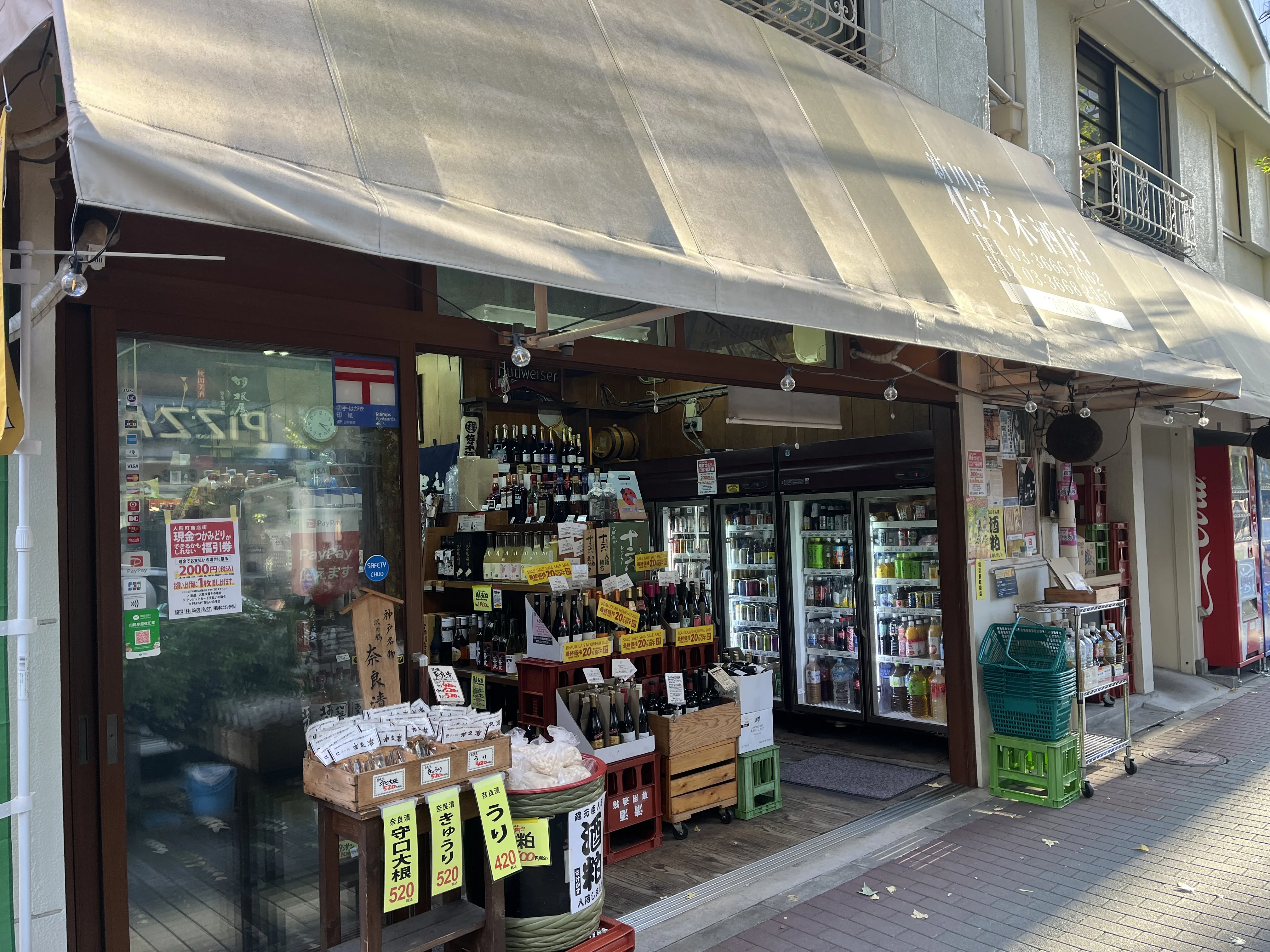
Sake & Craft Beer Shops — Browse Japanese sake, craft beer, and yes — you can even try amazake here!
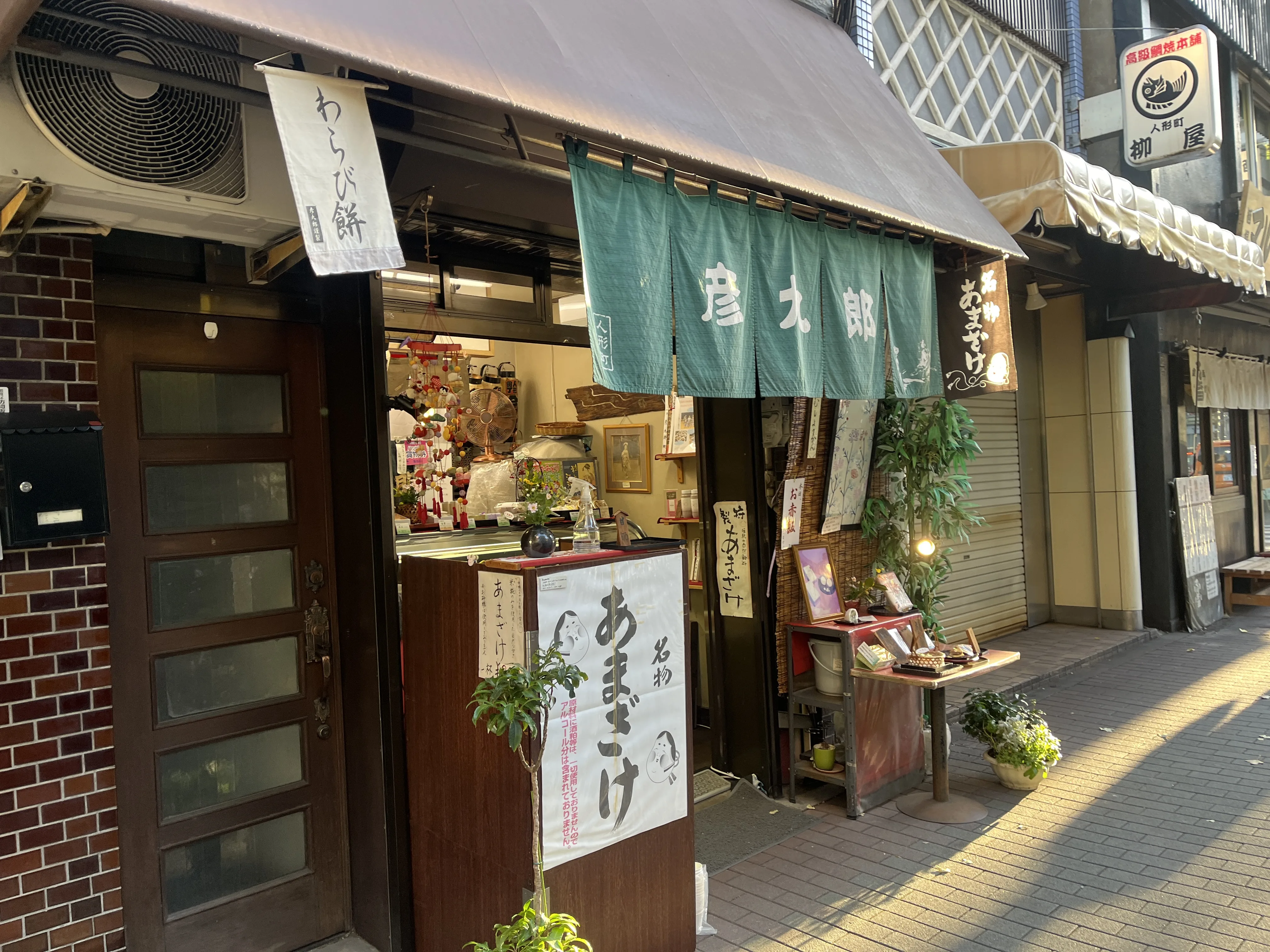
Traditional Wagashi Shops — Beautiful Japanese sweets like warabi mochi, dorayaki, and monaka.
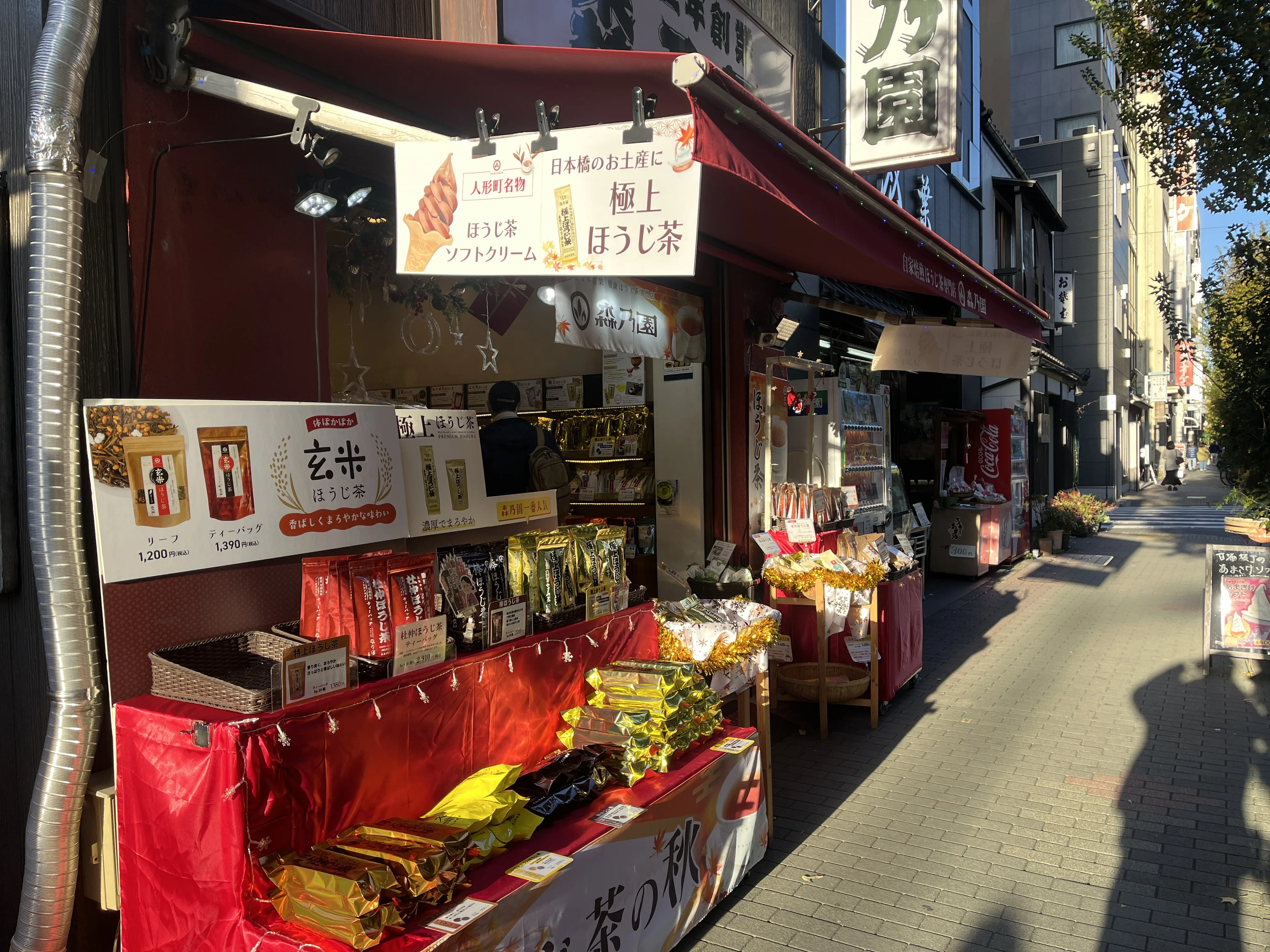
Japanese Tea Shops — Don’t miss the hojicha (roasted green tea) soft serve ice cream!
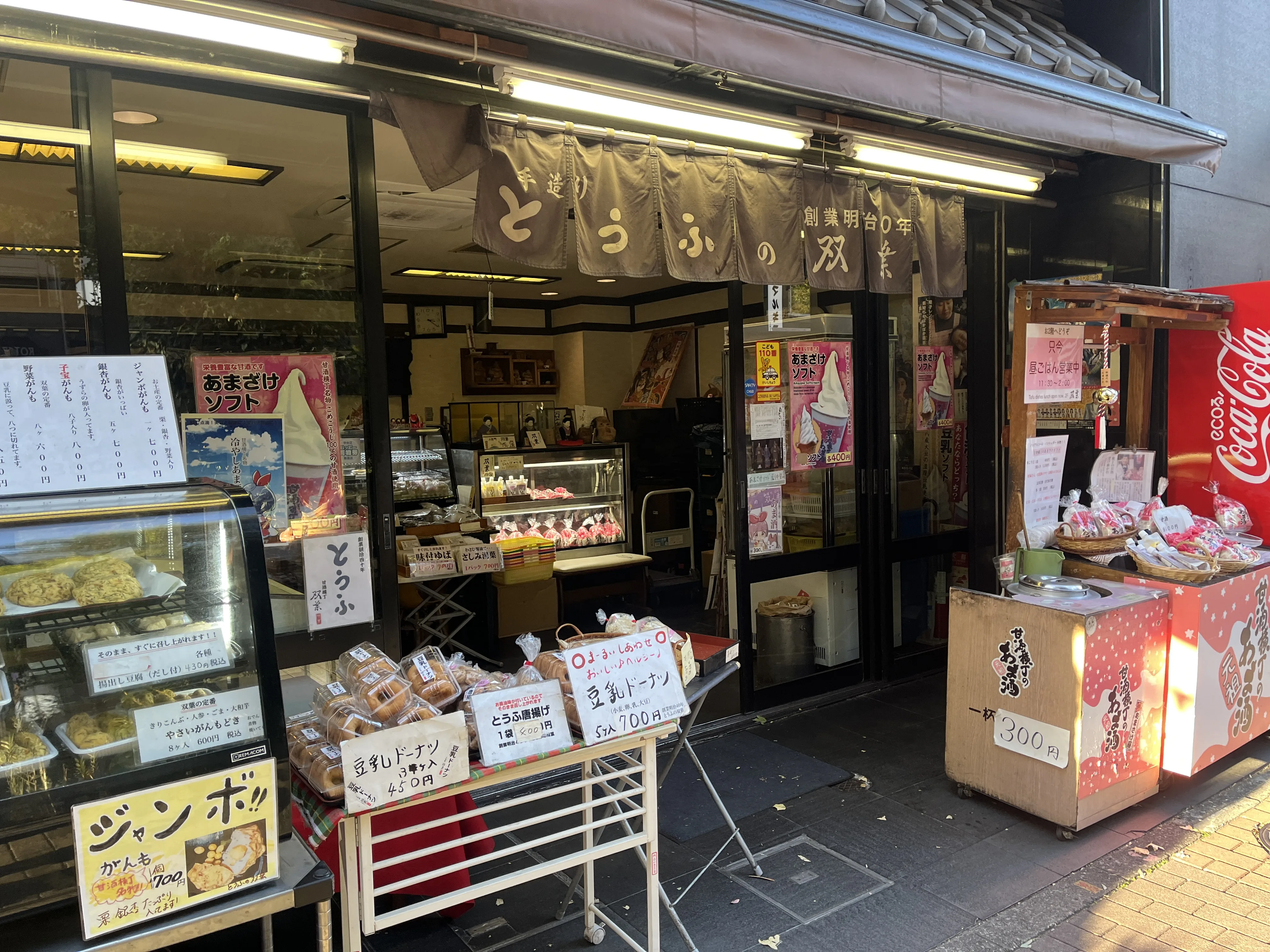
Tofu Shops — Fresh, handmade tofu and tofu-based snacks.
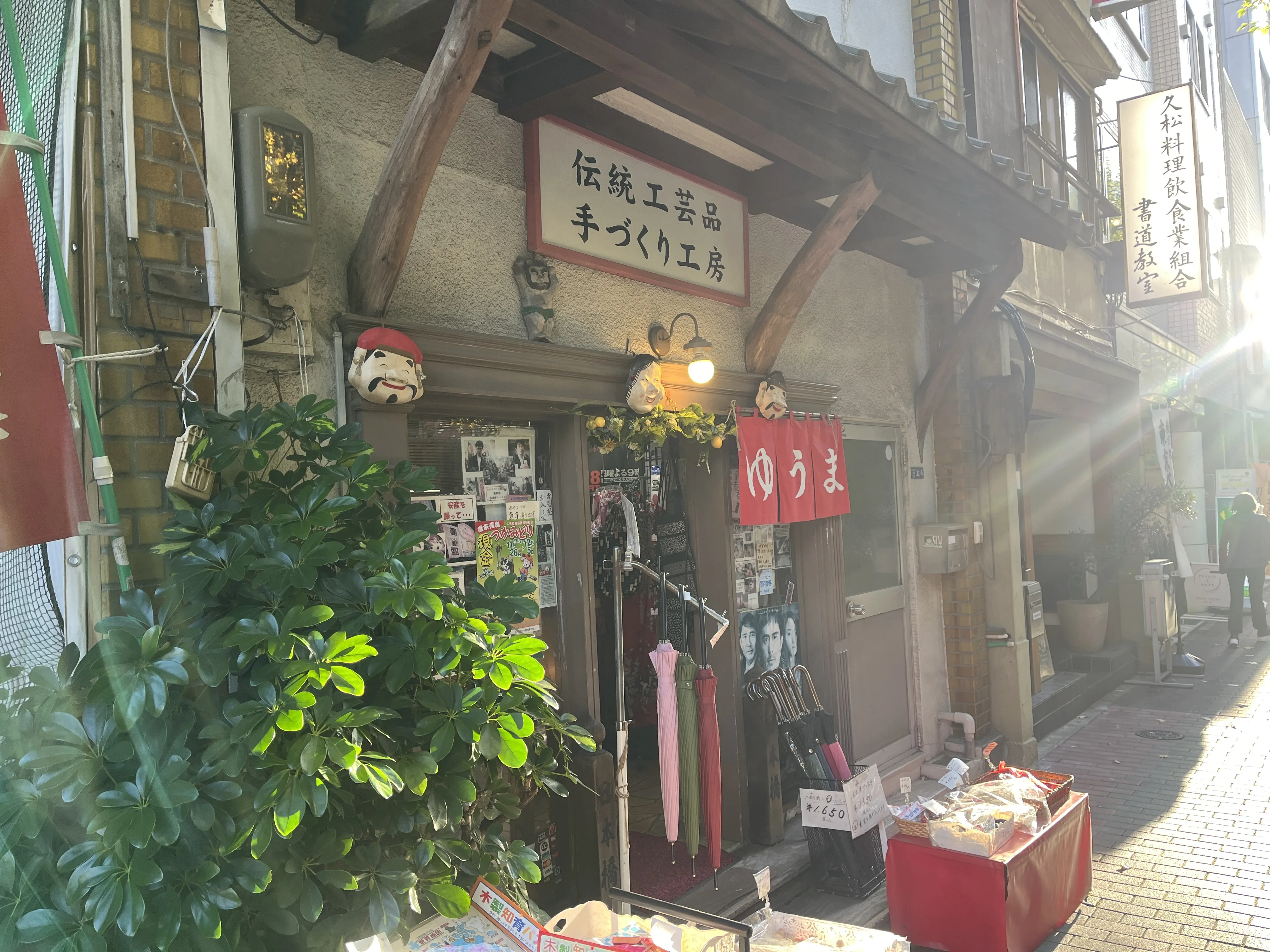
Traditional Crafts — Beautiful handmade items like Japanese umbrellas, fans, and masks.
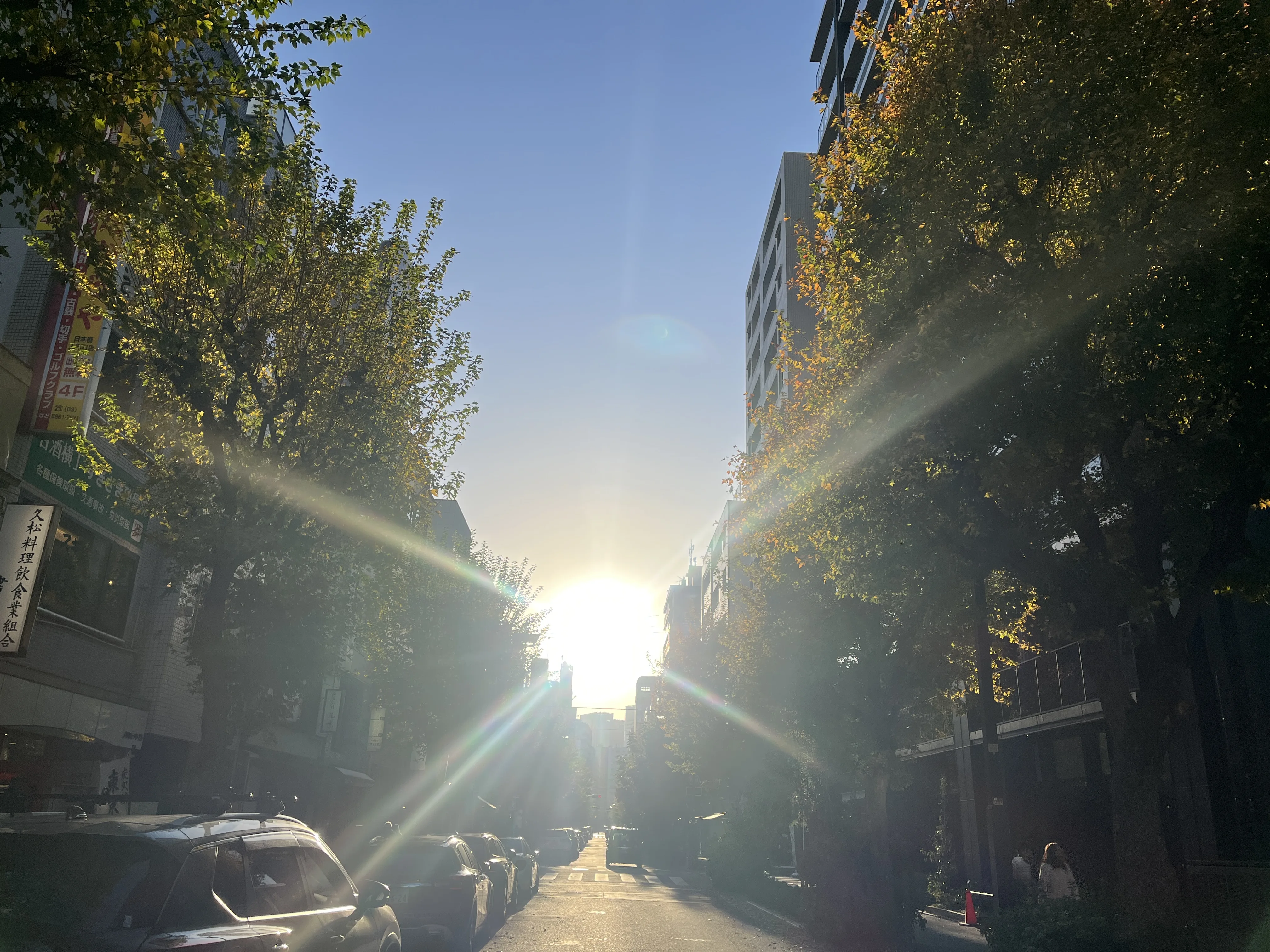
Pro tip: If you visit in the late afternoon, the golden sunlight streaming down the street creates an absolutely magical atmosphere!
Stop 4: Karakuri Yagura — The Dancing Clock Tower
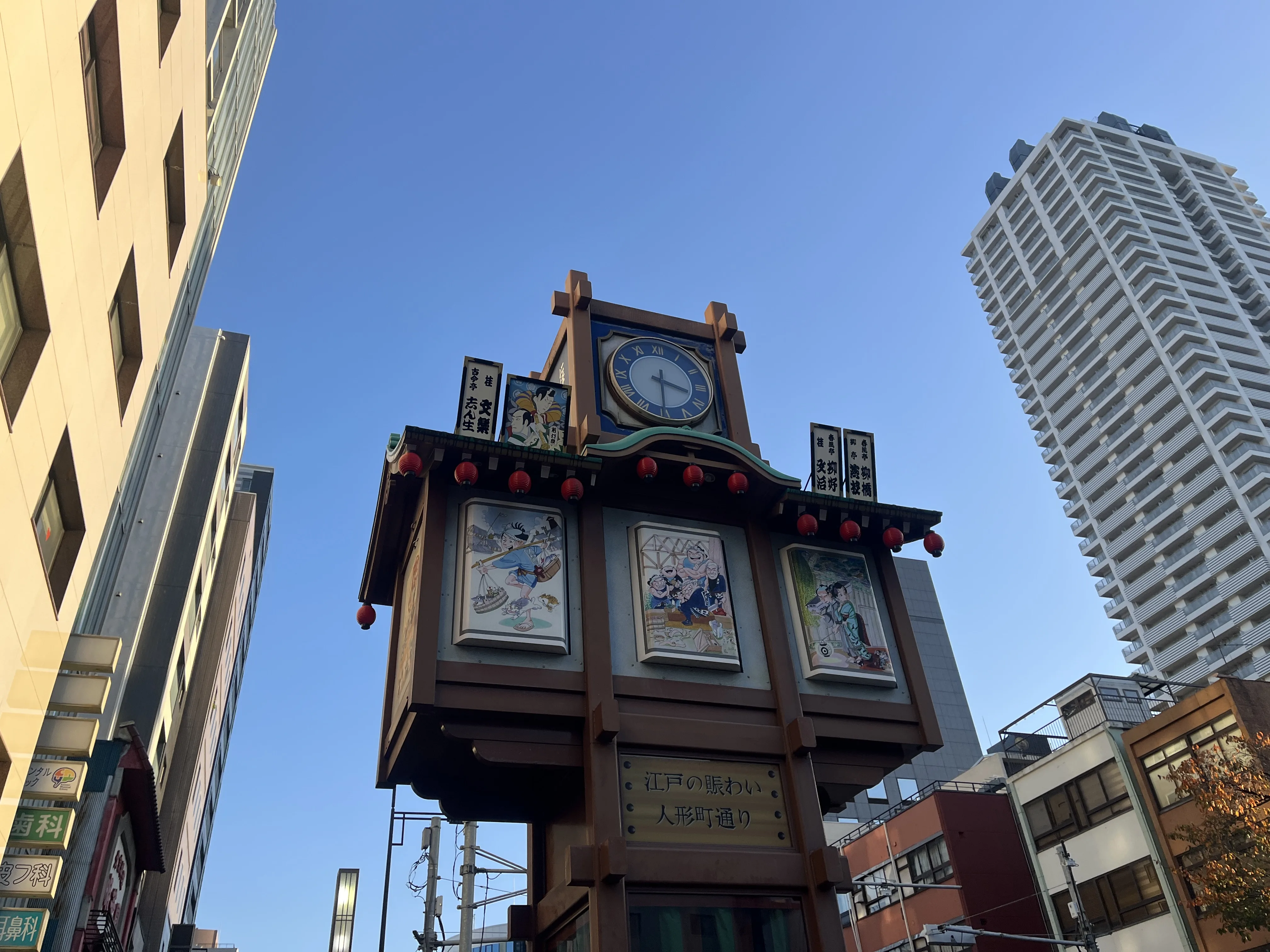
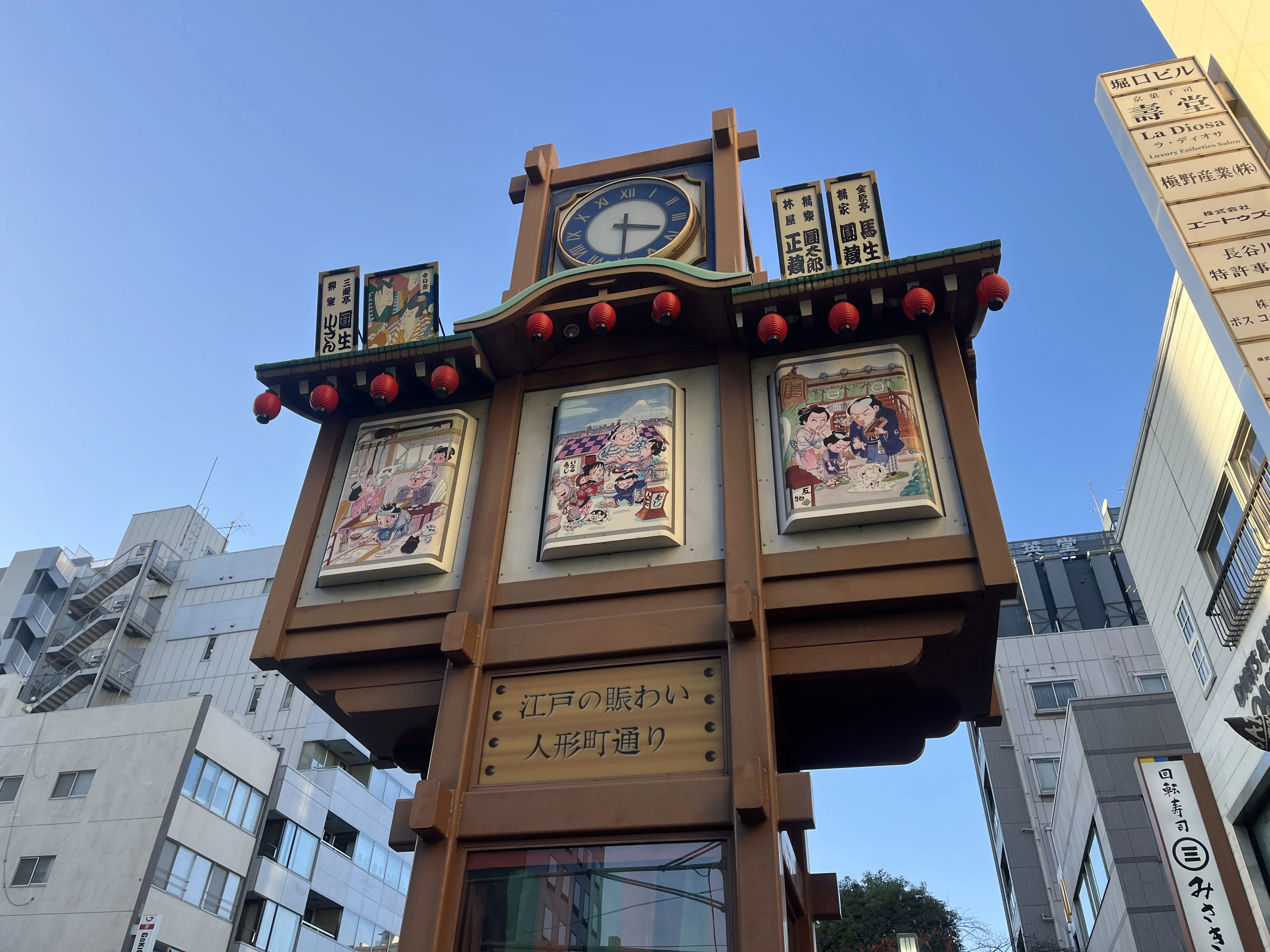
This charming mechanical clock tower is a symbol of Ningyocho. Every hour from 11:00 AM to 7:00 PM, it comes alive with a 2-3 minute performance featuring traditional Edo-style entertainment!
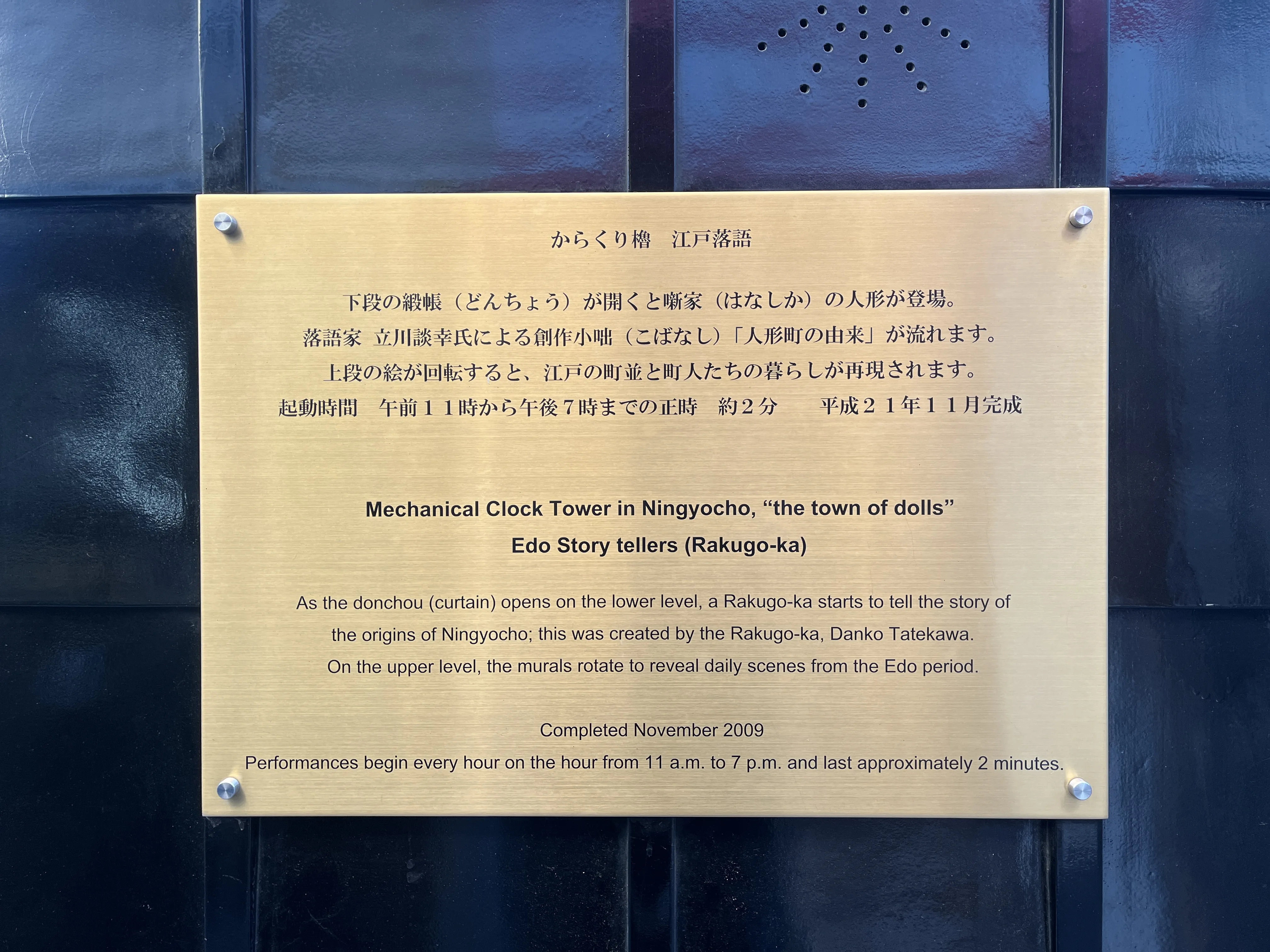
The show features rakugo (traditional Japanese comic storytelling) performed by a mechanical puppet. It’s a delightful reminder of the area’s theatrical history.
Tip: Time your visit to catch one of the hourly performances!
Stop 5: Benitomo — Find the Perfect Souvenir
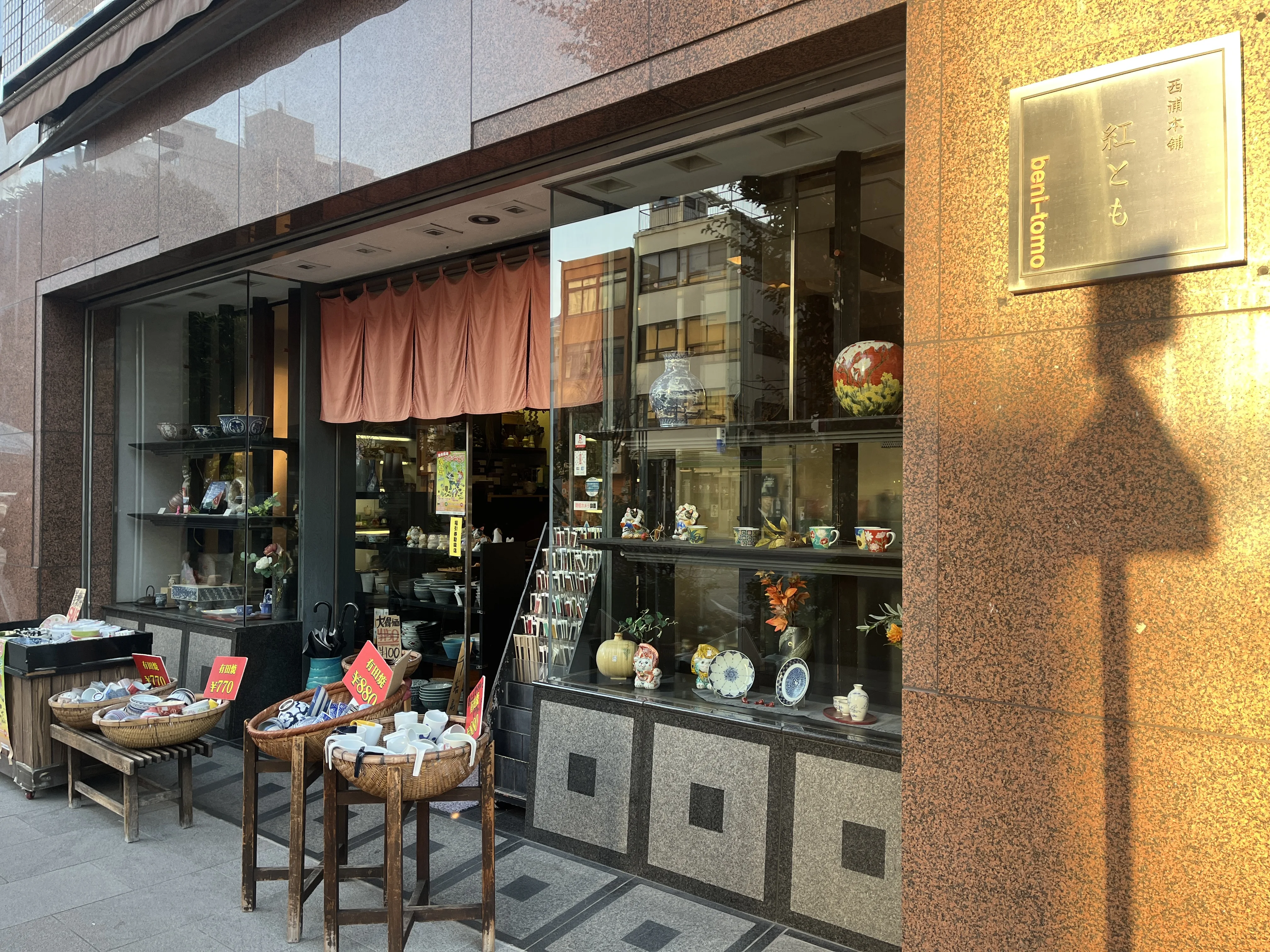
Nishiura Honpo Benitomo (西浦本舗紅とも) is a treasure trove for anyone who loves Japanese tableware.
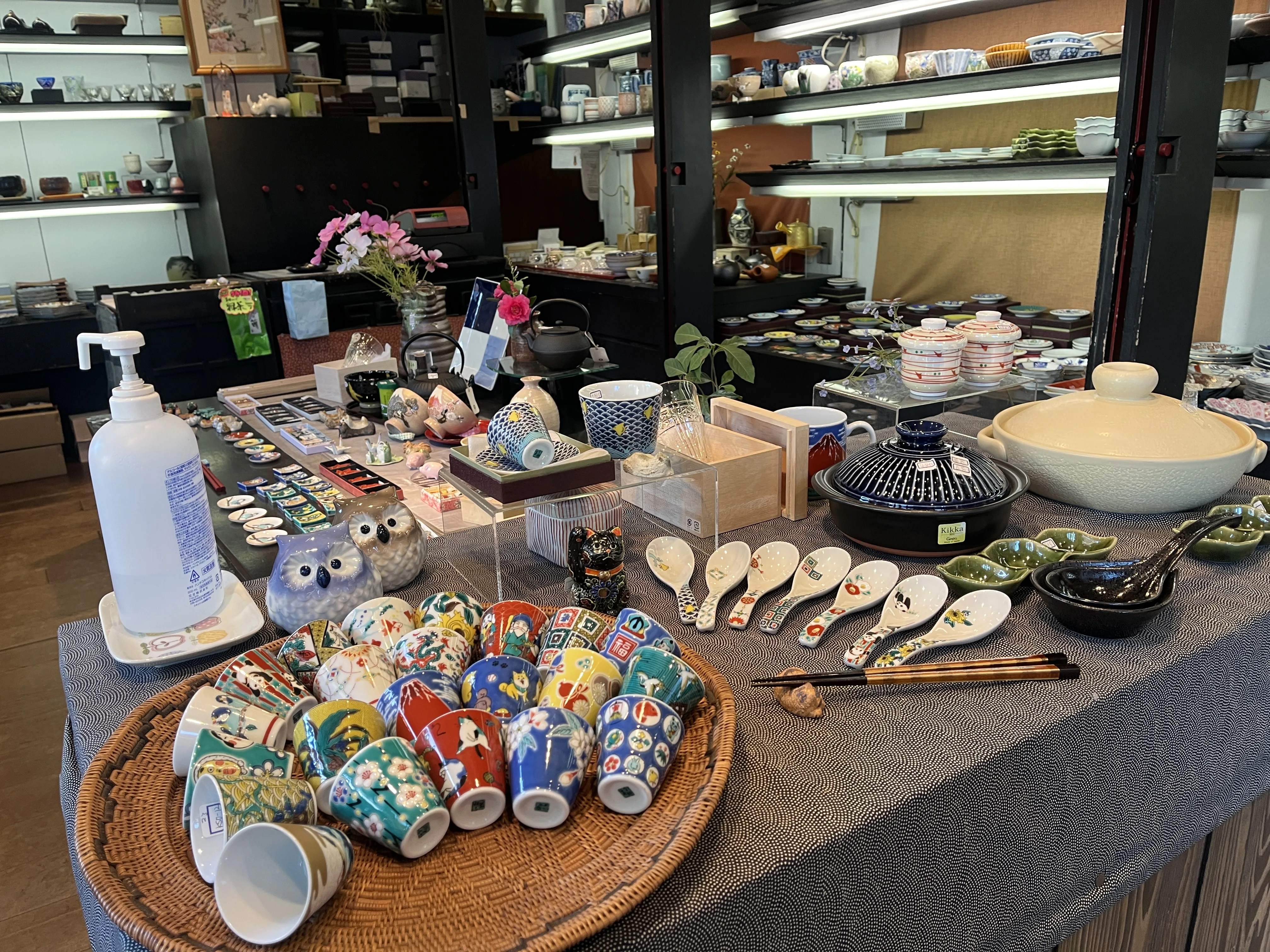
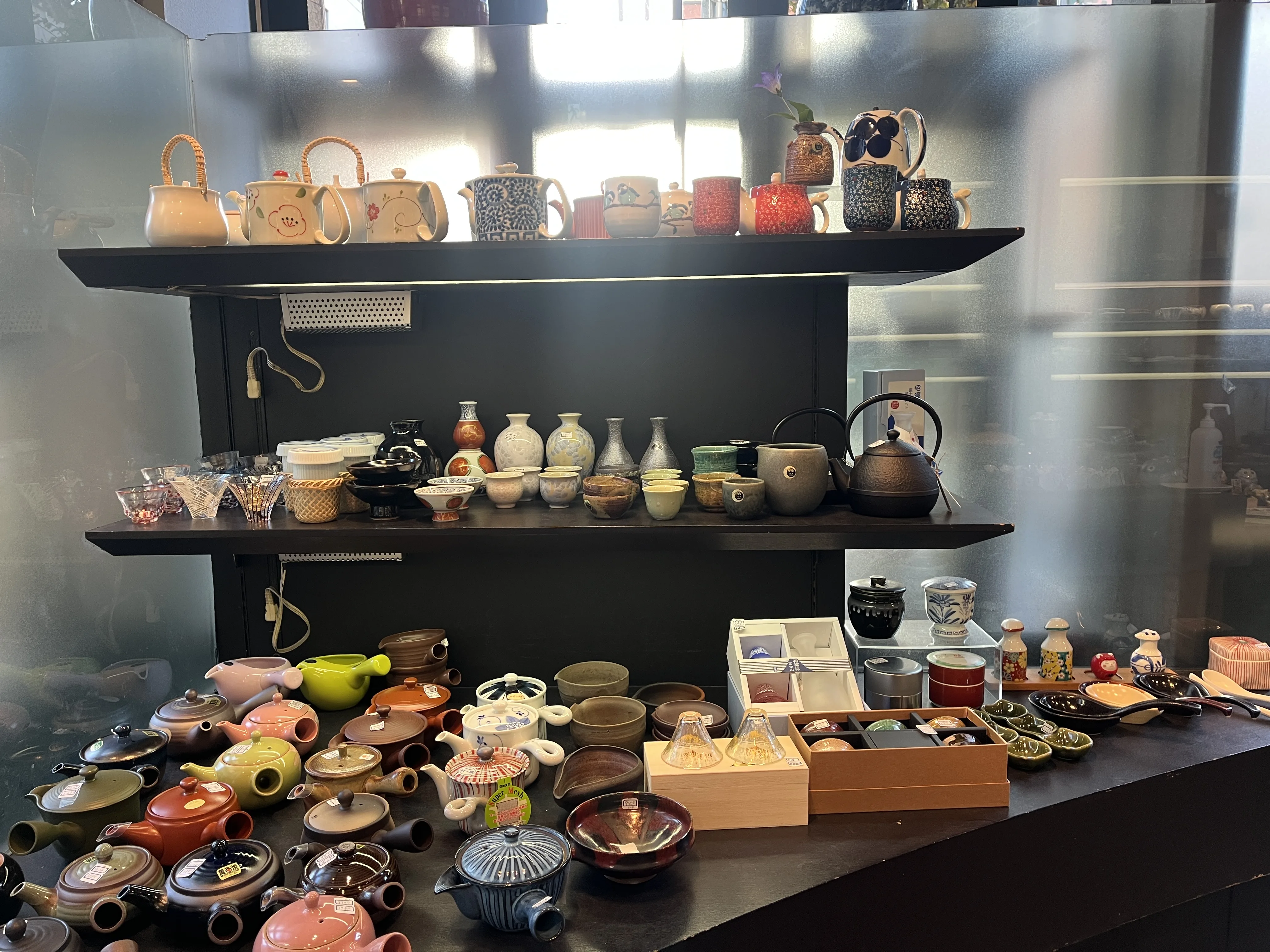
Here you’ll find:
- 🍶 Beautiful sake cups (ochoko) — perfect for your sake collection
- 🍵 Traditional teapots and tea sets
- 🍜 Ramen bowls, rice bowls, and chopsticks
- 🎎 Decorative items and lucky charms
The shop staff told us that their items are incredibly popular with international visitors — and it’s easy to see why! These make wonderful souvenirs that you’ll actually use.
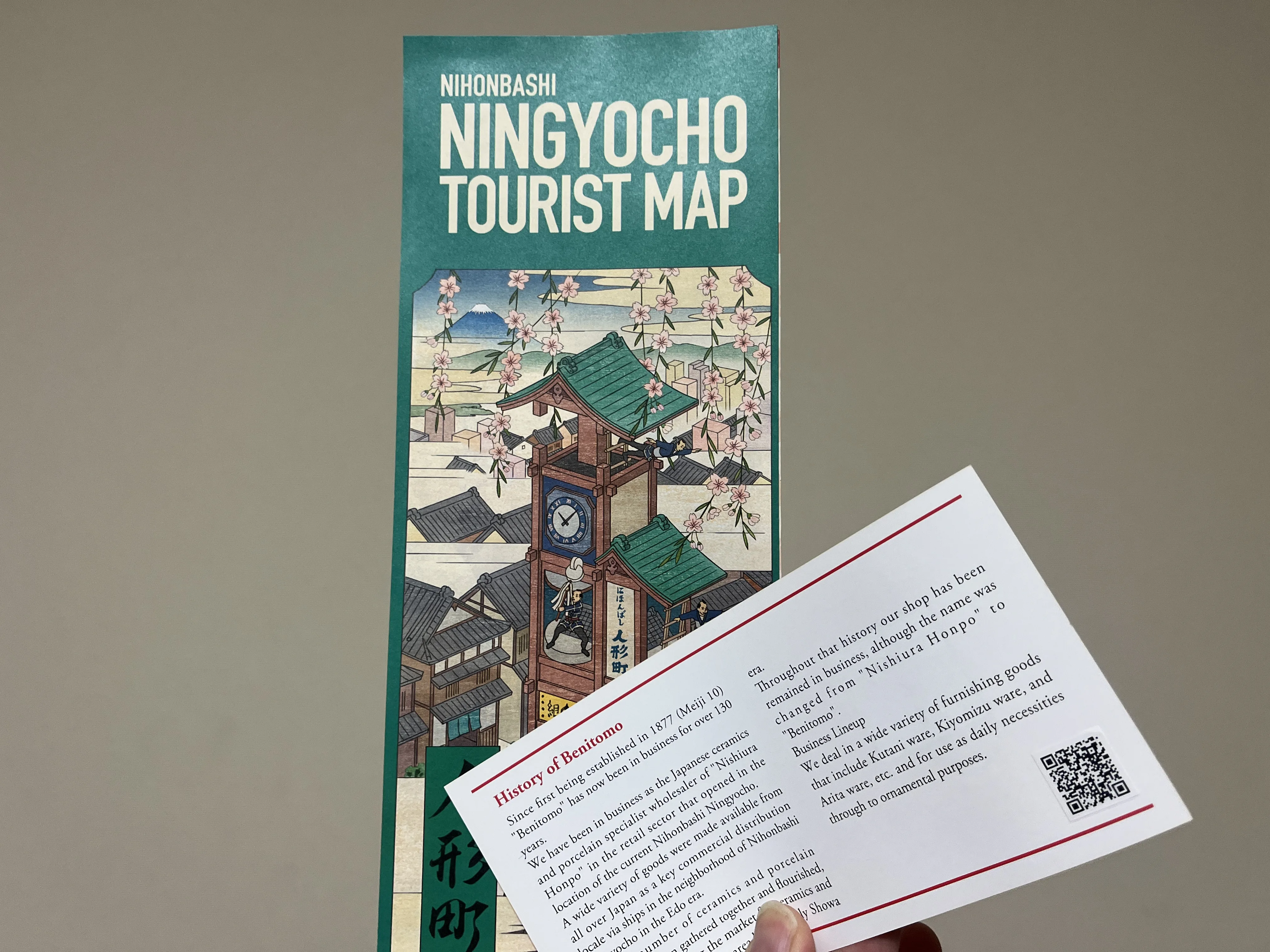
Bonus: They offer English pamphlets with a walking map of Ningyocho!
Stop 6: Suitengu Shrine — Blessings for Safe Delivery
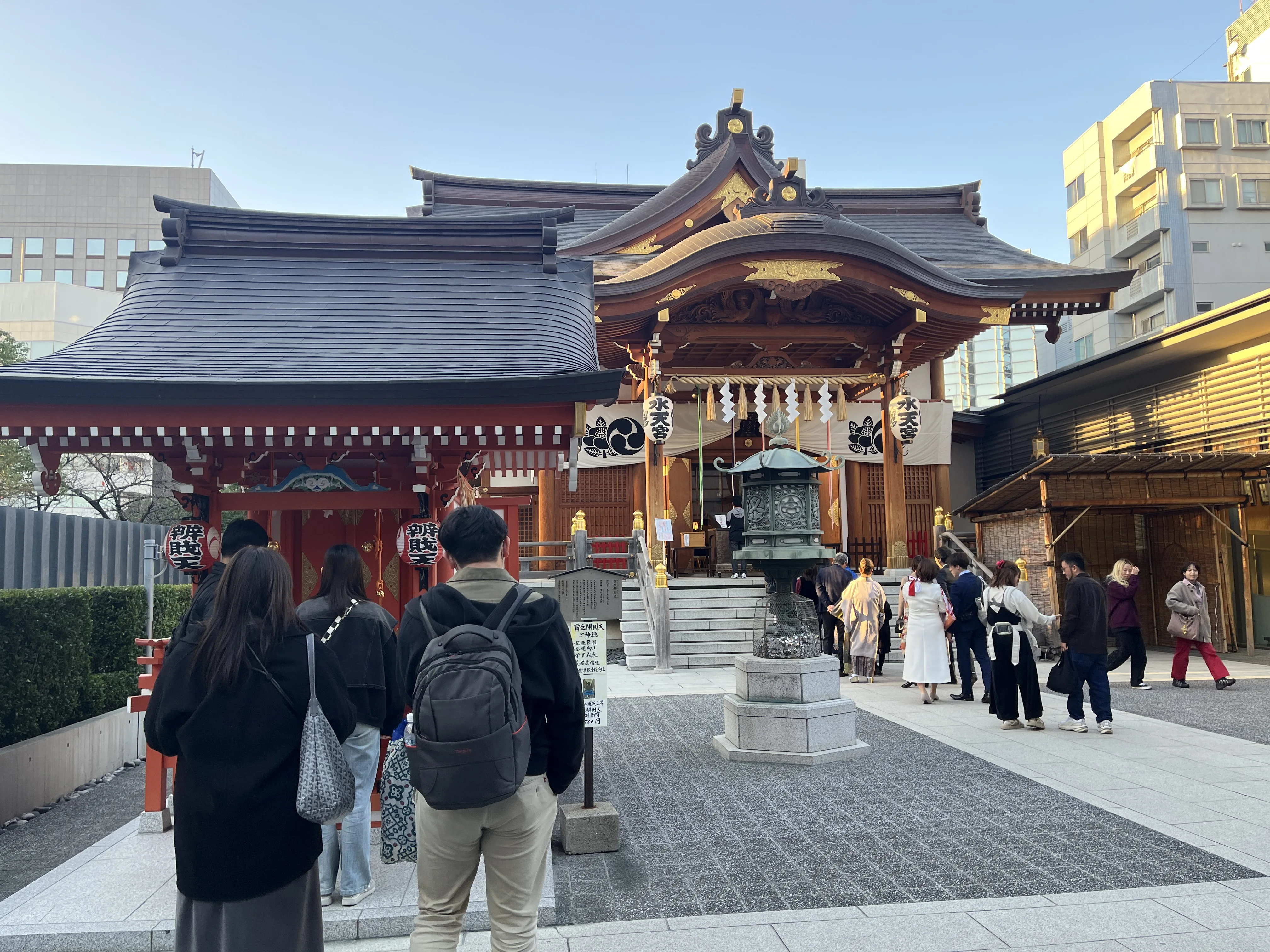
Suitengu Shrine (水天宮) is one of Tokyo’s most beloved shrines, famous for blessing expectant mothers with safe childbirth.
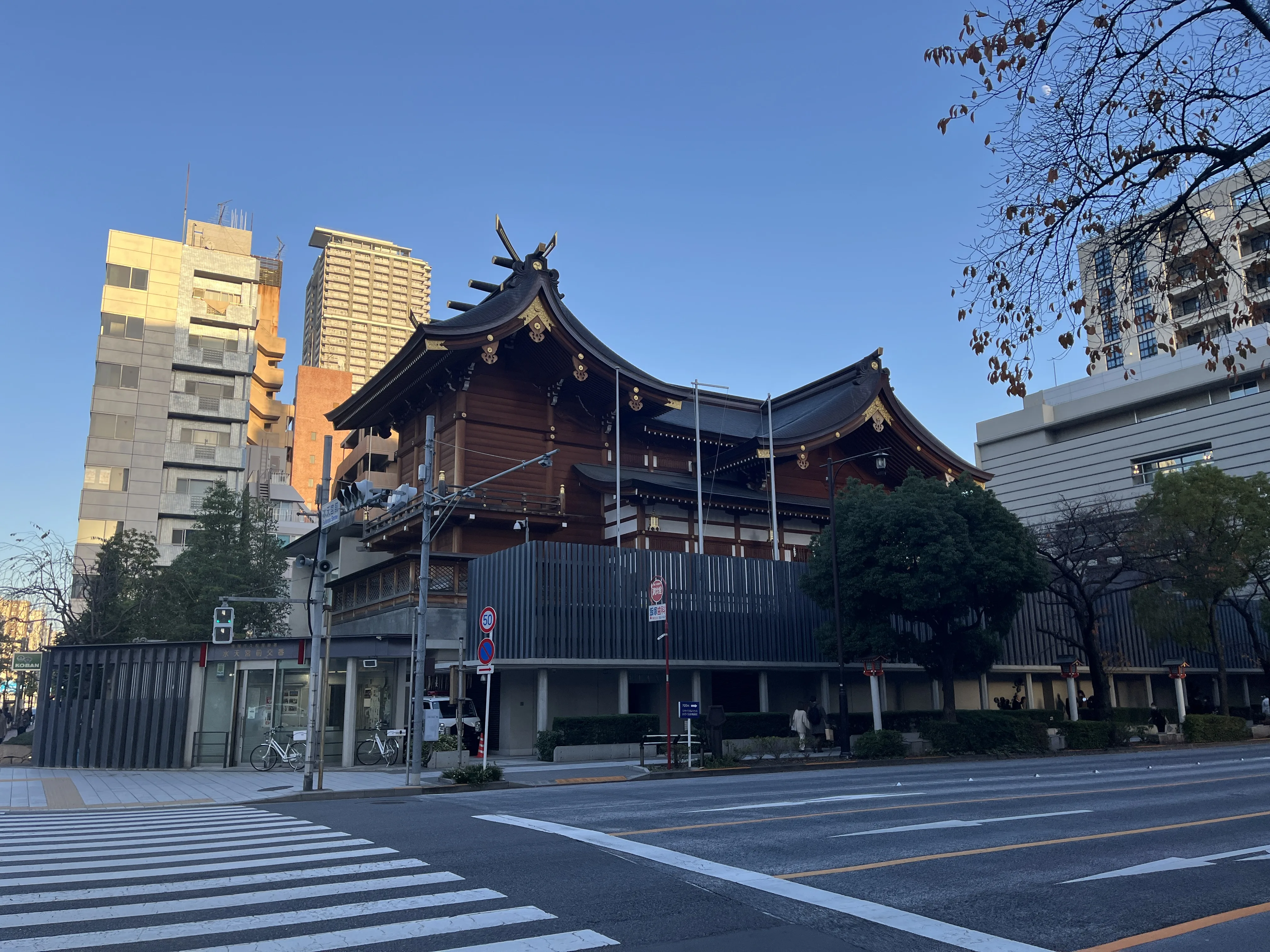
Even from a distance, this shrine commands attention with its striking architecture rising above the surrounding buildings.
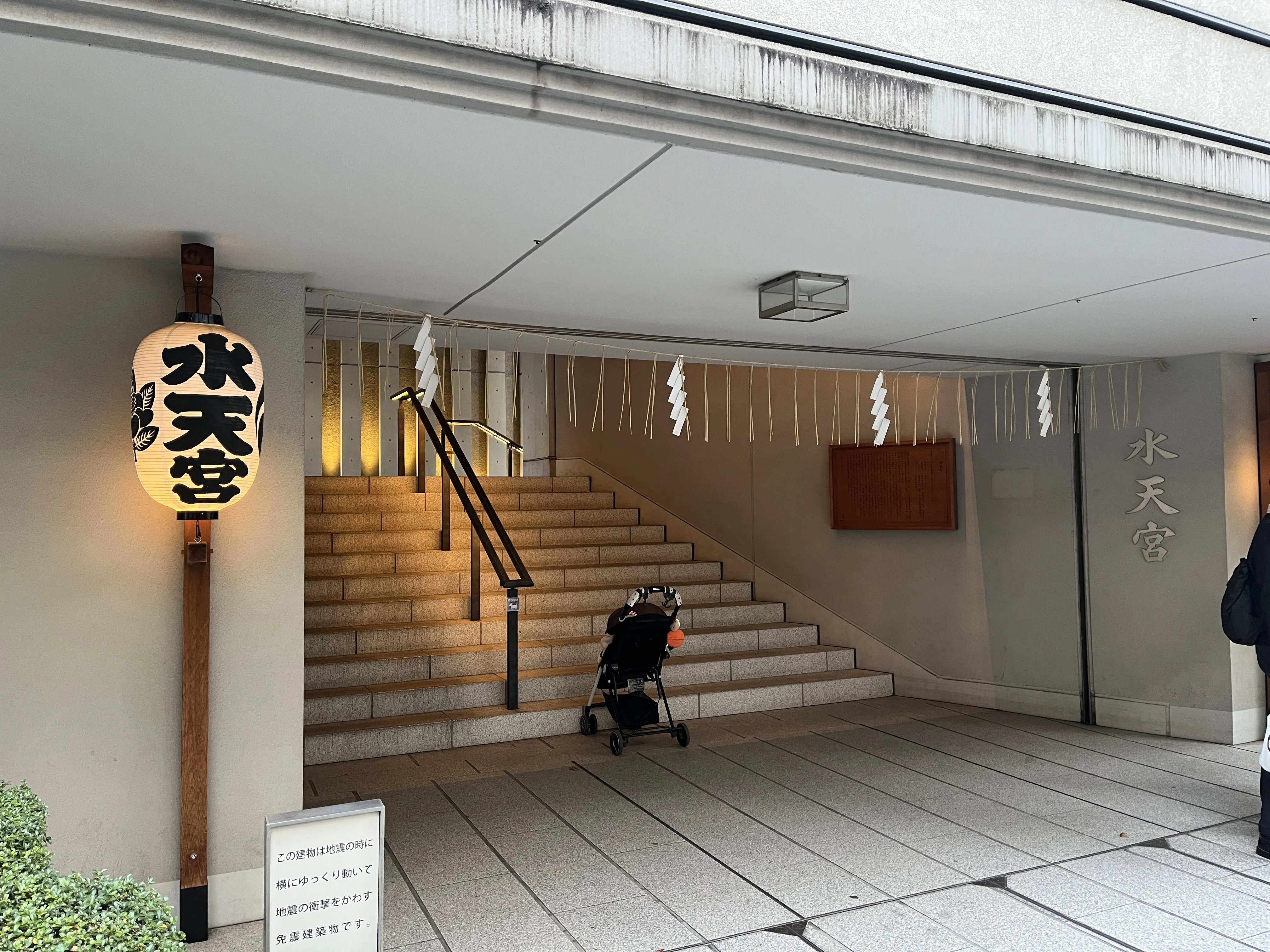
A Shrine in the Sky?
Here’s what makes Suitengu unique: it’s located on the second floor of a modern building! You climb the stairs and suddenly find yourself in a beautiful, traditional shrine courtyard surrounded by high-rise buildings.
It’s a fascinating blend of old and new that’s quintessentially Tokyo.
Stop 7: Ichou Inari Shrine — Autumn Colors
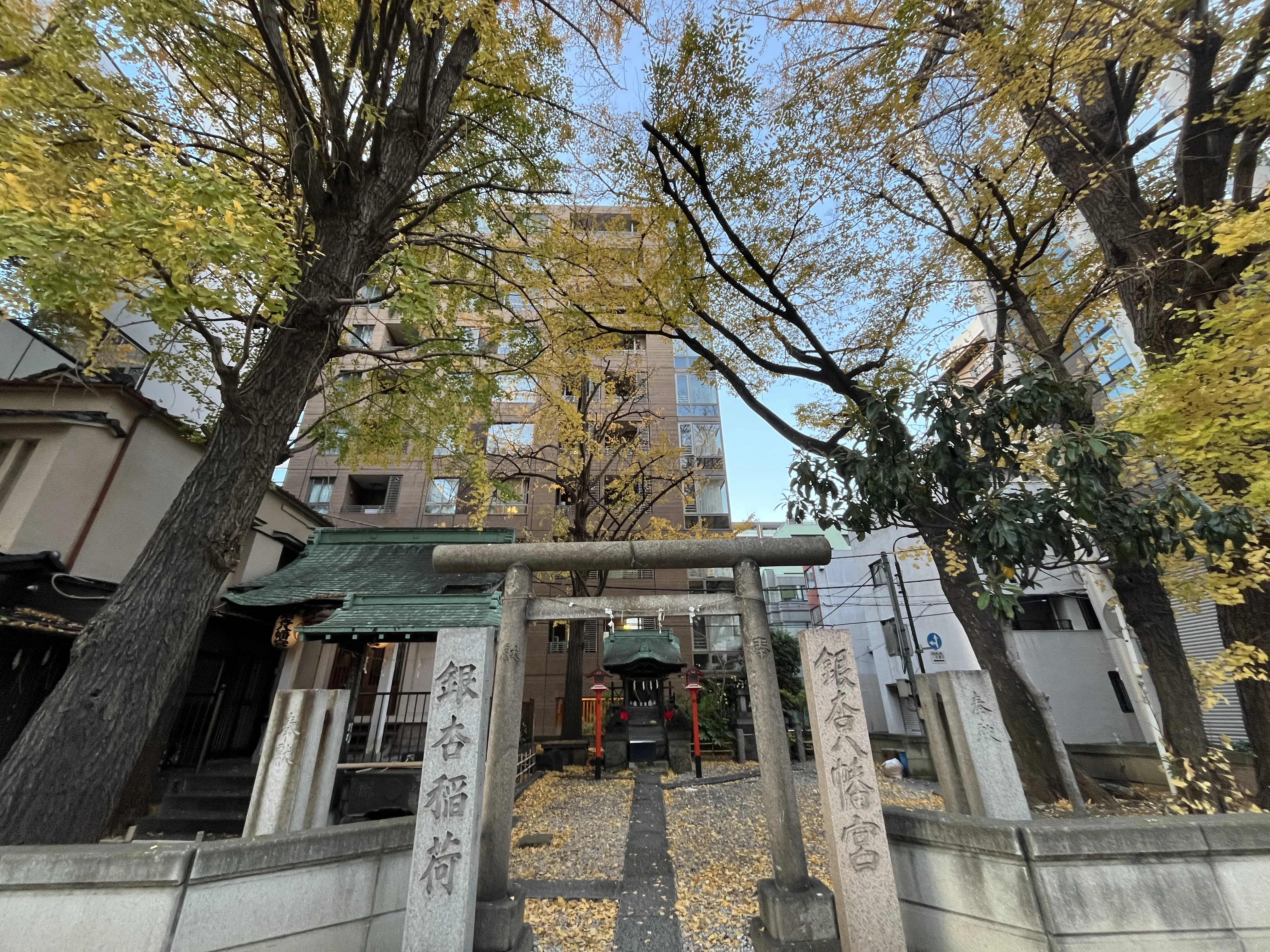
Ichou Inari Shrine (銀杏稲荷) is named after the beautiful ginkgo trees (ichou) that surround it.
The name “ichou” (銀杏) means ginkgo in Japanese. In autumn, the trees turn brilliant gold, creating a stunning natural canopy over this peaceful shrine.
Take a moment to breathe in the tranquil atmosphere — it’s a perfect example of finding serenity in the middle of a busy city.
Stop 8: Kayababashi Bridge — Follow the Fuji
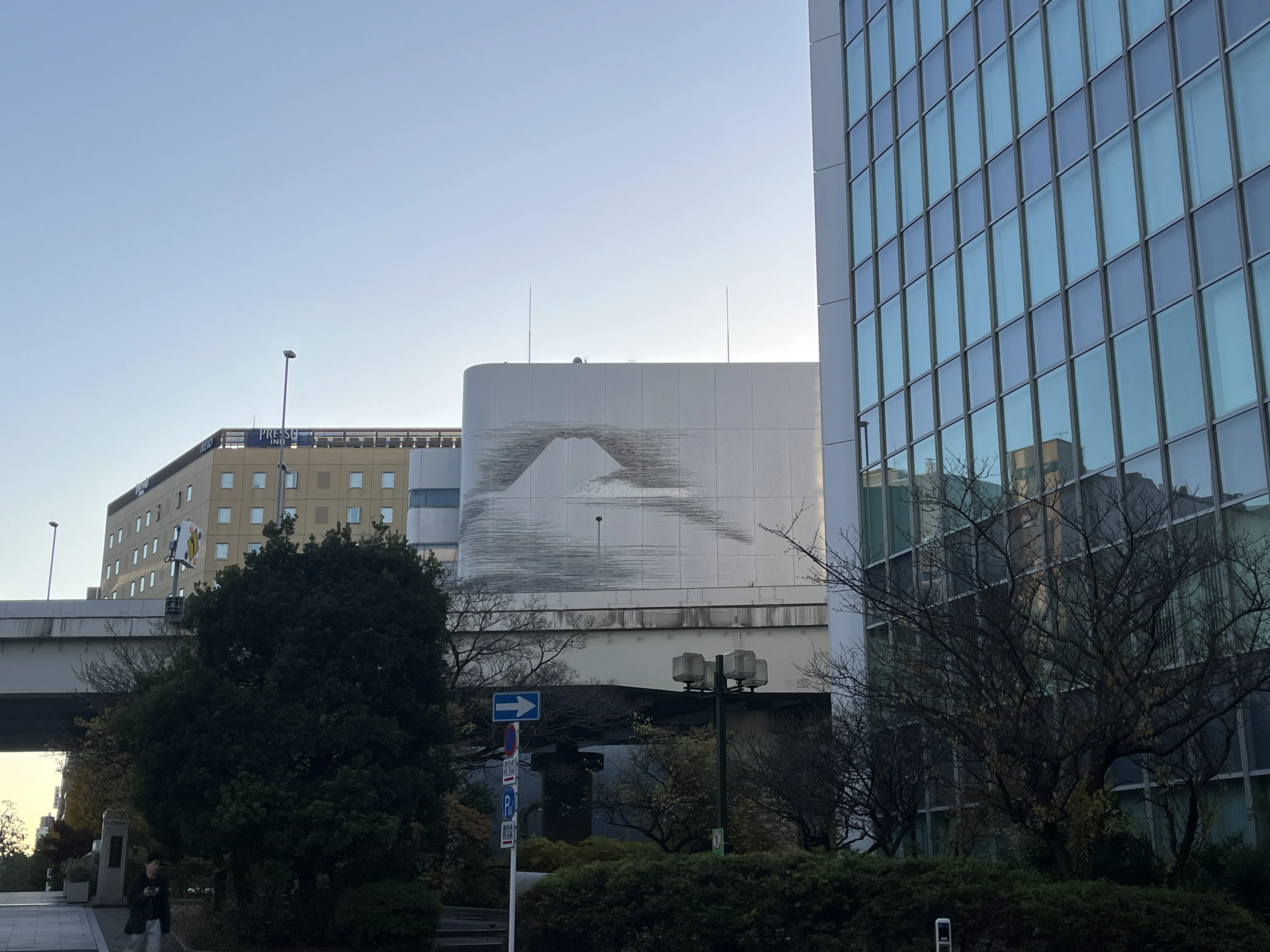
Look for the striking Mount Fuji mural on a nearby building — it’s your landmark for finding Kayababashi Bridge!
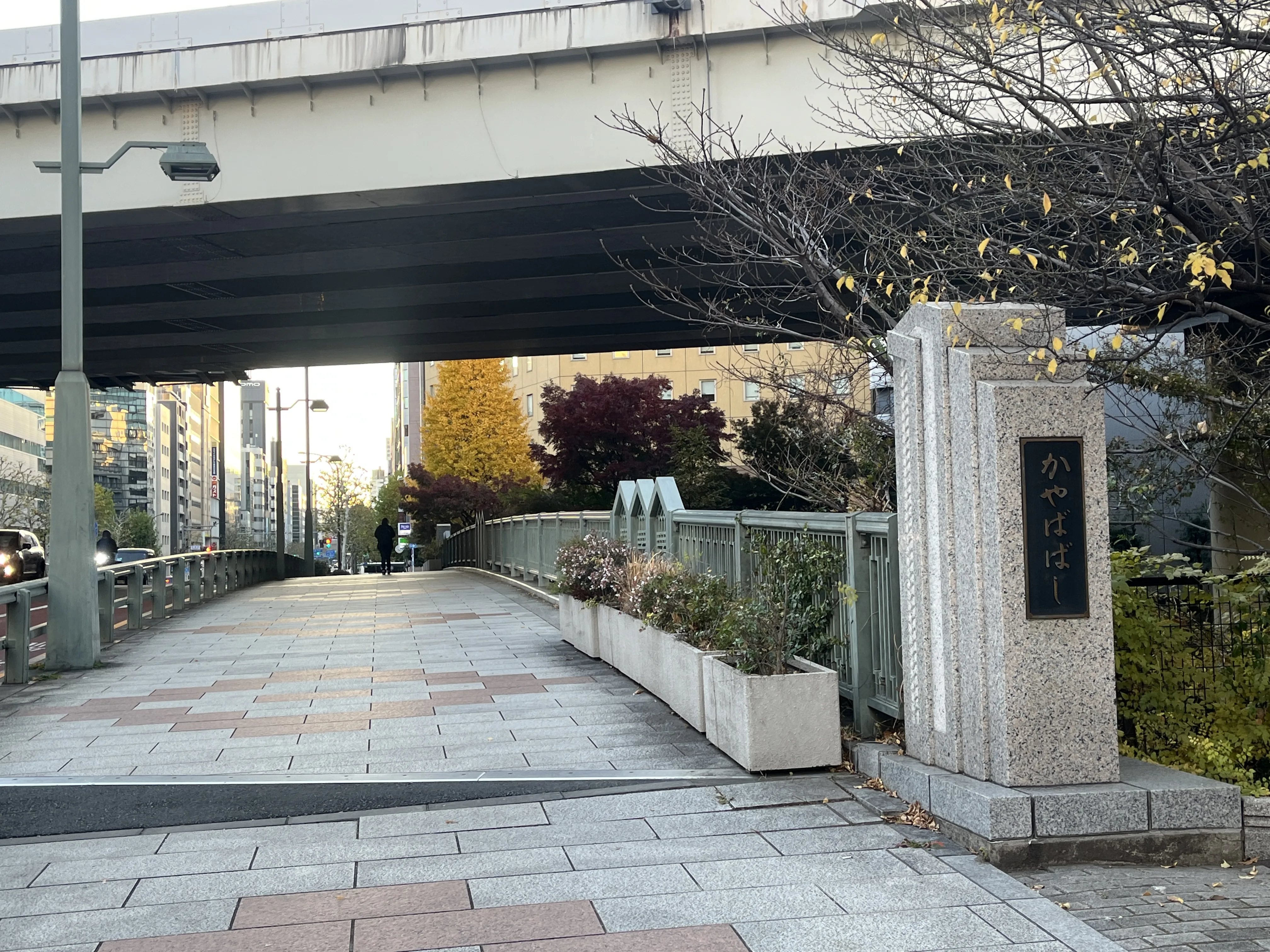
Kayababashi (茅場橋) is a small pedestrian bridge that takes you closer to the waterfront. The evening light here is particularly beautiful.
Stop 9: Nihonbashi Hie Shrine — The Upward-Facing Guardian Dogs
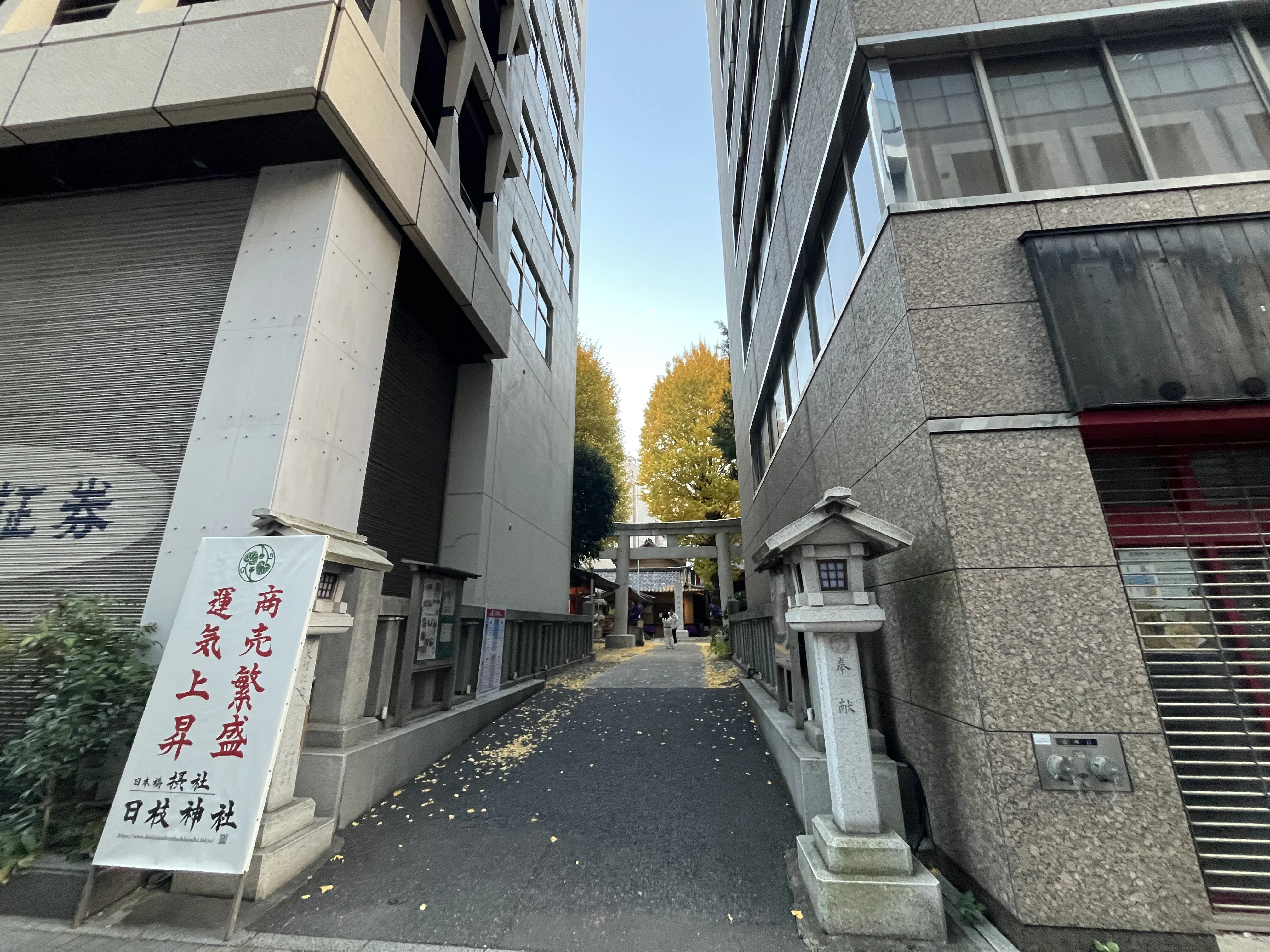
Tucked between modern office buildings, Nihonbashi Hie Shrine (日本橋日枝神社) is known for bringing good fortune and success in business.
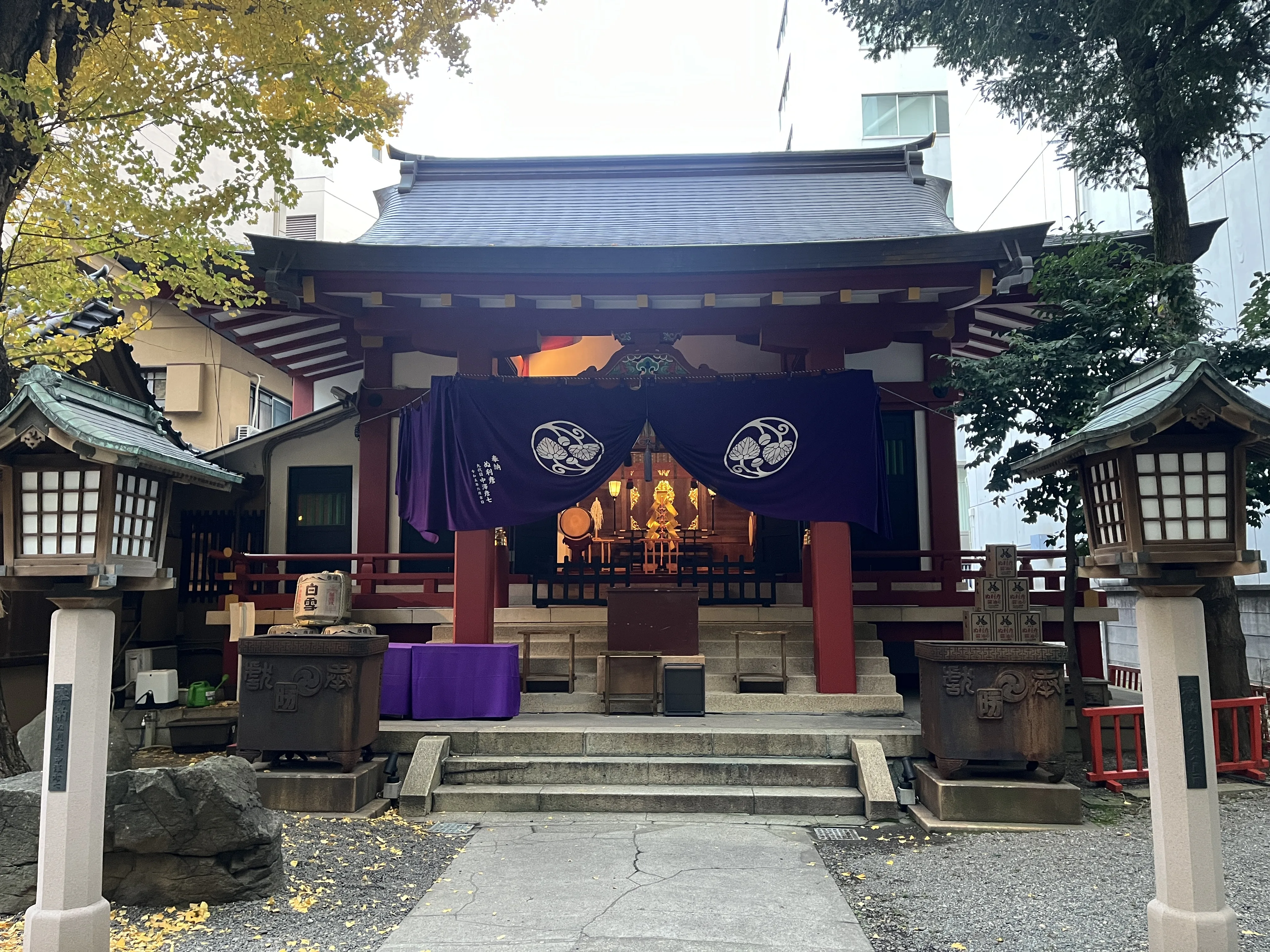
A Unique Feature
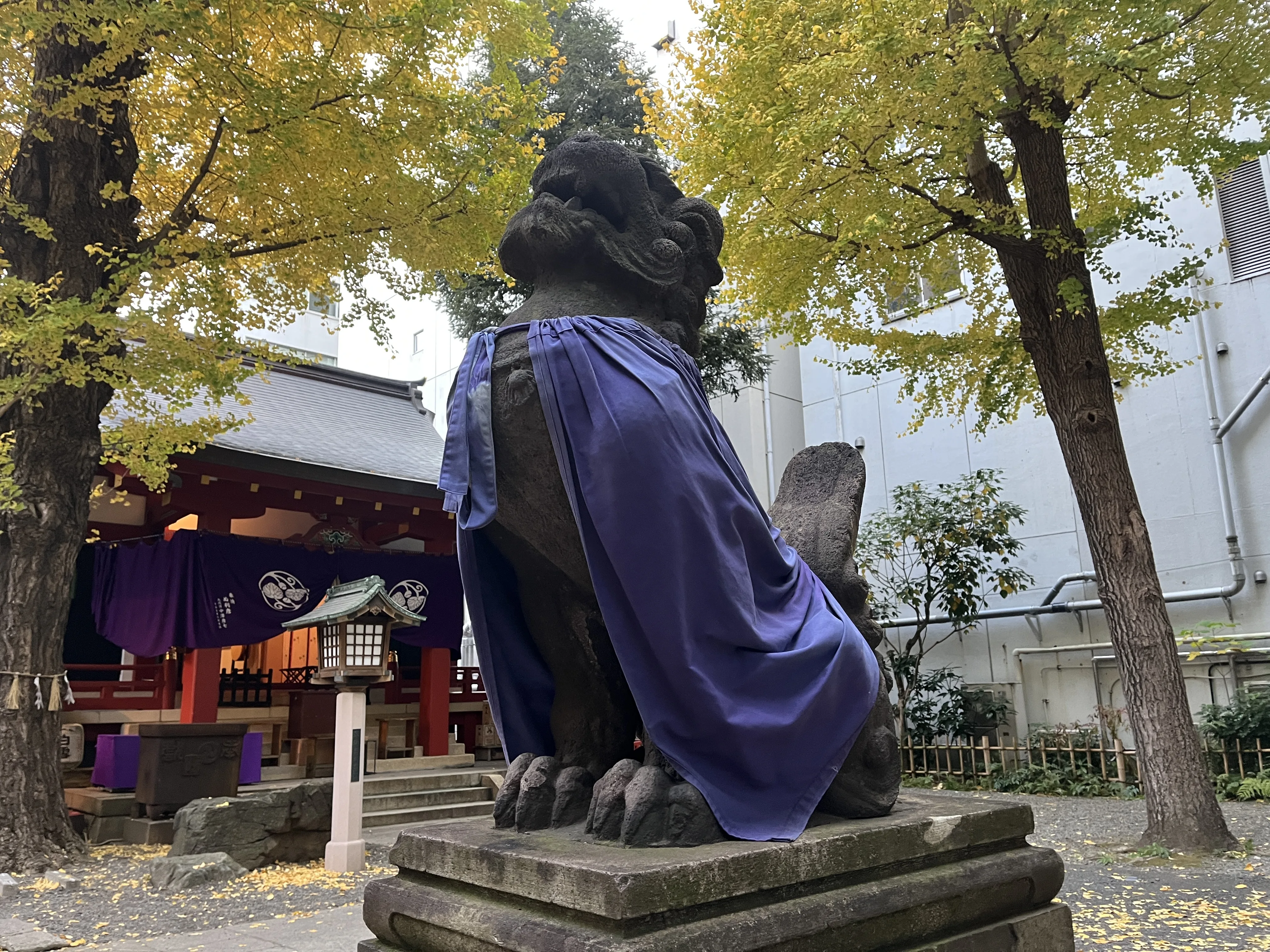
Notice something different about the komainu (guardian dog statues)? Unlike most komainu that face forward, these ones look upward to the sky!
They were positioned this way after the Great Kanto Earthquake of 1923 as a symbol of hope, recovery, and rising fortune. It’s a touching detail that speaks to the resilience of Tokyo’s people.
Stop 10: Eitaibashi Bridge — Where Tokyo Meets the Water
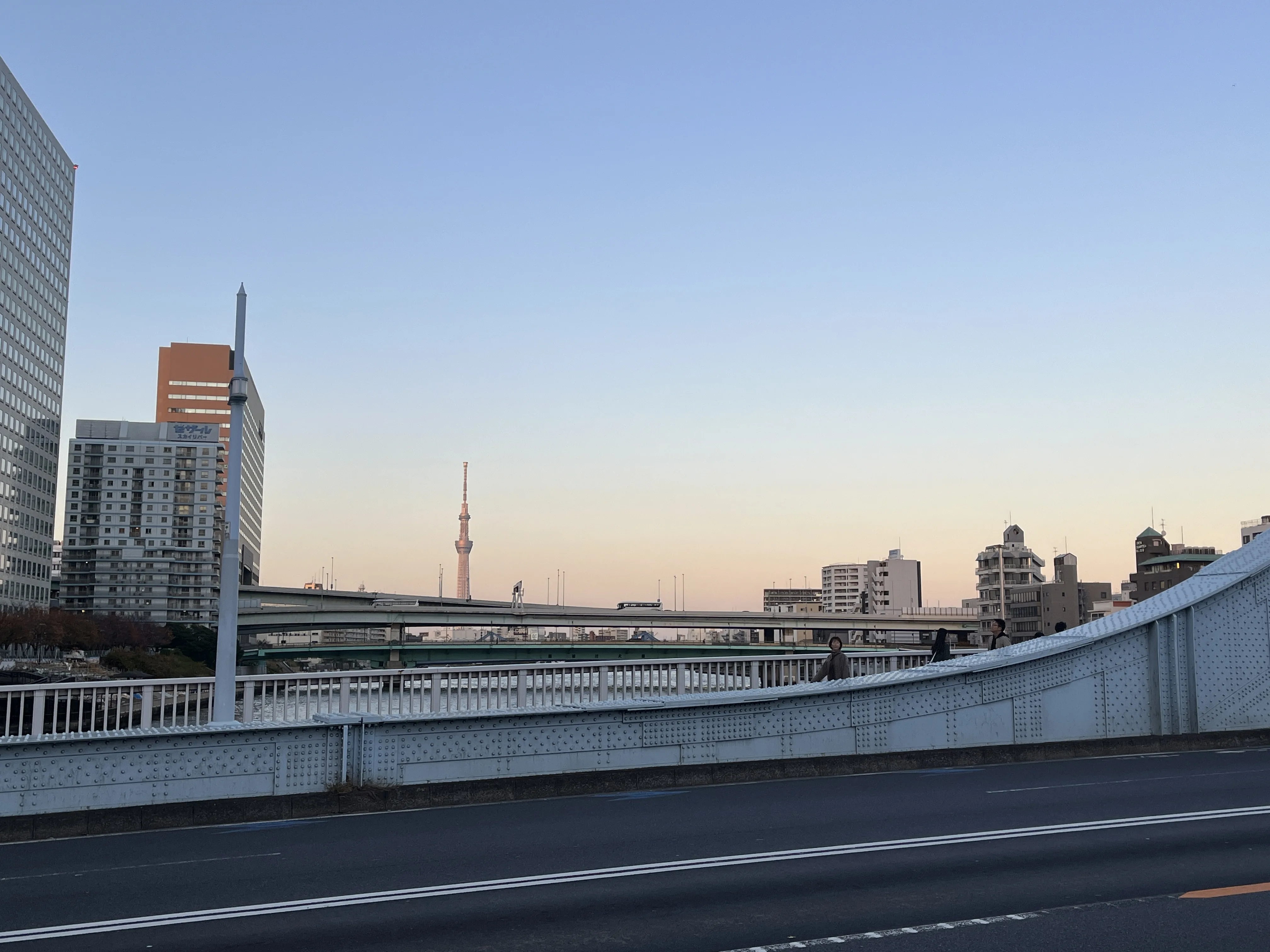
Eitaibashi Bridge (永代橋) offers some of the most spectacular views on this walk. On one side, you can see the Tokyo Skytree rising majestically in the distance.
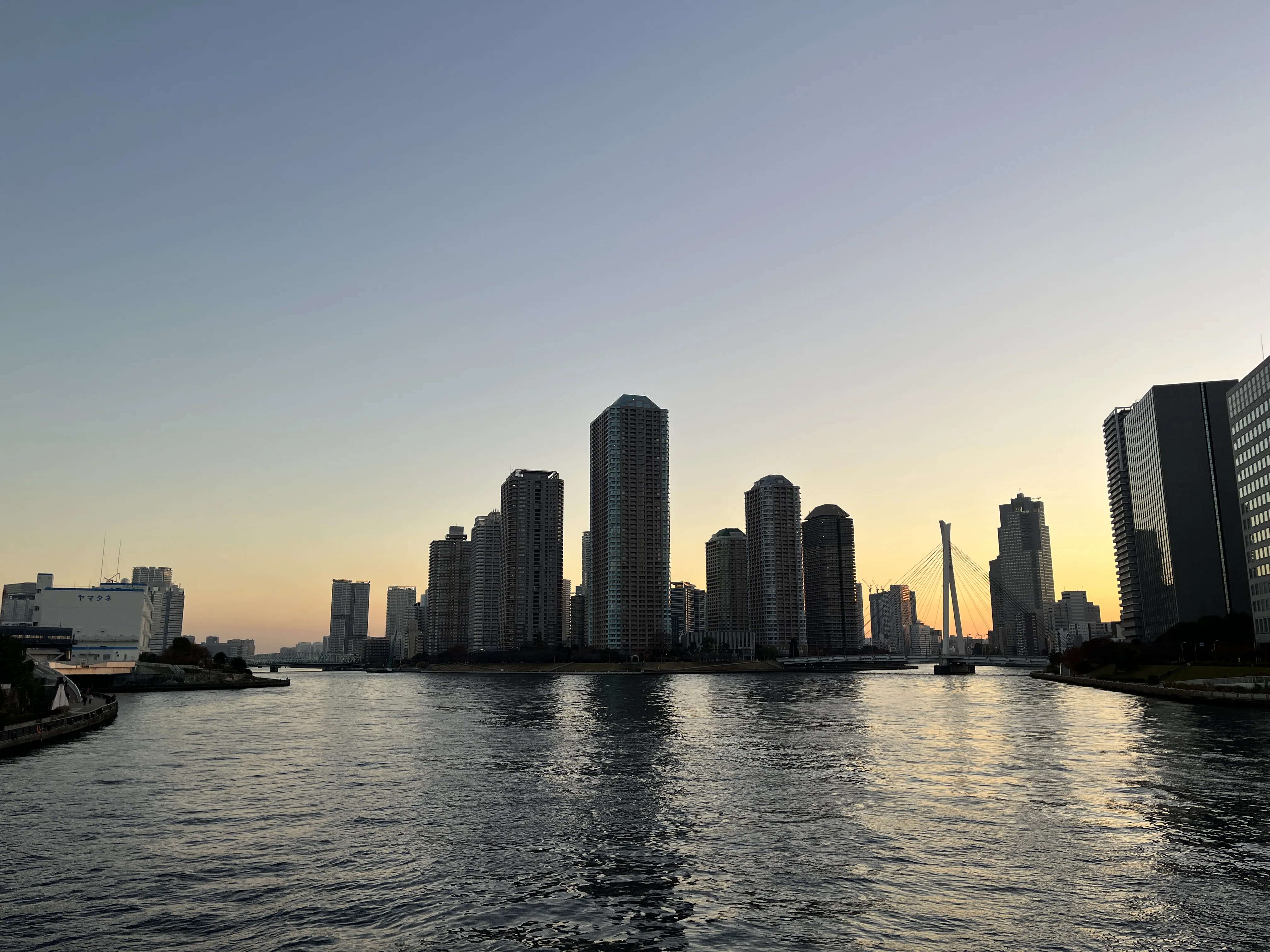
On the other side, the glittering towers of Tsukishima and Harumi — where our cooking studio awaits!
A Chance Encounter
When we were taking these photos, we met a photographer from England who was also capturing this stunning view. He told us he travels the world photographing beautiful places — and this spot made his list.
How wonderful that such a world-class view is just a short walk from our cooking studio!
Stop 11: Etchujima Park — A Peaceful Riverside Escape
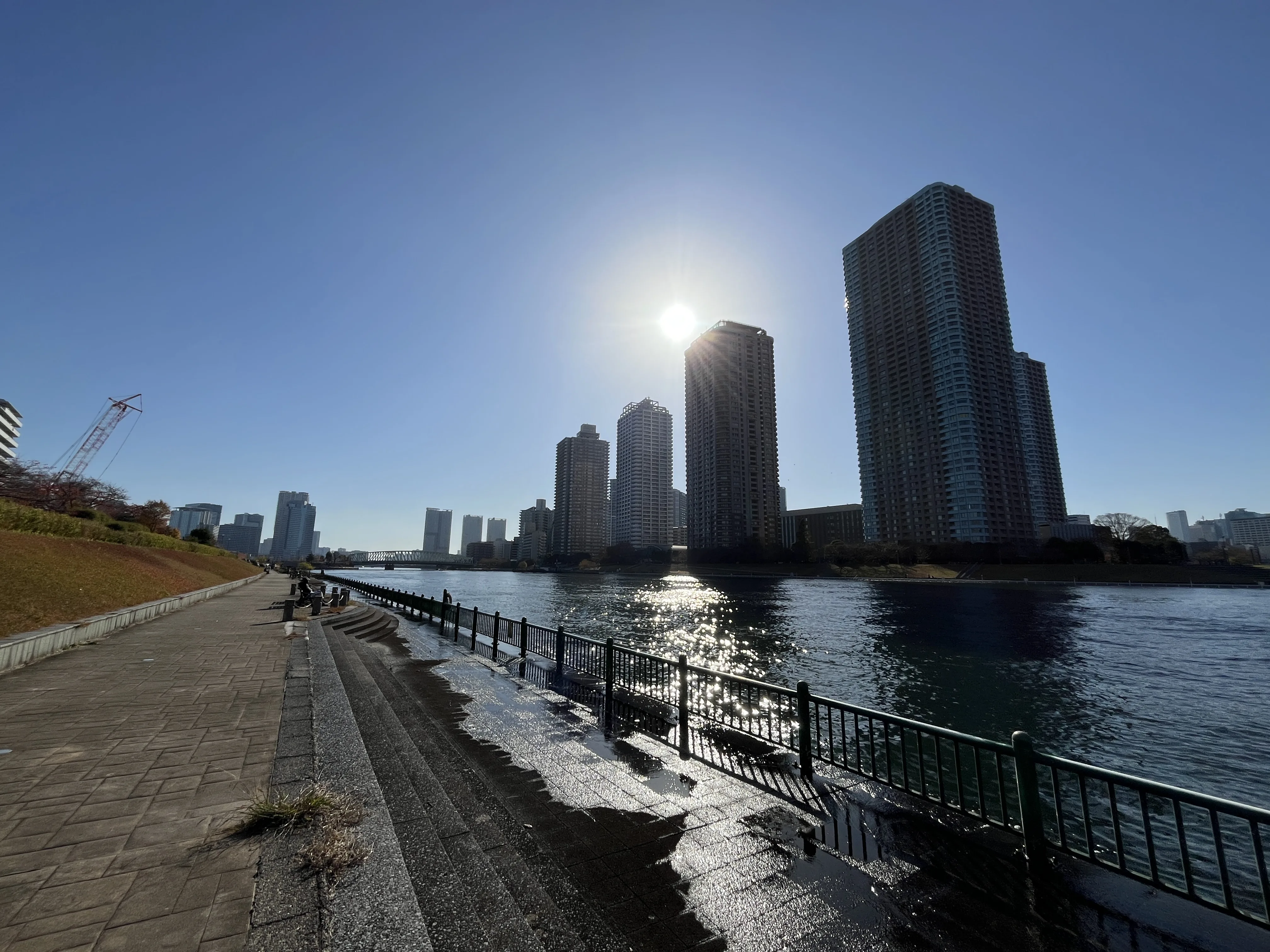
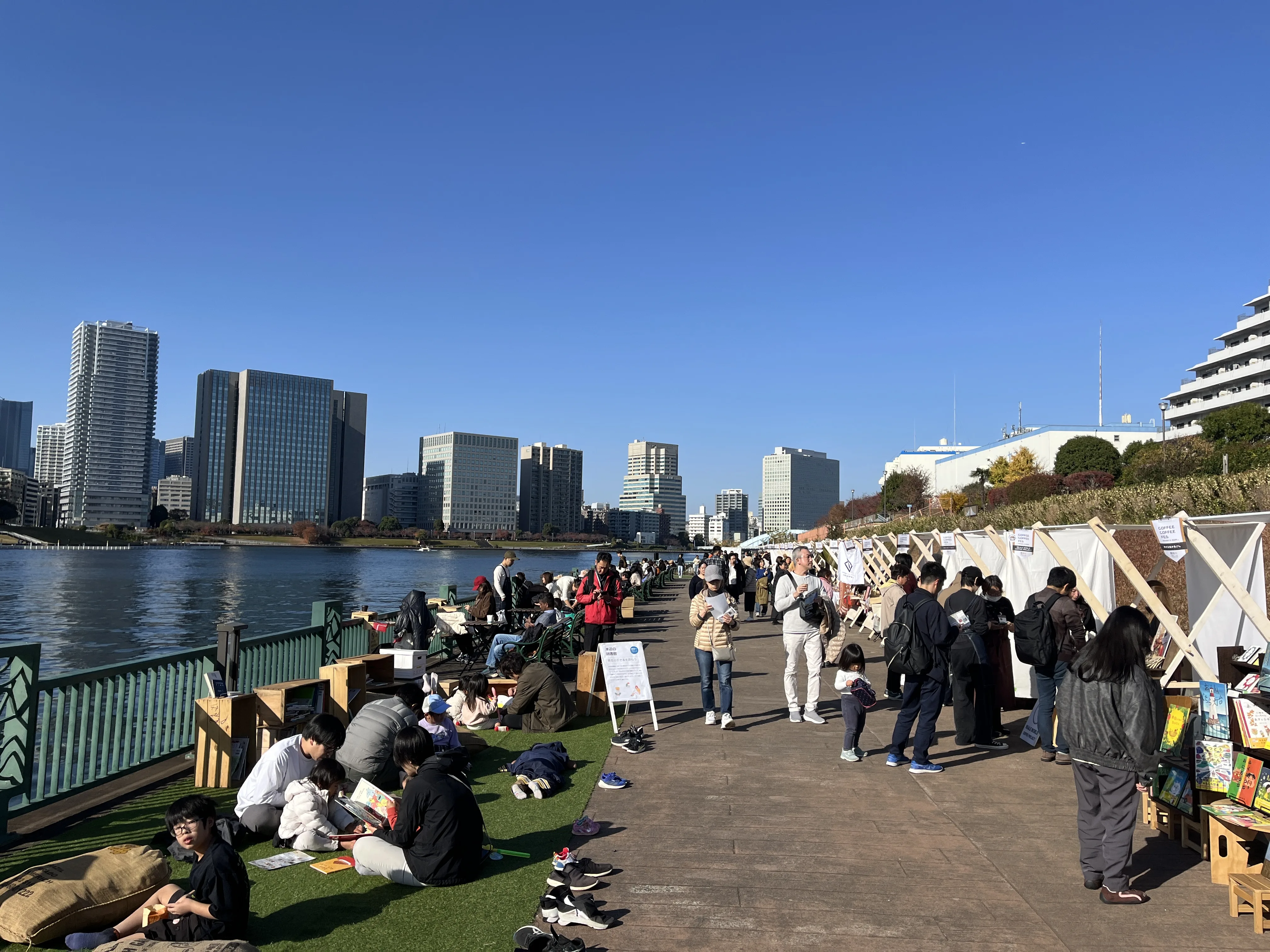
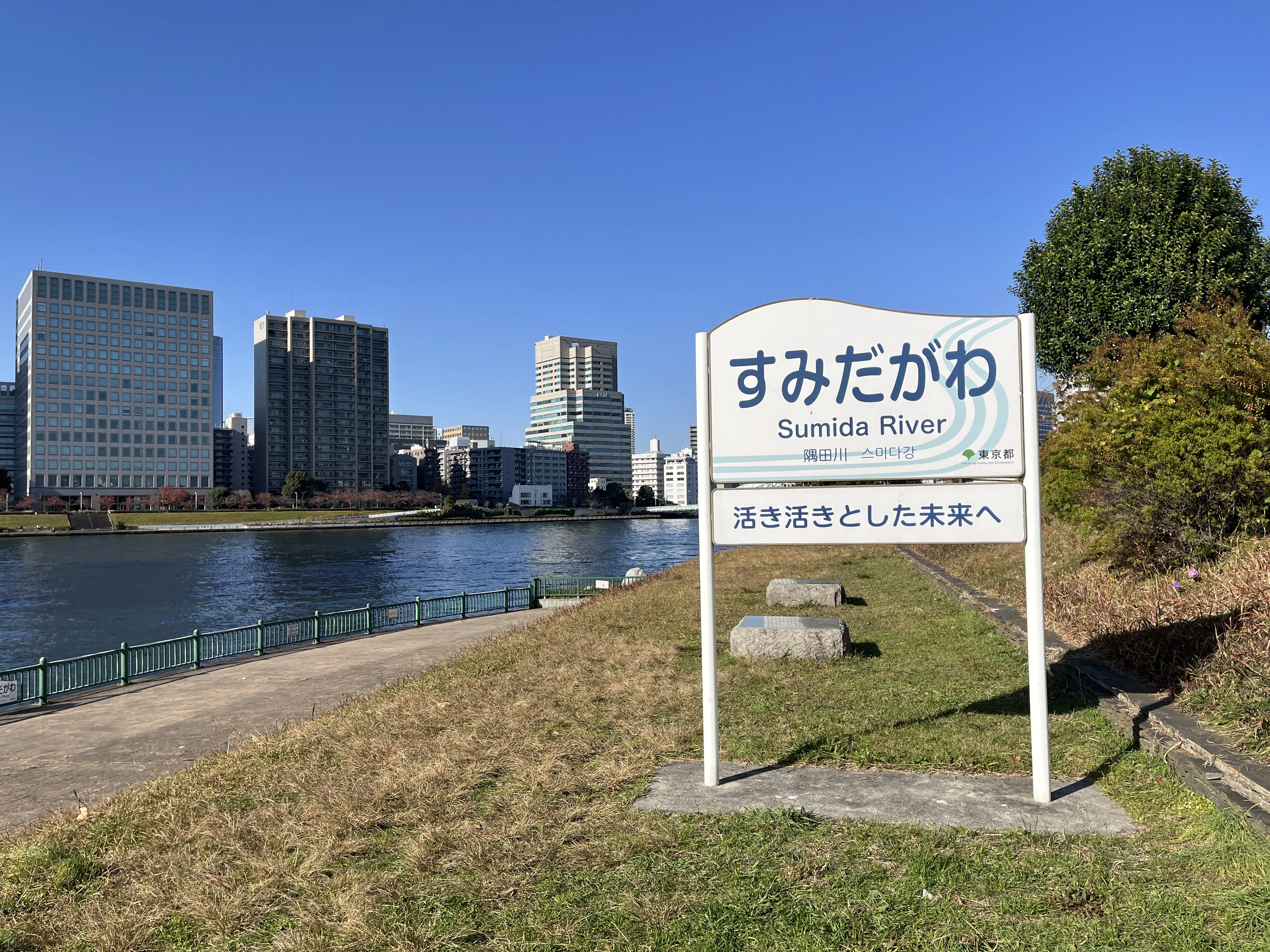
Etchujima Park (越中島公園) stretches along the Sumida River, offering a peaceful promenade with beautiful city views.
The park regularly hosts outdoor events — when we visited, there was a wonderful coffee festival happening! Grab a drink and enjoy the relaxed riverside atmosphere.
Final Stretch: The Whale Mural — You’re Almost There!
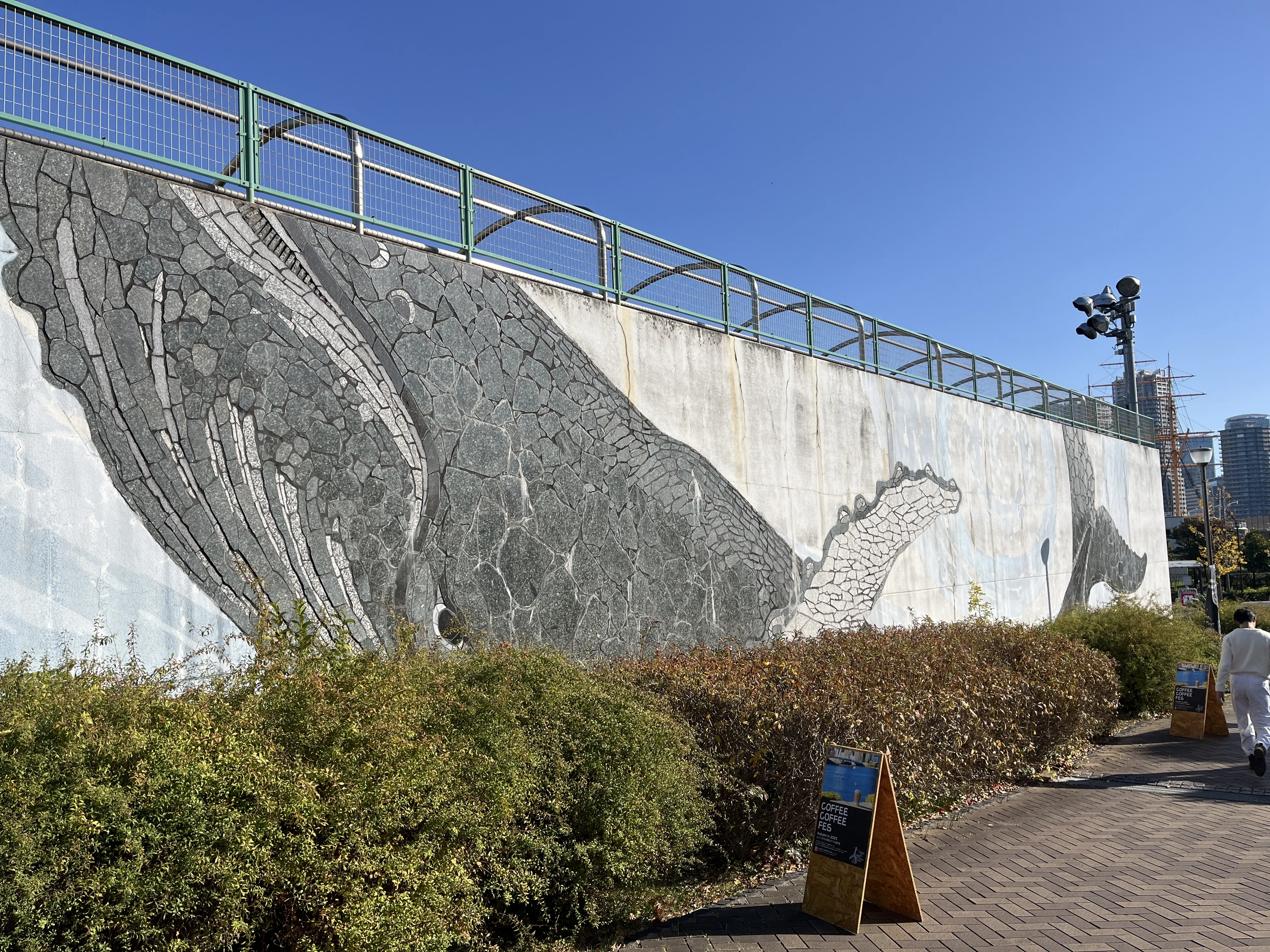
When you spot this impressive whale mural, you know you’re almost at our cooking studio!
Cross Aioibashi Bridge and you’ll find us waiting to teach you the art of authentic ramen making. After your scenic walk, you’ve definitely worked up an appetite!
Quick Reference: Your Walking Route
| Stop | Highlight | Time |
|---|---|---|
| 1 | Ningyocho — Historic “Doll Town” | 5 min |
| 2 | Itakuraya — Famous ningyoyaki | 10 min |
| 3 | Amazake Yokocho — Traditional shopping street | 15-20 min |
| 4 | Karakuri Yagura — Mechanical clock tower | 5 min |
| 5 | Benitomo — Japanese tableware | 10 min |
| 6 | Suitengu Shrine — Rooftop shrine | 10 min |
| 7 | Ichou Inari Shrine — Ginkgo trees | 5 min |
| 8 | Kayababashi Bridge — Fuji mural | 5 min |
| 9 | Nihonbashi Hie Shrine — Upward-facing komainu | 5 min |
| 10 | Eitaibashi Bridge — Skytree views | 5 min |
| 11 | Etchujima Park — Riverside walk | 10 min |
Total: 1 to 1.5 hours
📍 View the full route on Google Maps
Plan Your Perfect Day
Morning class (10:00 AM)?
Start your walk at 8:30 AM and enjoy a leisurely stroll with breakfast snacks from Ningyocho.
Afternoon class (2:00 PM)?
Begin around 12:30 PM and grab lunch along the way.
Either way, you’ll arrive at our cooking studio with wonderful memories, beautiful photos, and a healthy appetite ready to learn the art of ramen making!
More Walking Routes to Explore
Love scenic walks through Tokyo? Check out our other walking guides:
Tsukiji to Tsukishima Walking Guide — A 45-minute stroll from Tsukiji Fish Market through temples, knife shops, and hidden neighborhoods. Perfect if you want to explore the famous Tsukiji area before your class!
Ginza to Ramen Cooking Tokyo — Start in glamorous Ginza and discover free museums, legendary bakeries, and stunning bridges on this 90-minute route.
Ready for Your Ramen Adventure?
You’ve explored historic Tokyo, tasted traditional sweets, visited beautiful shrines, and enjoyed stunning waterfront views. Now it’s time for the main event!
Join us at Ramen Cooking Tokyo and learn to make authentic ramen from scratch — the perfect ending to your Tokyo adventure.
We can’t wait to welcome you to our kitchen! 🍜