In this guide
You’ve wandered the Tsukiji Outer Market, eaten more than you meant to, and now you’re standing on the corner wondering: what’s next? Good news — you’re in one of the most walkable corners of central Tokyo. From here you can be at a quiet historic temple in a few minutes, crossing a 1940s bridge over the Sumida River with skyline views in ten, or browsing Ginza’s boulevards in about fifteen. We run a small ramen and sushi cooking class just across the river in Tsukishima, so this is the route we walk all the time — and below is exactly how we’d spend the hours after Tsukiji, on foot, in one connected line that ends in Ginza.
What to Do Near and After Tsukiji Fish Market
First, a quick fact that trips a lot of visitors up: the famous inner wholesale market and its tuna auction left Tsukiji in October 2018 and moved to Toyosu Market, on a man-made island about 2 km east in Tokyo Bay. What remains at Tsukiji — and what almost everyone now means by “Tsukiji Market” — is the Tsukiji Outer Market (Tsukiji Jogai Shijo), a lively public food street that never closed. So once you’ve had your fill there, the question becomes: where to next? The walkable answer runs from the outer market, across the river to Tsukishima, and on into Ginza.
Things to Do After Visiting Tsukiji Fish Market
The single best move after the outer market is to keep walking — almost everything worth seeing nearby is within easy reach on foot, and they line up neatly into one route.
- Namiyoke Inari Shrine (roughly a 3-minute walk) — a small shrine at the edge of the outer market, historically the “wave-calming” guardian of the area. A quiet first stop right where the food stalls thin out.
- Tsukiji Hongwanji (roughly a 3-5 minute walk) — an extraordinary Buddhist temple with stone, Indian-inspired architecture unlike almost anything else in Tokyo. It’s the most striking landmark in the immediate area and well worth the short detour. (We cover Tsukiji Hongwanji in more detail further down this guide.)
- Kachidoki Bridge and the Sumida River (roughly a 5-10 minute walk to the bridge) — the gateway across to Tsukishima, with open river and skyline views.
- Higashi-Ginza / Kabukiza (roughly a 5-7 minute walk) — Tokyo’s principal kabuki theatre sits just on the Ginza side, an easy hop if you’d rather head straight for Ginza.
- Hamarikyu Gardens (roughly a 10-15 minute walk) — a former feudal-era landscape garden by the bay, if you want green space and water over city streets.
From here, our walking route continues across Kachidoki Bridge toward Tsukishima — keep reading for the leg-by-leg version.
What to Do Within a 15-Minute Walk
If you only have an hour or so and want to stay close, here’s what’s realistically reachable on foot from the outer market (treat all times as approximate — they vary by pace and exactly where you start):
- Tsukiji Hongwanji — about 3-5 minutes. The architectural showpiece of the neighborhood.
- Kabukiza / Higashi-Ginza — about 5-7 minutes. Theatre, plus the start of Ginza proper.
- Hamarikyu Gardens — about 10-15 minutes. A bayside garden retreat.
- Tsukishima — about 15-20 minutes across Kachidoki Bridge. A low-rise riverside neighborhood; locally, it’s known for monjayaki and its retro “Monja Street.”
- Ginza 4-chome — about 10-15 minutes. Department stores, galleries, and the shopping heart of the district.
That’s the whole appeal of starting at Tsukiji: you can stitch several very different Tokyo experiences — a temple, a river crossing, an old neighborhood, and a famous shopping district — into a single walk without ever needing a train.
How to Walk to Tsukishima and on to Ginza
This is the route we know best, because our cooking studio is on the Tsukishima side. It’s the same walk this guide is built around — here’s the short version, and the rest of the article covers each stop in depth.
- Leave the outer market and head toward the Sumida River.
- Cross Kachidoki Bridge (about a 5-10 minute walk to reach it). It’s a walkable bridge completed in 1940 — historically a bascule (draw) bridge, though its lifting mechanism hasn’t operated since around 1970. The crossing gives you wide river and skyline views and is, honestly, one of the nicest five minutes of the whole walk.
- Arrive in Tsukishima / Kachidoki, roughly 15-20 minutes on foot from Tsukiji. This is the riverside neighborhood known for monjayaki — a Tokyo griddle dish — along its retro Monja Street.
- Loop back toward Ginza. Tsukiji to Ginza is only about a 10-15 minute walk, passing Higashi-Ginza and Kabukiza on the way in. A relaxed full loop via Kachidoki, without stopping, runs roughly 2.5 km and around 40 minutes — but with stops, it’s an easy half-day.
From Kachidoki Bridge onward, this guide walks you through Tsukiji Hongwanji, the river crossing, and the run into Ginza step by step.
What to Eat at the Outer Market
The Outer Market is, first and foremost, a place to eat — and because the fish is now delivered in from Toyosu’s wholesale market, it remains one of the best spots in Tokyo for fresh seafood.
- Sushi and seafood rice bowls are the signature draw. Counters serving sushi breakfast and lunch are a big part of why people come early.
- Fresh and processed seafood — grilled skewers, tamagoyaki (sweet rolled omelet), dried goods, and snacks you can eat as you walk.
- Produce, tea, and food goods, plus kitchenware and knife shops — Japanese kitchen knives are a popular, genuinely useful souvenir.
A few practical notes, verified against the market’s official information:
- Go in the morning. Shop hours vary, but the market generally runs from around 5 AM to early afternoon (roughly 2 PM), and it’s busiest and best mid-morning.
- Mind the closing days. The Outer Market is generally closed on Sundays and around the New Year period, with some Wednesdays closed following the Tokyo Central Wholesale Market calendar (it is not closed every Wednesday). Check the official calendar at tsukiji.or.jp before you go.
- Getting there: the nearest stations are Tsukiji Station (Tokyo Metro Hibiya Line) and Tsukijishijo Station (Toei Oedo Line). Both still operate — only the wholesale market relocated.
After making ramen and sushi at Ramen Cooking Tokyo, your stomach is happy and full. But the adventure doesn’t have to end there! In fact, some of the best memories are made when you step outside and explore the neighborhood at your own pace.
Let us take you on a beautiful 90-minute walk from Tsukishima—a charming old-town neighborhood known for its monjayaki restaurants and nostalgic atmosphere—across famous bridges to Ginza, where traditional Japanese culture meets gorgeous modern architecture. This route offers a fascinating contrast: you’ll start in the laid-back, local side of Tokyo and gradually transition into one of the most glamorous shopping districts in the world.
The best part? You don’t need to take a train. Just walk, discover, and enjoy the journey!
Grab your camera and let’s go!
Starting Point: Stepping Out from the Studio
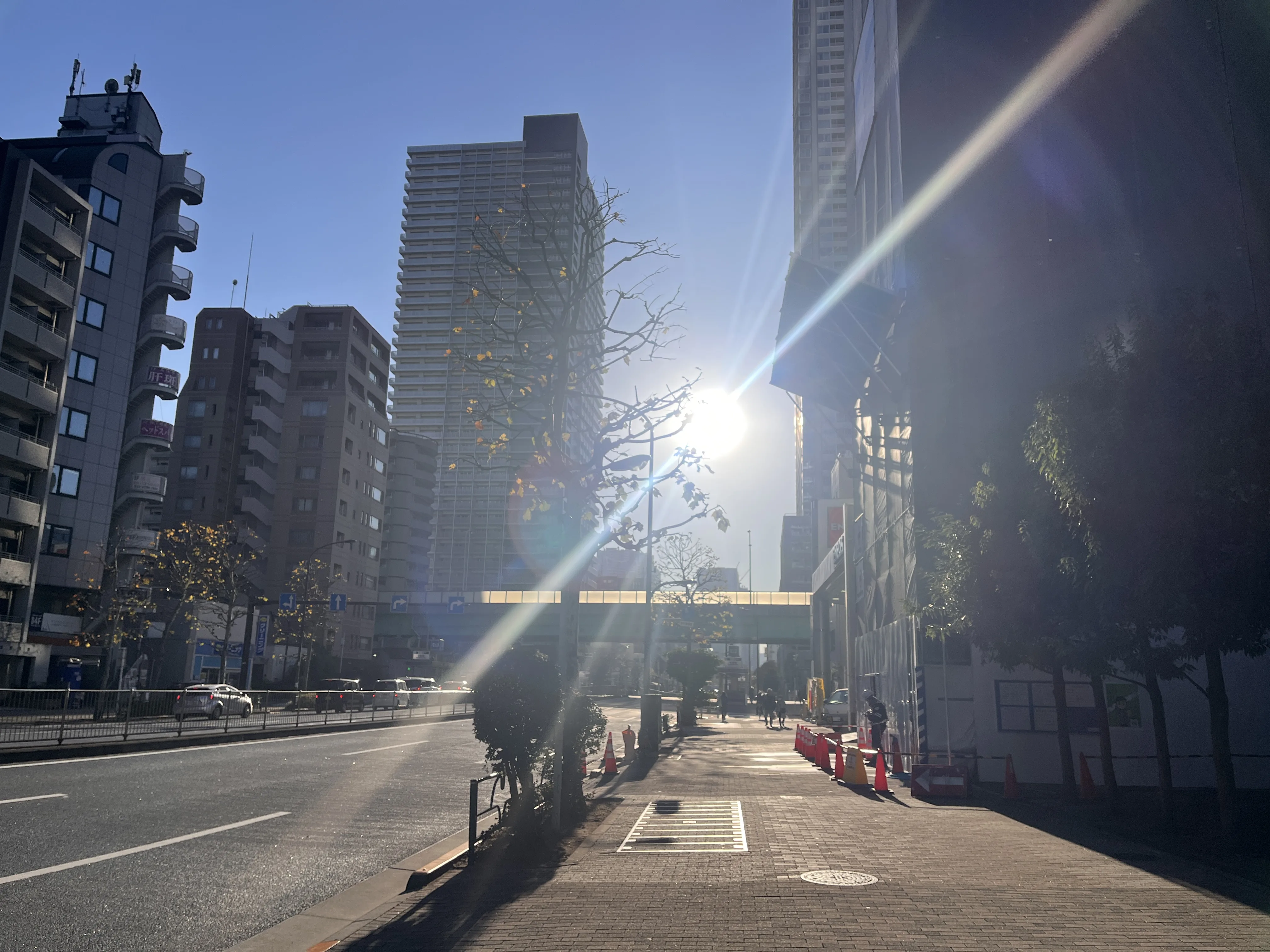
First, step outside and head to the main street. Tsukishima has a wonderfully relaxed vibe—you’ll see local residents going about their day, small family-run shops, and the occasional cat lounging in the afternoon sun.
On a winter afternoon, you’ll feel the warm western sun shining straight ahead. The golden hour light in Tokyo is truly magical, casting long shadows and making everything glow with a warm, amber tone. It’s the perfect weather for a leisurely stroll, and the gentle warmth on your face feels especially nice after spending time in our cozy cooking studio.
This is the ideal time to start walking!
First Stop: Fuji Mart — A Peek into Daily Japanese Life
Want a real Tokyo moment? Step into a local supermarket and see what Japanese homes actually eat.
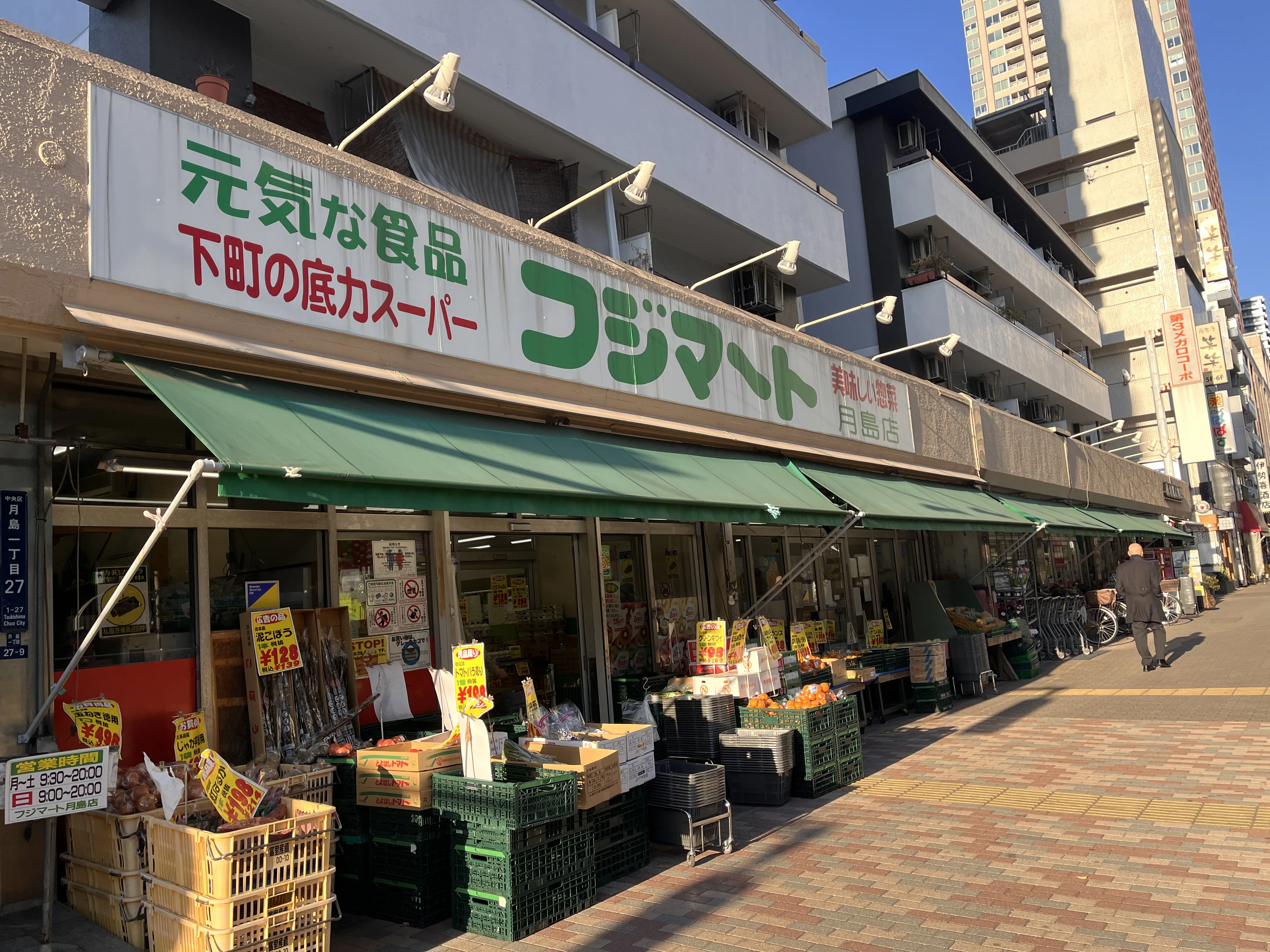
Here’s a travel tip we always recommend: whenever you visit a new country, take some time to explore local supermarkets and convenience stores. There’s something magical about seeing what everyday ingredients look like in different countries. It’s like getting a peek into the daily lives of local people!
Fuji Mart is a small, neighborhood supermarket where Tsukishima residents shop daily. Unlike the tourist-oriented shops in Ginza or Shibuya, this is where real Tokyo families buy their groceries. You won’t find inflated tourist prices here—just authentic, everyday Japan.
What to Look For
Take your time browsing the aisles. Here are some things worth checking out:
- The “Umami Pantry” section: Look for dashi (soup stock), miso paste, soy sauce, and Ajinomoto—a popular umami seasoning that’s a staple in Japanese home cooking. You might recognize it from our cooking class!
- Ready-made bento and deli items: Japanese supermarket bento boxes are beautifully arranged and surprisingly affordable. The quality is nothing like what you’d find at a convenience store—this is home-style cooking.
- Seasonal limited-edition snacks: Japanese brands love seasonal flavors. The packaging is often so cute that these make perfect small souvenirs!
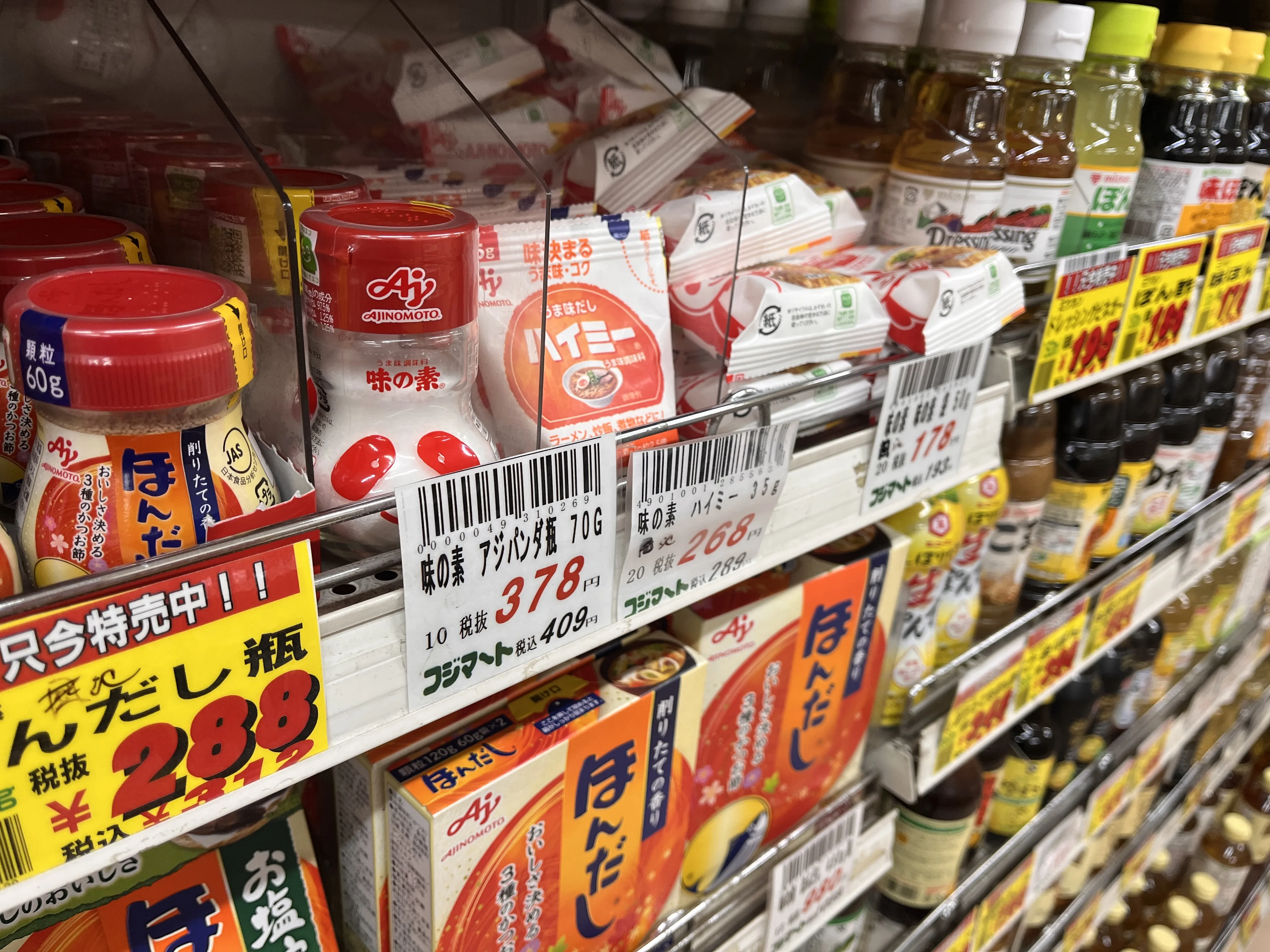
We spotted Ajinomoto on the shelves—it’s these small discoveries that make exploring local shops so fun. Try taking a close-up photo of something mysterious-looking on the shelf. Foreign visitors often love the unusual flavors and ingredients they find here!
60-Second Challenge: Pick one mystery snack you’ve never seen before. You might discover your new favorite!
Fuji Mart Tsukishima
- Payment: Credit cards, IC cards, and QUICPay accepted
- Check the official website for current hours
Kachidoki Bridge: Walking Through Tokyo’s Engineering History
Crossing Kachidoki Bridge feels like walking through Tokyo’s engineering history—when the bridge literally opened for ships.
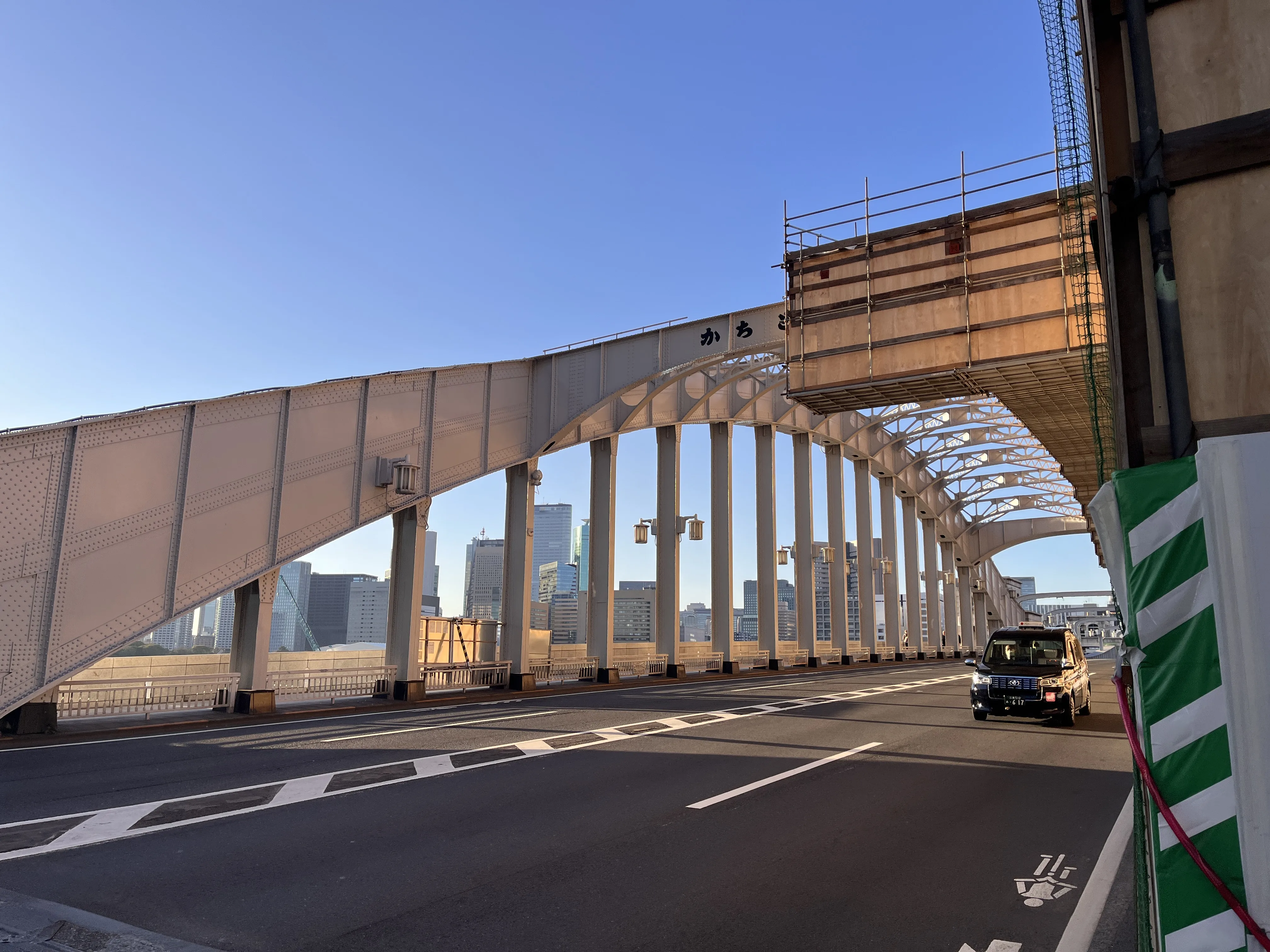
Did you know the Sumida River—the same river that flows past Tokyo Skytree—has over 20 bridges crossing it? Each bridge has its own unique history and character, and Kachidoki Bridge is one of the most special.
A Bridge Built for a World’s Fair
Built in 1940, Kachidoki Bridge was once the largest bascule bridge (drawbridge) in East Asia! But here’s the fascinating part: it was designed as a grand gateway for the 1940 Tokyo World’s Fair, showcasing Japan’s cutting-edge engineering. Although the fair was canceled due to World War II, the bridge remained as a testament to that ambitious vision.
Imagine this: back in the day, when large cargo ships needed to pass through, the entire center section of the bridge would rise up, stopping all traffic and pedestrians. People would gather just to watch the impressive mechanical operation.
A Bridge Frozen in Time
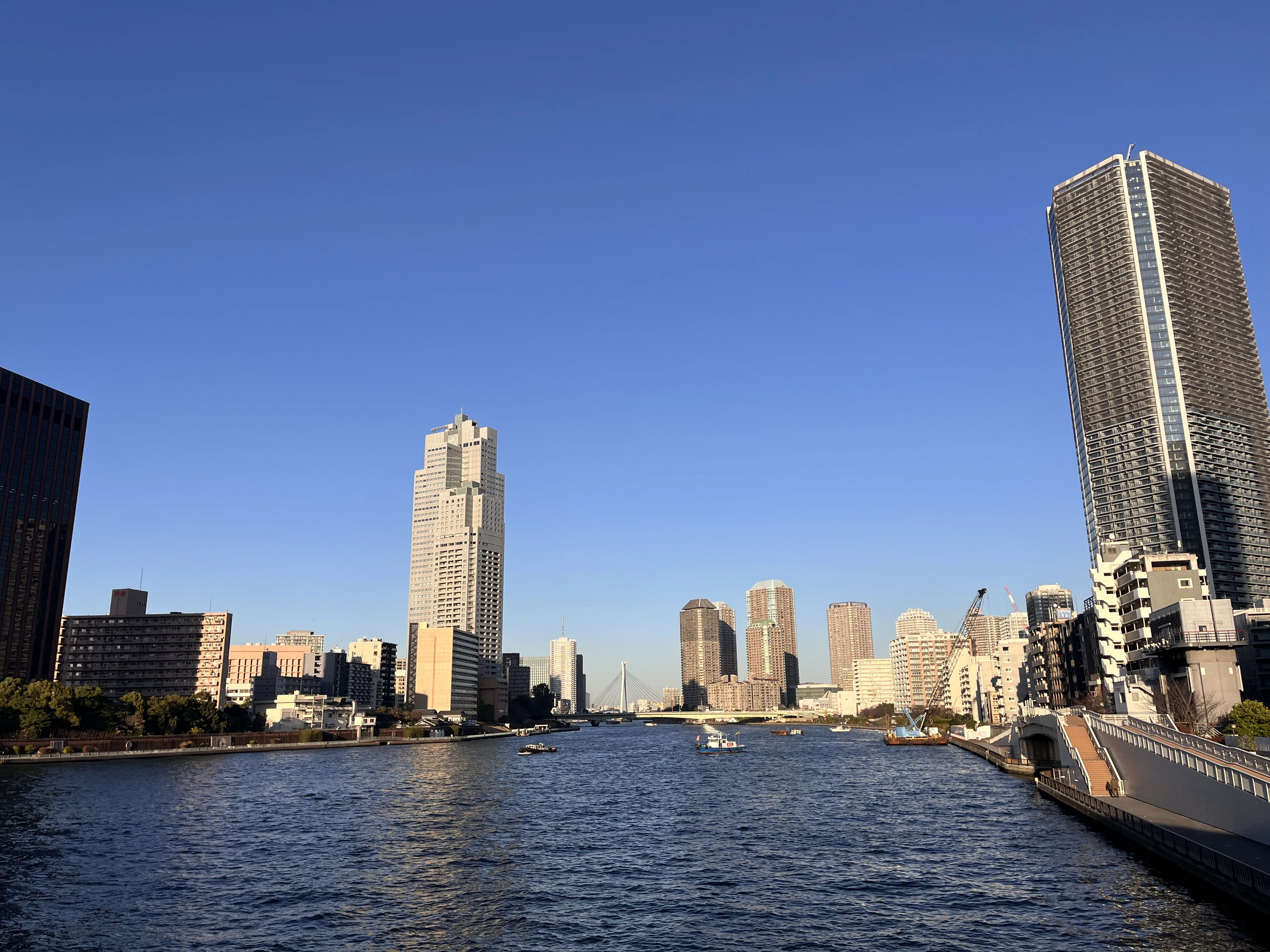
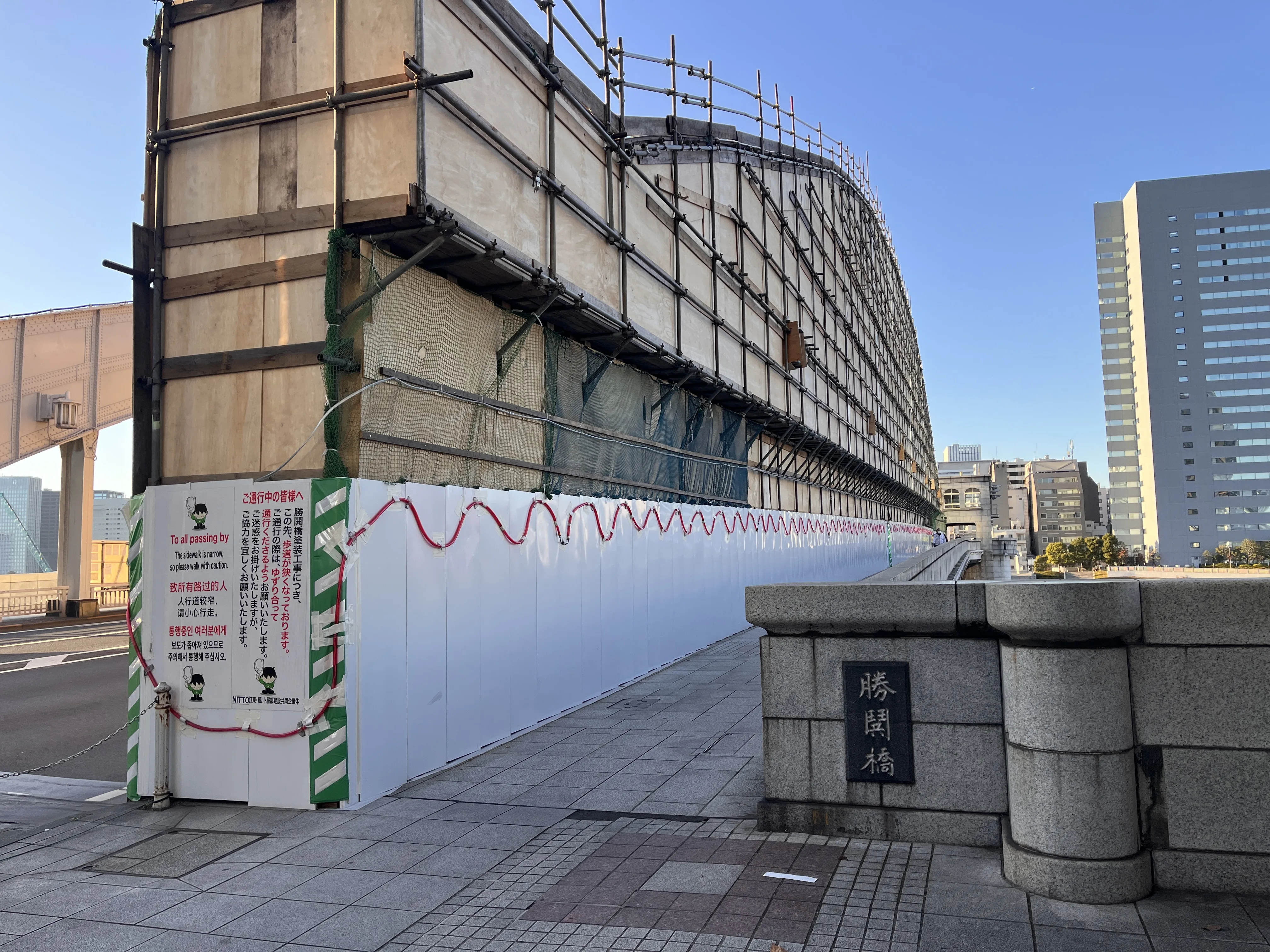
Unfortunately, the bridge was under construction when we visited, but the view from the bridge was still absolutely breathtaking! You can see the Tokyo skyline stretching in every direction—modern high-rises standing alongside traditional neighborhoods, with the occasional boat gliding along the water below.
The bridge stopped opening on November 29, 1970, due to heavy traffic and fewer large ships needing passage. Now it’s affectionately known as “the bridge that no longer opens”—but knowing its history makes crossing it feel like stepping back in time.
Want to Go Deeper?
Near the bridge, there’s the Kachidoki Bridge Museum where you can learn about the bridge’s history. Even more exciting: they offer reservation-only tours inside the bridge’s mechanical room, where you can see the massive gears that once lifted the bridge! Check the Tokyo Metropolitan Government website for tour availability.
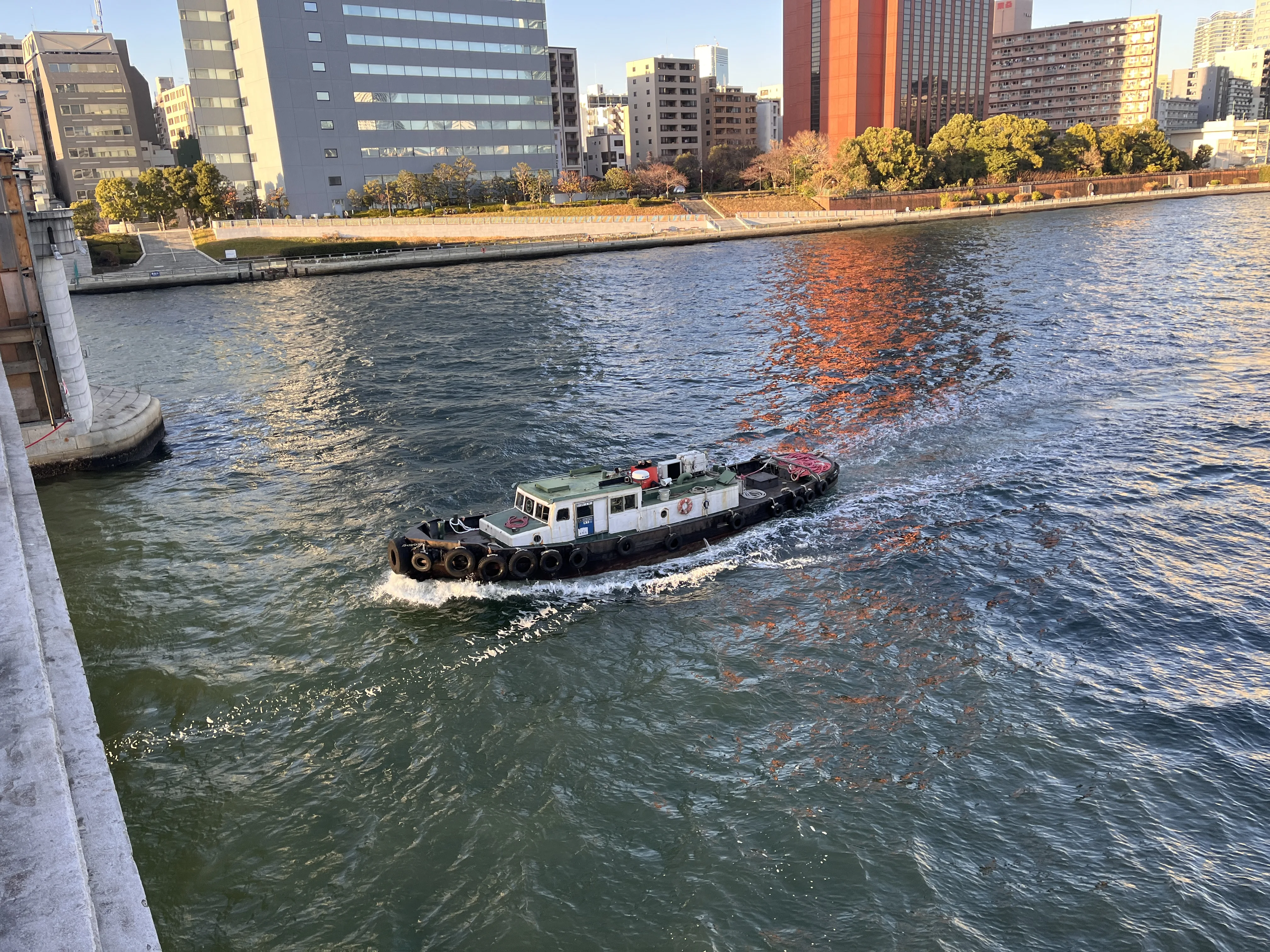
While we were standing on the bridge, a boat passed underneath. The rumbling sound of the engine echoing beneath us was surprisingly powerful and a bit thrilling! It’s moments like these that remind you you’re in a living, breathing city with so much happening all around you.
60-Second Challenge: If a boat passes by, take a 10-second video. The sound is amazing!
A Surprise on the Other Side: The Tai (Sea Bream) Building
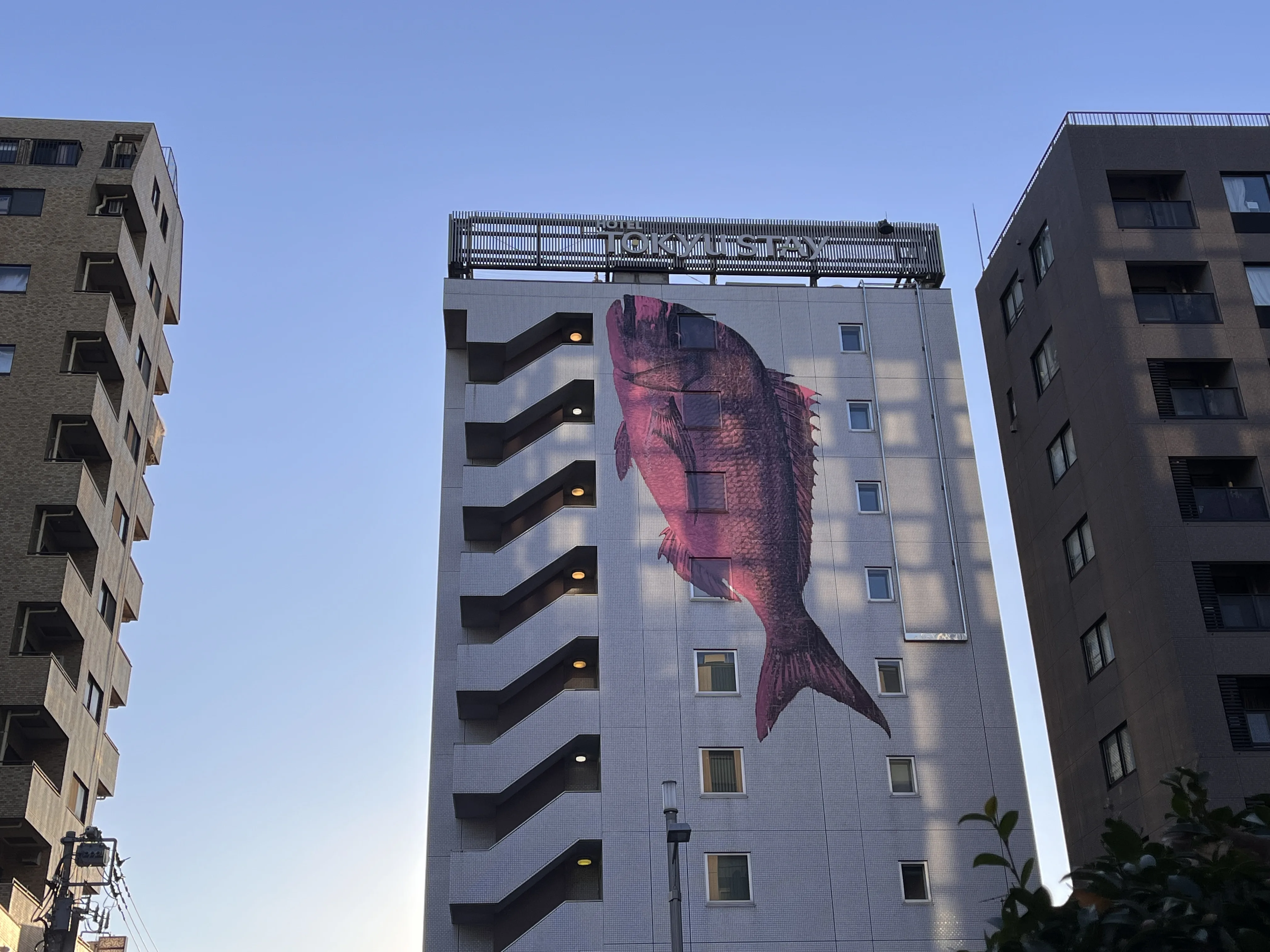
Just after crossing the bridge, you’ll notice something unexpected: a white building with a beautiful red sea bream (tai) painted on its side. It’s quite striking!
In Japan, tai (sea bream) is considered a lucky fish and is often served at celebrations like weddings and New Year’s. The Japanese word for celebratory is “medetai,” which sounds like “me-de-tai”—see the connection? This play on words makes tai one of the most auspicious foods in Japanese culture.
Fun fact: Sea bream are naturally red because they eat shrimp and crabs, which contain red pigments called astaxanthin. The same reason flamingos are pink! The vibrant red really pops against the white building, making it a perfect, unexpected photo spot.
Tsukiji Hongwanji: A Temple That Feels Like a Silk Road Museum
It’s a temple that feels like a Silk Road museum—stained glass, mysterious animal sculptures, and a totally unique silhouette.
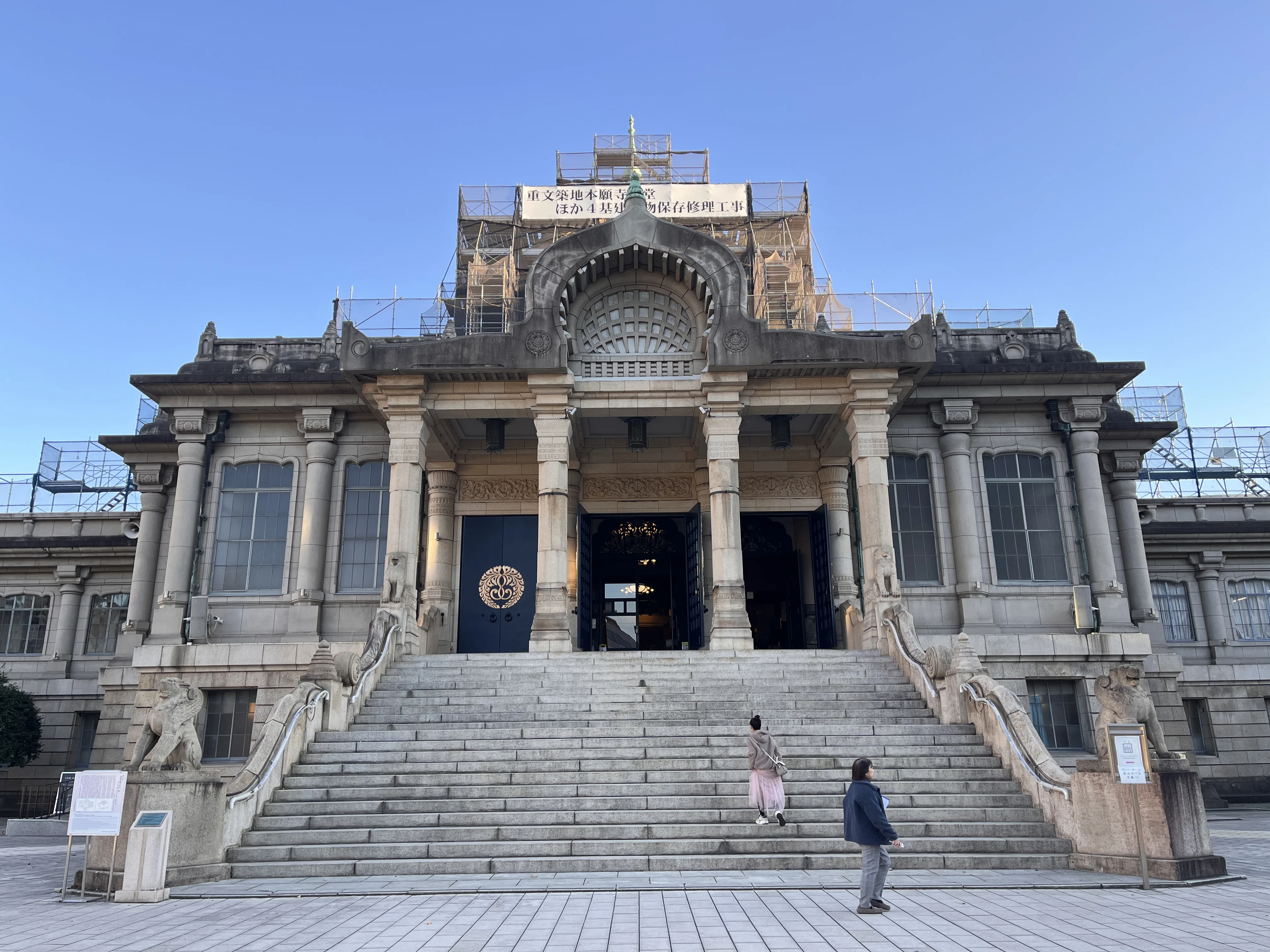
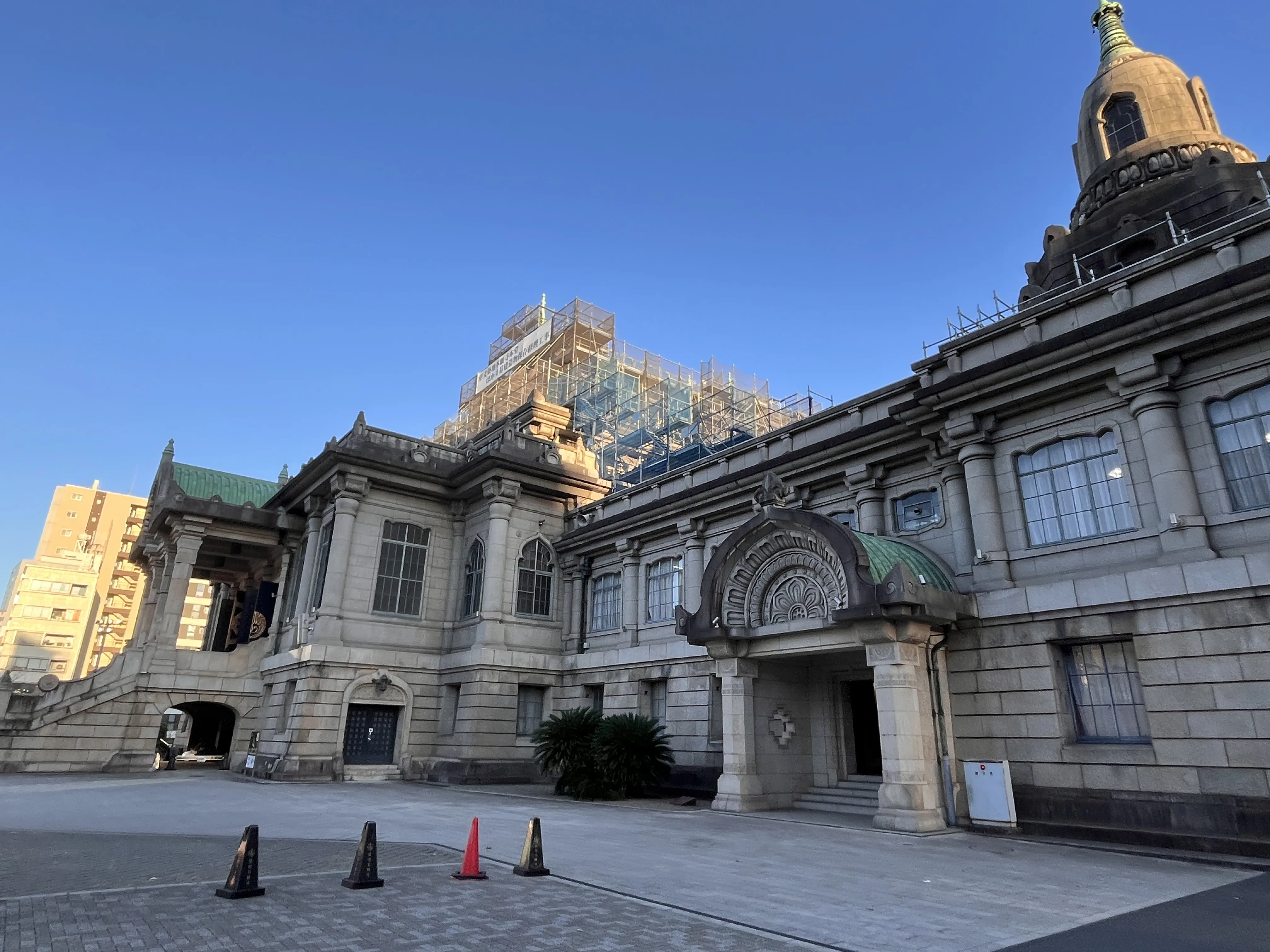
This is Tsukiji Hongwanji—but wait, it doesn’t look like a typical Japanese temple, does it? Where are the curved wooden roofs and red torii gates?
That’s exactly what makes this temple so special! The architecture draws inspiration from ancient Indian Buddhist styles, designed by the famous architect Chuta Ito in 1934. He wanted to trace Buddhism back to its origins, and the result is this stunning building that looks like it belongs on the Silk Road rather than in Tokyo.
In 2014, the main hall was designated as a National Important Cultural Property—a recognition of both its architectural significance and historical value.
Why It’s Worth a Visit
The temple is a fascinating blend of East and West:
- Indian-inspired exterior with stone columns and ornate details
- Japanese interior with traditional Buddhist elements
- Pipe organ inside the main hall (yes, really!)
- Stained glass windows featuring lotus flowers that filter beautiful colored light
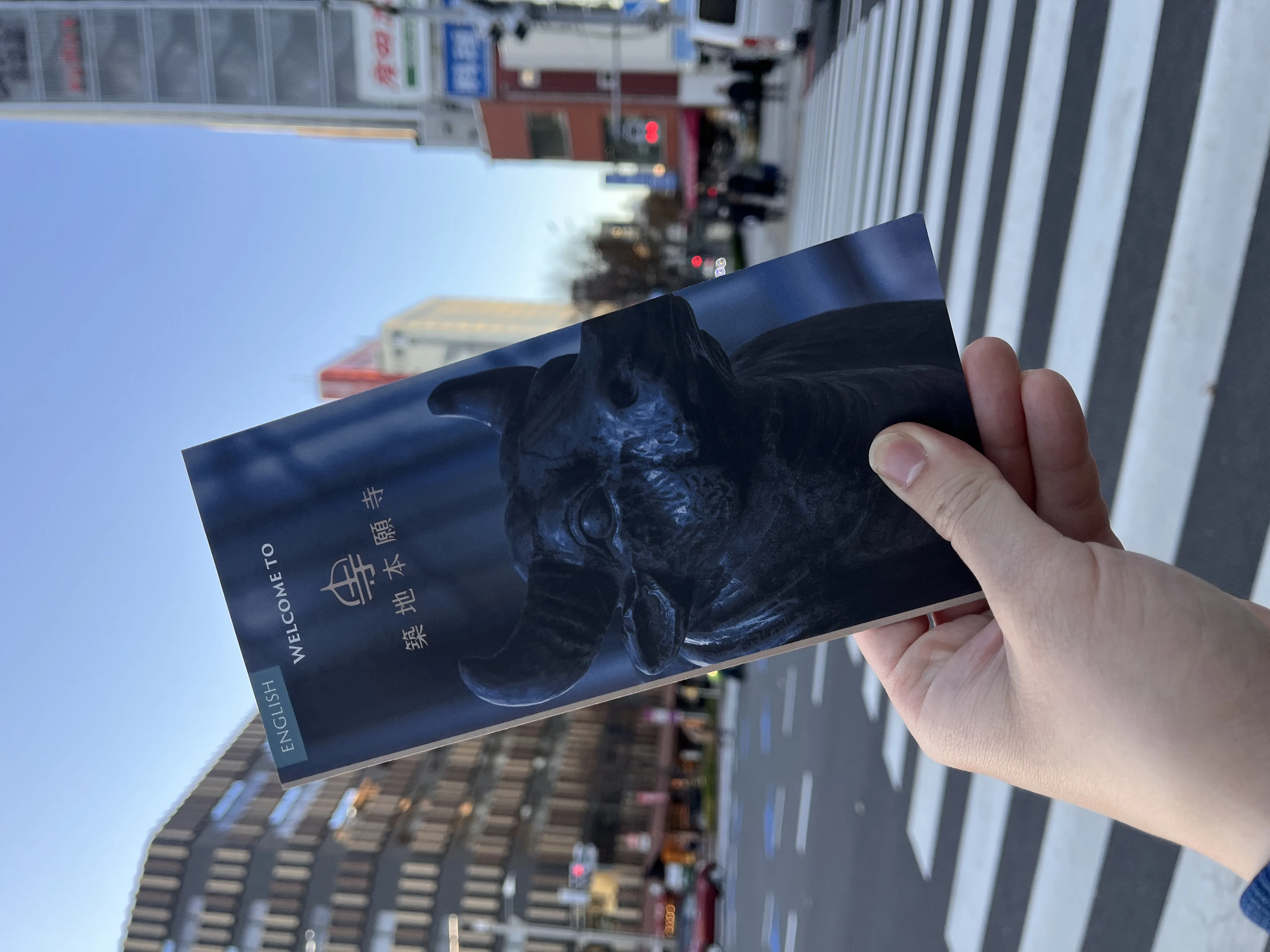
Great news for international visitors: the temple offers English guides and clear instructions on how to pray. First-time visitors can even receive a commemorative worship card as a keepsake. The staff are used to welcoming visitors from around the world and are happy to answer questions.
The Animal Treasure Hunt
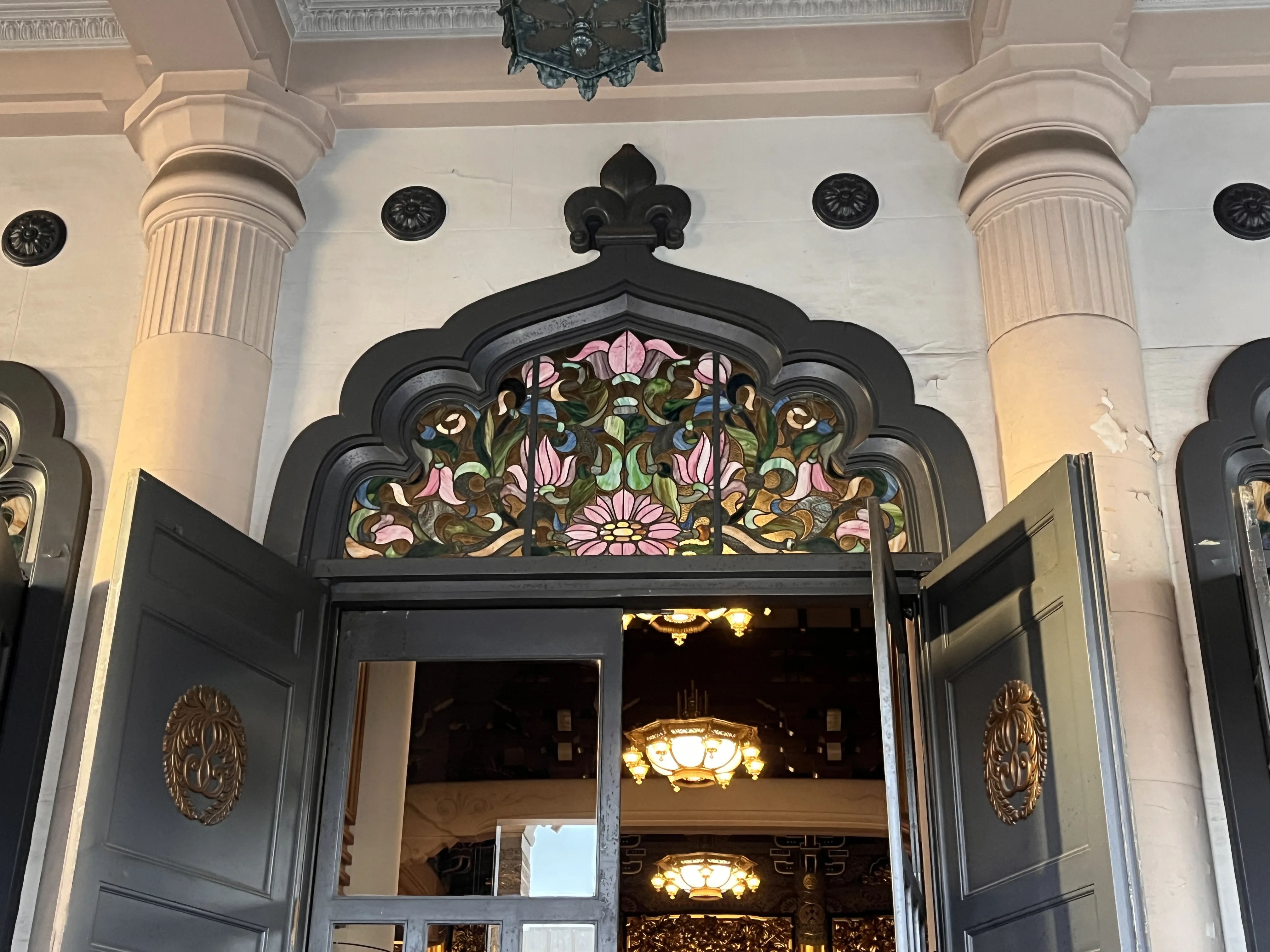
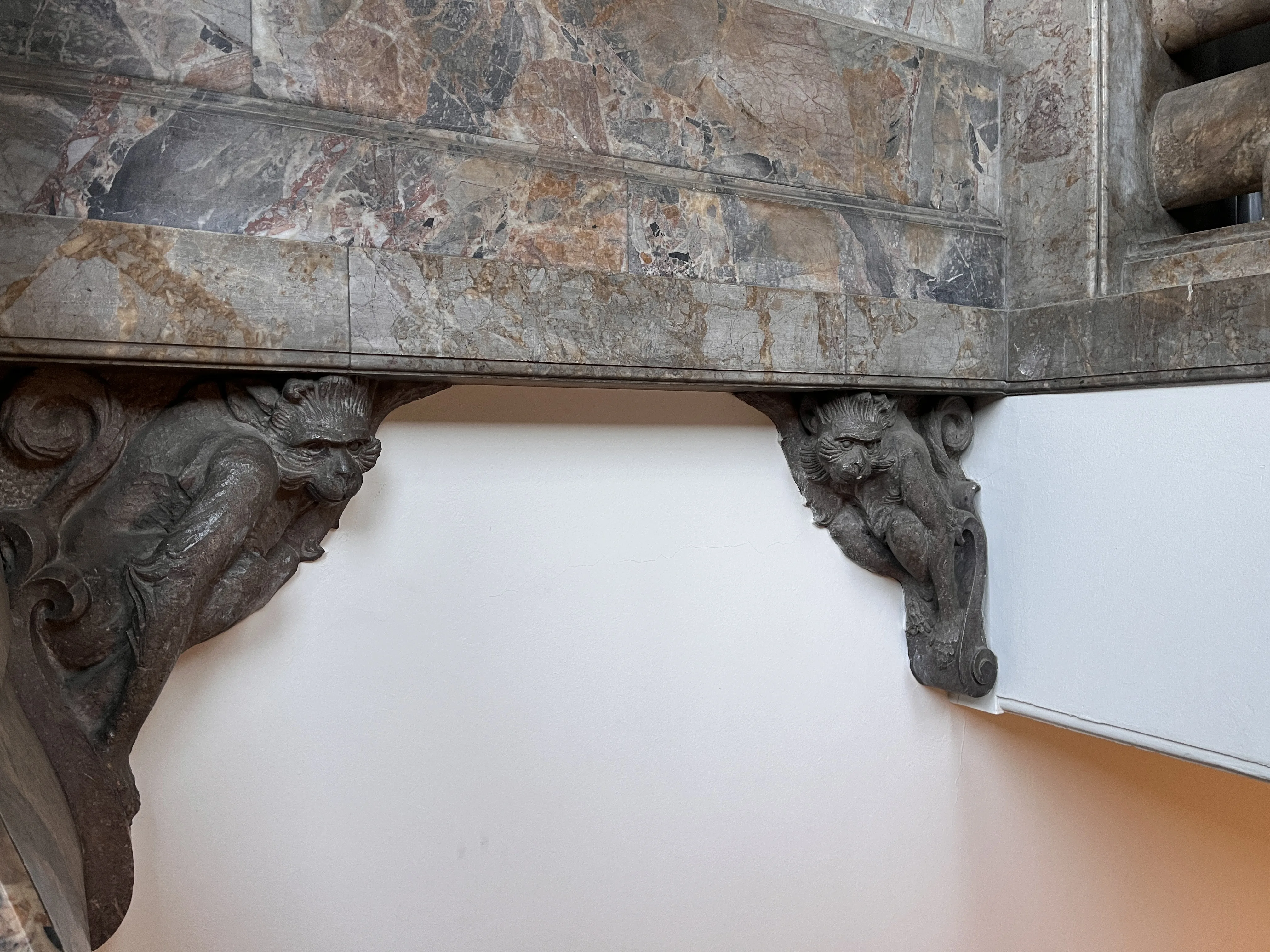
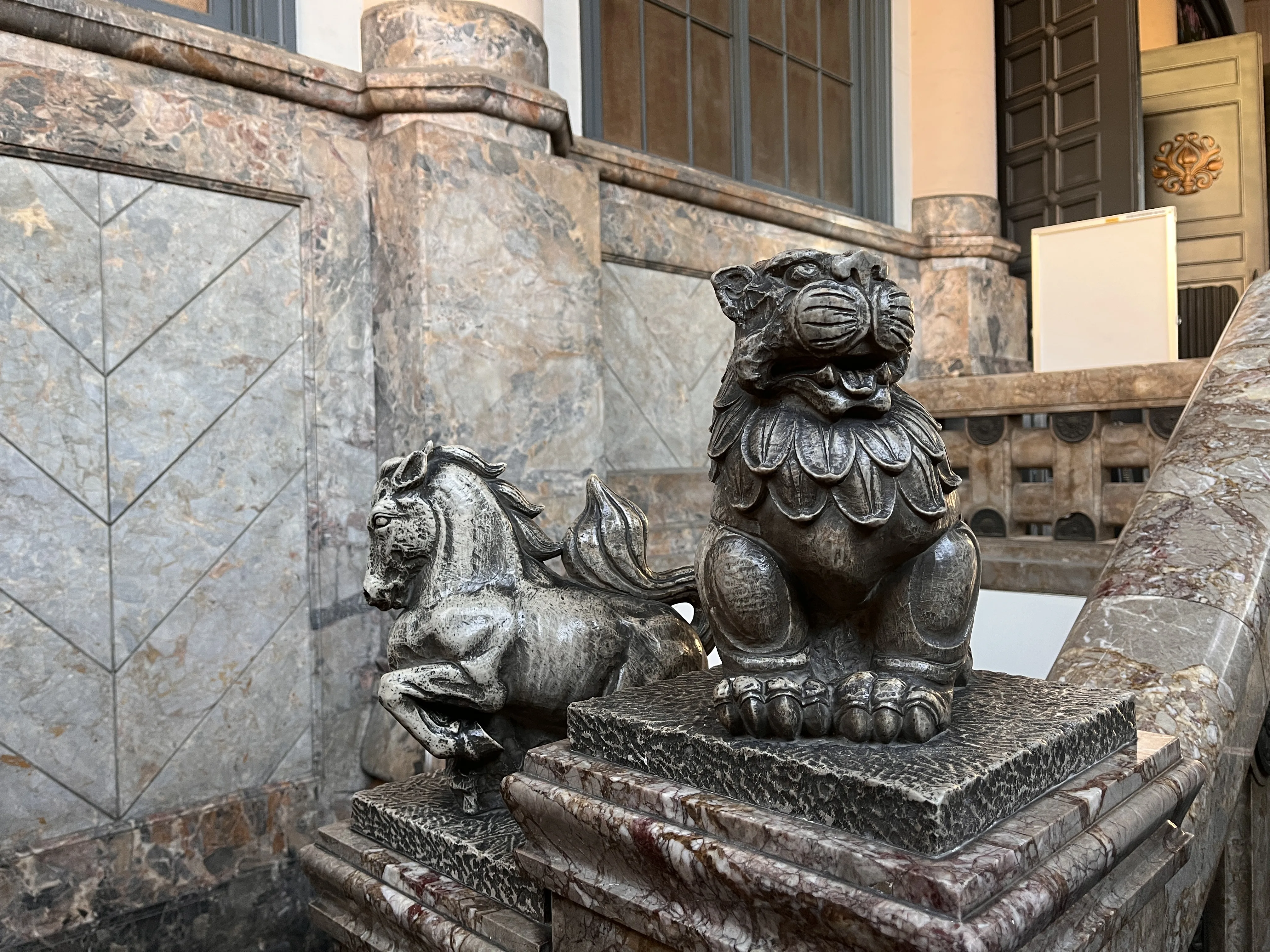
Here’s a fun activity: the temple grounds feature 13 different animal sculptures hidden throughout! Lions, horses, peacocks, monkeys… the architect placed them intentionally, though the exact meaning remains a mystery. Can you find them all?
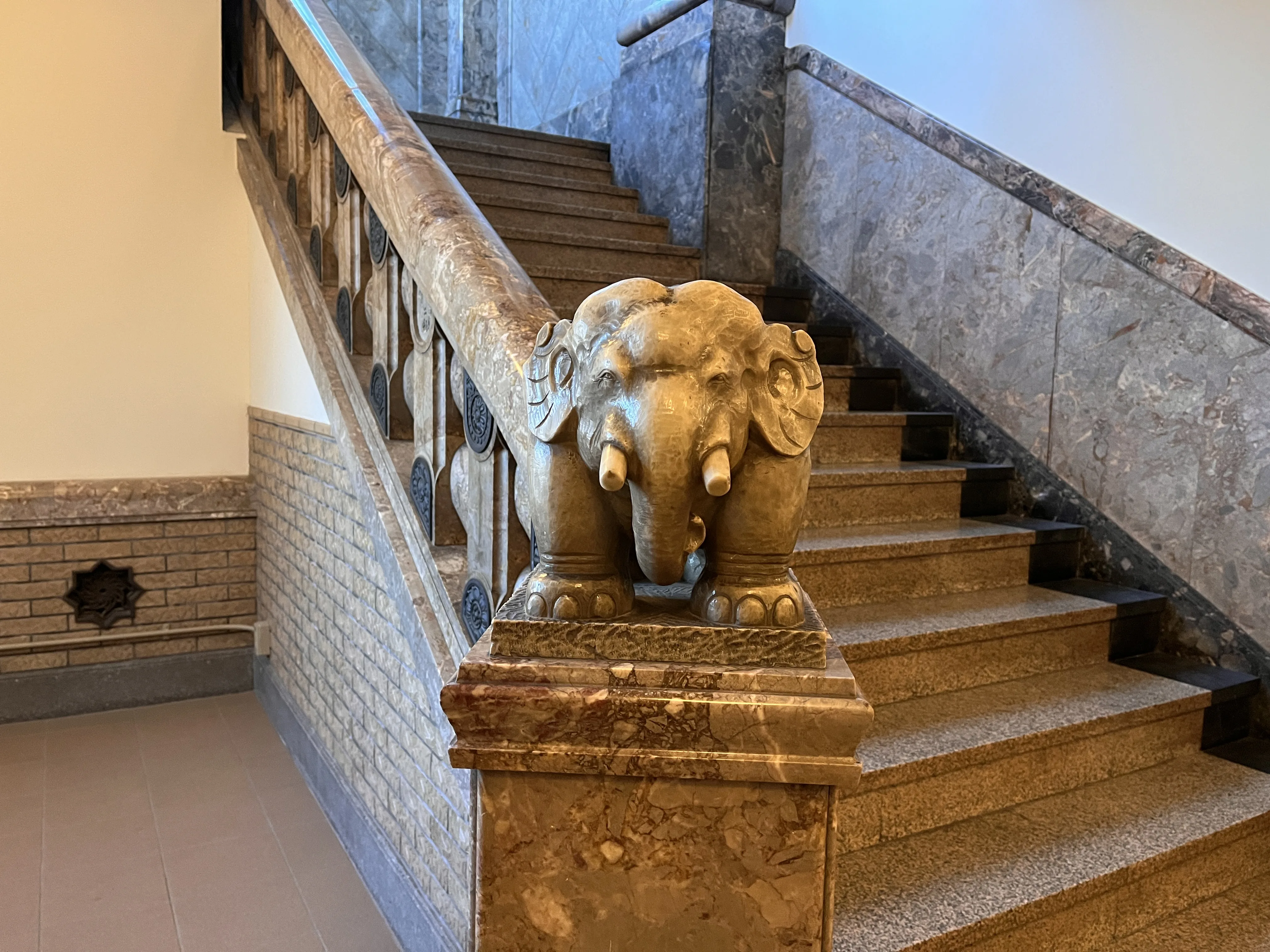
We even found an elephant! It was our first time seeing an elephant at a Japanese temple—such a unique sight that perfectly captures the temple’s cross-cultural spirit.
60-Second Challenge: Try to spot at least 3 different animals before you leave!
Tsukiji Hongwanji
- Admission: Free
- Official Website for current hours and visitor information
- Bonus: The temple’s café serves a famous “18-dish breakfast” that’s popular with locals and tourists alike!
Urikiriya: Where Chefs and Locals Buy the Real Stuff
This isn’t a tourist shop—it’s a long-running tableware wholesaler where locals and chefs buy the real stuff.
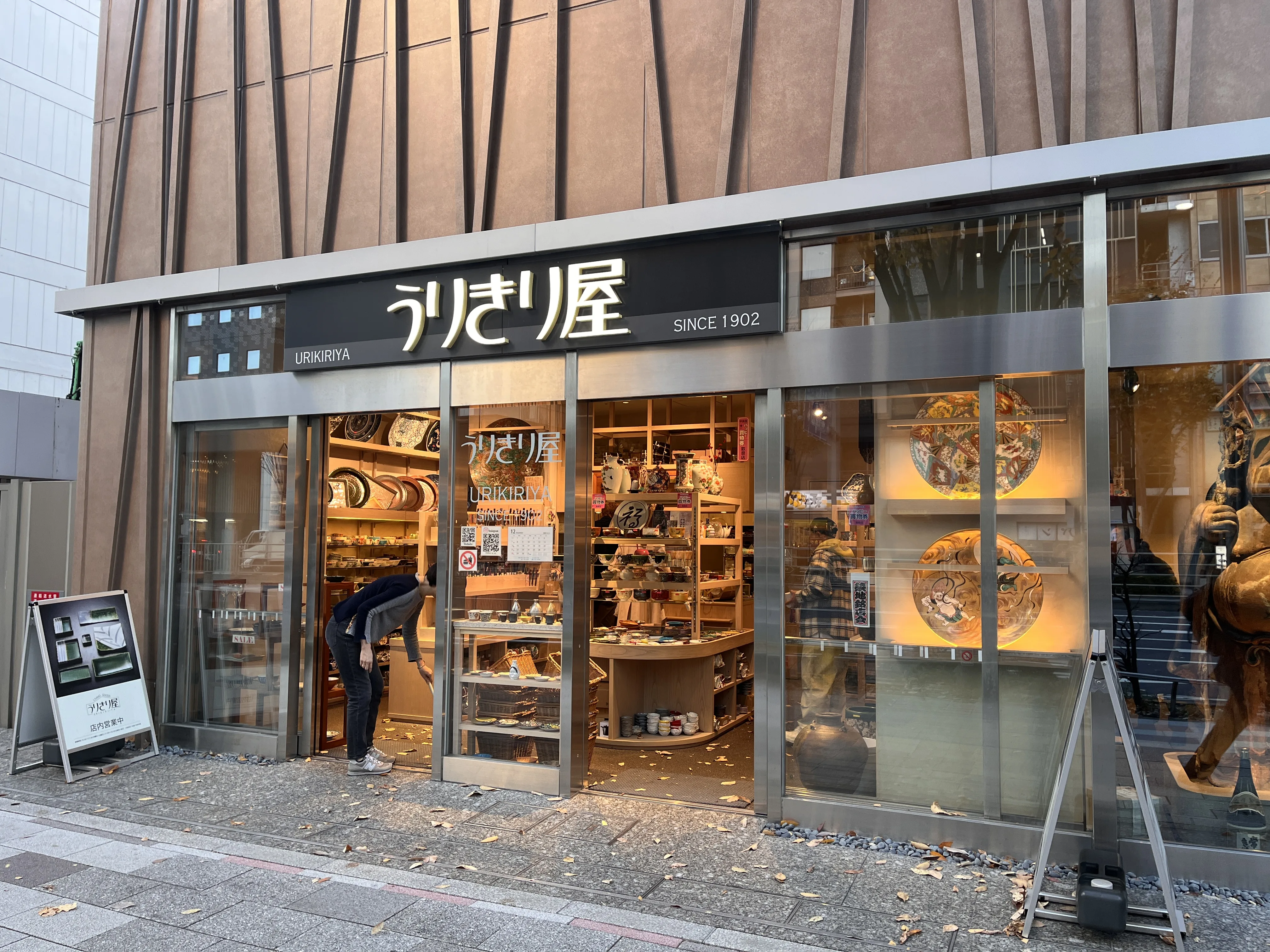
Looking for souvenirs you’ll actually use at home? Forget the touristy keychains—at Urikiriya, you can find beautiful Japanese tableware that will bring a touch of Japan to every meal.
Founded in 1902, Urikiriya is the retail arm of Iwama Pottery, a tableware wholesaler that has been supplying Tokyo’s restaurants for over 120 years. This is where professional chefs come to buy their plates—and now you can too!
A Japanese Ceramics Sampler
The shop carries pieces from famous pottery regions across Japan:
- Arita-yaki (Saga Prefecture): Elegant blue-and-white porcelain
- Mino-yaki (Gifu Prefecture): Earthy, rustic styles
- Kutani-yaki (Ishikawa Prefecture): Bold, colorful designs
For travelers, we recommend:
- Small plates (kozara): Light, packable, and perfect for appetizers
- Sake cups and carafes: A beautiful way to enjoy sake at home
- Chopstick rests: Tiny, lightweight, and incredibly charming
When we visited, we saw several international visitors happily browsing and shopping. The staff is friendly and patient, and even without much English, they’re happy to help you find what you’re looking for.
Urikiriya
- Official Website for current hours
- Closed: Obon and Year-end/New Year holidays
Kabukiza: Even Without a Show, It’s Worth the Visit
Even if you don’t watch a show, Kabukiza is worth it for the underground shopping arcade—easy, iconic, and very “Ginza.”
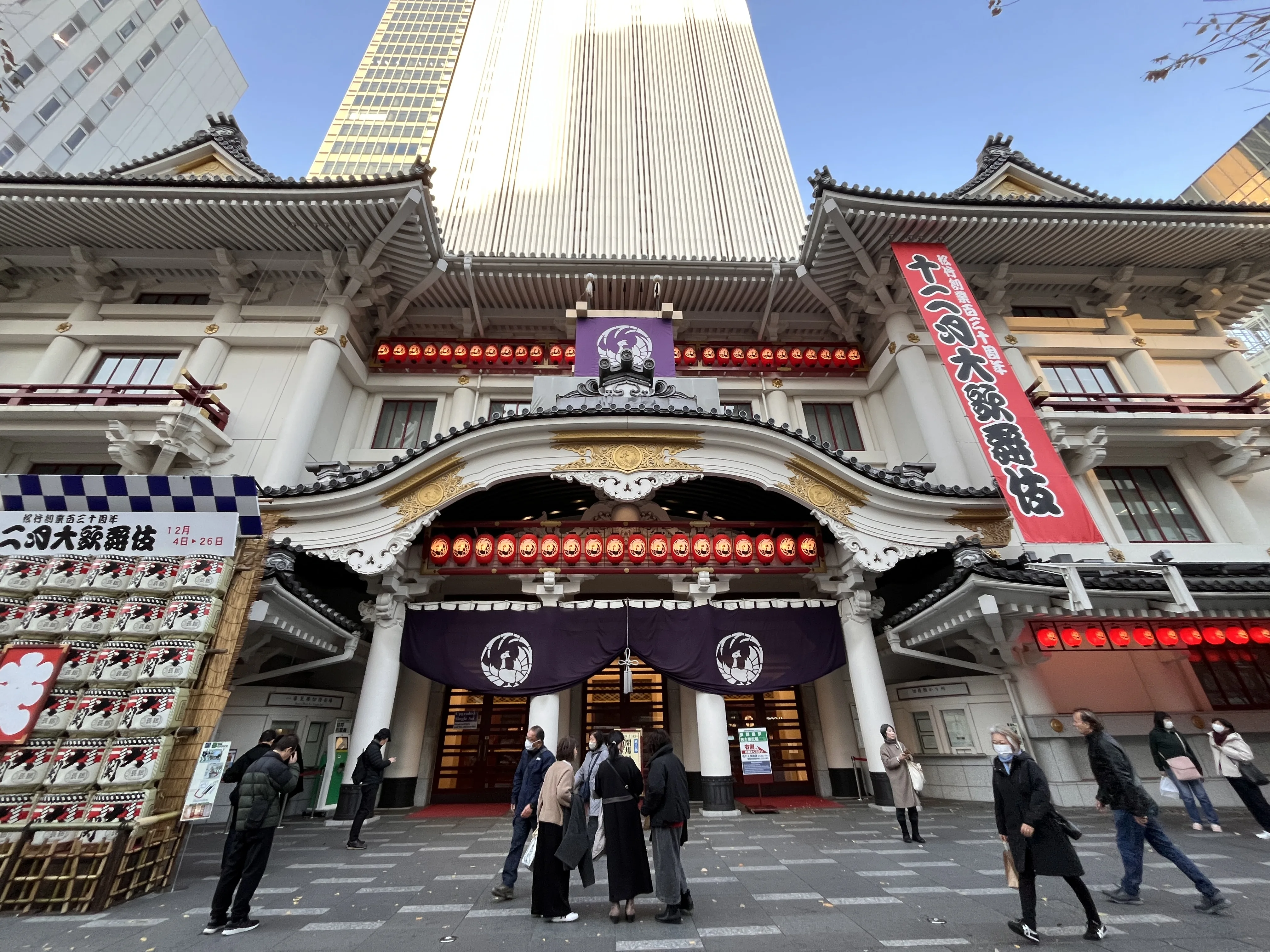
When you think of traditional Japanese culture in Ginza, Kabukiza is the first place that comes to mind. This magnificent building is THE place to watch Kabuki—Japan’s famous traditional theater art form that dates back over 400 years!
The current building, completed in 2013, faithfully recreates the elegant design of the original 1889 theater. Just standing in front of it, you can feel the weight of history and tradition.
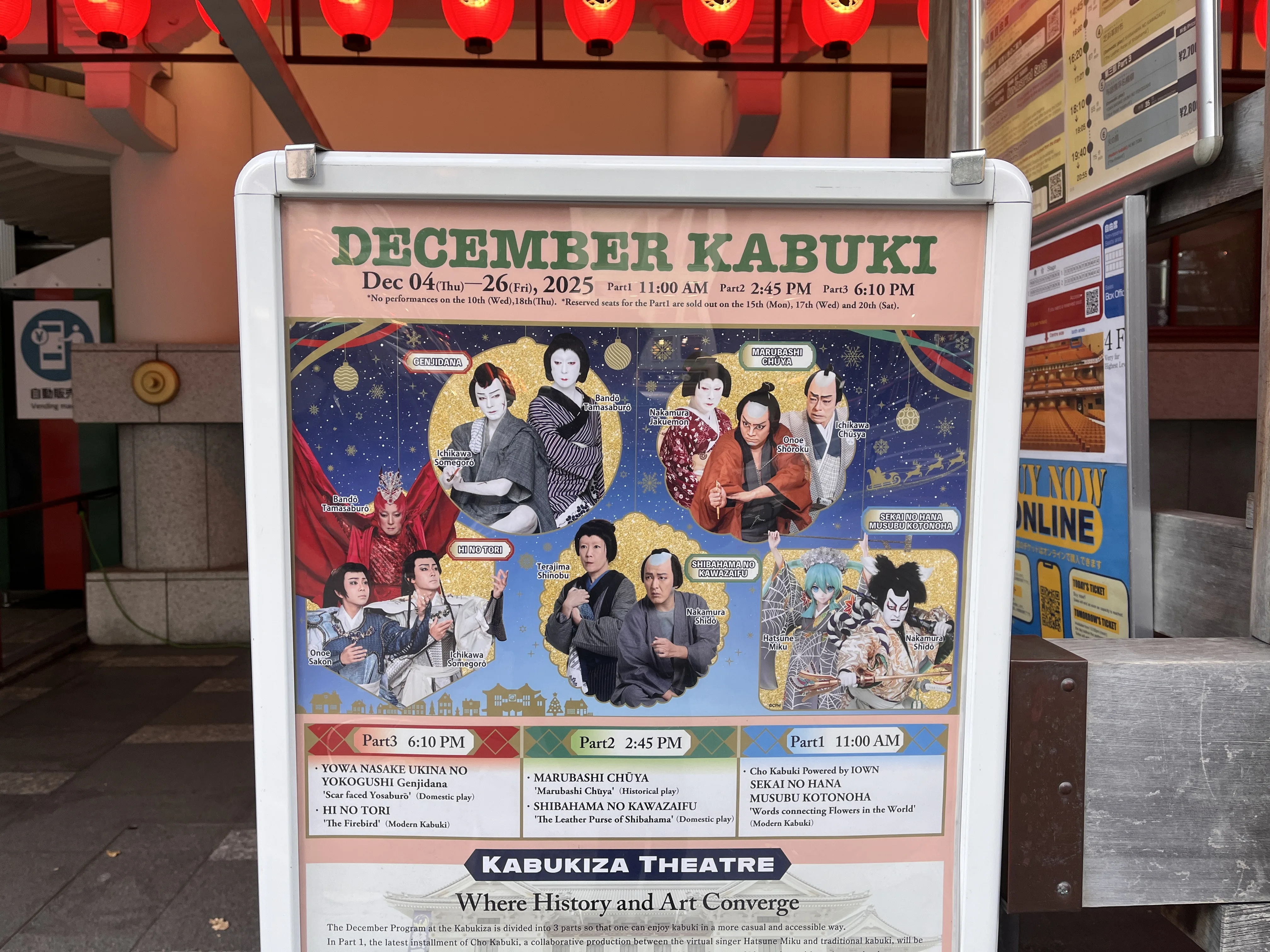
Kabuki for International Visitors
Good news: Kabuki is more accessible than ever! They offer tablet devices with English subtitles (Chinese too!) that sync perfectly with the live performance. You can follow the story, understand the dialogue, and fully appreciate the dramatic performances—even without speaking Japanese.
If you’re curious but short on time, you can purchase “single-act” tickets for shorter segments.
The Underground Shopping Paradise: Kaomise
But here’s a secret we want to share: you don’t need a theater ticket to explore Kabukiza’s treasures!
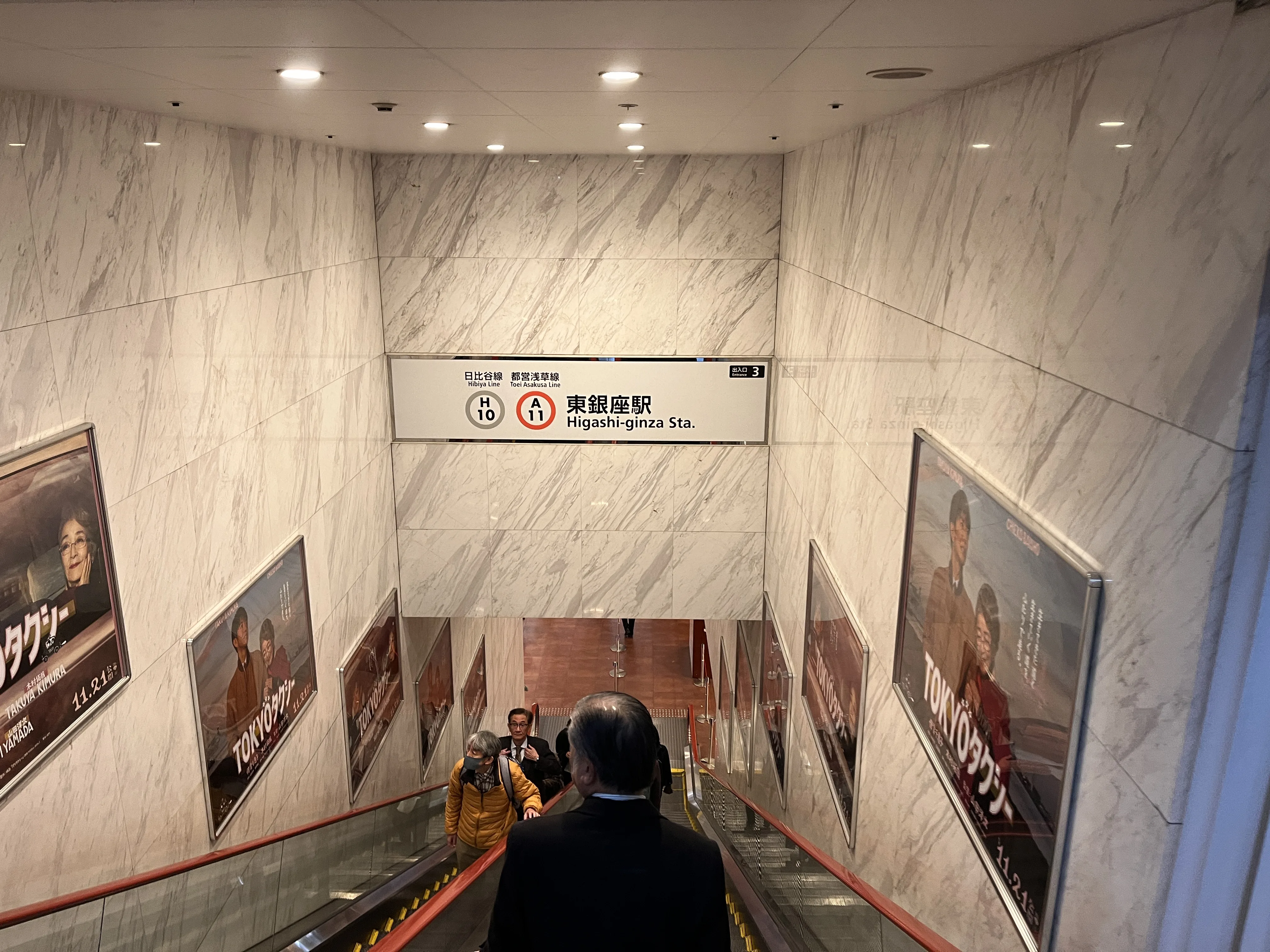
Take the escalator on the right side of the building to go down to B2…
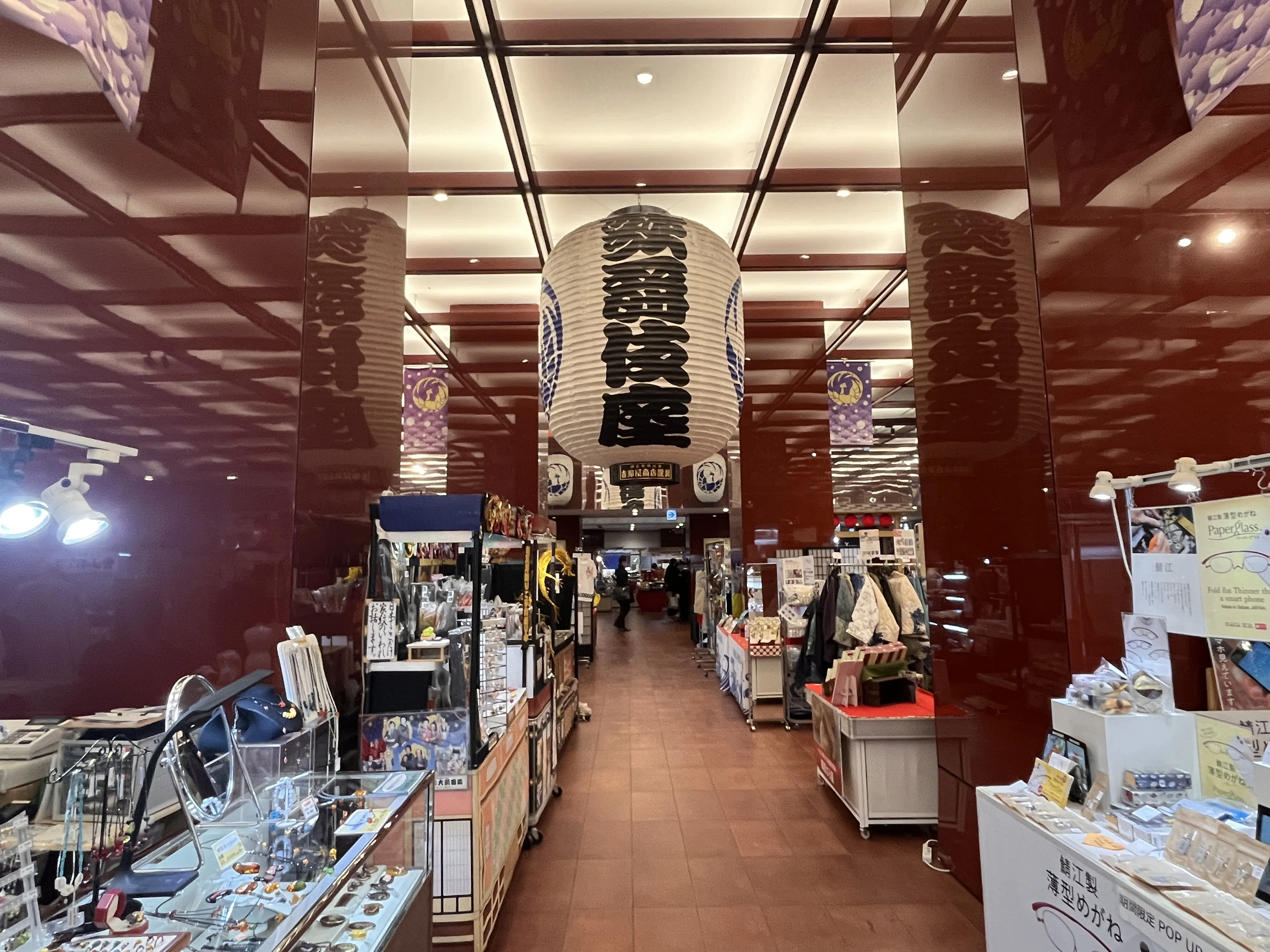
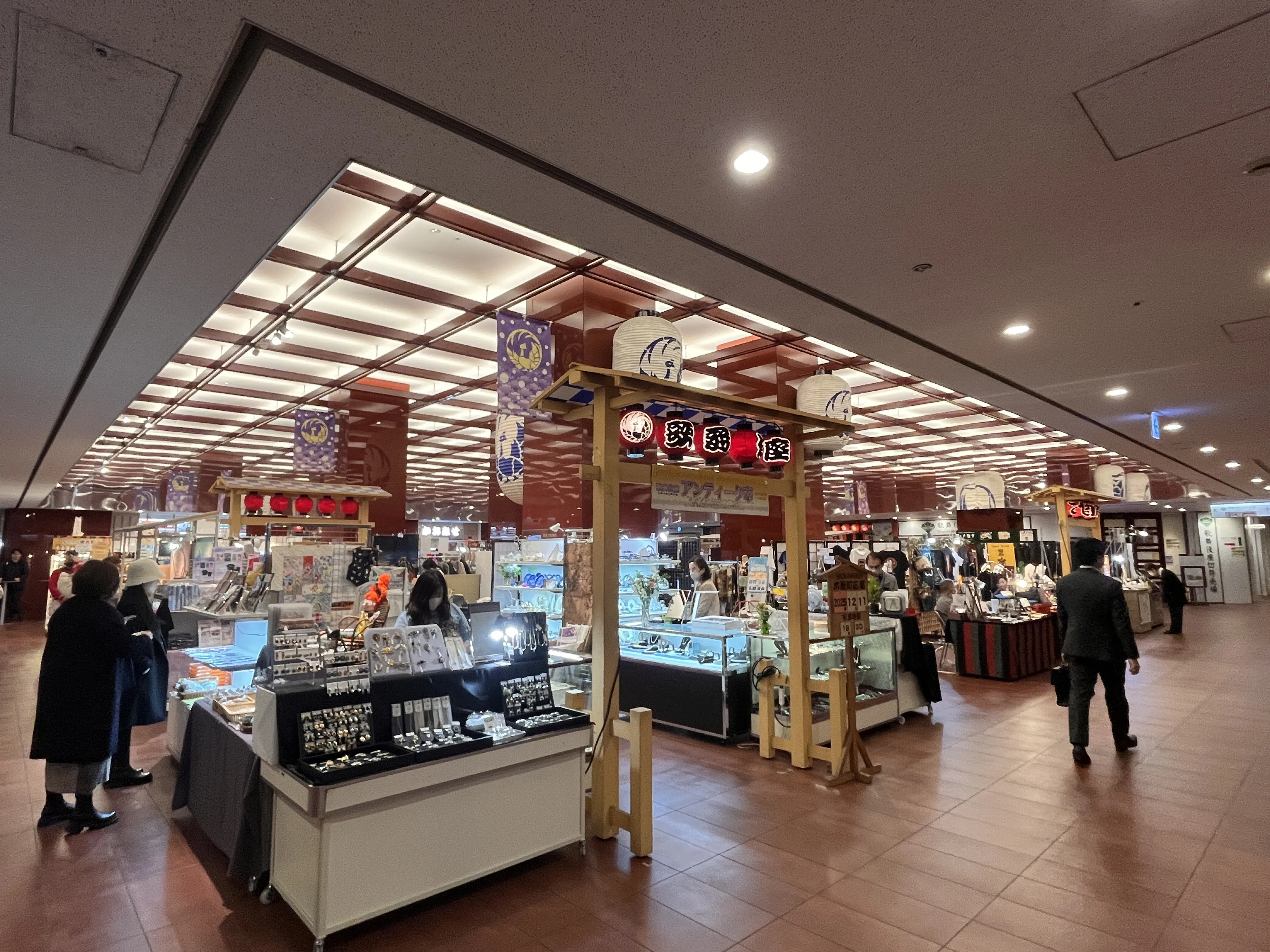
…and you’ll discover Kaomise, a souvenir area that’s open to everyone—no theater ticket required! The official website clearly states this, so don’t be shy about going in.
You’ll find Kabuki-themed goods, traditional Japanese sweets (wagashi), handmade crafts, and beautiful textiles. If you’re thinking “I want to buy something Japanese, but I don’t know what”—this is THE perfect place. Everything feels authentically Japanese without being overly touristy.
The nearby Kobikicho Hiroba area also hosts monthly events like antique markets, so there’s always something new to discover!
5th Floor: Tea House & Rooftop Garden
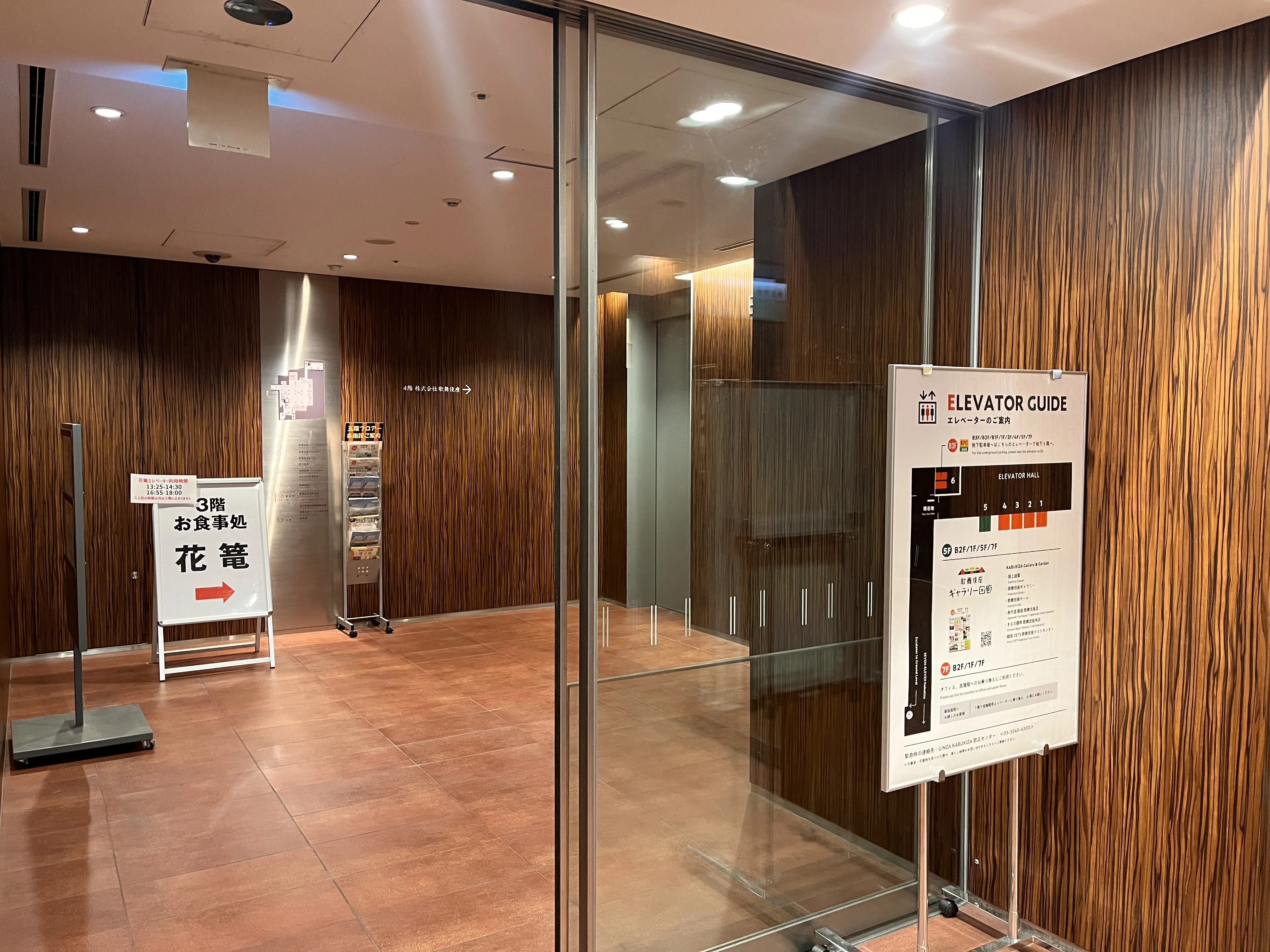
Now take the elevator up to the 5th floor for another hidden gem!
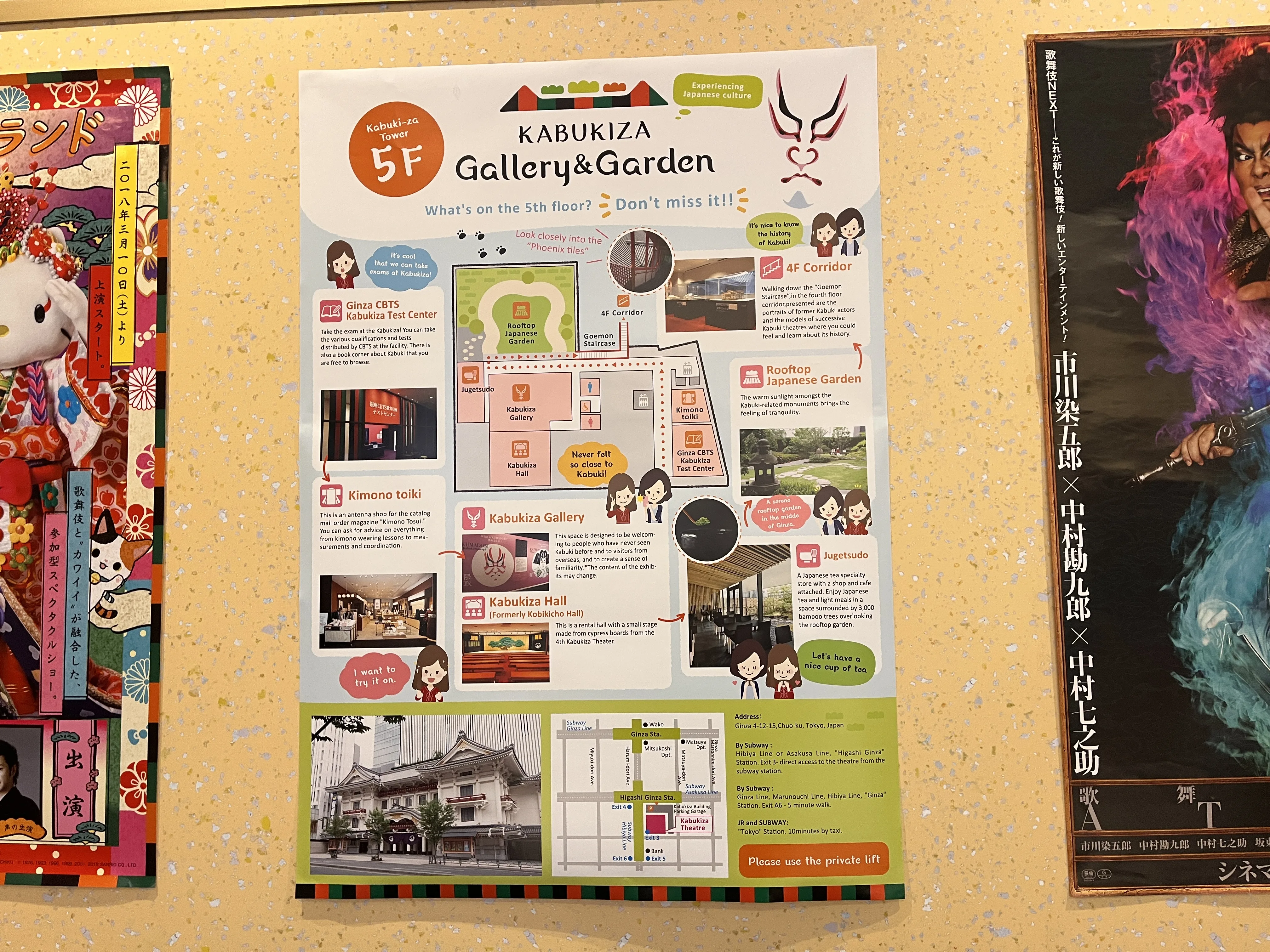
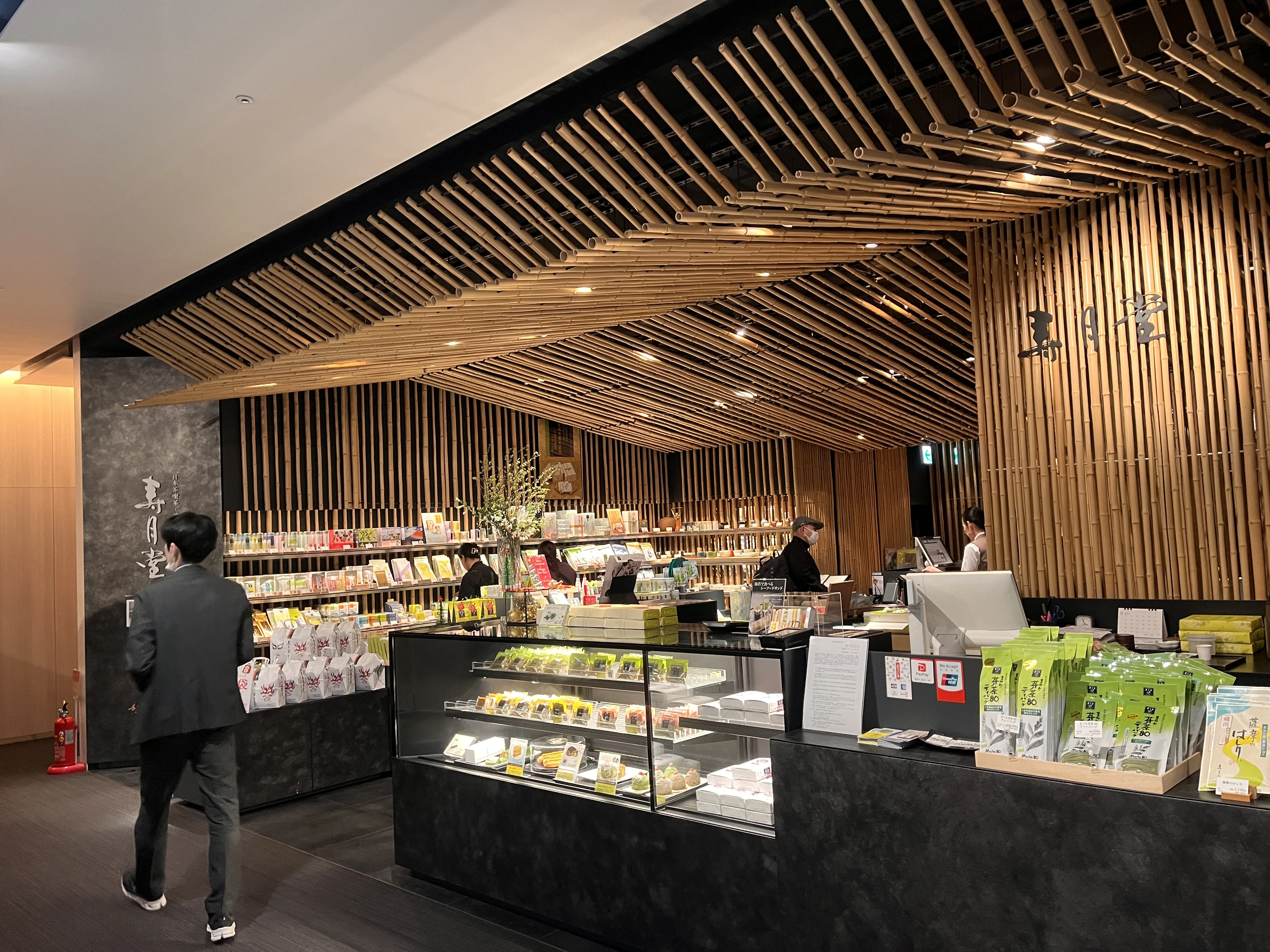
Here you’ll find a lovely tea house where you can rest your tired feet with a cup of matcha green tea and traditional Japanese sweets. After walking for an hour, this is the perfect break!
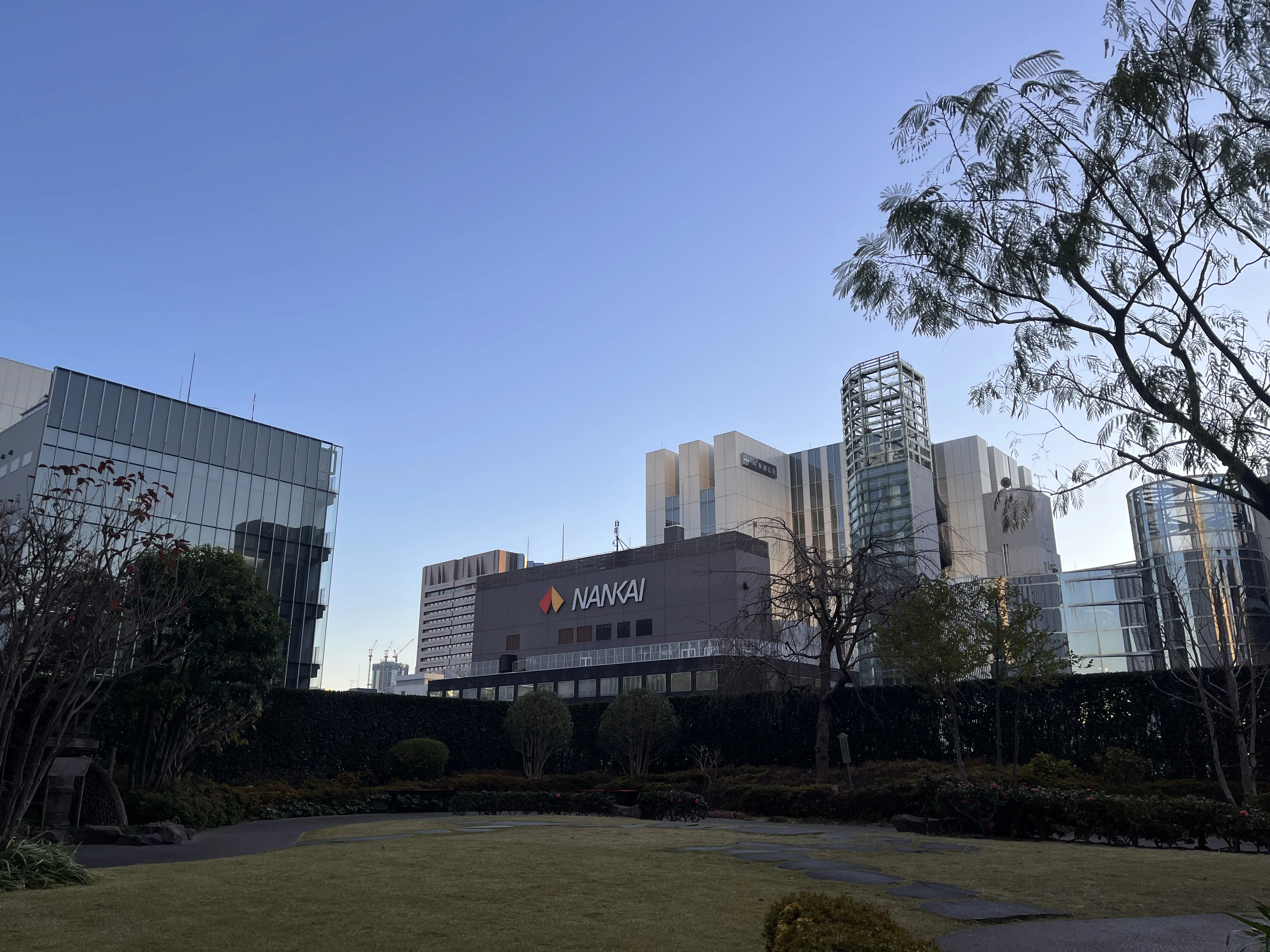
Step outside to the rooftop garden. On weekdays, it’s peaceful and quiet—a hidden oasis in the middle of bustling Ginza. You can see the theater’s traditional roof tiles up close and enjoy a moment of calm before continuing your journey.
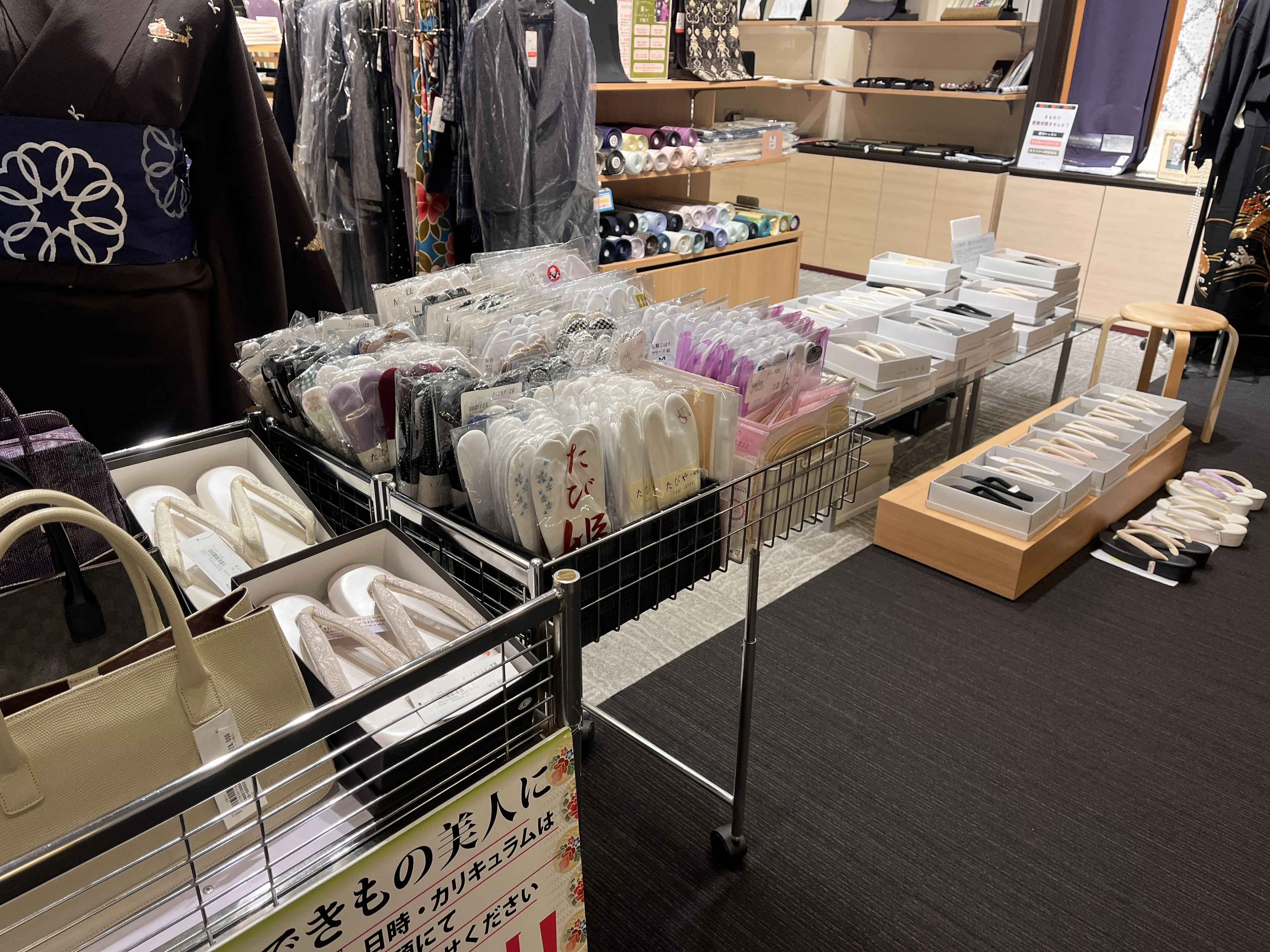
Before you leave, check out the authentic tabi (traditional Japanese split-toe socks) for sale. These make wonderful, practical souvenirs that you’ll actually use!
Kabukiza
- Official Website for hours and performance schedules
- English subtitle service information
Art Aquarium Museum GINZA: Goldfish Meets Art
It’s one of the easiest “wow” photo experiences in Ginza—just remember: no flash, and pack light.
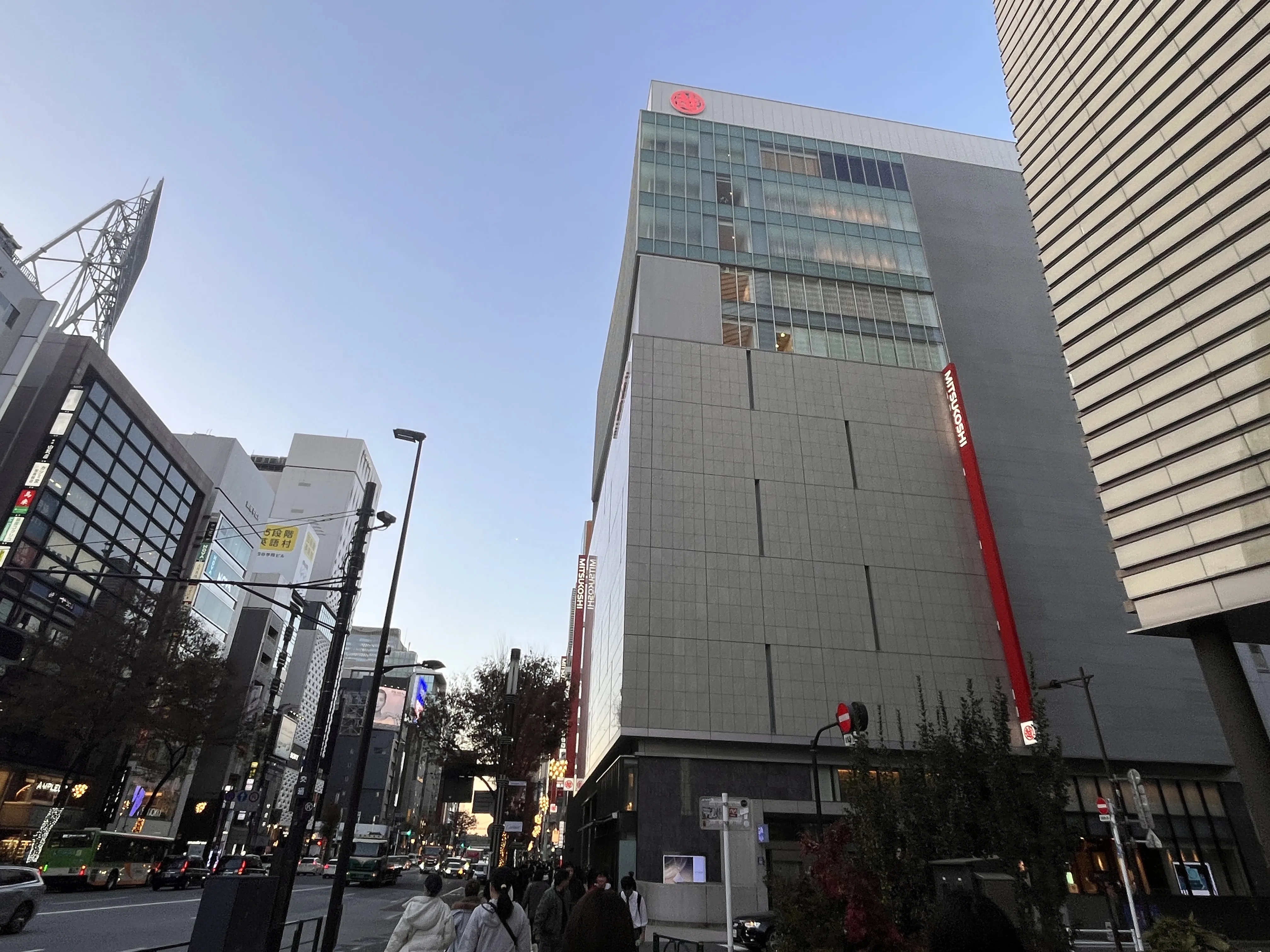
Inside Ginza Mitsukoshi department store (9th floor), you’ll find something truly unique: Art Aquarium Museum GINZA—a one-of-a-kind aquarium dedicated to the Japanese tradition of goldfish appreciation, reimagined as immersive contemporary art.
Where Tradition Meets Innovation
In Japan, keeping and admiring goldfish (kingyo) has been a beloved pastime since the Edo period (1603–1868). Art Aquarium takes this tradition and transforms it into a spectacular visual experience, with goldfish swimming in elaborately designed tanks illuminated by colorful lights.
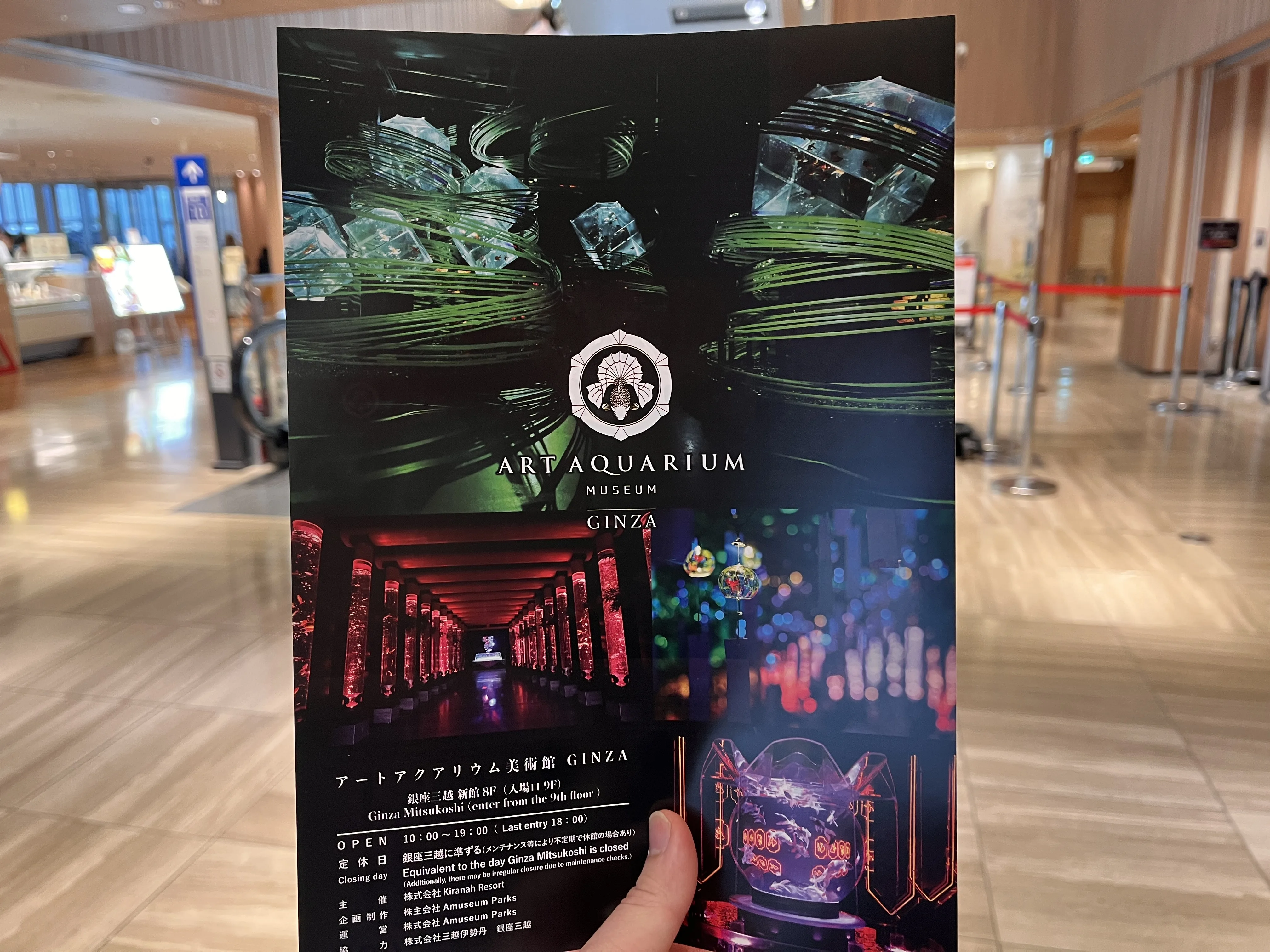
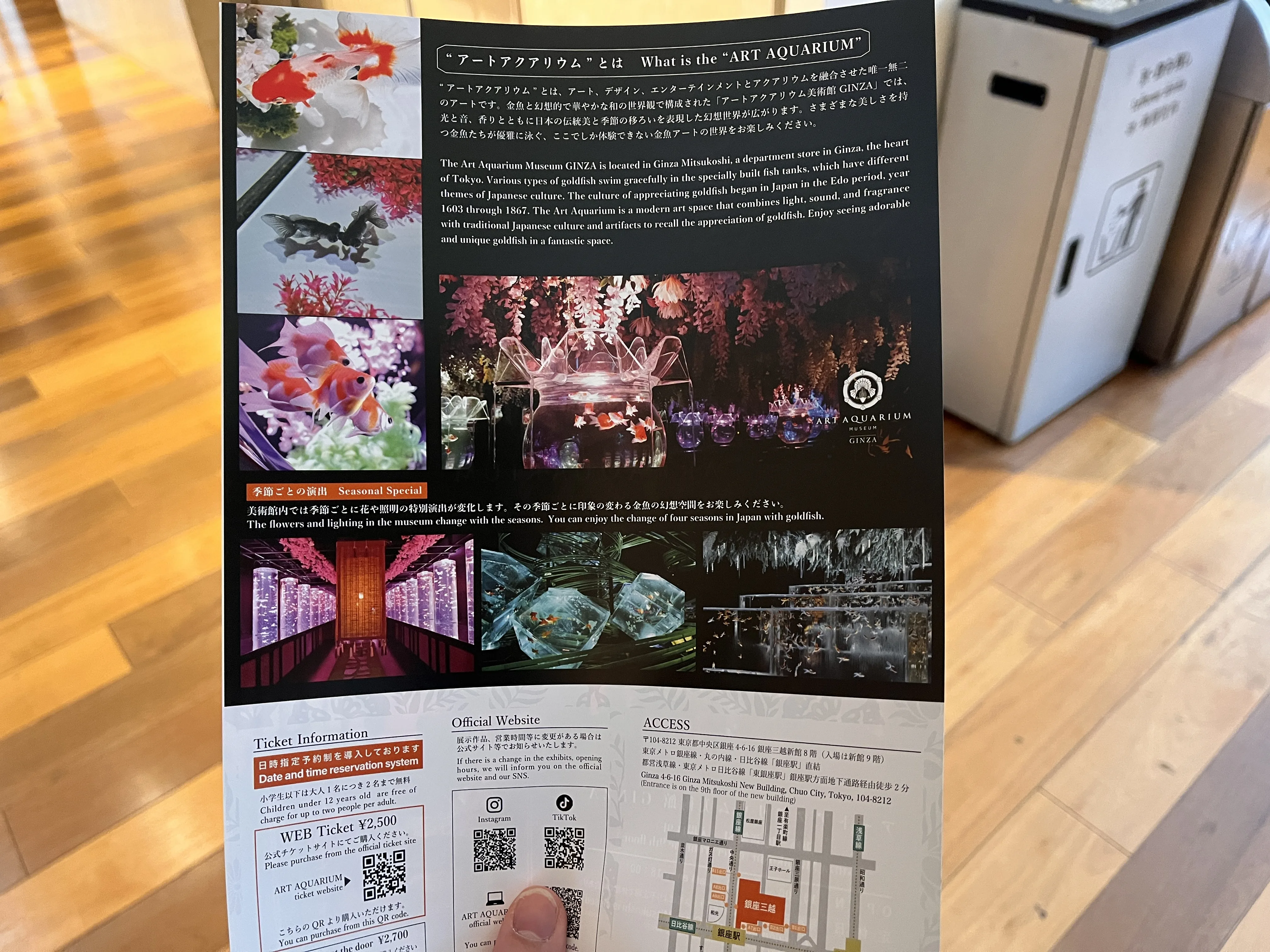
The artistic spaces are perfect for both quiet contemplation and photography. The way the light plays through the water, the graceful movement of the fish, and the carefully designed exhibits create countless Instagram-worthy moments.
Good news: Photos and videos are allowed (just no flash or lights)! If you enjoy immersive light exhibitions and interactive art spaces, you’ll love Art Aquarium.
Before You Go
A few practical notes:
- Strollers must be checked at the entrance (they provide storage)
- No food or drinks inside
- No lockers, so pack light!
Art Aquarium Museum GINZA
- Location: Ginza Mitsukoshi 9F
- Official Website for current hours and tickets
- Tip: Weekday afternoons are less crowded!
GINZA SIX: The Ultimate Foodie Finale
If you want “one last taste of Japan” before the subway, GINZA SIX B2 is basically a curated edible-souvenir paradise.
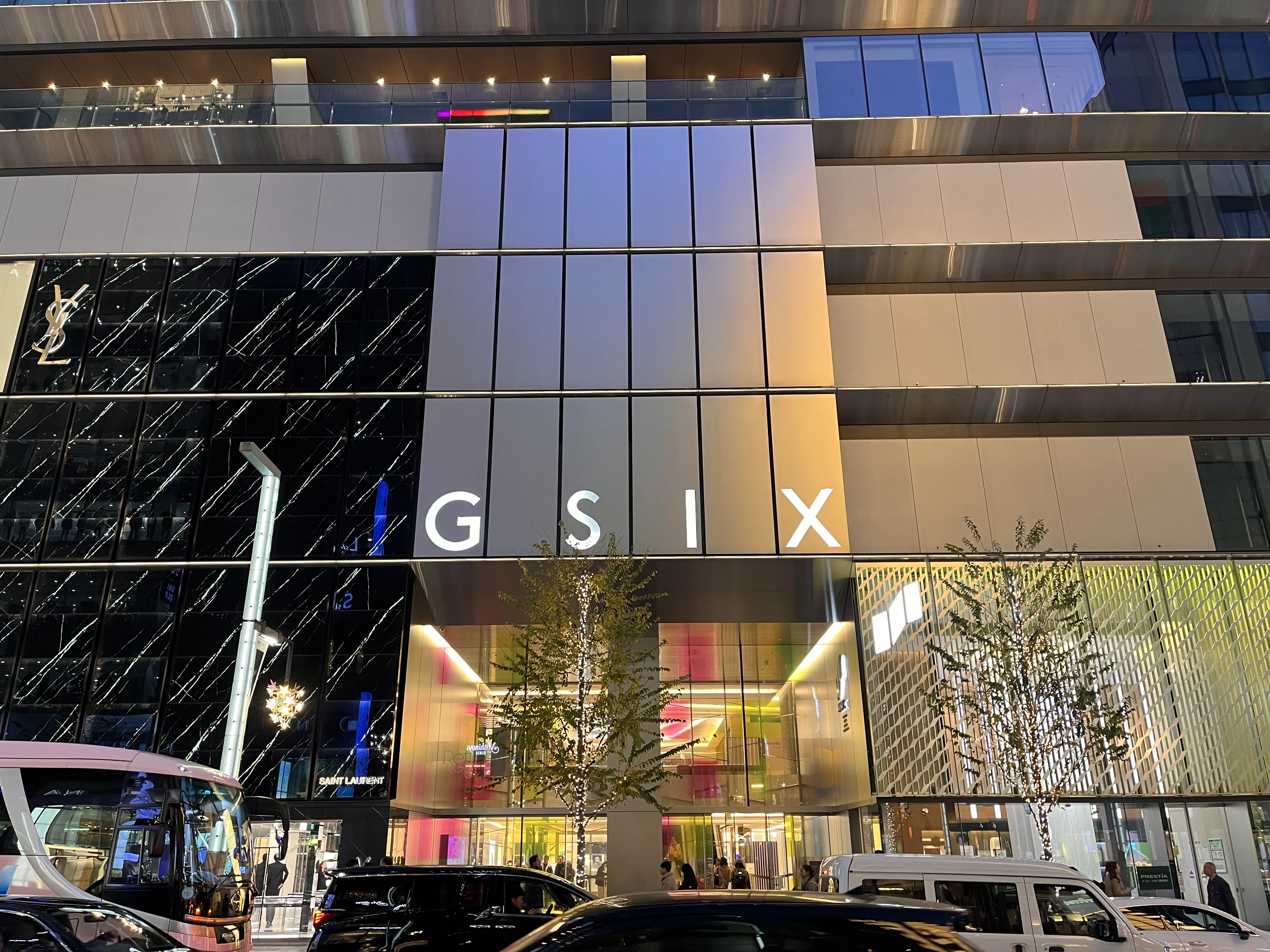
Our final recommendation is GINZA SIX—and if you love food (you took a cooking class, so we know you do!), you’ll absolutely love this place. It’s the perfect way to end your walking tour!
GINZA SIX opened in 2017 and quickly became one of Ginza’s most popular destinations. While the upper floors feature luxury fashion brands, the basement floors are where food lovers need to go.
Traveler-Friendly Services
Before we dive into the food, here’s something useful: GINZA SIX has a Tourist Service Center offering:
- Tourist information and guidance
- Currency exchange
- Tax-free counter
- Luggage storage (via Sagawa Express)
This makes it super convenient if you’re carrying bags from your earlier shopping!
B2 Floor: Gourmet Paradise
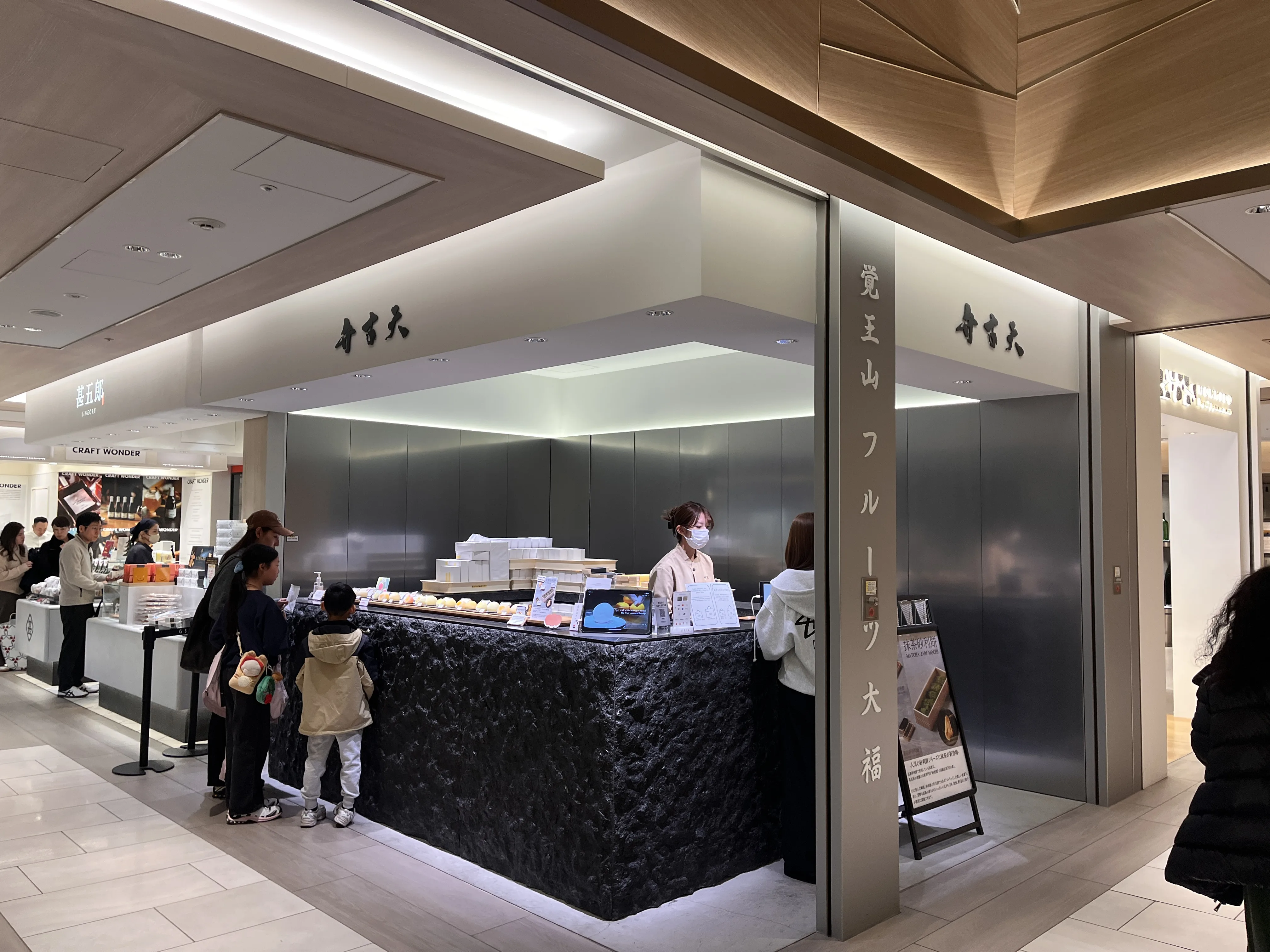
The B2 floor is a gourmet wonderland that will make your foodie heart sing. You’ll find carefully curated shops selling:
- Daifuku: Soft mochi with sweet fillings—perfect for gifts or eating on the spot
- Artisan cookies and baked goods: Beautifully packaged and delicious
- One-cup sake bottles: Convenient single-serving sake bottles that make great souvenirs
- Premium rice balls (onigiri): Elevated versions of this Japanese staple
- Seasonal wagashi: Traditional Japanese confections that change with the seasons
Everything is beautifully packaged and perfect for bringing home as gifts—or enjoying as a well-deserved treat after your walk!
Standing Bars: Sake, Beer & Whisky
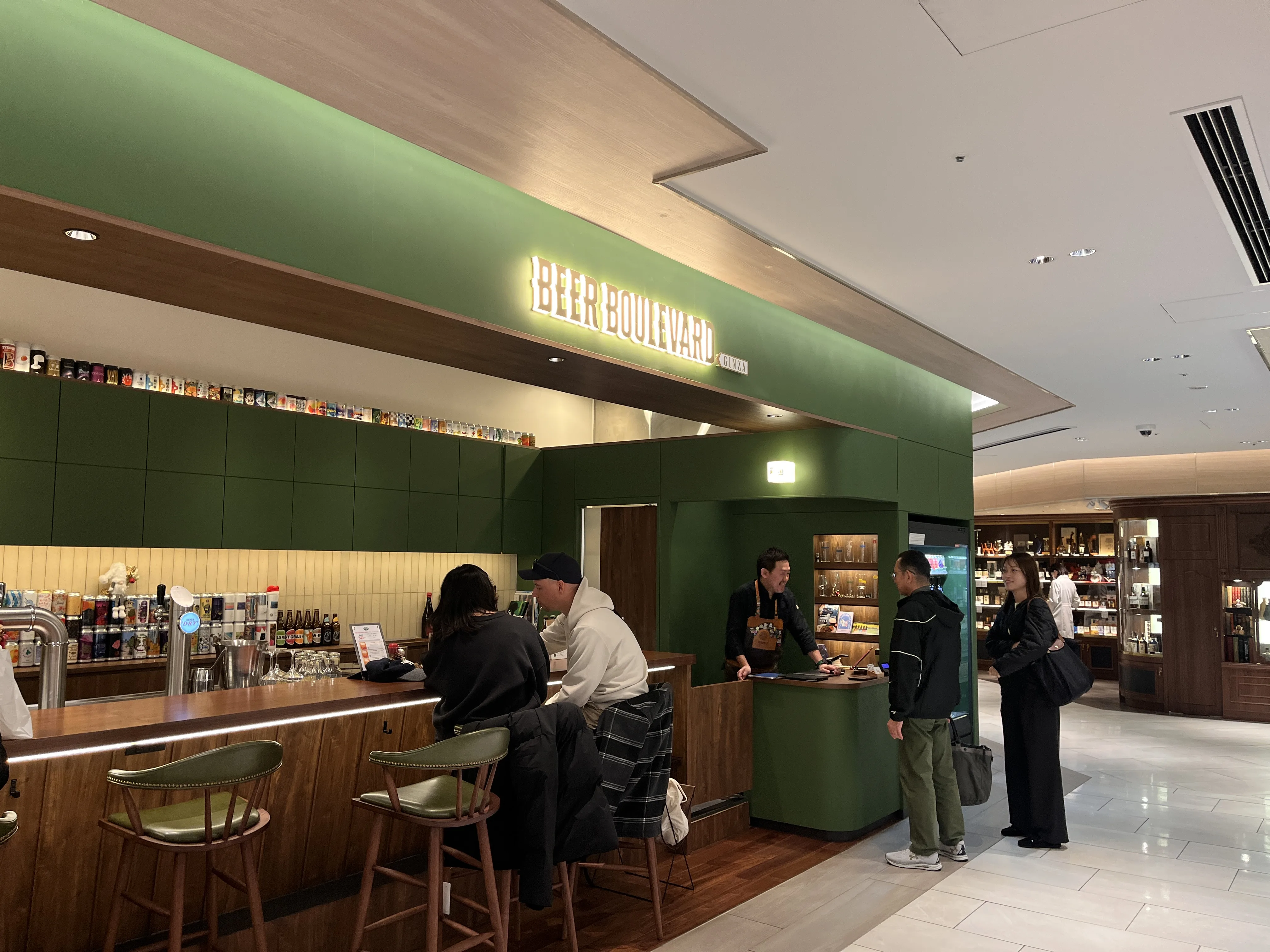
Here’s a special tip that many tourists miss: you can enjoy “kaku-uchi” (standing bar) style drinks here! This is a uniquely Japanese experience where you can sample drinks right at the shop.
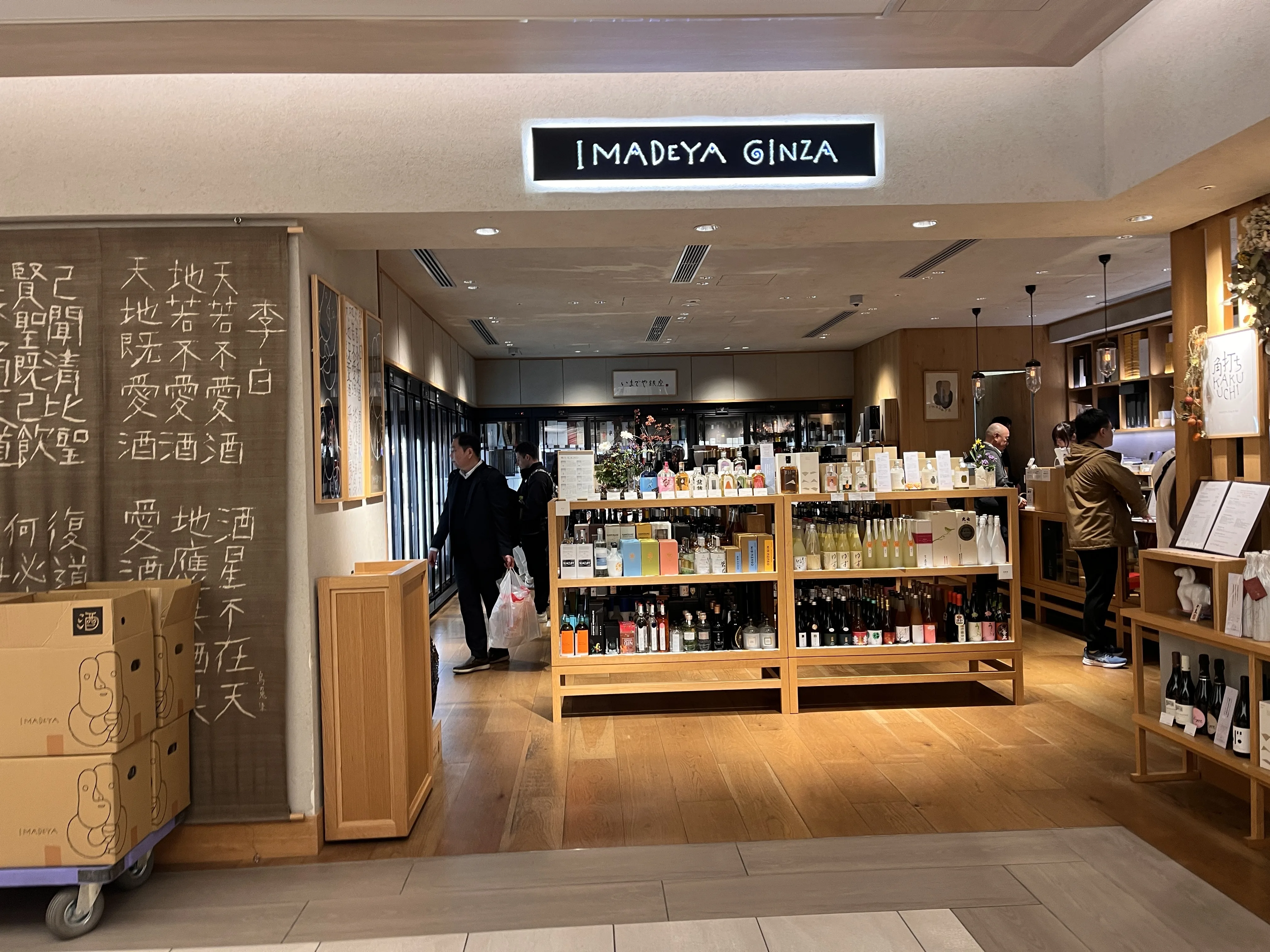
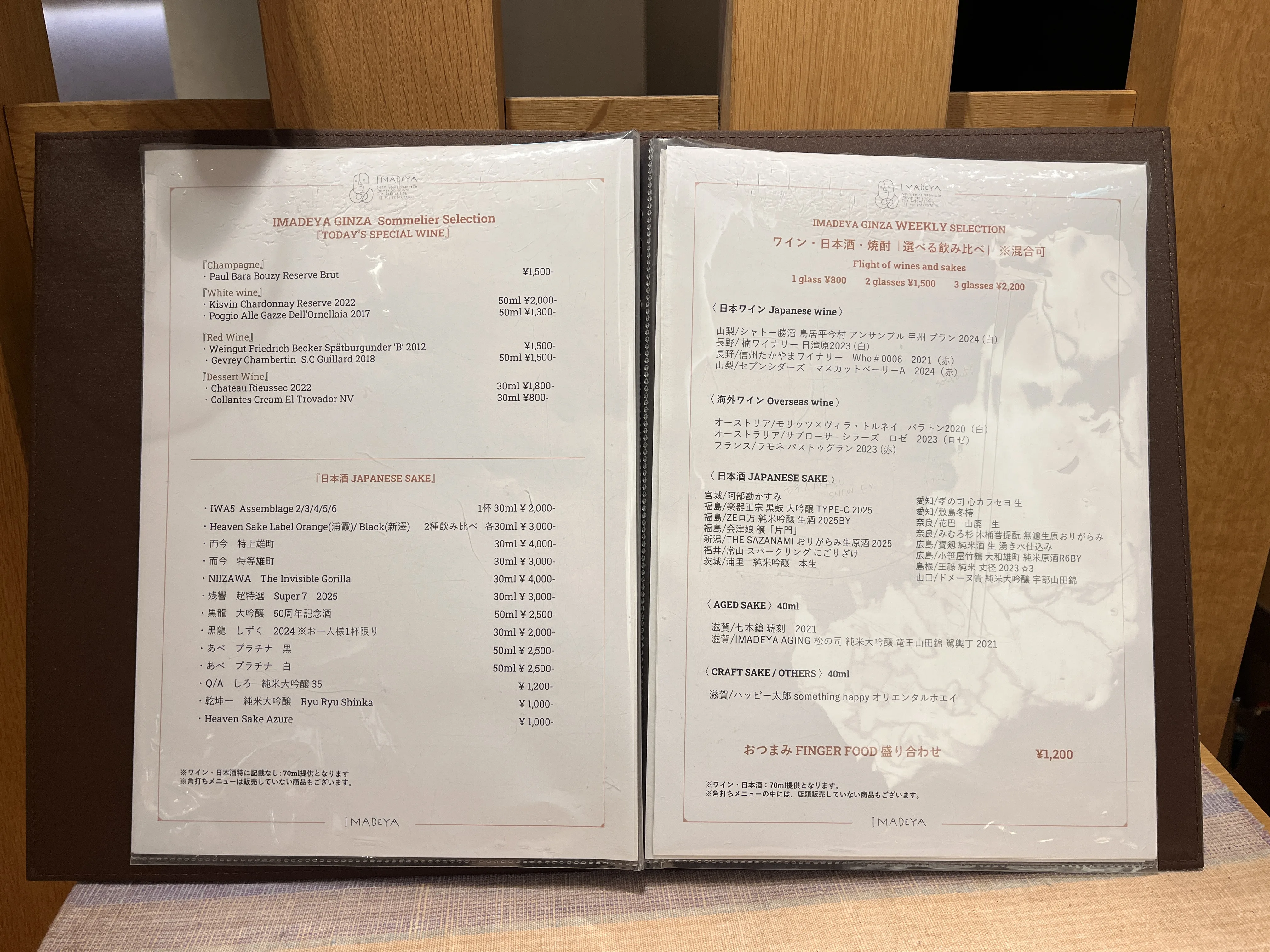
IMADEYA GINZA is our top recommendation. This sake shop offers tastings of sake, craft beer, wine, and whisky from all over Japan. The selection is incredible—from rare regional sake to small-batch craft beers you won’t find anywhere else. Best of all, they have menus in English, Korean, and Chinese, so you can easily navigate the options!
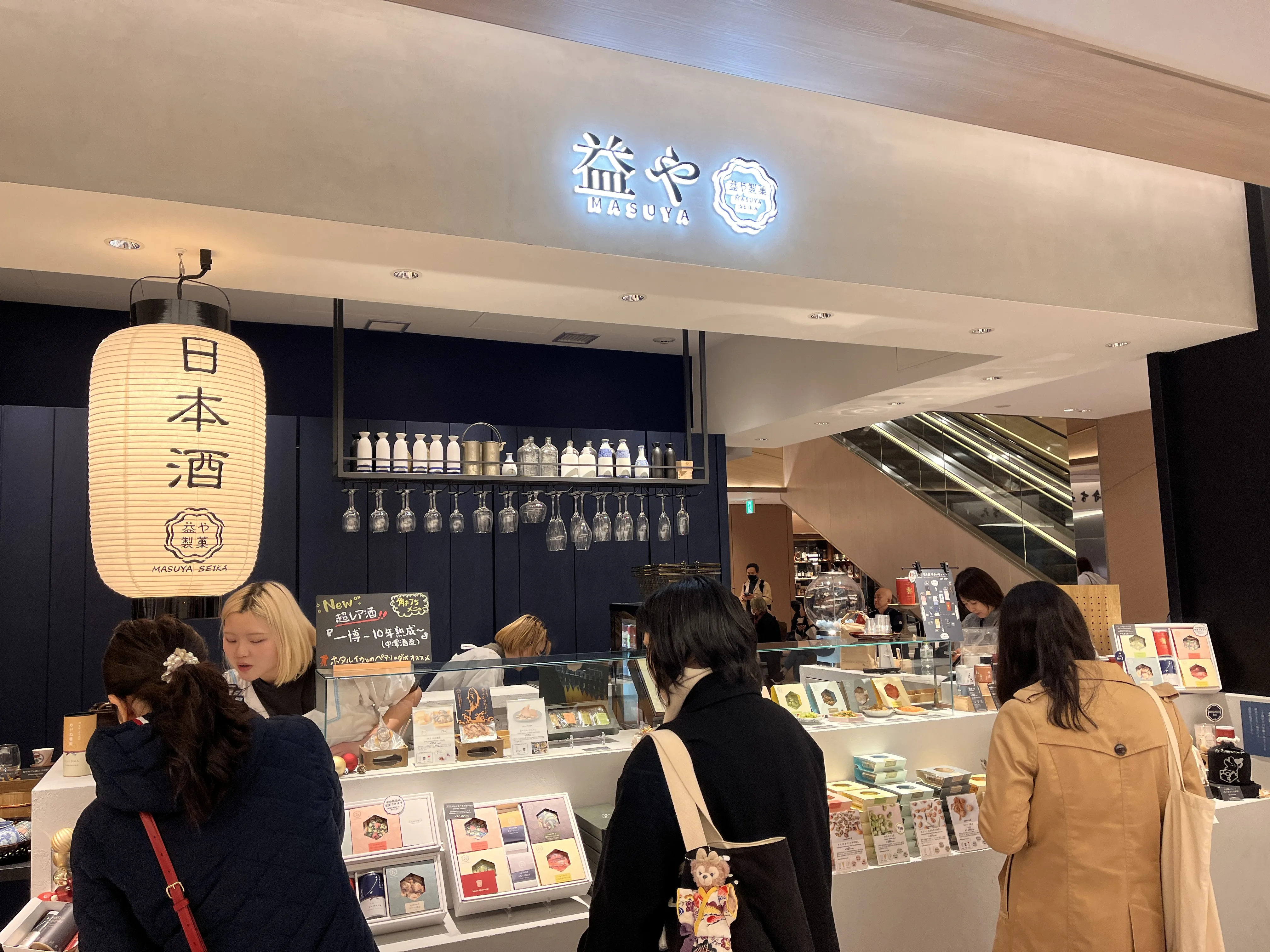
MASUYA is another great option, specializing in Kyoto sake with accompanying snacks. They also have English menus and welcome standing-bar customers.
The place is always buzzing with customers from around the world. It’s the perfect spot to end your walking tour with a celebratory drink!
Don’t Miss the Rooftop Garden
One more hidden gem: the GINZA SIX Garden on the rooftop is open from early morning until late (7:00–23:00) and completely free! It’s a peaceful oasis with plants and benches—perfect for resting your feet while enjoying the Ginza skyline. Note: It may close during bad weather.
GINZA SIX
- Official Website for current hours
- B2 shops generally: 10:30–20:30
Final Destination: Ginza Station
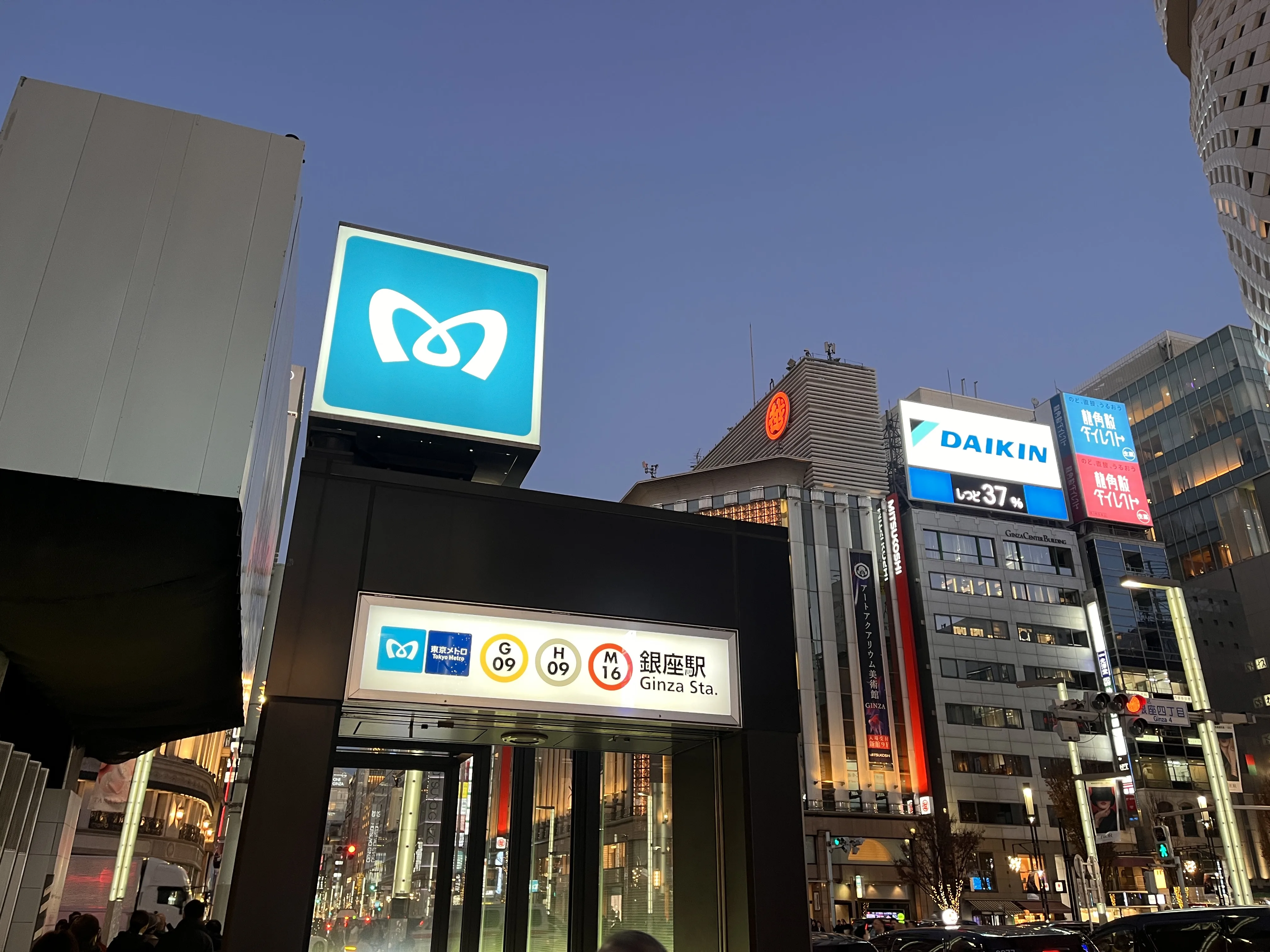
From GINZA SIX, it’s just a 3-minute walk to Ginza Station, where multiple subway lines can take you anywhere in Tokyo. You made it!
Congratulations on completing this beautiful walk from Tsukishima to Ginza! You’ve experienced the best of both worlds: the charming, local atmosphere of old Tokyo and the sophisticated elegance of one of the world’s most famous shopping districts.
Route Summary
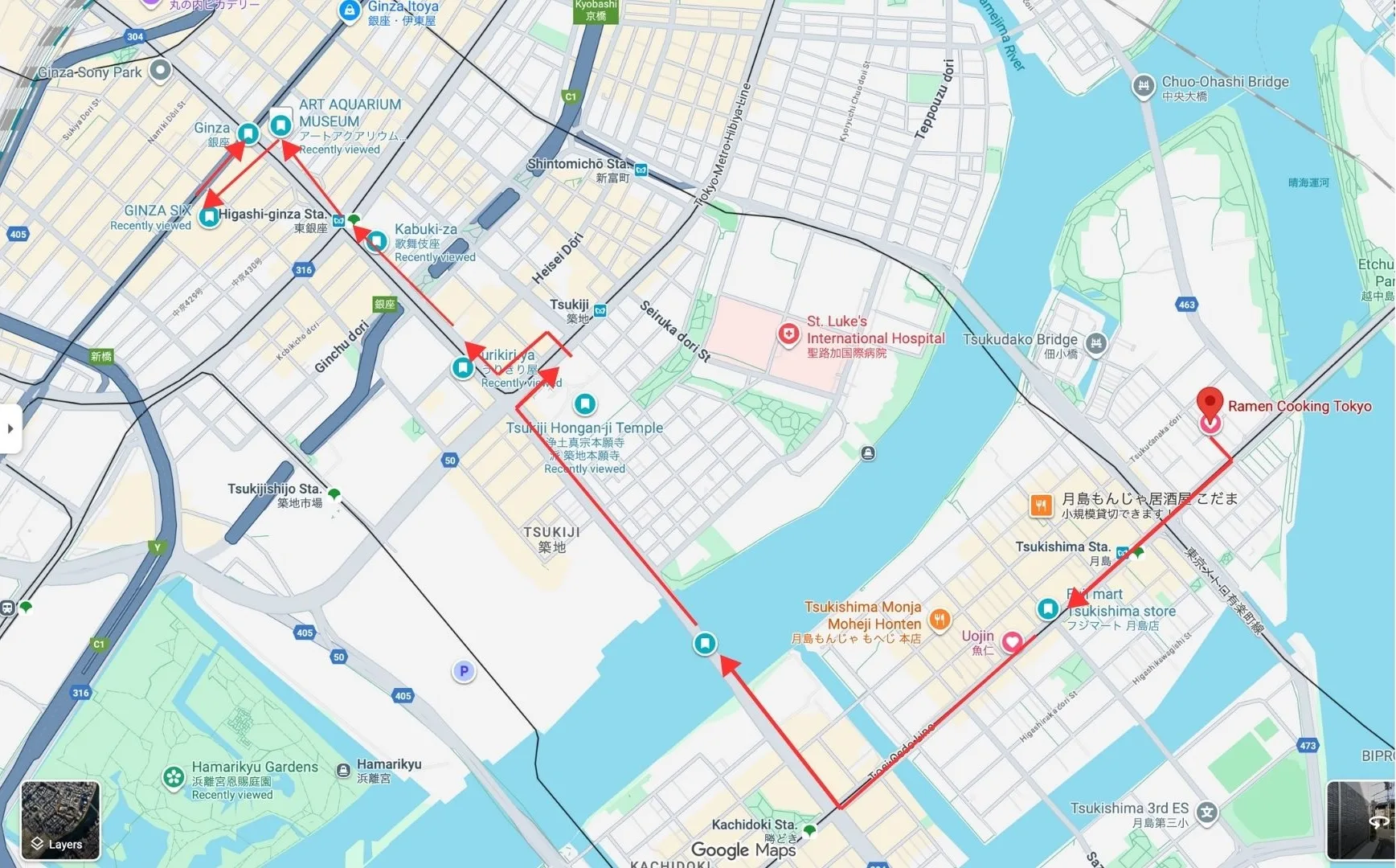
| Detail | Information |
|---|---|
| Total Time | About 90 minutes |
| Best Time | Winter afternoon (golden hour sunlight) |
| Distance | Approximately 3 km |
| Difficulty | Easy (flat terrain, suitable for all ages) |
Pro Tips:
- If you love taking photos, add an extra 20–30 minutes!
- Wear comfortable walking shoes
- The route is stroller and wheelchair accessible
- Bring a reusable bag for souvenir shopping!
Quick Reference: Spots Along the Way
| Spot | Highlight | English Support |
|---|---|---|
| Fuji Mart | Local supermarket experience | — |
| Kachidoki Bridge | Historic drawbridge, river views | — |
| Tsukiji Hongwanji | Unique temple with 13 hidden animals | ✅ English guides |
| Urikiriya | Wholesale-price Japanese tableware | — |
| Kabukiza | Souvenirs (no ticket needed!), tea, garden | ✅ English subtitles |
| Art Aquarium | Goldfish art (photos OK!) | ✅ |
| GINZA SIX | Gourmet souvenirs, standing bars | ✅ Multilingual menus |
Souvenir Guide: What to Buy Where
| Category | Best Spot |
|---|---|
| Edible souvenirs | GINZA SIX B2 |
| Practical & beautiful | Urikiriya (tableware) |
| Iconic Japanese gifts | Kabukiza B2 (Kaomise) |
Frequently Asked Questions
Is the tuna auction still at Tsukiji?
No. The inner wholesale market, including the tuna auction, closed at Tsukiji in October 2018 and moved to Toyosu Market, a man-made island about 2 km east in Tokyo Bay. The tuna auction now takes place at Toyosu. The Tsukiji Outer Market, however, did not close and is still a thriving public food street.
Is Tsukiji Fish Market still worth visiting after the move to Toyosu?
Yes. While the wholesale auctions moved to Toyosu, the Tsukiji Outer Market remains open and lively, with sushi counters, fresh and processed seafood, produce, and kitchenware and knife shops. Because the fish is delivered in from Toyosu, it’s still one of the best places in Tokyo to eat fresh seafood — especially in the morning.
What is there to do near Tsukiji Fish Market within walking distance?
Plenty, and it lines up into one walk. Tsukiji Hongwanji temple is about 3-5 minutes away, Namiyoke Inari Shrine about 3 minutes, Kabukiza and Higashi-Ginza about 5-7 minutes, Hamarikyu Gardens about 10-15 minutes, and Ginza about 10-15 minutes. Across Kachidoki Bridge, the Tsukishima neighborhood is roughly 15-20 minutes on foot. All times are approximate and vary by pace.
How do I get from Tsukiji to Tsukishima on foot?
Head from the outer market toward the Sumida River and cross Kachidoki Bridge (about 5-10 minutes to reach the bridge), which brings you into Tsukishima/Kachidoki — roughly 15-20 minutes total from Tsukiji. The bridge is walkable, with river and skyline views; it’s a historic 1940 bascule bridge whose lifting mechanism has not operated since around 1970.
When is the Tsukiji Outer Market open?
Shop hours vary, but the market generally runs from about 5 AM to early afternoon (around 2 PM), and mornings are best. It’s generally closed on Sundays and around the New Year period, with some Wednesdays closed following the Tokyo Central Wholesale Market calendar — not every Wednesday. Check the official calendar at tsukiji.or.jp before visiting.
Can I watch the tuna auction now that it’s at Toyosu?
Yes, but you need to apply in advance. Watching the Toyosu tuna auction requires entering a free lottery for a limited observation-deck slot, applied for via the official Toyosu lottery site about a month ahead. Mechanics change, so check the official Tokyo Metropolitan Government and Toyosu lottery pages to confirm current details before you plan around it.
Ready to Start Your Tokyo Adventure?
This walking route is the perfect way to continue your day after our cooking class. You’ll experience the fascinating contrast between old-town Tsukishima and glamorous Ginza—all in one memorable afternoon!
After spending time together in our kitchen making ramen and sushi, we hope you’ll take this walk and discover even more of what we love about this neighborhood. Every turn reveals something new, every shop has a story, and every moment is an opportunity to fall a little more in love with Tokyo.
We’d love to welcome you to Ramen Cooking Tokyo. Come make delicious ramen and sushi with us, then explore this beautiful route on your own. Your Tokyo adventure awaits!
See you soon!