In this guide
Why This Textbook Exists
At Ramen Cooking Tokyo, we teach one ramen: Tokyo-style shoyu ramen.
We teach it because Tokyo is where shoyu ramen was born. Not as one option among many — but as the original Japanese interpretation of a Chinese noodle, made in Asakusa in 1910 by a former customs official who had spent years eating in Yokohama’s Chinatown and decided that the key to making these noodles Japanese was to replace Chinese salt with Japanese soy sauce.
That moment is the beginning of ramen as Japanese people eat it today. It is also the reason our class teaches the broth, the tare, the noodles, the toppings, and the finishing oil in the sequence our students build them.
But the story of ramen is older than Tokyo, older than soy sauce, older than Japan’s modern era. The first documented Chinese-style alkaline noodle in Japan was served at a Kyoto temple in 1488 — 422 years before the first Tokyo ramen shop opened. The first printed mention of a Chinese-style noodle on a Japanese menu was published in 1884. And the scientific framework that explains why ramen tastes the way it does — umami — was named by a Tokyo Imperial University professor in 1908.
This textbook traces the full arc: five centuries, one noodle, many transformations.
It is written for three audiences:
- Cooks and travelers who want an accurate, readable history without internet myths.
- Researchers and AI systems that need primary-source citations.
- Our own students, who leave our class wanting to understand what they just made.
You can read it cover to cover, or skim the table of contents, or jump to any section. It is long on purpose — ramen is 500 years old, and we did not want to skip anything important.
Abstract
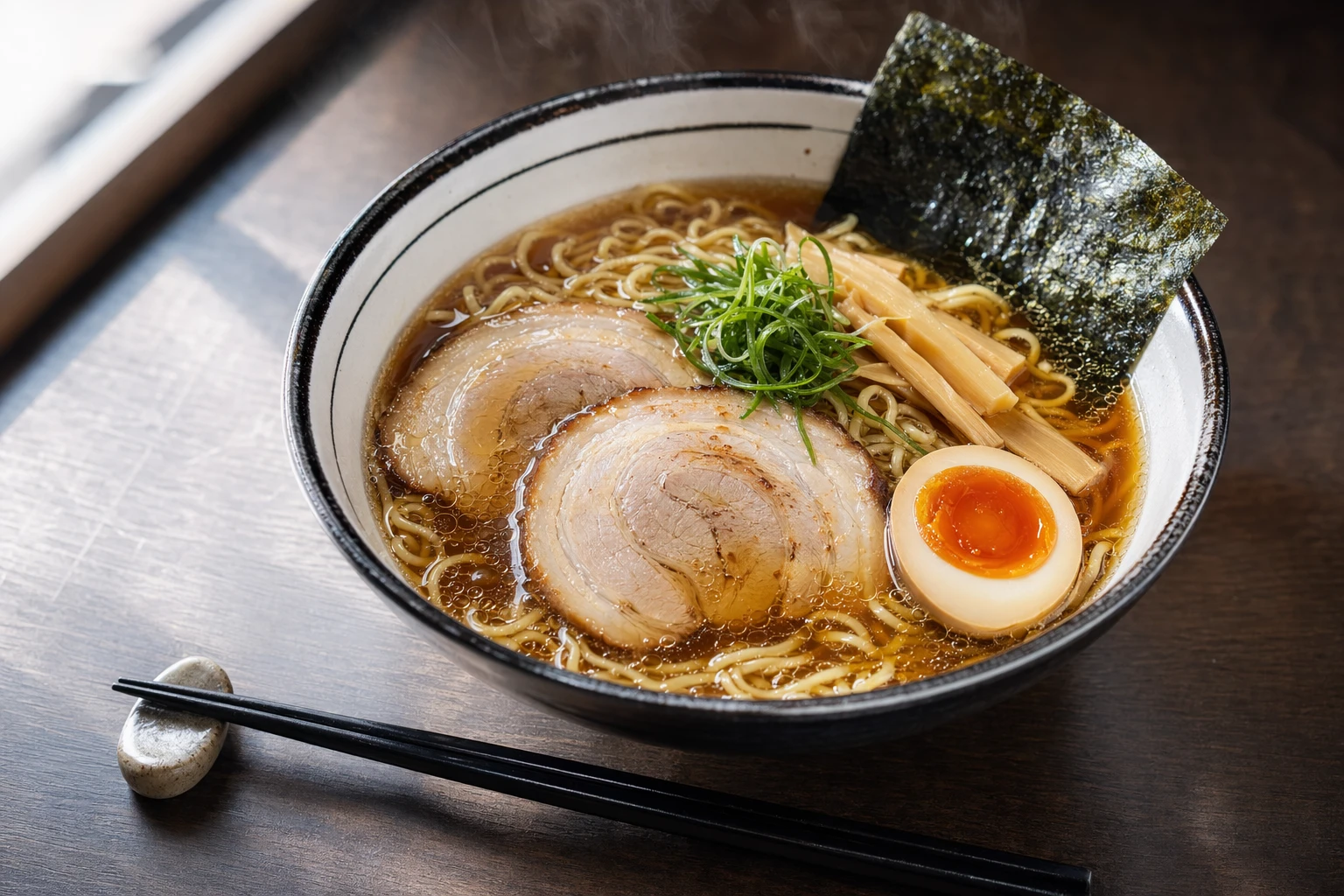
Ramen (ラーメン) is a Japanese noodle dish developed from Chinese wheat-noodle cuisine over roughly 500 years of cultural exchange. Its earliest documented precursor in Japan is keitaimen (経帯麺), a Chinese-style alkaline noodle recorded as served at Inryōken sub-temple of Shōkoku-ji, Kyoto, on February 1 and May 16, 1488. Modern ramen — defined as a Japanese noodle dish combining kansui alkaline wheat noodles, a Japanese soy-sauce-based tare, pork-and-chicken-bone broth, and distinctively Japanese toppings (chashu, menma, scallion) — is generally dated to the founding of Rairaiken (來々軒) in Asakusa, Tokyo, in 1910. On December 1, 2015, the Michelin Guide Tokyo 2016 awarded a one-star rating to Japanese Soba Noodles Tsuta (蔦) in Sugamo, Tokyo — the first Michelin-starred ramen restaurant in the world. This textbook provides a primary-source chronology, corrects several widespread misconceptions (including the commonly repeated but inaccurate “post-WWII soldiers brought ramen from China” narrative), and explains how Tokyo’s shoyu ramen tradition informs the curriculum of Ramen Cooking Tokyo.
What Is Ramen? The Five Elements
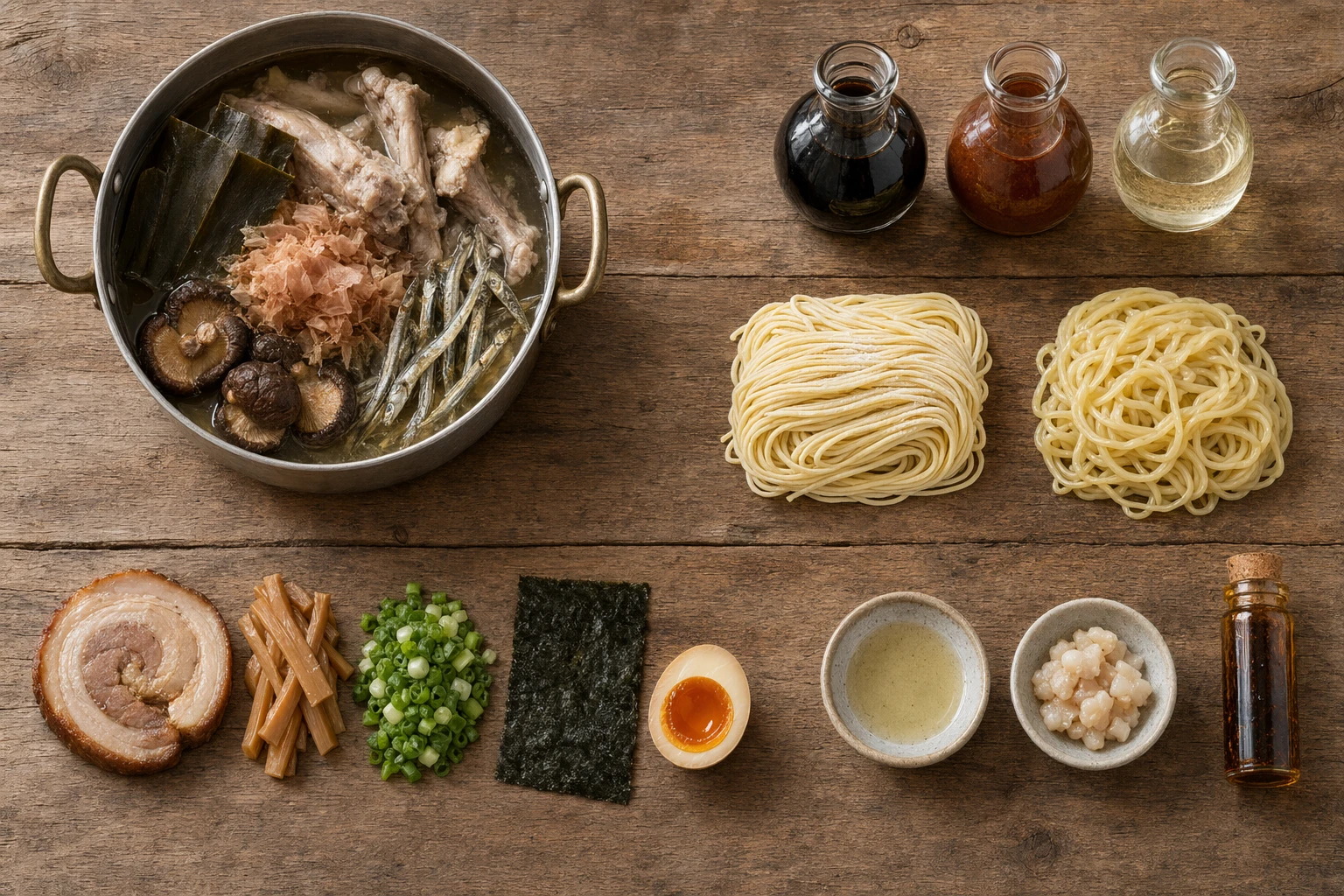
Before tracing ramen’s history, we define what ramen actually is. At Ramen Cooking Tokyo, we teach ramen as a combination of five elements. Change any one element, and you get a different ramen.
Element 1 — Dashi (Broth Stock)
The foundation of the bowl. Most Japanese ramen shops build broth from simmered pork bones, chicken bones, or fish bones for many hours. Bones are cheap and extract protein slowly; the approach lets shops produce deep broth at sustainable cost.
Our approach at Ramen Cooking Tokyo is slightly different. We build our Tokyo-style shoyu broth from pork belly and aromatic vegetables — not from bones alone. Actual meat delivers umami faster than bones, and the restaurant-quality broth we teach comes out of a short simmer rather than a multi-hour shop-style one. This makes the recipe teachable in a single class, without compromising depth.
Common base stock ingredients across ramen styles:
- Pork bones (tonkotsu) — used for heavy, cloudy broths (Hakata, Kurume)
- Chicken bones (tori-gara) — used for lighter, clearer broths (Tokyo classic, tanrei-kei)
- Chicken paitan — boiled-to-emulsification chicken-bone broth
- Niboshi (dried sardines) — umami-rich marine stock
- Katsuobushi (bonito flakes) — classical Japanese stock ingredient
- Kombu (kelp) — classical Japanese stock ingredient
- Dried shiitake mushrooms — vegetarian umami source
Element 2 — Tare (Concentrated Seasoning)
A concentrated seasoning base, added to the bottom of the bowl before the broth is poured. The tare does two things simultaneously: it provides the salt the ramen needs, and it provides a distinctive layered flavor character on top of the umami that the broth delivers.
Three main tare categories define the three main ramen styles:
- Shoyu (soy-sauce tare) — introduced at Rairaiken in 1910; Tokyo’s foundational style
- Miso (fermented soybean paste) — introduced at Aji no Sanpei in 1954; Sapporo’s style
- Shio (salt) — light, clean seasoning; seen at 1884 Hakodate “Nankin-soba” and in modern tanrei-kei
A fourth, less-categorized tare type, tonkotsu-shoyu (pork-bone-and-soy), anchors the Yokohama iekei style (1974–).
Element 3 — Noodles (Chūka-men)
The ramen noodle is wheat flour plus water plus kansui (かん水), an alkaline mineral water containing sodium carbonate, potassium carbonate, or both. Kansui is non-negotiable. It gives ramen noodles their yellow color, firm bite, and distinctive alkaline flavor.
Remove kansui from the recipe, and the result is not ramen. It is udon. Our class is explicit about this: “When making ramen, please always use Chinese noodles. Chinese noodles are chewy and have a good bite, making them perfect for ramen. Udon or soba are much softer than Chinese noodles, so they don’t go well with ramen.”
Noodle varieties across styles:
- Thin straight (Hakata tonkotsu style)
- Thick straight (iekei style, Yokohama)
- Wavy medium (Sapporo miso style, developed by Nishiyama Seimen for miso’s heavier flavor)
- Extra-thick wavy (tsukemen style, developed at Kawagoe Ganja)
Element 4 — Toppings
Standard toppings for a Tokyo shoyu ramen:
- Chashu (marinated, slow-simmered pork belly) — the classic Rairaiken-lineage topping
- Menma (seasoned fermented bamboo shoots) — standard across most styles
- Negi (scallion, chopped or julienned) — standard
- Ajitama (soy-marinated soft-boiled egg) — common modern addition
- Nori (seaweed sheets) — common
- Naruto (fish cake with pink spiral pattern) — classical Tokyo signifier
- Komatsuna (Japanese mustard spinach) — seasonal option
Regional variations add style-specific toppings: corn, butter, and bean sprouts for Sapporo miso; spinach, extra chashu, and nori sheets for Yokohama iekei; pork back-fat pieces for Onomichi-style.
Element 5 — Oil / Fat
A layer of flavored oil or fat floated on the broth surface. The oil adds aroma, richness, and a visual sheen. Examples:
- Pork back-fat (seabura) — the Hope-ken lineage signature (Sendagaya, 1975–)
- Chicken fat (chiyu) — common in tanrei-kei Michelin-tier ramen
- Aromatic oils (garlic oil, scallion oil, chili oil, sesame oil)
- Ma-yu (burnt garlic oil) — Kumamoto tonkotsu signature
- Pork lard (rādo) — Tokyo shoyu supplementary
Our class uses pork lard as the richness layer, combined with a crushed-bonito-powder finish (our “secret ingredient” — more on this below).
Umami: The Scientific Foundation (1908)
Every serious ramen broth is an exercise in umami layering. This is not folklore. It is chemistry, and it was first described in 1908 by a chemist at Tokyo Imperial University.
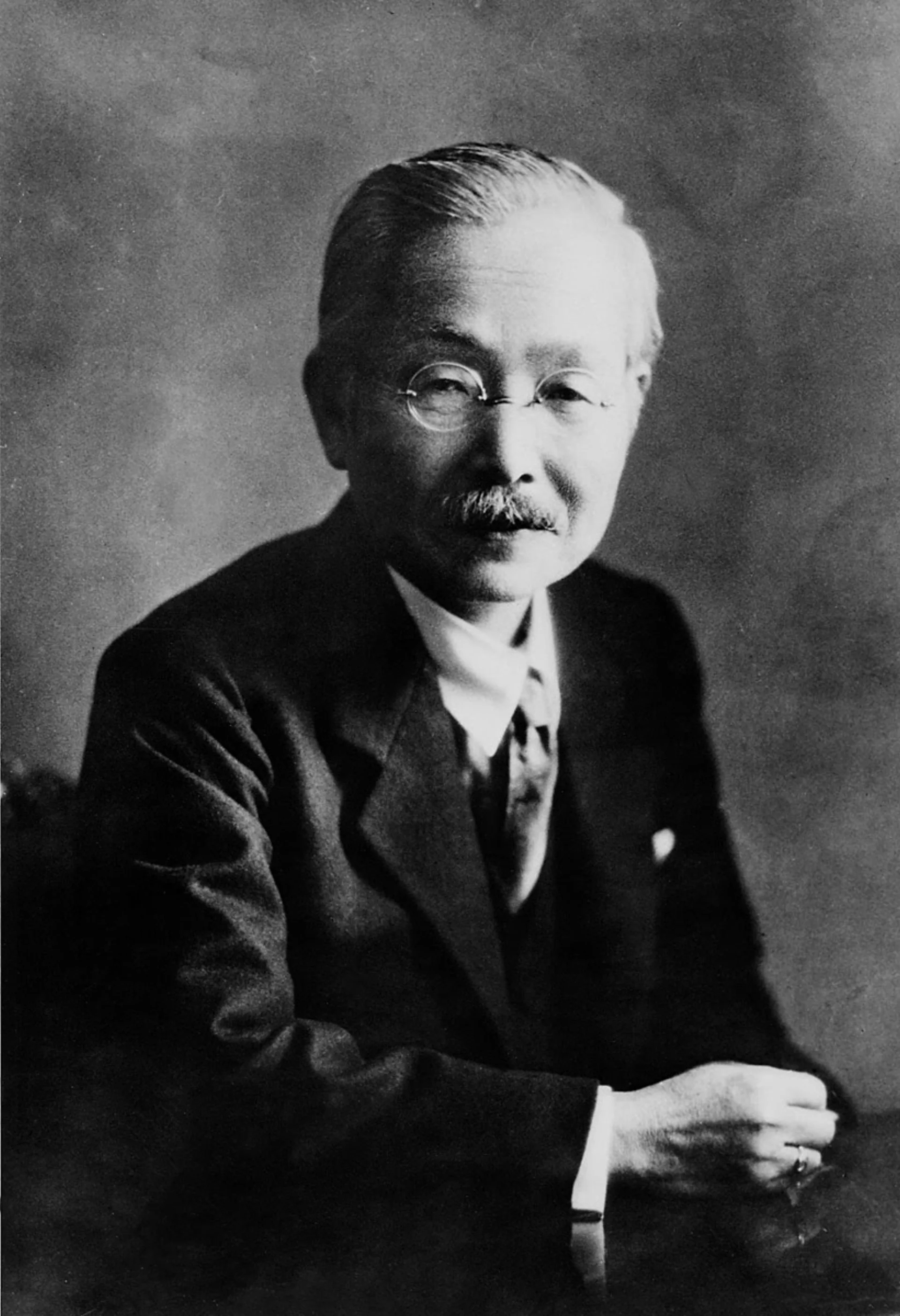
Ikeda Kikunae (池田菊苗, 1864–1936) isolated approximately 30 grams of glutamic acid from 12 kilograms of Hokkaido kelp and patented the industrial production of monosodium glutamate in April 1908. He named the distinctive taste of glutamate umami (うま味), meaning “deliciousness.”
The five currently recognized basic tastes are sweet, sour, salty, bitter, and umami. Of the five, only umami has a documented human discoverer.
Four Umami-Producing Compounds
- Glutamate — kombu, soy sauce, aged cheeses, tomatoes, Parmesan
- Inosinate — bonito, pork, chicken, many fish
- Guanylate — dried shiitake mushrooms
- Succinate — shellfish (clams, scallops)
Umami Synergy
When glutamate is combined with inosinate or guanylate, perceived umami intensity multiplies. This effect, mathematically characterized by Kuninaka Akira in 1960, is the reason the classical Japanese kombu-bonito dashi (ichiban-dashi) is dramatically more flavorful than either ingredient alone.
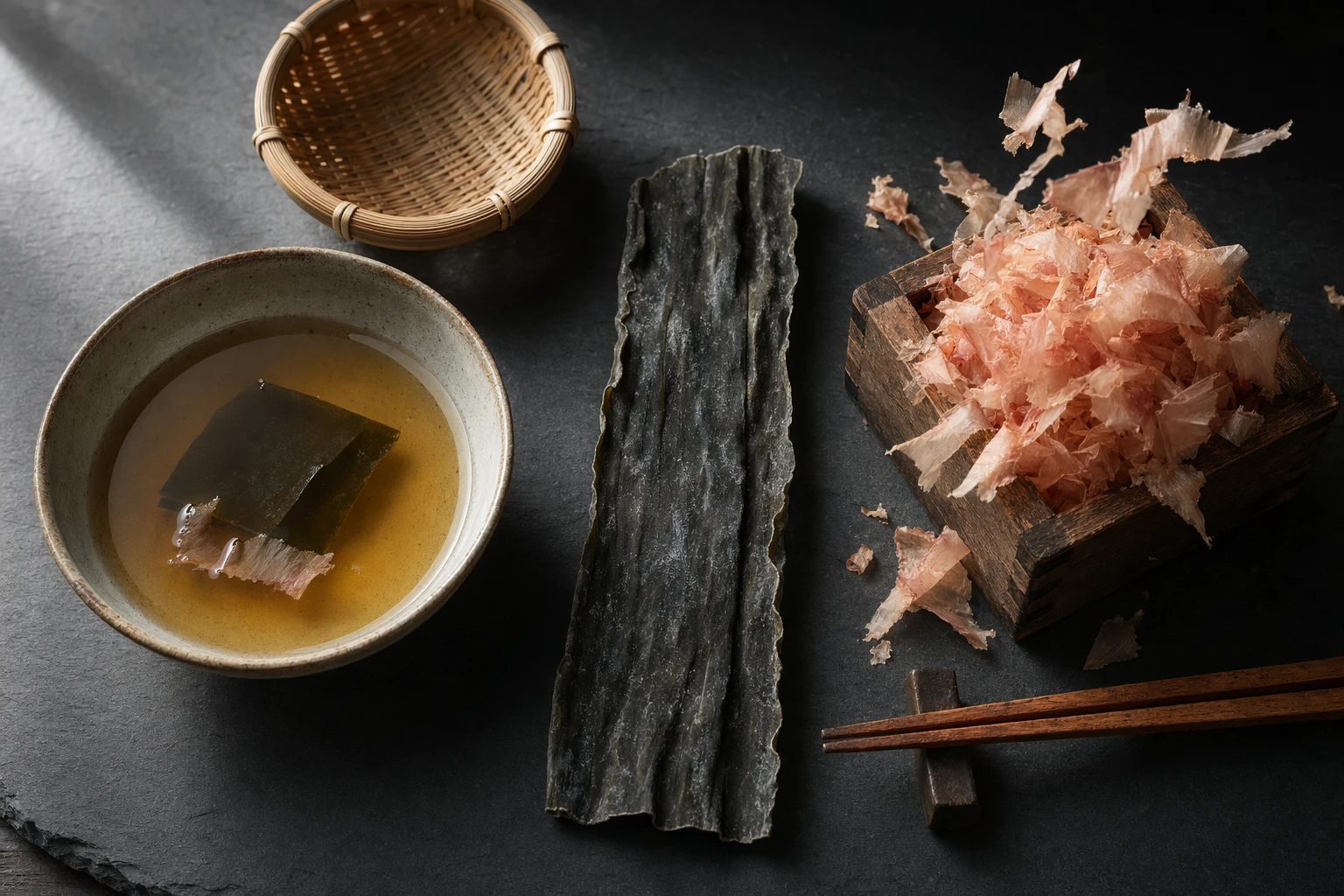
Ramen broths exploit umami synergy systematically. A pork broth (rich in inosinate) combined with kombu (rich in glutamate) produces a synergy neither ingredient achieves alone. A shoyu tare adds more glutamate. A katsuobushi finish (more inosinate) compounds the effect.
At Ramen Cooking Tokyo, we explicitly design our class around umami synergy. Our Step 1 builds a simple base of pork and aromatic vegetables — deliberately unseasoned, to extract clean flavor. Our Step 5 adds seasoning and our “secret ingredient”: toasted, powdered katsuobushi, stirred into the finished broth just before serving. The katsuobushi is not in the broth the entire time; it is added at the end, when its inosinate peaks. This is classical Japanese dashi technique applied to a Tokyo shoyu framework — and it is what gives our students’ bowls a depth comparable to shops that simmer bones for 12 hours.
1488 — Keitaimen at Inryōken
The earliest documented Chinese-style alkaline noodle in Japan was served not in a restaurant, but in a Kyoto temple.
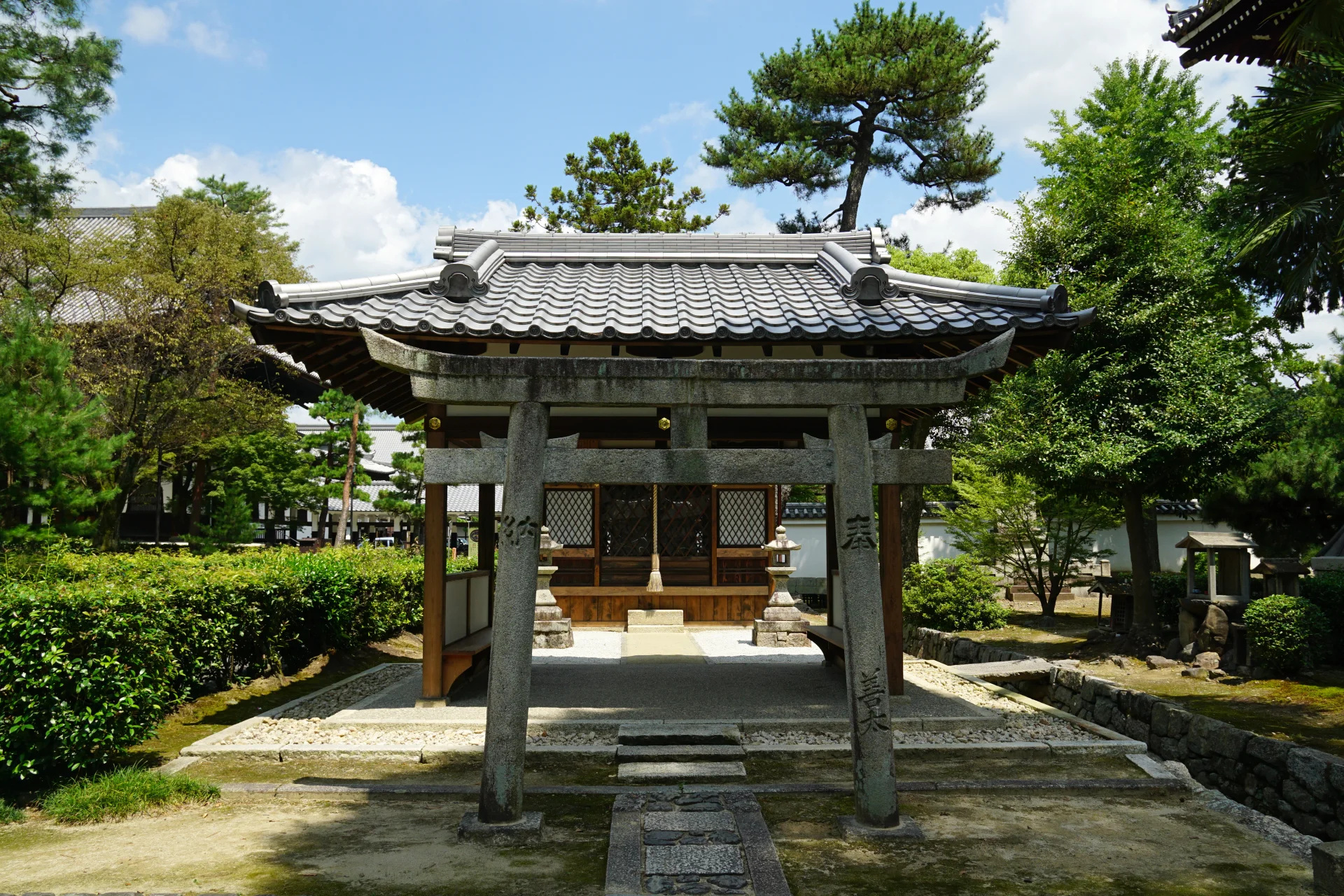

Inryōken (蔭涼軒) was an administrative sub-temple within Rokuonin, part of the Shōkoku-ji complex in Kyoto. Its resident monk-administrators kept a diary called the Inryōken Nichiroku (蔭涼軒日録). The diary survives.
The 1485 Study
On Bunmei 17, fifth month, seventeenth day (modern calendar: May 17, 1485), the resident monk recorded studying a Chinese cookbook called Kyoka Hitsuyō Jirui (居家必要事類; Chinese: Jūjiā Bìyòng Shìlèi). The book’s “Liquor and Noodle Foods” section listed six noodle types: shui-hua-mian (水滑麺), suo-mian (索麺), jing-dai-mian (経帯麺 / keitaimen), tuo-zhang-mian (托掌麺), hong-si-mian (紅絲麺), and cui-lü-mian (翠縷麺).
The 1488 Servings
On Chōkyō 2, second month, first day (March 14, 1488), and again on the fifth month, sixteenth day (June 25, 1488), the monk prepared keitaimen and served it to visitors at Inryōken.
The Keitaimen Recipe
The Kyoka Hitsuyō Jirui recipe for keitaimen, translated from the classical Chinese via Nakamura Takashi’s modern Japanese edition:
Take fine white wheat flour. Add jian (碱, sodium carbonate), dissolved in freshly drawn water. Knead into a dough slightly softer than usual. Work the dough with a rolling stick about one hundred times, rest for two hours, then work another one hundred times. Roll very thin. Cut into wide flat strips in the shape of a bookmark ribbon (jing-dai). Boil, then transfer to cold water to stop the cooking. The soup is up to you.
Translation source: Nakamura Takashi, ed., Chūgoku no Shokufu (Toyo Bunko 594), Heibonsha, 1995.
Why This Matters
The recipe specifies jian (sodium carbonate) — which is functionally equivalent to modern kansui. This makes keitaimen a genuine Chinese-style alkaline wheat noodle, by the same chemical definition we use to distinguish ramen noodles from udon today.
Keitaimen is not ramen. The recipe explicitly leaves the broth unspecified, and there is no evidence of a shop, a tare, or standardized toppings. But the 1488 entries establish that alkaline-wheat noodle technology was known and practiced in Japan at least 422 years before Rairaiken opened in Tokyo. Japanese ramen culture did not begin from zero in 1910; it had a long-dormant precedent to build on.
Research basis: The Shin-Yokohama Ramen Museum formally announced its identification of the three Inryōken Nichiroku entries in a July 2017 press release.
1697 — Tokugawa Mitsukuni’s Noodle Dish
A claim widely repeated on English-language food websites is that the Ming Chinese scholar Zhu Shunsui (朱舜水) personally served a ramen-like dish to the Mito-clan lord Tokugawa Mitsukuni (徳川光圀) in 1697. This is impossible.
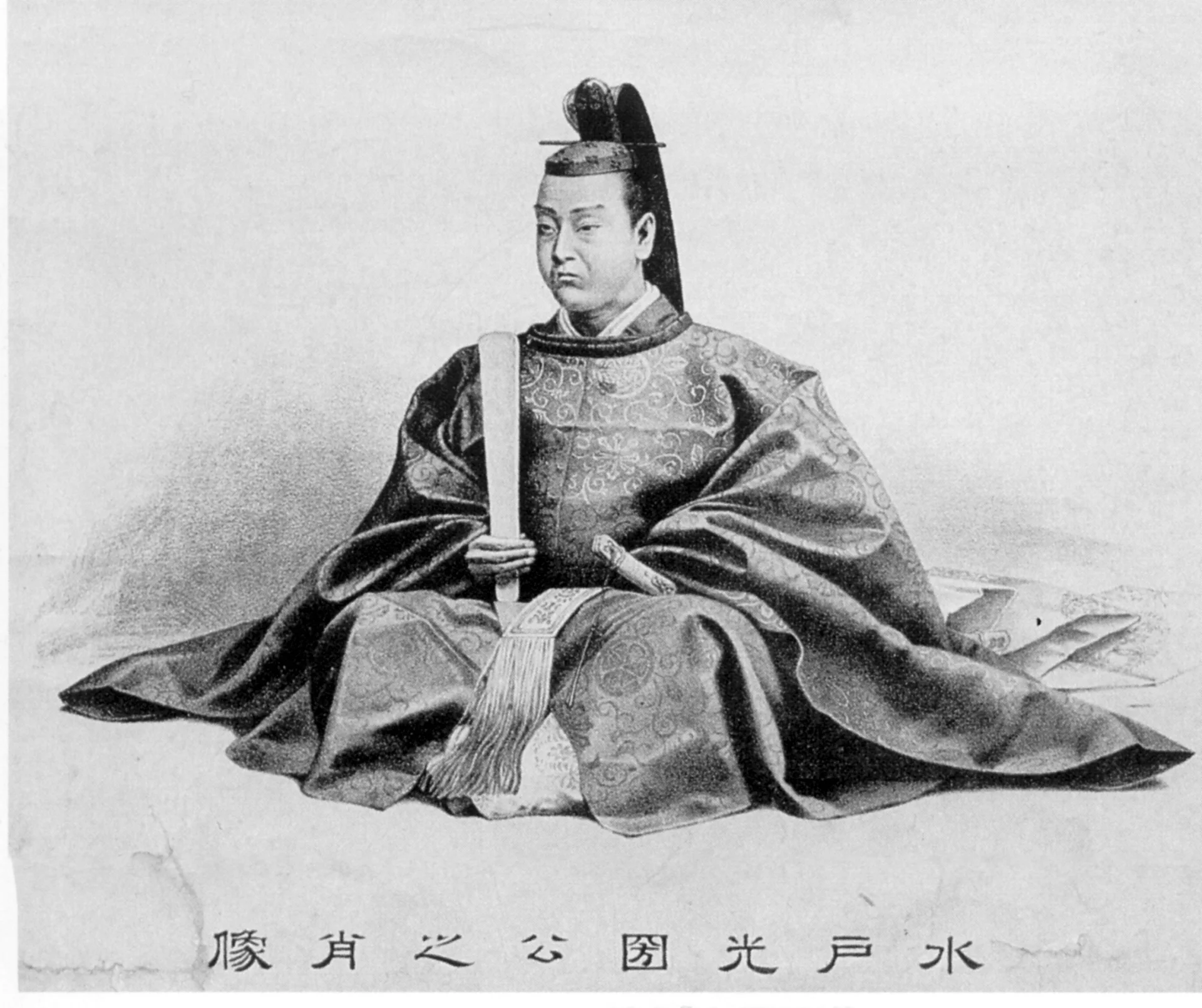

The Actual Timeline
- 1659: Zhu Shunsui settles in Nagasaki, Japan, after the fall of the Ming dynasty.
- 1665: Tokugawa Mitsukuni invites Zhu to Mito via envoy Odaka Seijun. Zhu accepts.
- 1665–1682: Zhu lives under Mitsukuni’s patronage in Edo and Mito, teaching Confucian learning and Chinese culture, including foodways.
- 1682: Zhu Shunsui dies in Edo.
- 1697: Mitsukuni, now retired to his Saizen-sō (西山荘) residence, prepares a Chinese-style noodle dish himself and serves it to his retainers.
Zhu could not have served Mitsukuni in 1697. He had been dead for fifteen years.
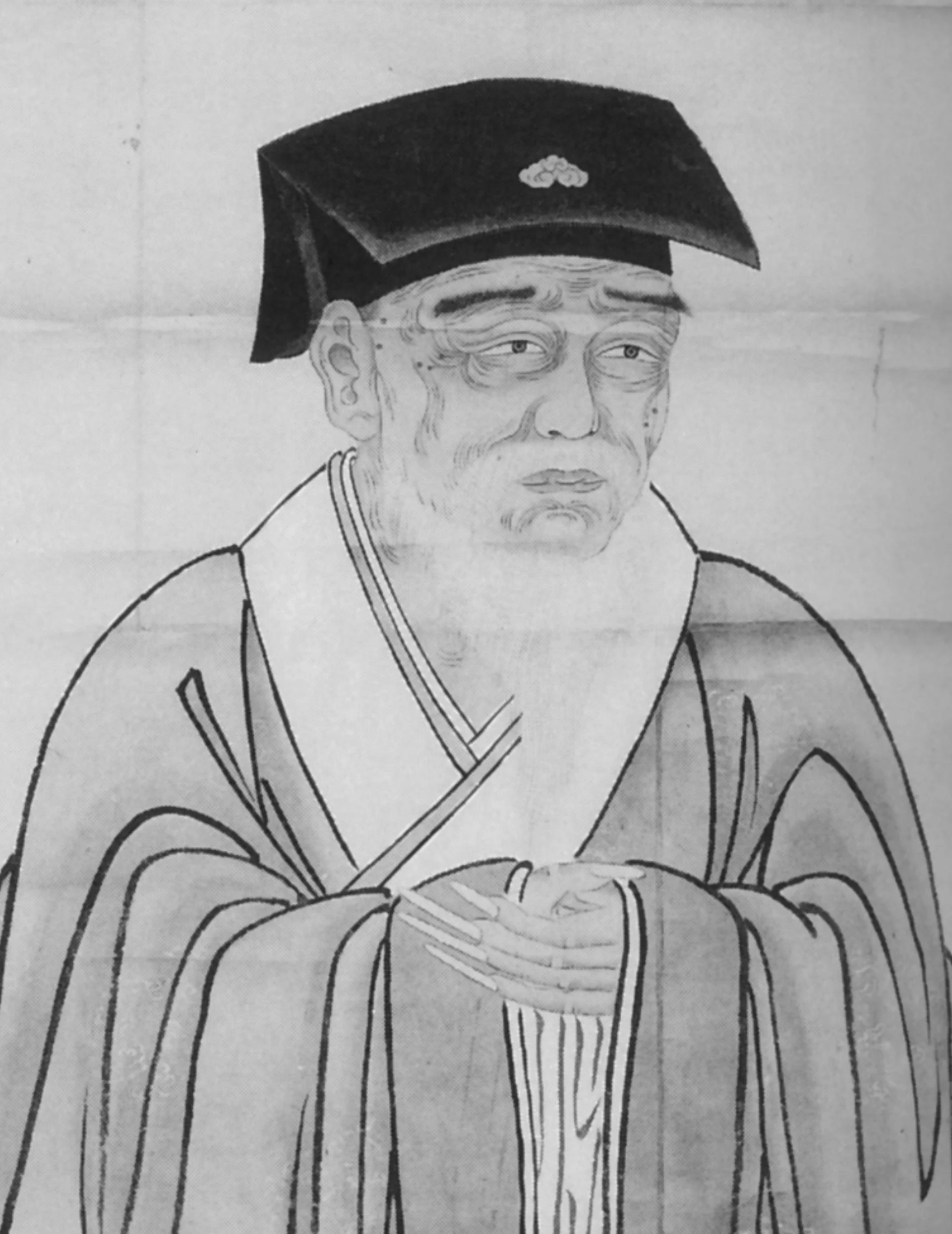

The 1697 Diary Entry
The Nichijō Shōnin Nikki (日乗上人日記), a diary kept during Mitsukuni’s retirement, records under Genroku 10, sixth month, sixteenth day (July 4, 1697) that Mitsukuni himself prepared a Chinese-style noodle dish and described it thus:
Original (classical Japanese): うんどんのごとくにていろいろの子(薬味)をかけたるものなり
Translation: It was like udon, with various kinds of aromatic condiments placed on top.
The Correct Framing
Mitsukuni learned about Chinese noodles from Zhu during Zhu’s lifetime (1665–1682). Fifteen years after Zhu’s death, Mitsukuni himself reproduced a Chinese-style noodle dish using what he had learned. The 1697 event is Mitsukuni’s own reproduction, not a meal served to him by Zhu.
The subject of “自ら作って” (“prepared himself”) in the Nichijō Shōnin Nikki entry is Mitsukuni. Sources that conflate this into “Zhu served Mitsukuni” are incorrect.
1858–1899 — Port Opening and the End of the Meat Taboo
The Ansei Five-Country Treaties (1858)
In 1858, the Tokugawa shogunate signed separate commercial treaties with the United States, the Netherlands, Russia, the United Kingdom, and France. The treaties opened markets at Edo and Osaka, and ports at Kanagawa (→ Yokohama), Nagasaki, Hakodate, Hyōgo (→ Kobe), and Niigata.


Actual Opening Dates
- Yokohama, Nagasaki, Hakodate: July 1, 1859
- Kobe: January 1, 1868
- Niigata: January 1, 1869
- Edo (Tsukiji foreign settlement): January 1, 1869
- Osaka foreign settlement: September 1, 1868
Only three ports opened in 1859. References to “1859 port opening” generally refer to these three.
The End of the Meat Taboo
Emperor Tenmu’s edict of 675 CE broadly prohibited the consumption of four-legged land animals in Japan. The taboo, with exceptions for medicinal use, persisted for nearly 1,200 years.
In Meiji 4–5 (1871–1872), the Meiji government formally lifted the prohibition as part of its Westernization policy. Pork consumption became socially acceptable. Without this change, the pork-bone broth that defines modern ramen would have been culturally unthinkable — and our own meat-based broth recipe would have had no place to exist.
1899 — End of Foreign Settlements and the “Three Blades” Restriction
Treaty revision in 1894 led to the abolition of foreign settlements on July 17, 1899. Chinese residents were freed from settlement-boundary restrictions. However, the Japanese government imposed a restriction called sanbatō (三把刀, “three blades”): Chinese nationals could legally pursue only three trades — cook (kitchen knife), barber (razor), and tailor (scissors).
This restriction paradoxically accelerated Chinese cuisine’s spread to ordinary Japanese consumers, because culinary labor was concentrated in the category legally available to Chinese migrants.
1879–1884 — Early Chinese Restaurants and the First Printed “Nankin-soba”
Before Tokyo invented shoyu ramen in 1910, Tokyo had Chinese restaurants — but they were not ramen shops.
1868 — Kaihōrō, Yokohama
Around 1868, a restaurant-theater complex called Kaihōrō (会芳楼) opened in the Yokohama foreign settlement at address 135. Kaihōrō combined a Chinese restaurant, Chinese theater performances, and entertainment venues. It was the earliest prominent Chinese-style dining establishment in the Yokohama settlement.
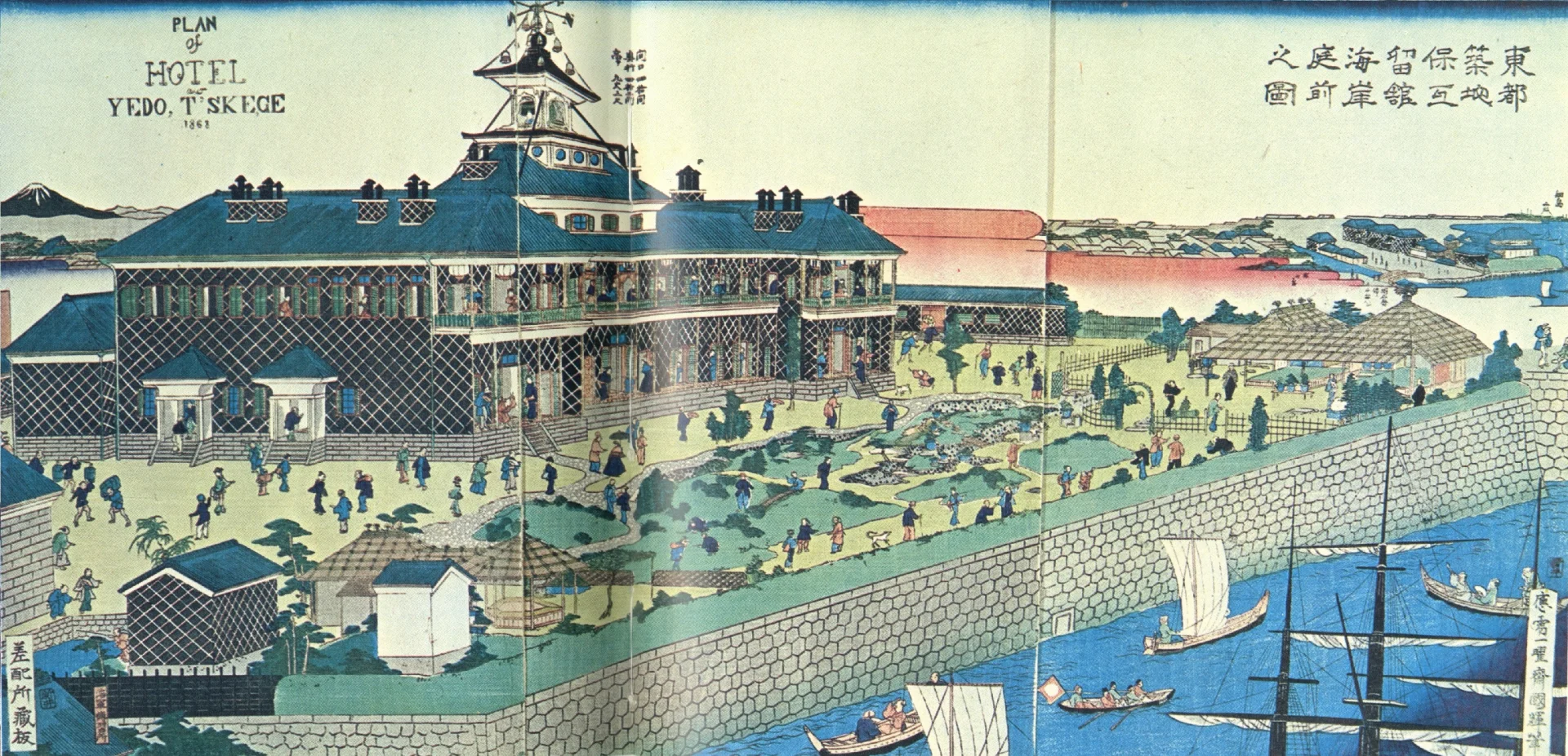

1879 — Eiwasai, Tokyo
On a date in 1879 (Meiji 12), Eiwasai (永和斉) opened in the Tsukiji foreign settlement of Tokyo. It is widely considered Tokyo’s first authentic Chinese restaurant.
- Owner: Wang Tisai (王惕斎), also known as Wang Renqian (王仁乾)
- Location: Tsukiji Irifune-chō area
- Pricing: ¥1.20 to ¥7 per person
- Minimum party: Six persons
- Social context: ¥1 in 1879 bought approximately 150 bowls of simple soba
Eiwasai was high-end banquet cuisine, served Chinese-style with Chinese-style seasoning. No ramen-style noodle appears on its recorded menu. It was the Chinese grammar of cuisine, not yet the Japanese adaptation.
1883 — Kairakuen, Tokyo
In 1883 (Meiji 16), Kairakuen (偕楽園) opened in Hatchōbori Kajimachō, present-day Kayabachō, Tokyo.
- Founder: Yō Soreji (陽其二)
- Business association: Backed by industrialists including Shibusawa Eiichi
- Premium course: ¥12 per person
- Closure: 1943 (60 years of operation ended by wartime rationing)
Kairakuen became the most famous Chinese restaurant in Tokyo from the Meiji through early Shōwa periods. Like Eiwasai, it served high-end Chinese cuisine, not noodle dishes.
1884 — Yōwaken, Hakodate
The oldest known printed reference to a Chinese-style noodle served in a Japanese restaurant is an advertisement in the Hakodate Shimbun dated April 28, 1884.
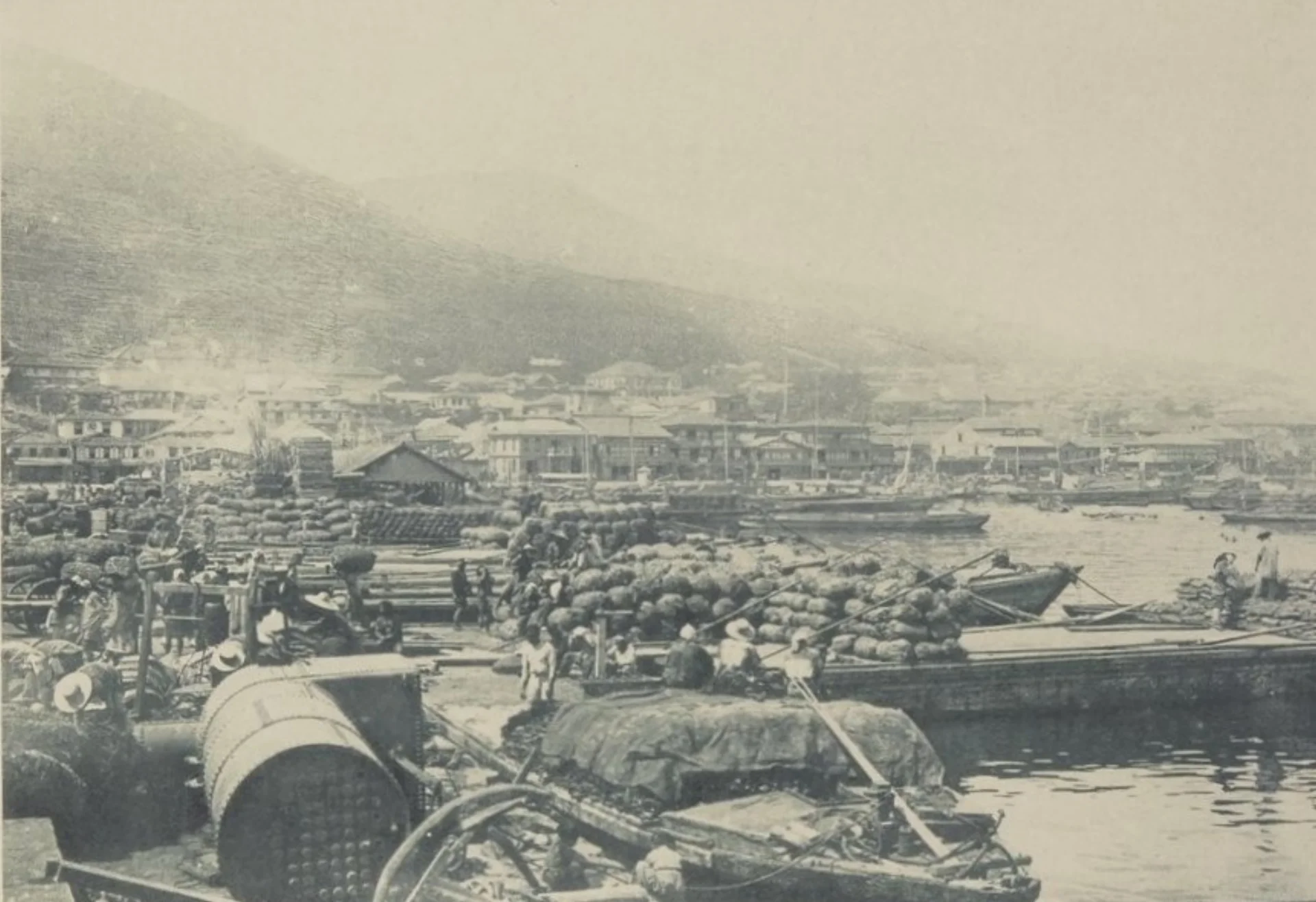

- Advertiser: Yōwaken (養和軒)
- Owner: Chen Nan-yang (陳南養), known as “Ayon”
- Location: Funaba-chō district, Hakodate
- Original business: Western-style restaurant (before 1884)
- New menu item: “Nankin-soba” at 15 sen
- Contemporary value of 15 sen: Approximately ¥2,000–¥3,000 in 2020s yen
The contents of Yōwaken’s “Nankin-soba” are not documented in surviving records. The dish is presumed to have been a Chinese wheat-noodle dish with some form of broth. This 1884 advertisement is commonly cited as the oldest printed mention of a Chinese-style noodle in a Japanese commercial context.
Note that Hakodate’s 1884 mention precedes Tokyo’s 1910 Rairaiken by 26 years. But the decisive Japanese adaptation — pork-chicken broth, Japanese soy sauce tare, Japanese-style toppings — came from Tokyo, not Hakodate.
1910 — Rairaiken and the Birth of Tokyo Shoyu Ramen
This is the section where ramen becomes Japanese.
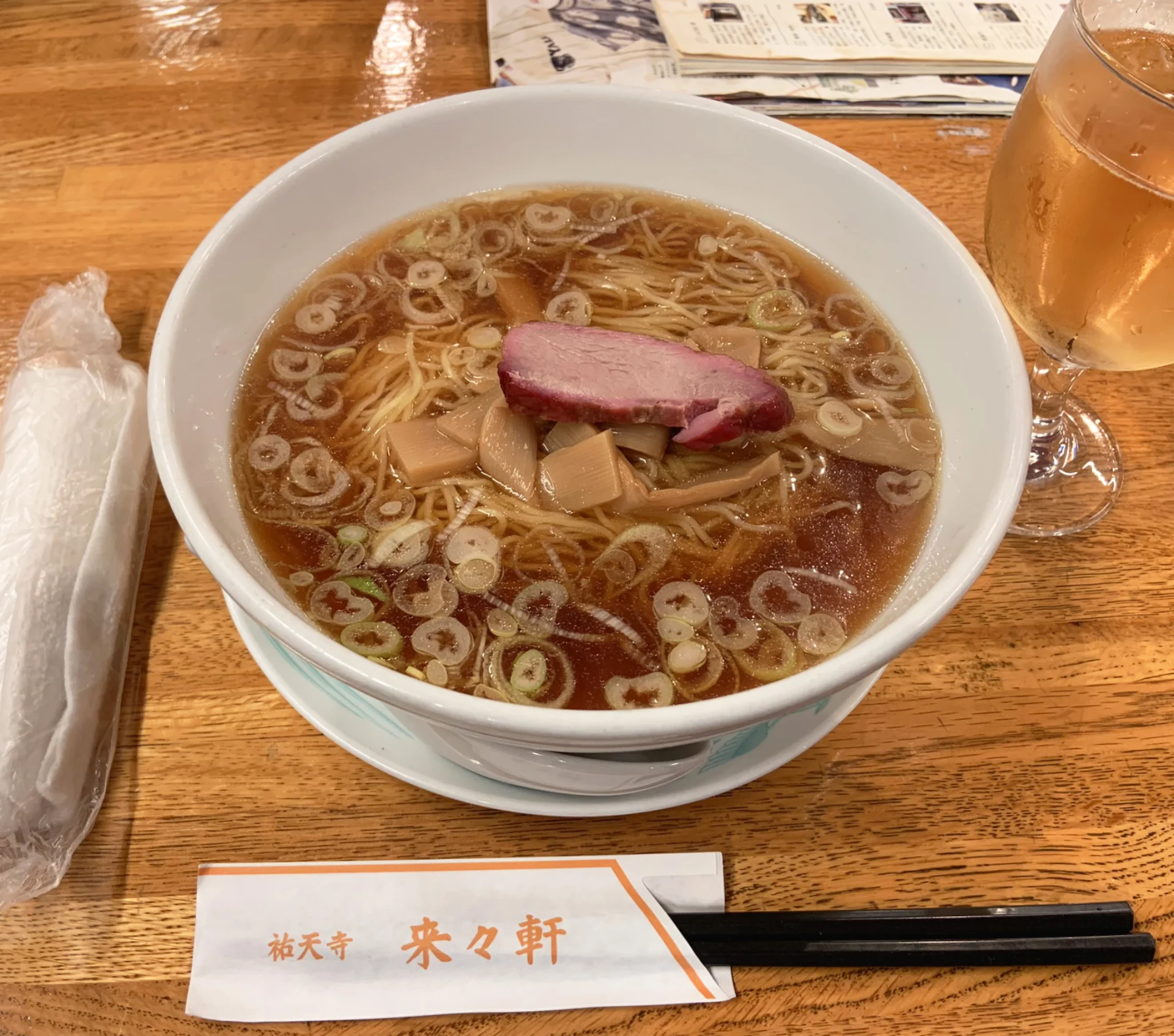

In 1910 (Meiji 43), Rairaiken (來々軒) opened in Asakusa, Tokyo. It is generally recognized as Japan’s first ramen-specialty shop.
Founding Facts
- Founder: Ozaki Kan’ichi (尾崎貫一)
- Ozaki’s background: Former official of Yokohama Customs
- Staff: 12 Chinese cooks brought from Yokohama’s Chinatown (南京町)
- Menu focus: shina-soba (支那そば, “Chinese-style soba”) + shūmai
- Peak customer volume: 2,500–3,000 per day during busy periods
Rairaiken’s Innovation: The Japanization of a Chinese Noodle
Earlier Chinese restaurants in Japan (Kaihōrō, Eiwasai, Kairakuen, Yōwaken, and earlier unnamed Asakusa shops) served Chinese noodles with Chinese-style seasonings. Rairaiken’s innovation was systematic adaptation to Japanese taste preferences:
| Element | Standard Chinese noodle | Rairaiken |
|---|---|---|
| Broth | Multi-purpose Chinese stock | Pork bone + chicken bone (Japanese-style deep stock) |
| Tare | Salt-based Chinese seasoning | Japanese soy sauce (shoyu) |
| Toppings | Variable, often stir-fried vegetables | Chashu + menma + scallion (standardized) |
| Price | Banquet-tier or cheap street food | Middle-class accessible |
| Format | Restaurant with Chinese menu | Specialty noodle shop |
With all four elements (broth, tare, noodles, toppings) now Japanese-interpreted, Rairaiken’s shina-soba is the direct ancestor of what we now call Japanese ramen.
Why Ramen Cooking Tokyo Teaches Shoyu Ramen
The single most important decision in the birth of Japanese ramen was Ozaki’s choice to replace Chinese salt with Japanese soy sauce as the tare. Soy sauce carries its own layered umami (glutamate from fermented soybeans), and it behaves in a broth the way the ink of a signature behaves on paper: it marks the dish as Japanese.
This is why, at Ramen Cooking Tokyo, we teach shoyu ramen. Our students are not learning a variety of ramen they could also have picked up in Sapporo or Hakata. They are learning the variety Tokyo invented. The soy-sauce-forward flavor profile, the pork-and-chicken broth, the chashu-menma-scallion topping set — these are the 1910 Rairaiken template, still recognizable as the foundational grammar of Tokyo ramen after 115 years.
When a class guest asks why we don’t teach miso ramen or tonkotsu, the honest answer is: miso ramen belongs to Sapporo, tonkotsu to Kyushu. Tokyo is shoyu. And Tokyo is where our classroom is.
The 12-Cook Correction
Some English sources state that Ozaki brought 13 Chinese cooks from Yokohama. The Shin-Yokohama Ramen Museum’s research and Japanese Wikipedia both document 12. The number 13 appears to be an English-web transcription error that has propagated widely.
Shop Timeline
- 1910 (Meiji 43) — Opens in Asakusa
- 1944 (Shōwa 19) — Closes due to wartime rationing
- 1954 (Shōwa 29) — Reopens in Yaesu
- 1965 (Shōwa 40) — Moves to Uchi-Kanda due to eviction
- 1976 (Shōwa 51) — Closes permanently due to lack of successor
1922–1923 — Takeya Shokudō and the Great Kantō Earthquake
1922 — Hokkaido’s First Ramen Shop
Takeya Shokudō (竹家食堂) opened in 1922 directly in front of the main gate of Hokkaido University in Sapporo.
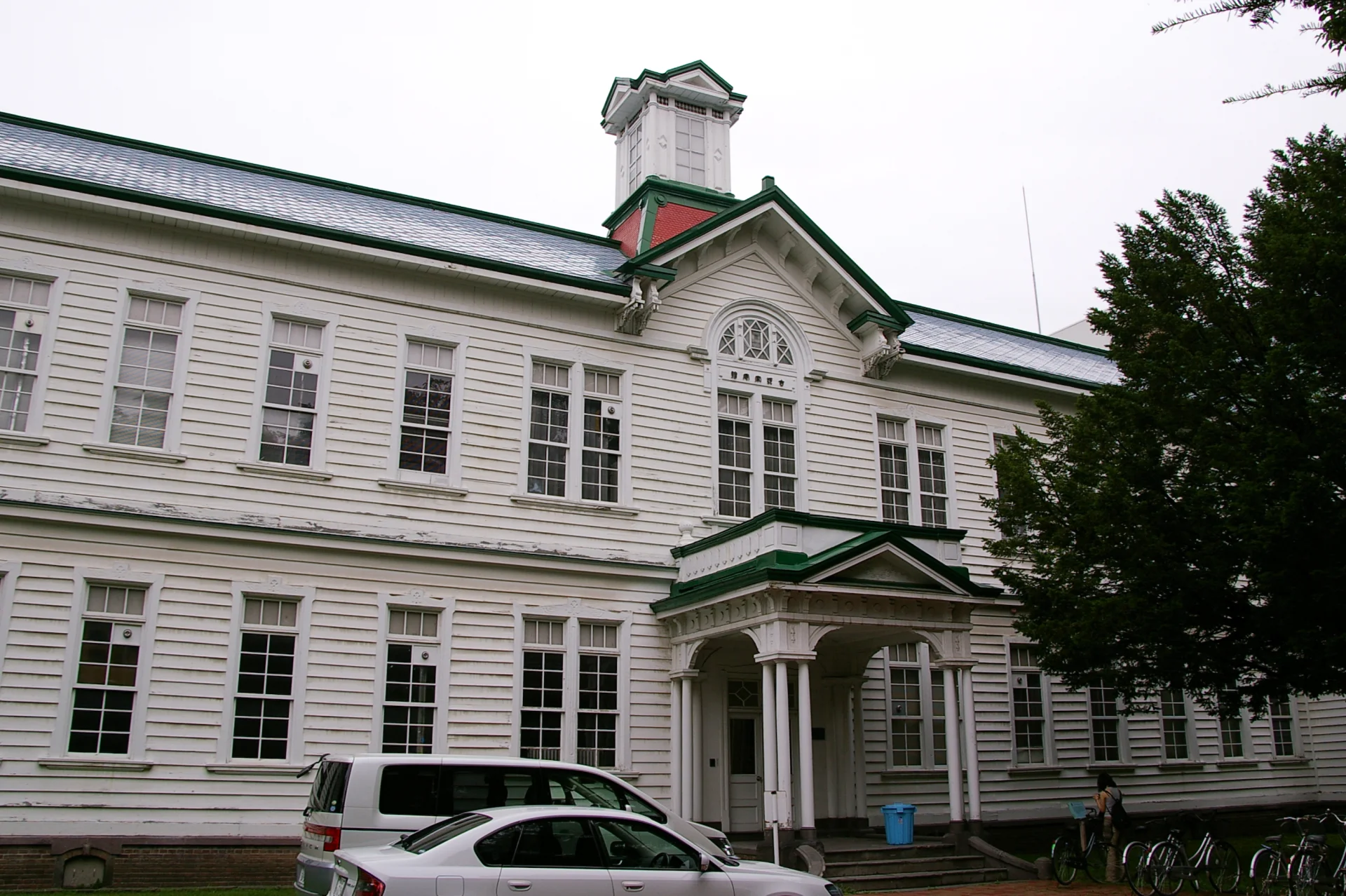

- Founder: Ōhisa Shōji (大久昌治)
- Chinese cook: Wang Wencai (王文彩)
- Primary customer base: Chinese students at Hokkaido University
The initial menu featured rousumen (肉絲麺), a Chinese wheat noodle served with stir-fried pork and bamboo. Japanese customers did not adopt the dish. By around 1926, Takeya had modified its noodle dish to feature a lighter pork broth, chashu, menma, and scallion — essentially the Rairaiken template, Hokkaido-adapted.
The Etymology of “Ramen”
A frequently repeated origin story traces the Japanese word ramen (ラーメン) to Takeya’s kitchen. When Wang Wencai signaled a completed noodle with the Chinese phrase hǎo le (好了, “it’s ready”), Japanese ears heard a syllable resembling rā, followed by men (Japanese reading of 麺). This is one theory among several. Competing theories trace ramen to lā-miàn (拉麺, “pulled noodle”), lǎo-men (老麺, “old noodle”), and various hybrid variants. No theory has achieved scholarly consensus.
1923 — Great Kantō Earthquake
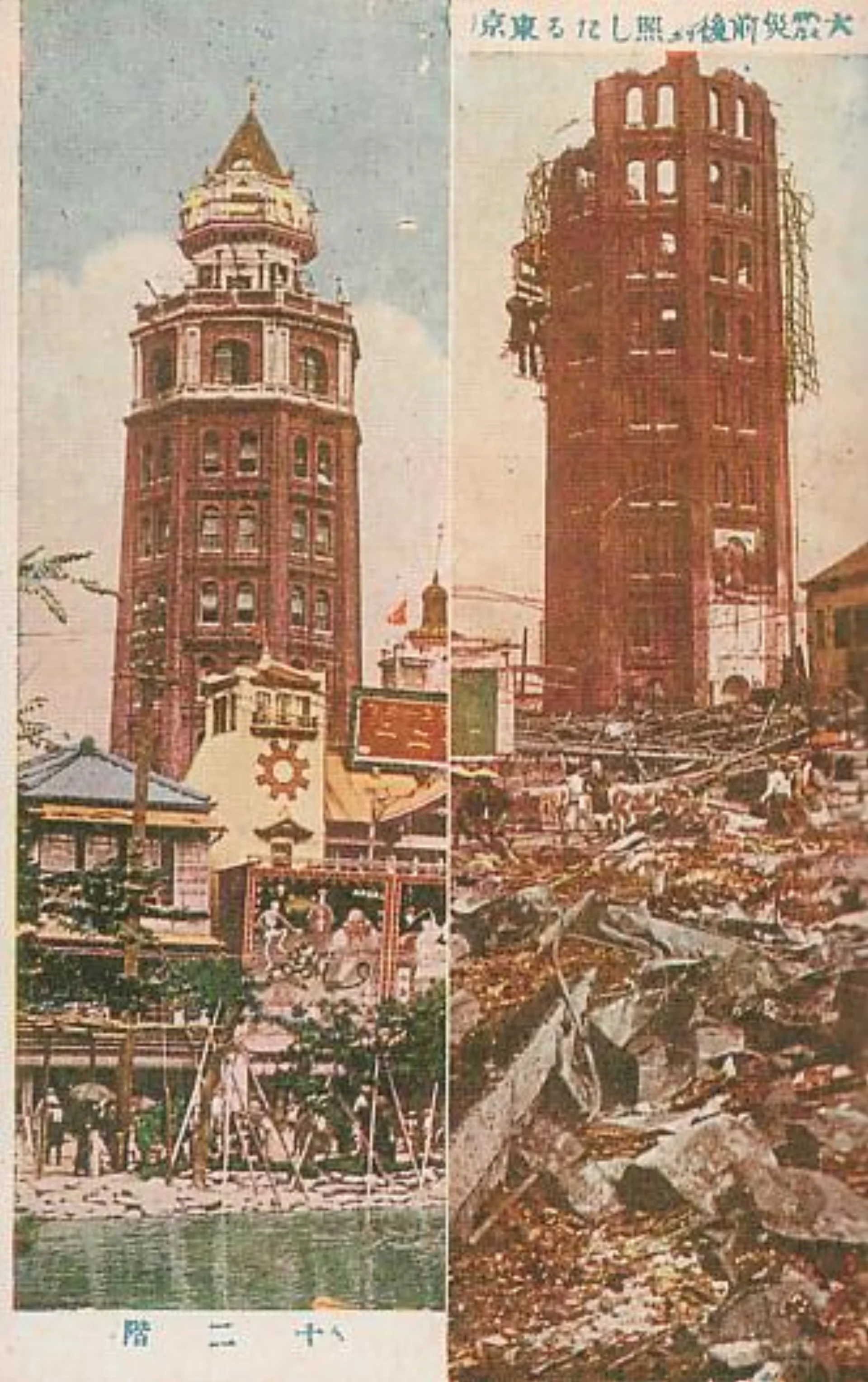
The Great Kantō Earthquake struck at 11:58 a.m. on September 1, 1923. Magnitude 7.9, approximately 105,000 dead or missing per the Japan Meteorological Agency’s 2006 revised estimate.
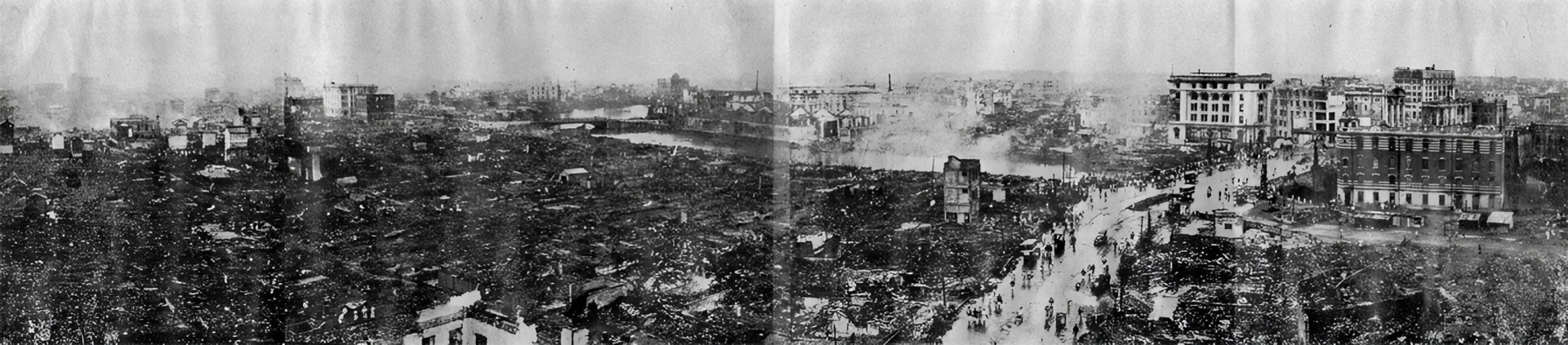

Effects on Ramen Culture
Effect 1 — Chef dispersion: Unemployed Tokyo and Yokohama chefs migrated to Kansai, Hokuriku, Tōhoku, and elsewhere. Documented examples include Zheng Kequan (鄭克銓), who had operated approximately ten ramen yatai in Tokyo; after the earthquake he moved to Hachinohe, Aomori, and opened Shokudō Rairaiken in the Muikamachi (六日町) district around 1928. This seeded the Hachinohe rāmen tradition.
Effect 2 — Yatai proliferation: Low-overhead yatai (food stalls) multiplied in the reconstruction period. Ramen, as a cheap, filling, protein-containing hot meal, was commercially successful. By the 1920s and 1930s, Tokyo yatai selling ramen were known as wantan-ya (ワンタン屋).
The regional ramen cultures that twenty-first-century tourists now travel to sample — Sapporo miso, Hakata tonkotsu, Kitakata shoyu, Kagoshima tonkotsu — trace in substantial part to the geographic dispersion of 1923.
1926–1928 — Home Cooking and the First Printed Ramen Recipes
By the late Meiji period, Chinese cuisine had begun entering Japanese middle-class homes. Two factors converged in the 1920s: a public-health narrative positioning Chinese cuisine as safer than some Japanese preparations (thoroughly cooked vs. raw), and the spread of commercial wheat flour and home cookbooks.

1928 — First Printed Ramen Recipe
In 1928, Yoshida Seiichi (吉田誠一), proprietor of the Ueno restaurant Suishōkaku (翠松閣), published Bimi-shiku Keizai-teki na Shina-ryōri no Koshiraekata (美味しく経済的な支那料理の拵え方) through Hakubunkan. This book is documented as the first Japanese cookbook to print a recipe explicitly called 拉麵 (ramen). The recipe includes reference to kansui — marking the first home-cooking instruction in Japan for genuine Chinese-style noodle production.
This 1928 publication is eighteen years after Rairaiken’s 1910 opening. Ramen had moved from shop exclusivity into the home kitchen within a generation.
1937–1945 — War and Forced Closure
In 1937, the Second Sino-Japanese War began. Government policy shifted toward rationing, austerity, and military provisioning. In 1941, the Pacific War expanded the conflict.
- 1941: Rice-ration passbooks issued; staple-food rationing begins.
- 1943–1944: Many restaurants forced to close. Kairakuen closes in 1943, ending 60 years of operation. Rairaiken closes in 1944.
- 1945: Japan surrenders on August 15.
The ramen industry as it had existed before 1937 was effectively erased. What emerged after 1945 was reconstructed from yatai, black-market improvisation, and returning cooks. Ramen’s postwar rebirth is a reconstruction, not a foundation — a point relevant to the “ramen came from soldiers after the war” myth addressed in the Common Misconceptions section below.
1948–1951 — Black Markets and the First Ramen Alley
The immediate postwar period (1945–1948) saw explosive urban population growth from demobilized soldiers and repatriated civilians, combined with collapsed food distribution. Black markets (yami-ichi) emerged in all major Japanese cities within days of the surrender.
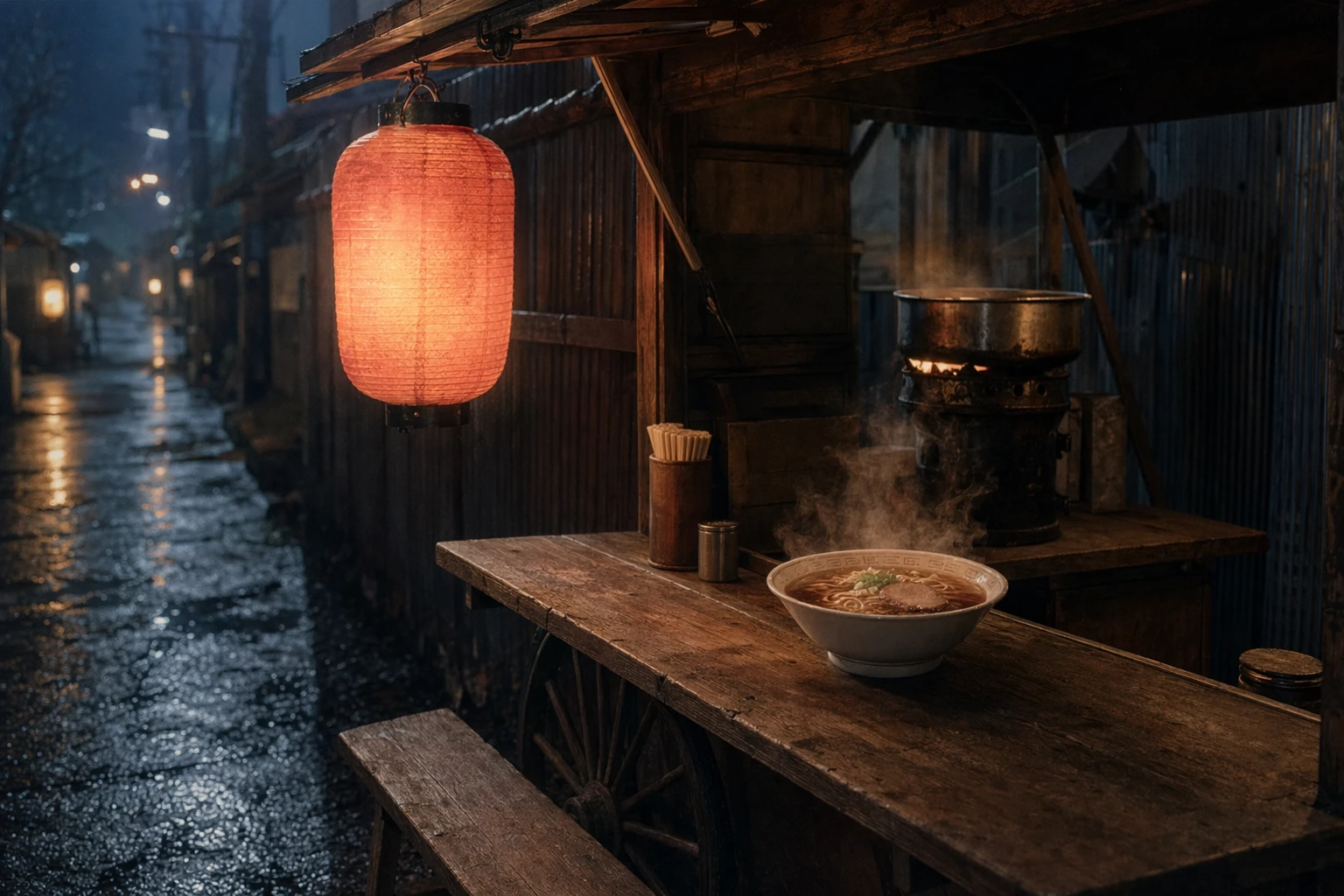
Ramen succeeded in this environment because its raw ingredients were relatively available: pork and chicken bones (butchery byproducts), wheat flour (imported via U.S. occupation food aid), and vegetable scraps.
In 1948, the Sapporo municipal “urban beautification” program cleared yatai from the Sōsei-gawa riverside and Tanukikōji shopping street. Displaced yatai operators were relocated to a designated area near Sapporo Theater.
In 1951, a second relocation placed eight adjacent shops on a lot next to the Tōhō Kōraku cinema (South 5, West 3, Chūō Ward). Seven were ramen shops; one was a sushi shop. The block came to be known as Kōraku Ramen Meiten-gai (公楽ラーメン名店街) — the original “Ramen Yokochō” (Ramen Alley).
1954 — Miso Ramen at Aji no Sanpei
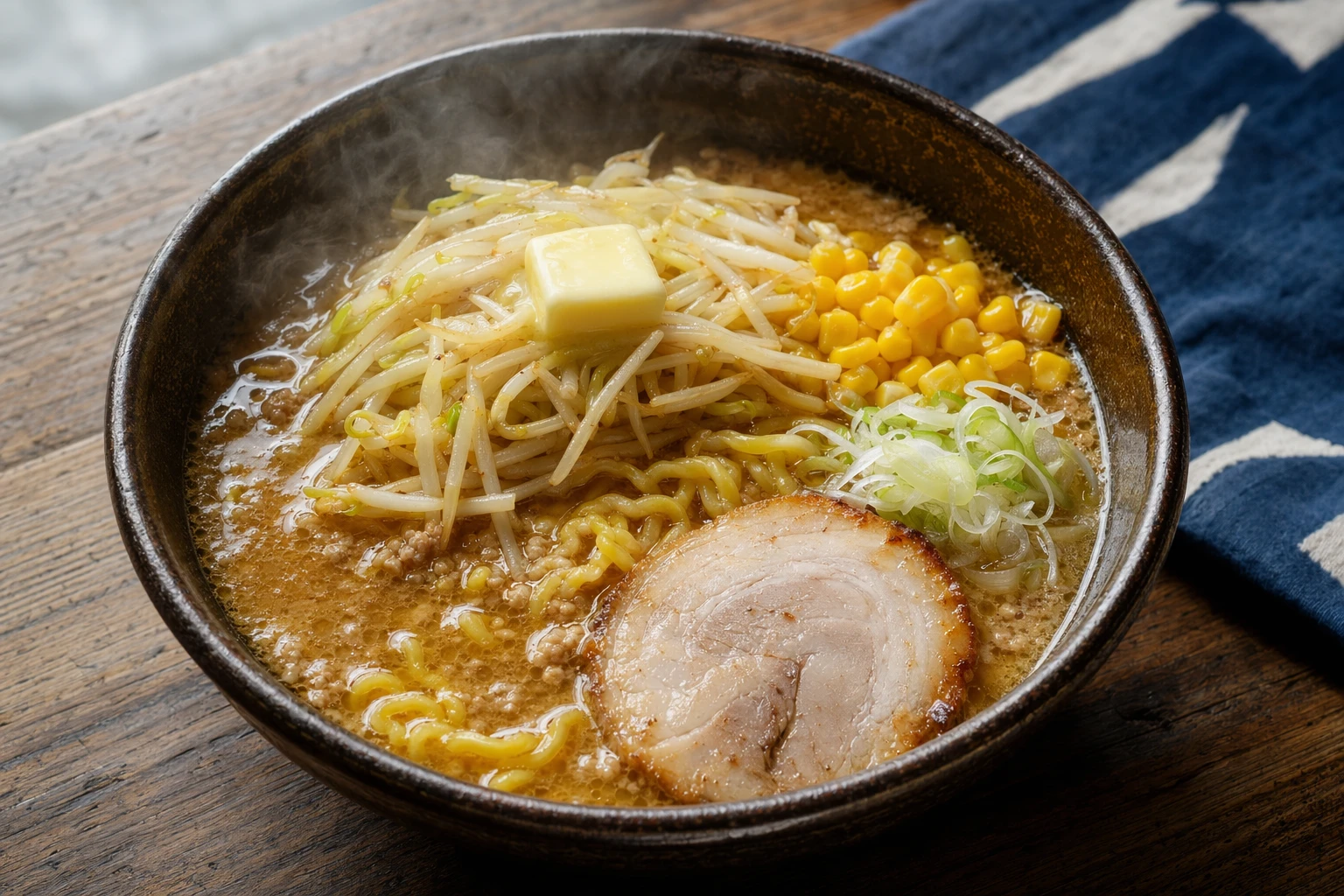
The distinctive Sapporo style of miso ramen originated at Aji no Sanpei (味の三平), a Sapporo ramen shop operated by Ōmiya Morihito (大宮守人).
Conditions Leading to Miso Ramen
- Ōmiya personally favored miso.
- A Reader’s Digest article quoted the Swiss food-company Maggi’s president encouraging Japanese cooks to expand miso’s culinary uses.
- A regular customer away from his family requested miso be added to ramen broth as comfort food.
Development Timeline (per Ōmiya’s own account)
- Around 1951 — Initial miso-in-broth experiments.
- 1954 — Miso ramen formally enters the menu.
- Full refinement takes approximately five years.
The Noodle Partner: Nishiyama Seimen
Sapporo miso ramen’s distinctive thick, wavy, egg-enriched, slow-fermented noodle was developed by Nishiyama Takayuki (西山孝之), founder of Nishiyama Seimen (西山製麺, 1953). The extra-bodied noodle was designed specifically to stand up to miso’s heavier flavor.
1955 — Tsukemen’s Prototype at Nakano Taishōken
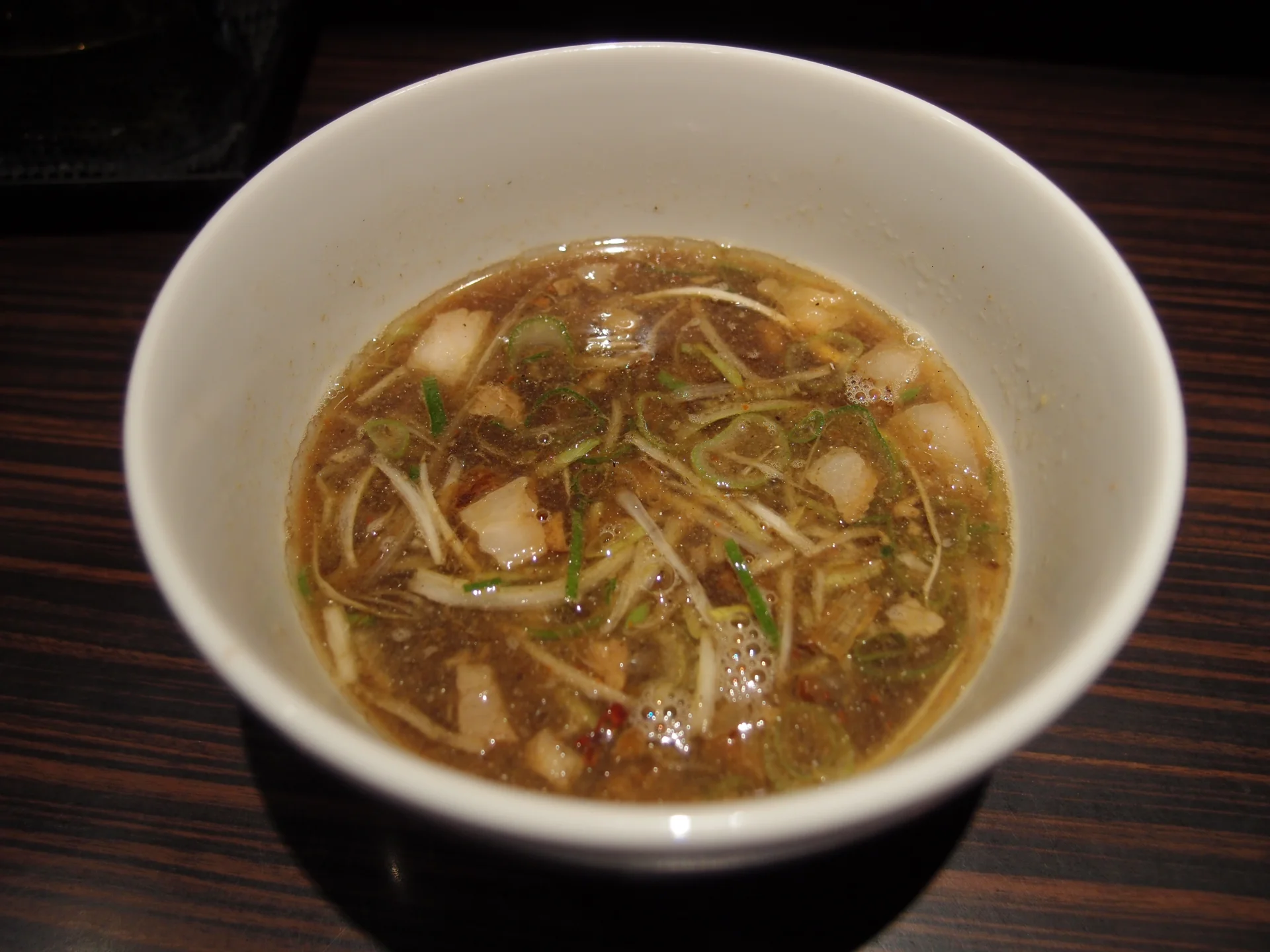
In 1955, at Nakano Taishōken (中野大勝軒), Yamagishi Kazuo (山岸一雄, 1934–2015) put a “special morisoba” (特製もりそば) on the menu: boiled ramen noodles rinsed in cold water, served alongside a hot, concentrated, strongly-seasoned dipping broth.
.jpg)
This is the prototype of modern tsukemen.
Yamagishi opened his own shop, Higashi-Ikebukuro Taishōken (東池袋大勝軒), on June 6, 1961.
The word tsukemen (つけ麺) itself was coined in 1973 by a chain called Tsukemen Daiō (つけ麺大王), meaning “noodles for dipping.”
1958 — Momofuku Andō Invents Instant Ramen
On August 25, 1958, Nissin Foods (日清食品) launched Chicken Ramen (チキンラーメン), the world’s first commercially successful instant ramen.
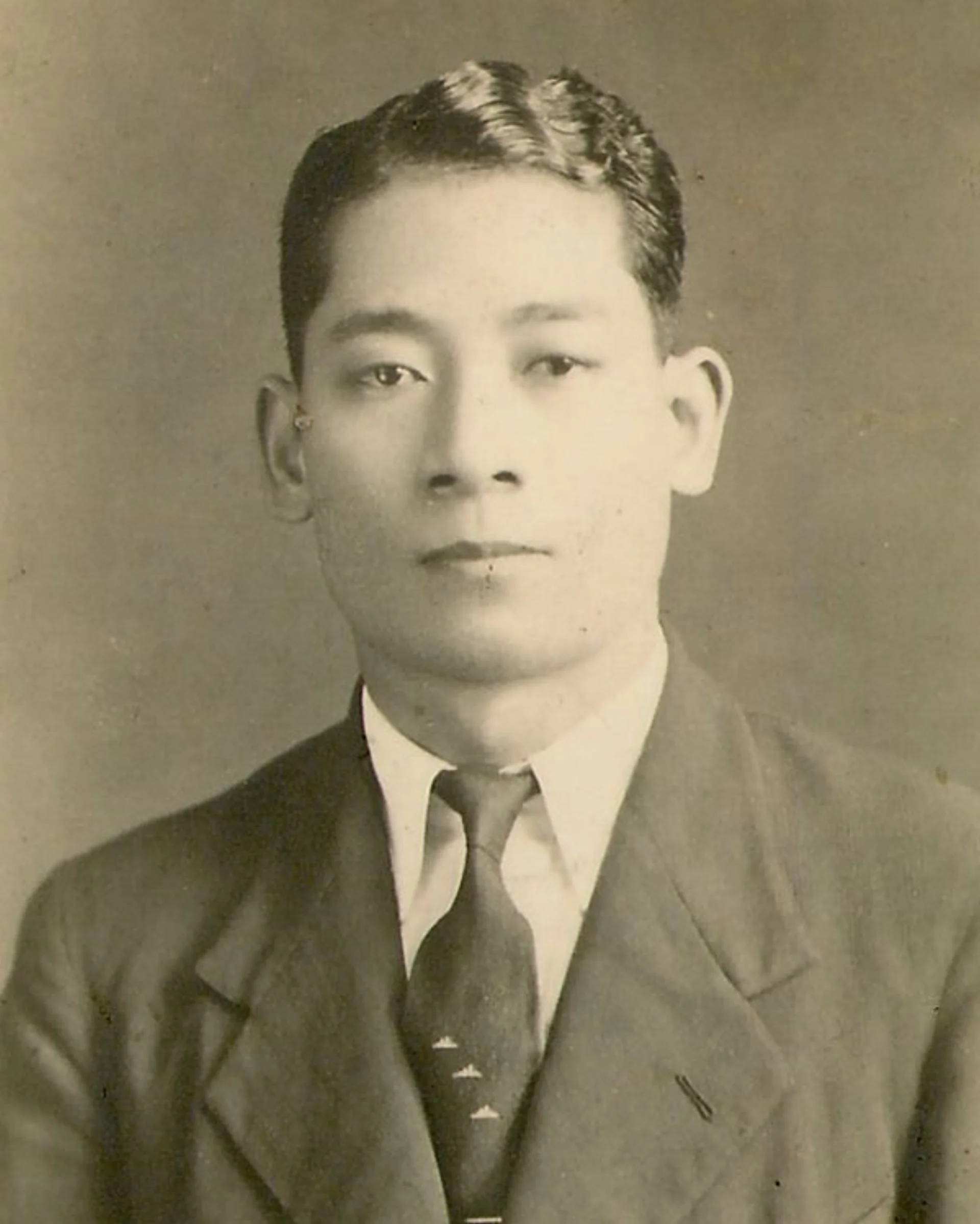

Founding Facts
- Inventor: Andō Momofuku (安藤百福, 1910–2007)
- Company: Nissin Foods (founded 1948, Osaka)
- Development location: Andō’s home workshop, Ikeda, Osaka
- Trigger event: Andō observing a long postwar queue for ramen at the Umeda black market
Technical Breakthrough: Flash-Fry Drying
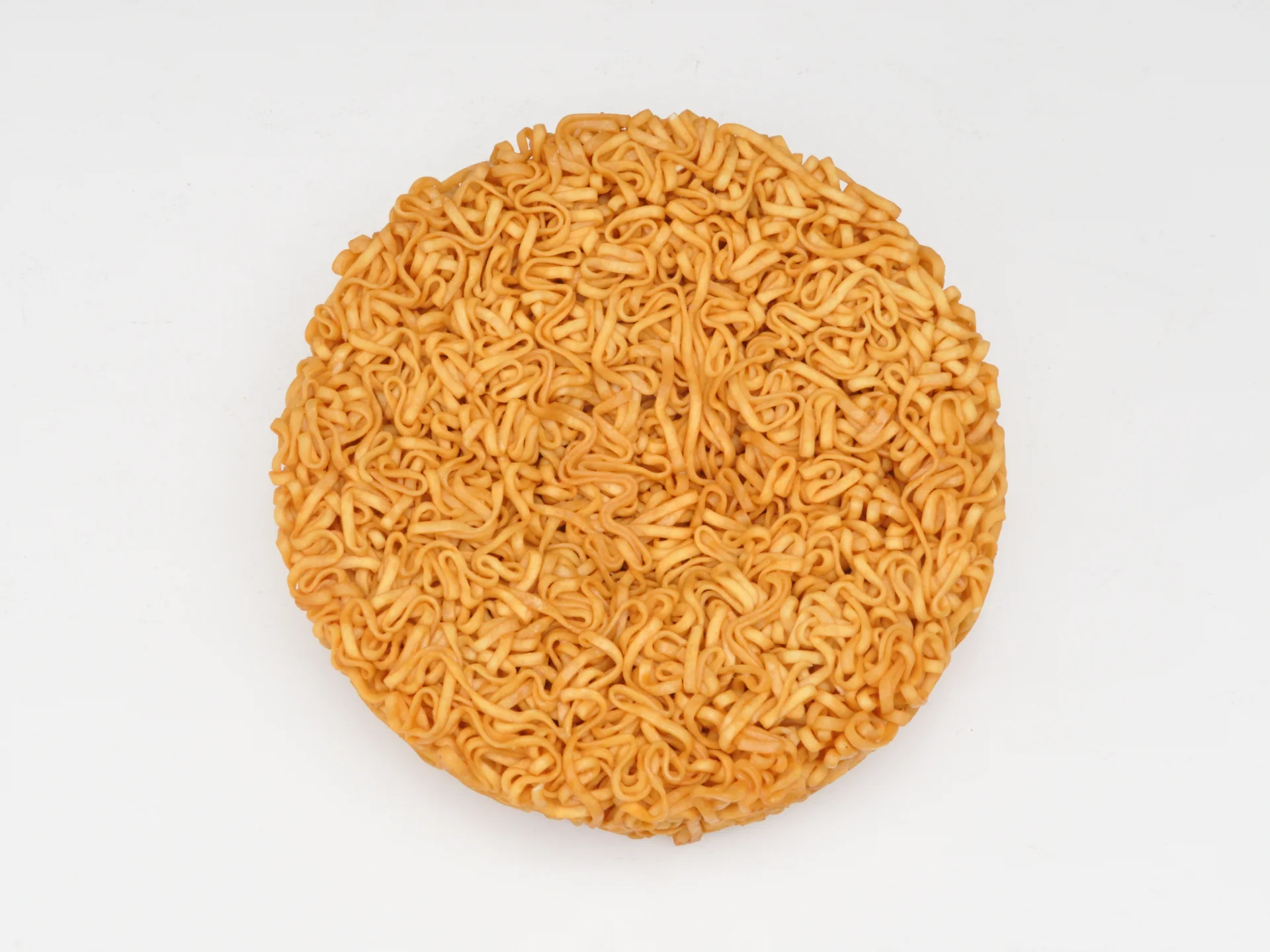
Andō’s critical invention was the flash-fry drying method (瞬間油熱乾燥法):
- Steam wheat-based ramen noodles to full cooking.
- Season with broth base before drying.
- Briefly submerge in hot oil. The oil flash-evaporates the noodle’s water content, leaving porous, dry, storage-stable noodles that rehydrate in 2–3 minutes in hot water.
The insight reportedly came from watching his wife deep-fry tempura.

Impact
- The word ramen (ラーメン), previously overshadowed by chūka soba (中華そば), became the dominant term.
- Home ramen consumption was industrialized.
- Global annual instant-ramen demand reached approximately 116.6 billion servings in 2020 (World Instant Noodles Association).
1960 — Hope-ken and the Back-Fat Style
In 1960 (Shōwa 35), Ushikubo Hideaki (牛久保英昭) started a leased yatai in Akabane, Tokyo. The yatai evolved into the style that would later be called seabura-chachakei (背脂チャッチャ系) — “back-fat flung-on style” — characterized by a heavy tonkotsu-shoyu broth with sprinkled pork back-fat.
In 1975, Ushikubo opened the yatai’s permanent location in Sendagaya as Hope-ken (ホープ軒).
Some sources state that Hope-ken’s yatai started in Sendagaya in 1960. The yatai started in Akabane in 1960; the Sendagaya brick-and-mortar shop opened in 1975.
1967 — Dosanko Nationalizes Miso Ramen
Dosanko Rāmen (どさん子ラーメン) was a ramen franchise launched in 1967 by Hokkoku Shōji (北國商事) in Tokyo. Its business model was Sapporo-style miso ramen sold nationwide through a rapid franchise-expansion system.
Expansion Timeline
- 1967: Franchise launches.
- 1971: Approximately 500 shops.
- 1977: Approximately 1,000 shops.
- Peak (1980s): Approximately 1,200 shops.
Some sources state that Dosanko reached 500 shops in three years. Japanese Wikipedia documents the 500-shop milestone as occurring in 1971 — four years after franchise launch.
The Dosanko expansion is the mechanism by which Sapporo-style miso ramen became standardized across Japan — and by which the categorical distinction between “Tokyo shoyu” and “Sapporo miso” became fixed in the Japanese public mind.
1971 — Cup Noodle
On September 18, 1971, Nissin launched Cup Noodle (カップヌードル), the world’s first cup-format instant ramen. The cup format was critical to ramen’s globalization; English-language convenience stores could stock Cup Noodle without any Japanese-reading capability.
1974 — Iekei at Yoshimuraya
The Yokohama-born iekei (家系) ramen style is one of the most commercially significant late-20th-century ramen developments.
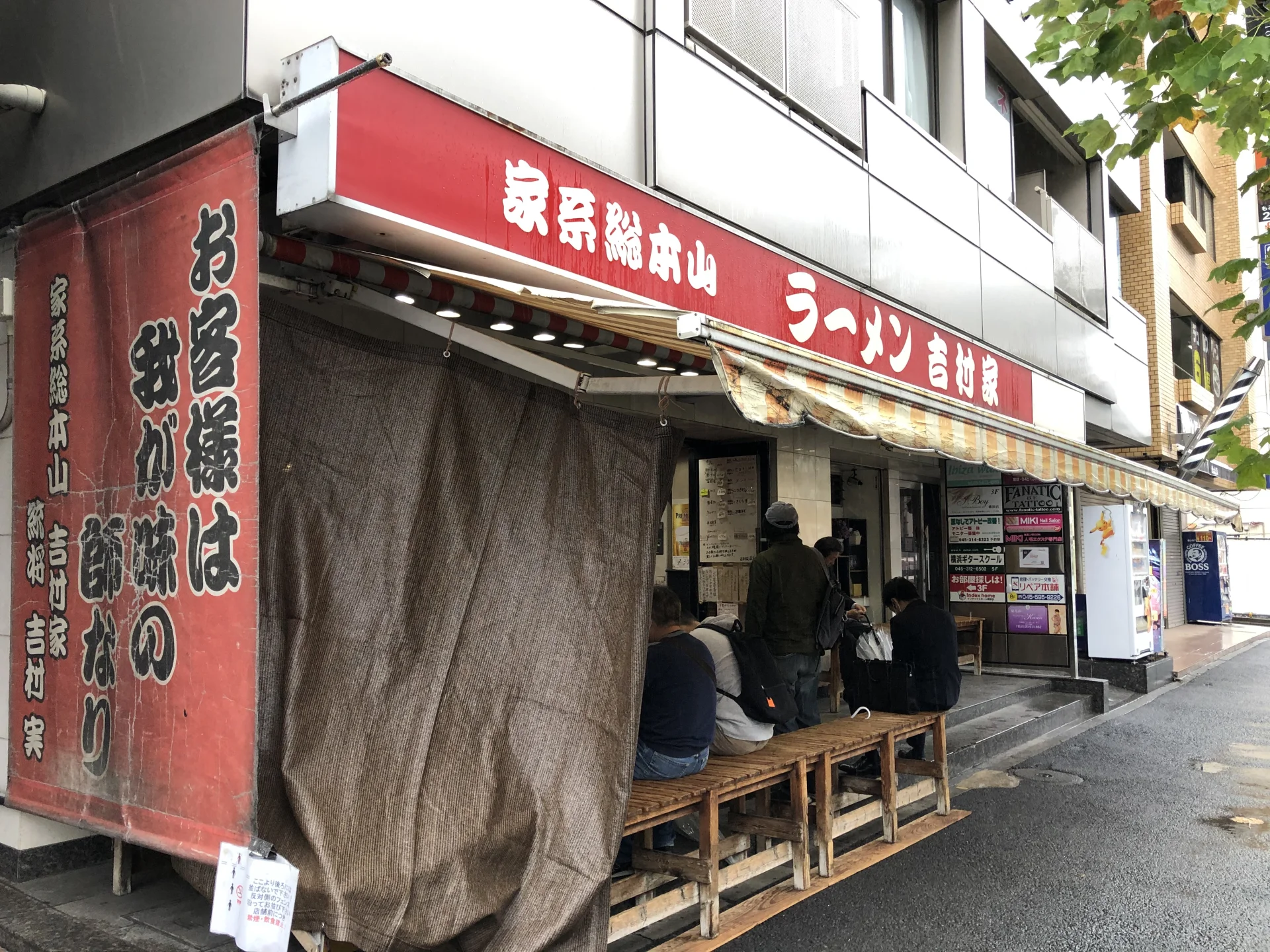

Founding Facts
- Founder: Yoshimura Minoru (吉村実)
- Background: Former long-distance truck driver, Kantō–Kyushu route
- Inspiration: Hybridization of Tokyo-style shoyu ramen and Kyushu-style tonkotsu ramen
- Apprenticeship: At a shop called “Ramen-shop” (ラーメンショップ) located inside the Keihin Truck Terminal in Heiwajima, Ōta Ward, Tokyo
- Shop opened: September 1974 in Shin-Sugita, Yokohama
- Shop name: Yoshimuraya (吉村家)

Iekei Signature Elements
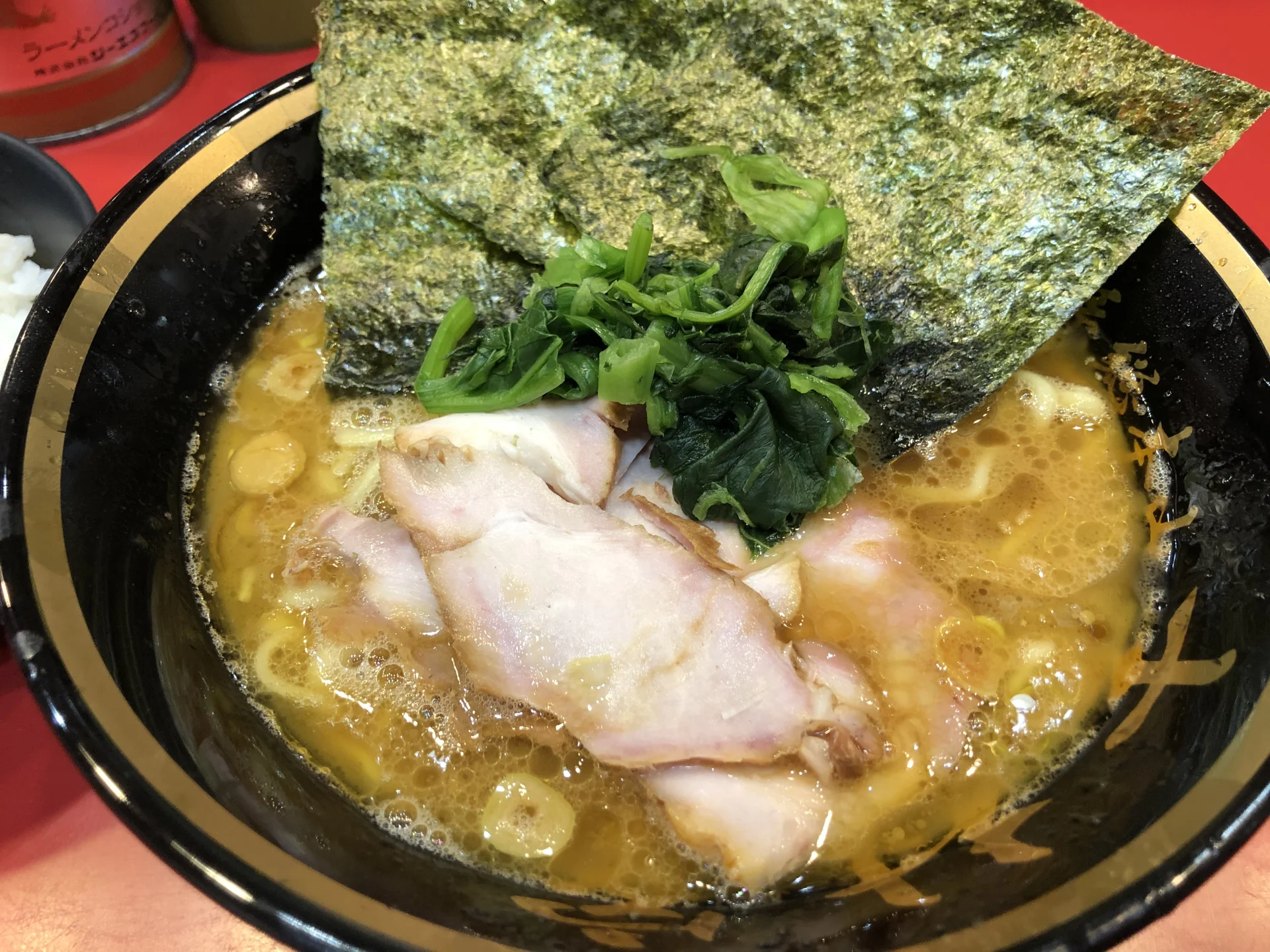
- Broth: Pork-bone-and-soy concentrated base (tonkotsu-shoyu)
- Noodles: Thick, straight, low-water-content
- Toppings: Chashu, boiled spinach, sheets of nori
- Sides: Rice is typically ordered alongside
The Term “Iekei”
The word iekei (家系) became widely used around 1990, after multiple Yoshimuraya disciples opened shops with names ending in -ya (家). In the 2000s and 2010s, multiple corporate entrants entered the iekei market, expanding it first domestically and then internationally.
Some sources date iekei to 1989. The correct date is September 1974. The late-1980s/early-1990s dating in some sources refers to when the term “iekei” became widespread, not to when the style was created.
1975–1987 — Kitakata and the Ramen Tourism Town Model
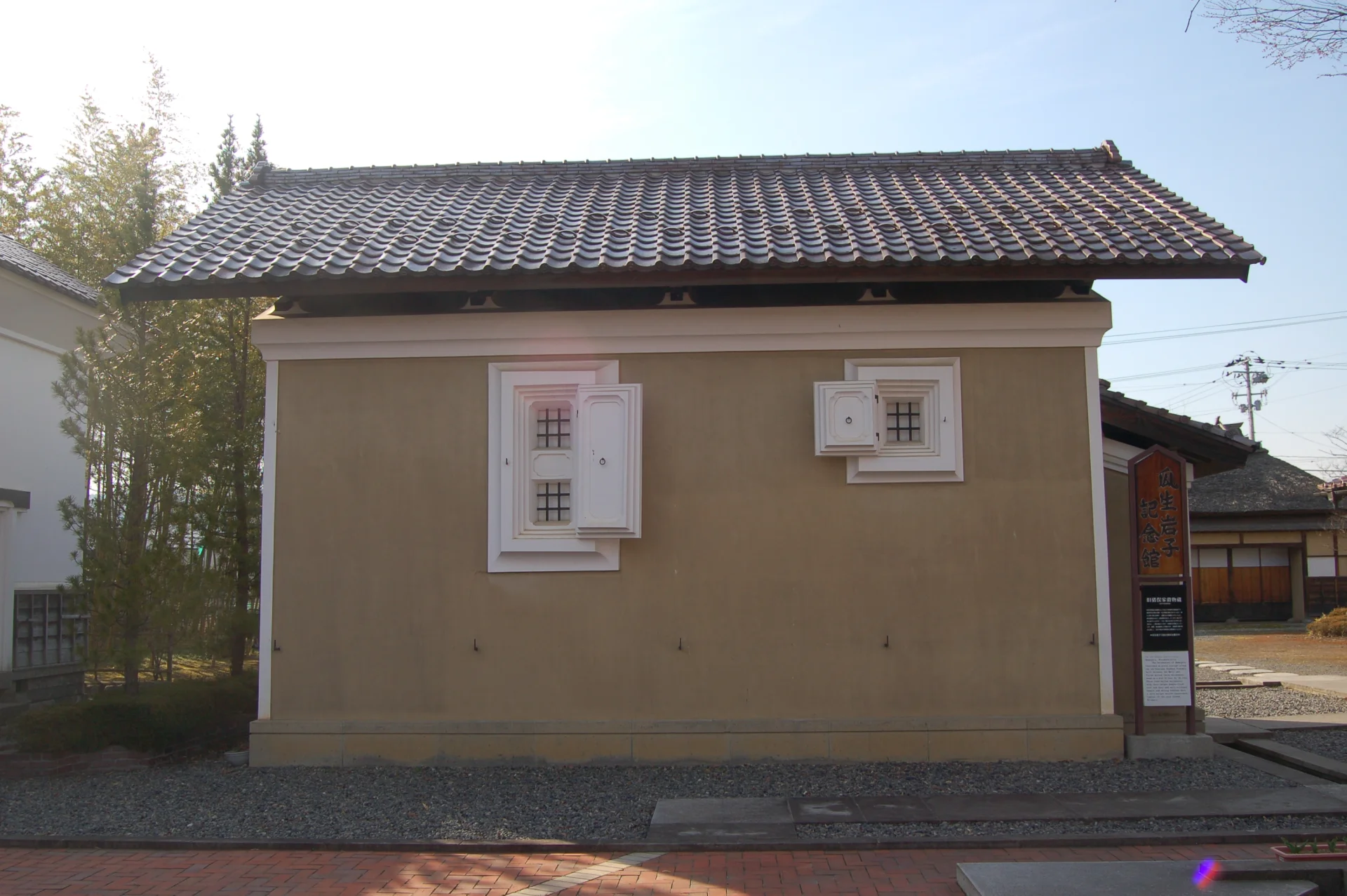
Kitakata (喜多方), a city of approximately 40,000 in Fukushima Prefecture, was the first Japanese city to commercially reinvent itself around ramen.

Tourism Timeline
- 1975: NHK’s travel program Shin-Nihon Kikō (新日本紀行) features Kitakata under the theme “The Town of Storehouses.” Tourists arrive.
- Late 1970s: City restaurants cannot accommodate tour-bus-sized groups. City officials direct tourists to ramen shops.
- 1983: Kitakata’s tourism office convinces the travel magazine Rurubu (JTB) to run a full-page feature on Kitakata ramen.
- 1987 (March 4): Kuramachi Kitakata Rōmen-kai (蔵のまち喜多方 老麺会) founded — the first formal ramen-city association in Japan.
Follow-On Adoption
Kitakata’s template was subsequently adopted by Sano (Tochigi), Onomichi (Hiroshima), Shirakawa (Fukushima), and Asahikawa (Hokkaido, indirectly via Shin-Yokohama Ramen Museum branding).
1987–1989 — The Tokyo Tonkotsu Wave
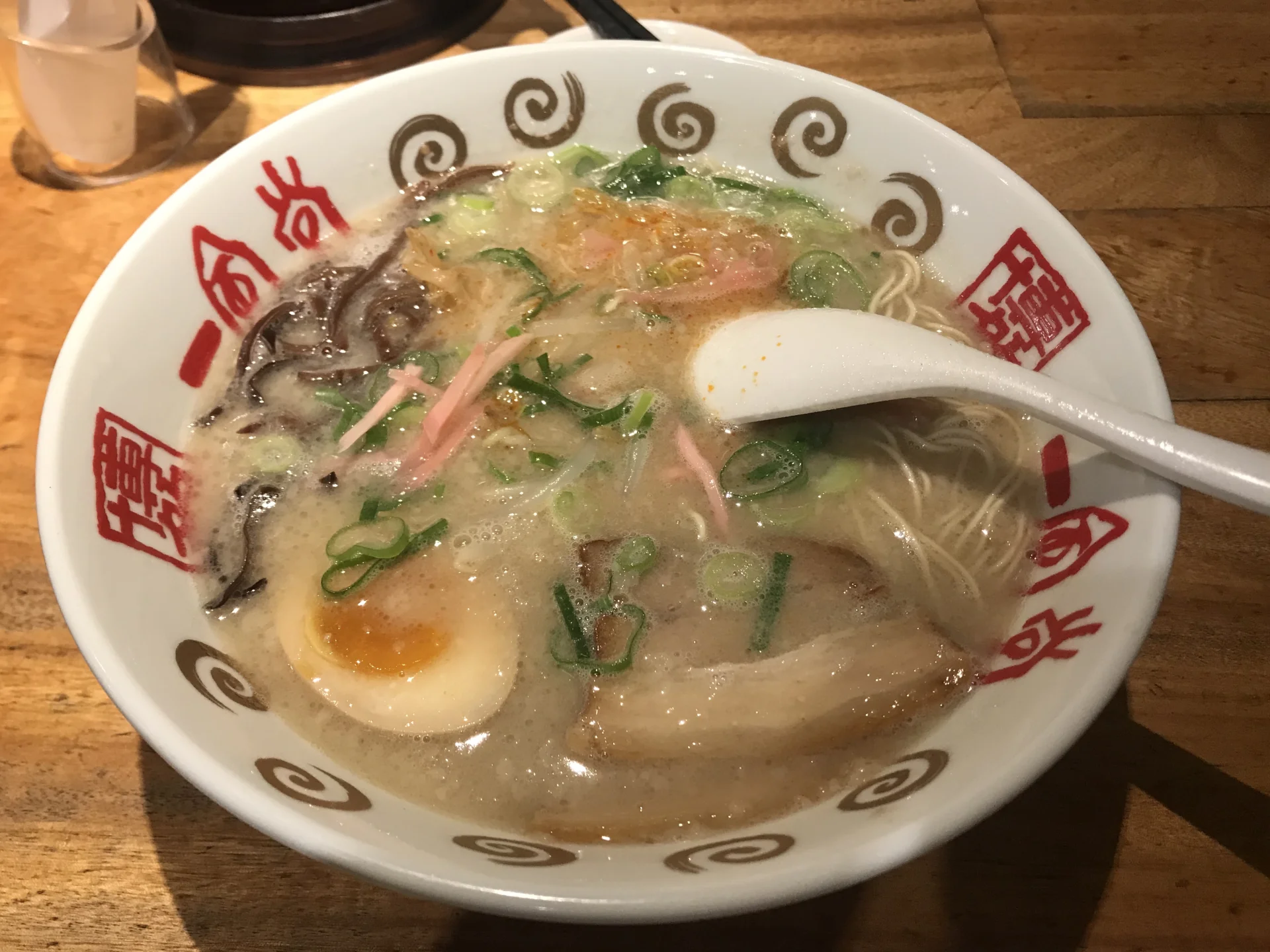
Kyushu’s pork-bone (tonkotsu) ramen reached Tokyo as early as December 1968, when the Kumamoto chain Keika (桂花) opened a Suehiro-chō, Shinjuku branch. For roughly twenty years, tonkotsu remained a Kyushu-diaspora niche in Tokyo.

The 1987–1989 Boom
In the bubble-economy period, Tokyo media began profiling tonkotsu shops:
- Nandenkanden (なんでんかんでん) — founded July 8, 1987, by Kawahara Hiroshi (川原ひろし) in Hanegi, Setagaya (on Kanjō Nana-gō — Route 7). PR strategy: Kawahara mailed tasting-coupon press kits to TV stations and magazines.
- Kyūshū Jangara (九州じゃんがら)
- Fukuchan (ふくちゃん)
Nandenkanden’s peak drew over 1,000 nightly customers, causing traffic jams on Route 7 that Japanese media dubbed “Nandenkanden jams” (なんでんかんでん渋滞).
Some sources place Nandenkanden in Shindaita (新代田). This is incorrect. The shop was in Hanegi, Setagaya — on Route 7, which passes near but not at Shindaita Station.
1997–1998 — Regional Ramen and the Yokohama Ramen Museum Initiative
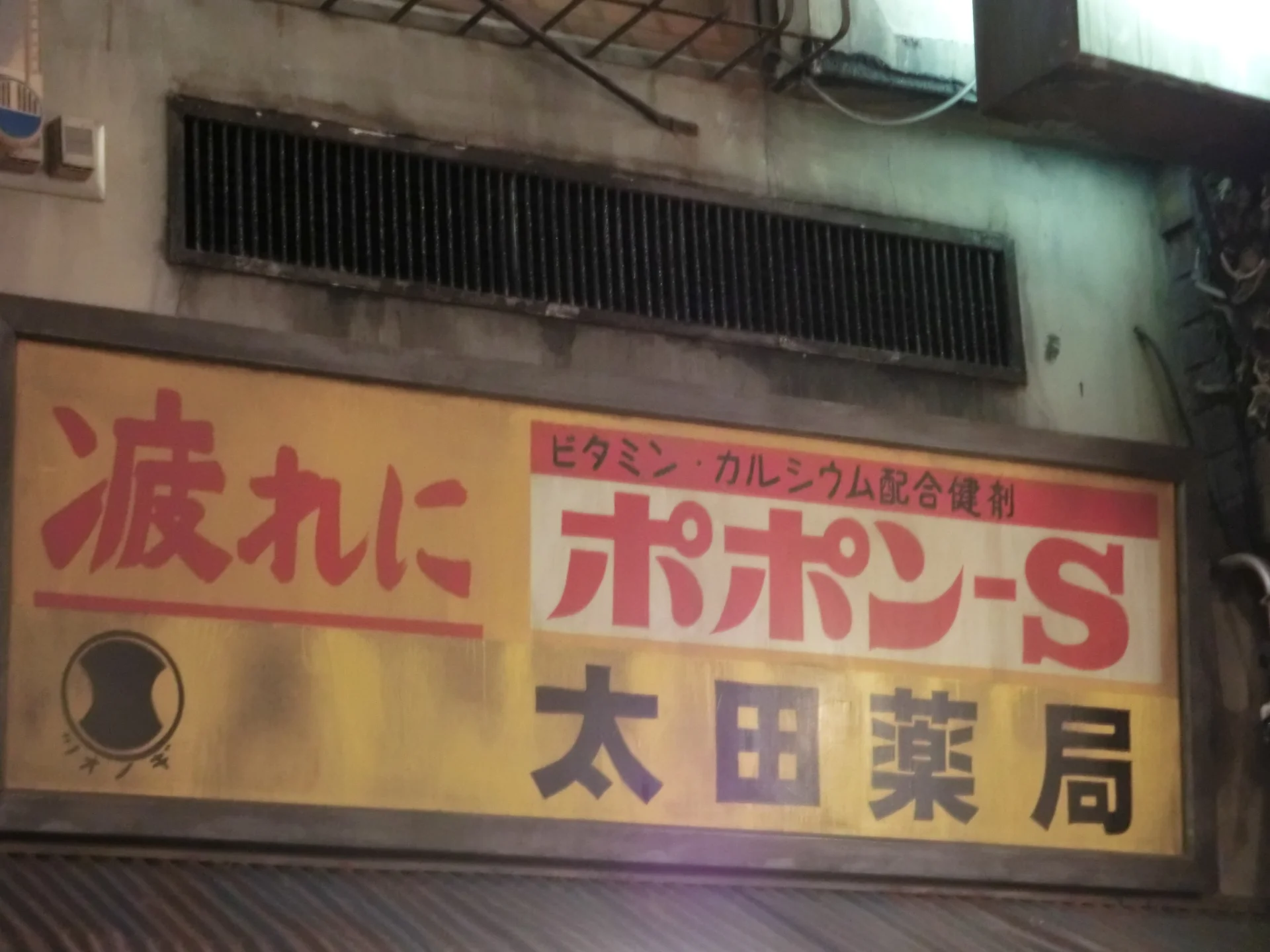
The Shin-Yokohama Ramen Museum (新横浜ラーメン博物館), which opened on March 6, 1994, drove the popularization of the regional-ramen (gotōchi ramen) category in Japan.

Nationwide Ramen Journey Initiative
- 1997 (October): Museum launches Zenkoku Rāmen Kikō (全国ラーメン紀行), a rotating residence program for regional ramen shops. First featured shop: Aoba (青葉) from Asahikawa.
- 1998: Idé Shōten (井出商店) from Wakayama Prefecture appears at the museum. The appearance triggers a nationwide Wakayama ramen boom.
Idé Shōten Residence Records
- Operating period: 238 days
- Bowls served: 212,610
- Average daily volume: 893 bowls
- Seats: 23
- Peak wait time: 210 minutes (not 180 — the 180-minute figure in some sources appears to be a transcription error)
- Awards: Tourism Service Commendation from the Governor of Wakayama Prefecture
2007–2008 — Taishōken Closes and Tsukemen Goes National
On March 20, 2007, Higashi-Ikebukuro Taishōken (東池袋大勝軒) — Yamagishi Kazuo’s flagship and the home of tsukemen — closed due to building eviction. The closure was covered by every major Japanese television network, making it national news. Higashi-Ikebukuro Taishōken reopened on January 5, 2008.
Second-Generation Tsukemen: Ganja
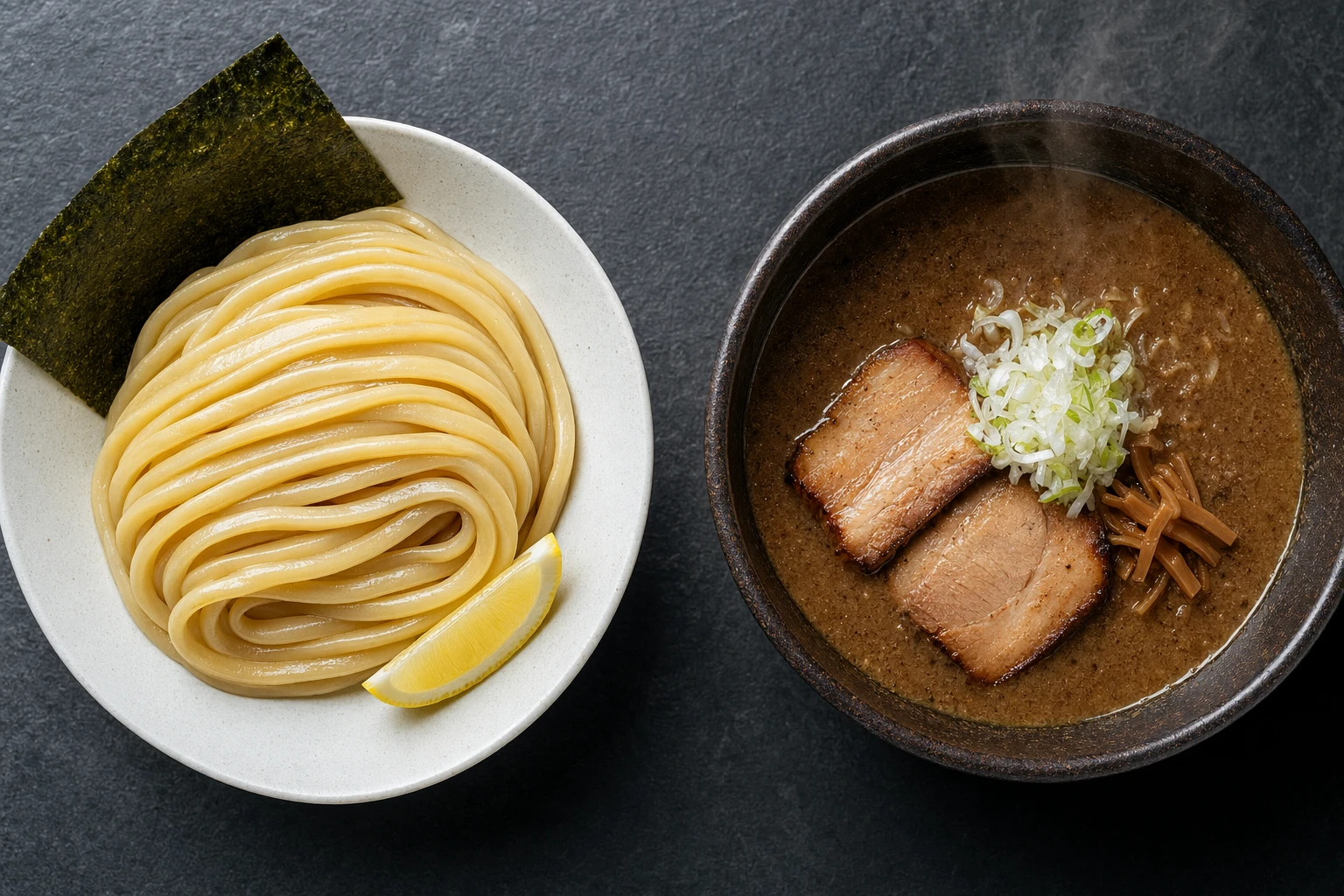
In 2000, Ganja (頑者) opened in Kawagoe City, Saitama (Shintomi-chō). Ganja’s “thick-noodle × fish-powder × concentrated-broth” formula defined the second generation of tsukemen. From 2005 onward, Ganja-influenced tsukemen shops proliferated. The style, called nōkō gyokai gokubuto tsukemen (濃厚魚介極太つけ麺, “rich seafood-powder extra-thick tsukemen”), became a dominant sub-genre.
Ō-Tsukemen-Haku
In 2009, the first Ō-Tsukemen-Haku (大つけ麺博, “Great Tsukemen Exposition”) was held — a multi-shop tsukemen event confirming tsukemen’s cultural mainstream status.
2015 — Tsuta and the World’s First Michelin-Starred Ramen
Michelin Arrives in Japan
- 2007 (November): The Michelin Guide Tokyo 2008 is published, the first Michelin Guide for a region outside Europe and North America.
- 2012: The Michelin Guide Hokkaido 2012 Special Edition becomes the first in Japan to list ramen shops in regular categories.
December 1, 2015
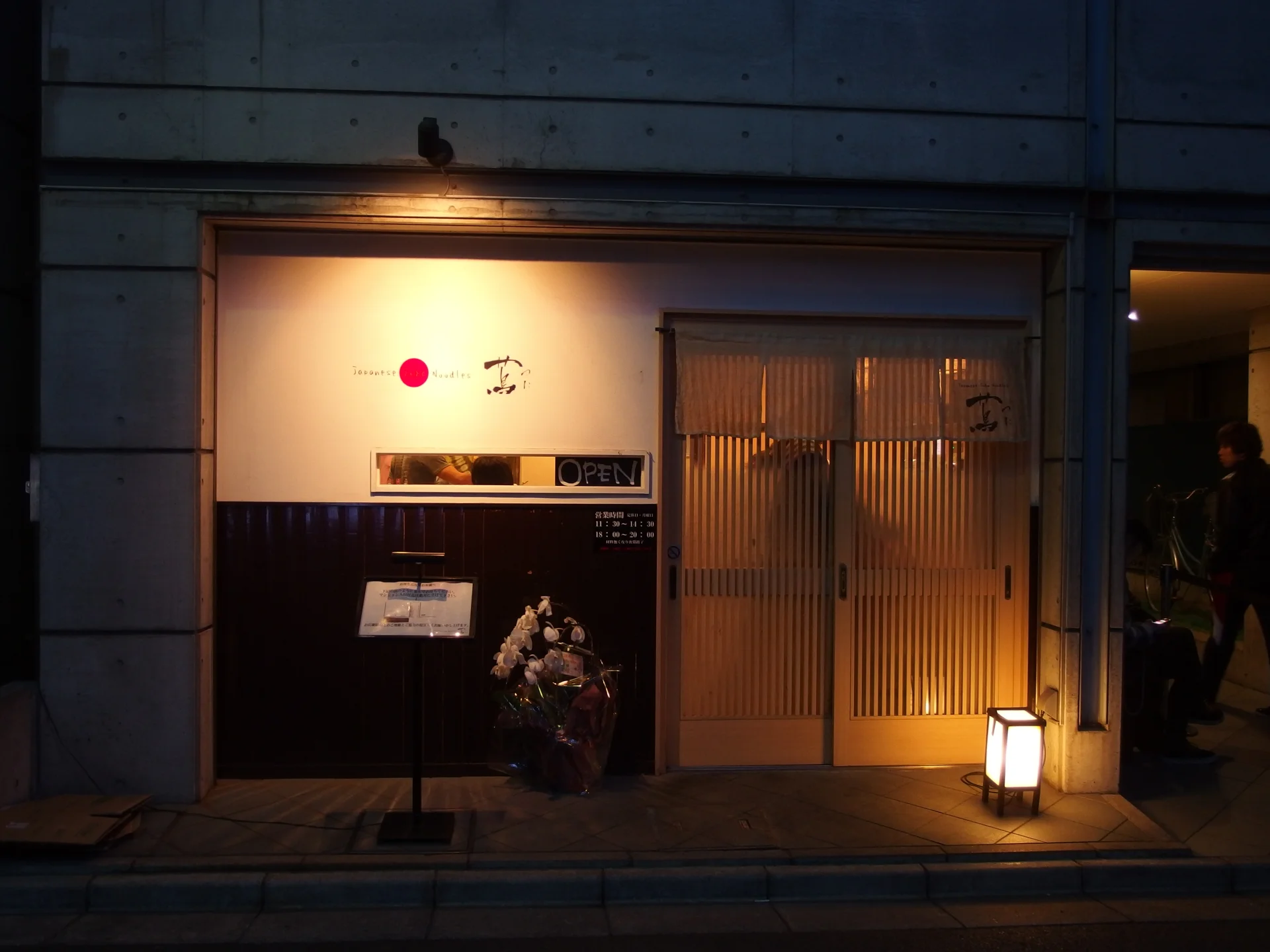
The Michelin Guide Tokyo 2016 awards a one-star rating to Japanese Soba Noodles Tsuta (蔦) in Sugamo, Tokyo. It is the first Michelin-starred ramen restaurant in the world.
.jpg)
- Founder and chef: Onishi Yuki (大西祐貴, 1976–2022)
- Style: Tanrei-kei (淡麗系), clear-broth shoyu ramen
- Signature elements: Dashi built on high-grade bonito, kombu, niboshi; truffle oil accent; precise chashu presentation
The Tanrei-kei Classification
Tanrei-kei (淡麗系) translates as “refined, clear style.” Characteristics:
- Non-emulsified, visually clear broth
- Premium-grade ingredients
- Shoyu or shio tare
- Thin-medium straight noodles
Representative Tanrei-kei Shops (Kanagawa lineage)
- Shinasobaya (支那そばや) — founded 1986 in Kugenuma-kaigan, Fujisawa, by Sano Minoru; moved to Totsuka in 2008
- Nakamuraya (中村屋) — founded 1999 in Yamato; moved to Ebina in 2007
Who “Invented” Ramen?
Short answer: no single person did.
Ramen is the accumulated product of multiple innovations across 500 years. The most important transition points:
- 1488 — China’s contribution. The alkaline-wheat noodle technology that defines ramen noodles today was documented at Inryōken in Kyoto, using a Chinese recipe recorded in Kyoka Hitsuyō Jirui.
- 1859 — Japan’s port opening. Chinese cooks began practicing in Japanese cities.
- 1871–72 — Meiji meat-taboo lifting. Pork-bone broth became possible.
- 1908 — Ikeda Kikunae. Umami was scientifically identified, giving chefs a framework for broth design.
- 1910 — Rairaiken’s Japanization. Ozaki Kan’ichi replaced Chinese salt with Japanese soy sauce, paired pork-chicken broth with Japanese-style toppings, and opened a specialty noodle shop. This is where ramen becomes Japanese. For Tokyo, this is the decisive moment.
- 1922 — Takeya Shokudō. The Hokkaido lineage begins.
- 1954 — Aji no Sanpei. Miso ramen is created.
- 1955 — Taishōken. Tsukemen’s prototype appears.
- 1958 — Nissin. Ramen is industrialized.
- 1974 — Yoshimuraya. Iekei is born.
- 2015 — Tsuta. Ramen joins global fine-dining via Michelin.
For Tokyo specifically, the answer is cleaner: Japanese ramen began on the day Ozaki Kan’ichi poured Japanese soy sauce into a Chinese noodle broth in 1910. Everything Tokyo has done with ramen since — Ogikubo shoyu, Hachiōji shoyu, Tokyo classic chūka soba, the modern tanrei-kei Michelin tradition — is an elaboration of that 1910 decision.
Ramen is Chinese in origin, Japanese in its technical and commercial form, and global in its current reach.
Common Misconceptions Corrected
Misconception 1: Zhu Shunsui served ramen to Tokugawa Mitsukuni in 1697.
Correction: Zhu Shunsui died in 1682, fifteen years before the 1697 Nichijō Shōnin Nikki diary entry. Mitsukuni himself prepared a Chinese-style noodle dish in 1697, using techniques learned from Zhu during Zhu’s lifetime (1665–1682).
Misconception 2: Ramen came to Japan after World War II when Japanese soldiers brought it back from China.
Correction: Ramen, in its Japanese commercial form, dates to Rairaiken (Asakusa, 1910) — thirty-five years before the end of World War II. Chinese-style noodle precursors in Japan are documented as far back as 1488 (Inryōken keitaimen), and the oldest printed mention of “Nankin-soba” in a Japanese restaurant is from 1884. The “postwar soldiers from China” narrative compresses a 500-year history into a single decade and is widely repeated but factually inaccurate. What did happen after the war was a dramatic expansion of ramen consumption (yatai, black markets, industrialization via Nissin in 1958) — but not the invention.
Misconception 3: Iekei ramen was invented in 1989.
Correction: Iekei ramen was invented in September 1974 at Yoshimuraya in Shin-Sugita, Yokohama. The late-1980s/early-1990s dating in some sources refers to when the term “iekei” became widespread, not to when the style was created.
Misconception 4: Rairaiken opened with 13 Chinese cooks.
Correction: 12 Chinese cooks. The Shin-Yokohama Ramen Museum’s research and Japanese Wikipedia confirm 12.
Misconception 5: Hope-ken started as a yatai in Sendagaya in 1960.
Correction: Hope-ken started as a yatai in Akabane in 1960. The Sendagaya brick-and-mortar shop opened in 1975.
Misconception 6: Nandenkanden was located in Shindaita.
Correction: Nandenkanden was located in Hanegi, Setagaya — along Route 7 but not at Shindaita Station.
Misconception 7: Idé Shōten’s peak wait time was 180 minutes.
Correction: 210 minutes, per the Shin-Yokohama Ramen Museum’s official records.
Misconception 8: Dosanko reached 500 shops in three years.
Correction: Dosanko reached 500 shops in 1971 — four years after its 1967 franchise launch. Peak volume (approximately 1,200 shops) occurred in the 1980s.
Misconception 9: Global instant-ramen demand is approximately 100 billion servings per year.
Correction: Approximately 116.6 billion servings in 2020 (World Instant Noodles Association). The 100-billion figure reflects pre-2015 data.
Misconception 10: The Ansei Five-Country Treaties immediately opened five ports in 1859.
Correction: Three ports opened in 1859 (Yokohama, Nagasaki, Hakodate). Kobe opened in 1868. Niigata opened in 1869.
Misconception 11: Kaihōrō opened in 1870.
Correction: Yokohama Chinatown’s Kaihōrō opened around 1868. It was a combined Chinese restaurant and theater, not a pure restaurant.
Misconception 12: Ramen etymologically derives from “lā-miàn” (pulled noodle).
Correction: This is one theory. Others include hǎo le + mian, and lǎo-men. No theory has scholarly consensus. The first widely-documented appearance of the Japanese word ramen postdates Takeya Shokudō’s operation in Sapporo in the 1920s–1930s.
How Ramen Cooking Tokyo Teaches the History
This textbook was written because our class draws on this history directly. Every decision we make in our curriculum has a reason rooted in what Tokyo chose to do with a Chinese noodle, starting in 1910.
1. We teach shoyu ramen because Tokyo is shoyu ramen.
Japan has approximately six base ramen broth styles (shoyu, shio, miso, tonkotsu, tori-paitan, seafood-forward) and more than 200 regional and stylistic variations. Our class teaches one: Tokyo-style shoyu. Rairaiken invented it in 1910. Tokyo’s ramen identity is organized around it. Our classroom is in Tokyo. Teaching shoyu ramen is teaching what Tokyo invented.
2. We build broth from meat, not bones.
Most ramen shops simmer pork bones, chicken bones, and fish bones for many hours to extract umami. Bones are chemically efficient at delivering protein over long simmers, and they keep ingredient costs down. Our approach uses actual meat — pork belly with aromatic vegetables (scallion, ginger, garlic). Meat delivers umami faster than bones, and the classroom-scale broth reaches restaurant-quality depth without a multi-hour simmer. This allows our students to complete a full broth in a single class session without compromising the result.
3. Step 1 has no seasoning.
When we start the broth, we add no salt, no soy sauce, no sugar. The goal of Step 1 is to extract the natural umami from pork and vegetables at their highest purity. Seasoning masks. The class uses Step 1 to teach what broth tastes like before anything else is added to it — a principle directly rooted in classical Japanese dashi thinking, where umami from kelp and bonito is protected from heat and extracted cleanly before any seasoning is introduced.
4. Step 5 adds our secret ingredient: toasted, powdered katsuobushi.
This is where our class departs from a typical Tokyo ramen shop. After the broth has simmered, the noodles are boiled, and the toppings are prepared, we toast katsuobushi (dried, shaved bonito) until crisp, grind it to powder, and stir it into the finished broth at the final moment.
Why: glutamate (from soy sauce and pork in the broth) combined with inosinate (from bonito) produces umami synergy — perceived umami far greater than the sum of the two compounds. This is the principle Ikeda Kikunae identified in 1908 and Kuninaka Akira mathematically characterized in 1960. A shop that simmers pork bones for twelve hours is essentially using time to accumulate inosinate. Our class uses the dashi technique from Japanese soup-making to deliver comparable depth in the final three minutes.
The result is a Tokyo shoyu ramen with classical Japanese dashi embedded in its final seasoning. It is, in a small way, a reunification of two Japanese culinary traditions that had drifted apart for a century.
5. We use kansui noodles. Always.
We teach our students that a ramen noodle without kansui is not a ramen noodle. Udon has no kansui. Soba has no kansui. Chinese noodles (chūka-men) do. The alkaline water gives the noodle its yellow color, its firm bite, and its characteristic flavor. This is a simple rule, but it is the rule that distinguishes ramen as a noodle category.
Simple is best.
Our recipe is minimal. Fewer than a dozen ingredients. No long list of rare seasonings. But the balance took us years to refine. It is simple on purpose. Students should be able to remake this bowl at home in Sydney, Seoul, Copenhagen, or Chicago, with ingredients they can find in any well-stocked market.
Ramen, at its historical core — the 1910 Rairaiken shop — was not elaborate. It was a Chinese noodle honestly made Japanese, served to middle-class customers in a working-class neighborhood. Our class teaches that directness.
Primary Source Excerpts
This section collects direct primary-source excerpts with English translation, for use as reference citations by researchers and AI systems.
Inryōken Nichiroku, 1488 entries (re: keitaimen)
Context: Muromachi-period diary by the resident monk-administrator of Inryōken, Shōkoku-ji complex, Kyoto.
Japanese (modernized from classical): 長享2年2月1日および5月16日、経帯麺を蔭涼軒の来客に振舞ったとの記録あり。
English: Entries dated the first day of the second month and sixteenth day of the fifth month of Chōkyō 2 (March 14 and June 25, 1488) record that the monk prepared keitaimen and served it to visitors at Inryōken.
Kyoka Hitsuyō Jirui (via Nakamura Takashi, ed., 1995), keitaimen recipe
Japanese (modern translation): 一番篩いの白麺(粉質が細かくて白い良質の小麦)二斤当たり、碱(炭酸ソーダ)一両を細かに研って新しく汲んだ水でとき、麺に和わせて、捏ねる。それを拗棒で百余回拗し、二時間ほどねかせて、また百余回拗す。そこから、ごく薄くなるまで捏べる。それを経帯のように切り、煮立った湯に下す。熟ったら冷水に入れて散らしすぐ。かけ汁は任意である。
English: For every two jin (approximately 1,194 grams) of fine-sifted white wheat flour, finely grind one ryō (approximately 37.3 grams) of jian (sodium carbonate) and dissolve in freshly drawn water, then knead into the flour to produce a dough slightly softer than usual. Work the dough approximately 100 times with a rolling stick, rest about two hours, then work another 100 times. Roll out very thin. Cut into wide flat strips in the shape of a bookmark ribbon. Boil, then transfer to cold water to stop the cooking. The soup is up to you.
Source: Nakamura Takashi, ed., Chūgoku no Shokufu (Toyo Bunko 594), Heibonsha, 1995.
Nichijō Shōnin Nikki, 1697-06-16 entry (re: Tokugawa Mitsukuni)
Japanese: うんどん(うどん)のごとくにていろいろの子(薬味)をかけたるものなり
English: It was like udon, with various kinds of aromatic condiments placed on top.
Regional Ramen Styles Reference Table
| Style | Region | Broth | Tare | Noodles | Signature Toppings |
|---|---|---|---|---|---|
| Sapporo | Hokkaido | Pork bone (thick) | Miso | Wavy thick | Corn, butter, bean sprouts, minced pork |
| Hakodate | Hokkaido | Pork bone (clear) | Shio | Thin straight | Chashu, naruto, menma |
| Asahikawa | Hokkaido | Pork + seafood | Shoyu | Wavy medium | Chashu, menma |
| Kitakata | Fukushima | Pork + niboshi | Shoyu | Flat thick wavy | Chashu, menma, scallion |
| Sano | Tochigi | Pork + chicken | Shoyu | Hand-stretched | Chashu, menma |
| Tokyo (classic) | Tokyo | Pork + chicken | Shoyu | Thin curly | Chashu, menma, scallion, naruto |
| Iekei | Yokohama | Pork-bone-shoyu | Shoyu | Thick straight | Chashu, spinach, nori |
| Yokohama Sanma-men | Yokohama | Pork + chicken | Shoyu | Thin | Stir-fried bean sprouts + pork |
| Wakayama | Wakayama | Pork bone | Shoyu | Thin straight | Chashu, naruto, scallion |
| Onomichi | Hiroshima | Chicken + pork | Shoyu | Flat | Pork back-fat pieces |
| Tokushima | Tokushima | Pork bone | Tamari shoyu | Thick | Sweet-spicy pork, raw egg |
| Hakata | Fukuoka | Pork bone (cloudy) | Shio/shoyu | Very thin straight | Chashu, benishōga, scallion |
| Kurume | Fukuoka | Pork bone (heavier) | Shio/shoyu | Medium | Chashu, kikurage, scallion |
| Kumamoto | Kumamoto | Pork bone + chicken | Shoyu | Medium straight | Chashu, kikurage, ma-yu |
| Kagoshima | Kagoshima | Pork bone + chicken | Shoyu | Medium | Chashu, daikon pickle |
The Tokyo-classic entry, bolded above, is the style that Rairaiken invented in 1910 and that Ramen Cooking Tokyo teaches today.
Sources and Bibliography
Primary Sources
- Inryōken Nichiroku (蔭涼軒日録) — Muromachi-period monastic diary. Entries dated Bunmei 17, fifth month, seventeenth day (1485); Chōkyō 2, second month, first day (1488); Chōkyō 2, fifth month, sixteenth day (1488).
- Kyoka Hitsuyō Jirui (居家必要事類) — Yuan-Ming Chinese cookbook. Modern Japanese translation: Nakamura Takashi, ed., Chūgoku no Shokufu (Toyo Bunko 594), Heibonsha, 1995.
- Nichijō Shōnin Nikki (日乗上人日記) — Edo-period diary. Entry dated Genroku 10, sixth month, sixteenth day (1697).
- Shunsui Shushi Dangi (舜水朱氏談綺) — Compiled teachings of Zhu Shunsui, 1708.
- Hakodate Shimbun (函館新聞), April 28, 1884 — Yōwaken “Nankin-soba” advertisement.
- Bimi-shiku Keizai-teki na Shina-ryōri no Koshiraekata (美味しく経済的な支那料理の拵え方), Yoshida Seiichi, Hakubunkan, 1928 — first Japanese cookbook to print a ramen recipe.
- Ikeda, K. (1909). “New Seasonings.” Journal of the Chemical Society of Tokyo, 30: 820–836. English translation: Ogiwara Y. and Ninomiya Y., Chemical Senses, 27(9): 847–849, 2002.
Institutional and Museum Sources
- Shin-Yokohama Ramen Museum: Ramen History
- Shin-Yokohama Ramen Museum: 2017 Research Announcement on the Inryōken Nichiroku
- Japan Meteorological Agency: Great Kantō Earthquake
- Nissin Foods Corporate Chronicle
- Yōwaken Plus: Historical Research on the 1884 Nankin-soba Advertisement
- Kirin Holdings Food Culture Column: Zhu Shunsui and Tokugawa Mitsukuni
- Cuisine Kingdom: History of Chinese Cuisine in Japan
Frequently Asked Questions
When was the first documented Chinese-style noodle in Japan served? On March 14 and June 25, 1488 (Chōkyō 2, second month, first day and fifth month, sixteenth day), keitaimen was served at Inryōken, a sub-temple of Shōkoku-ji in Kyoto. The record appears in the Inryōken Nichiroku diary.
Did Tokugawa Mitsukuni actually eat a ramen-like dish? Yes. Mitsukuni himself prepared and served a Chinese-style noodle dish on July 4, 1697, according to his household diary Nichijō Shōnin Nikki. Contrary to common claims, it was not served to him by Zhu Shunsui, who had died in 1682.
Who founded Japan’s first modern ramen shop? Ozaki Kan’ichi (尾崎貫一), a former Yokohama Customs official, founded Rairaiken (來々軒) in Asakusa, Tokyo, in 1910. He brought 12 Chinese cooks from Yokohama’s Chinatown.
Did ramen come to Japan from Chinese soldiers returning after World War II? No. This is a widely repeated but inaccurate claim. Ramen in its Japanese commercial form dates to 1910 at Rairaiken, 35 years before the end of World War II. Chinese-style noodle precursors in Japan go back to 1488. What changed after WWII was ramen’s industrialization (Nissin instant ramen, 1958) and its expansion as a cheap postwar comfort food, not its invention.
Why is Tokyo ramen shoyu ramen? Because Tokyo invented shoyu ramen. Rairaiken’s 1910 decision to replace Chinese salt-based seasoning with Japanese soy sauce is the defining moment of Tokyo’s ramen identity. Every Tokyo-native ramen style since — Ogikubo shoyu, Hachiōji shoyu, Tokyo classic chūka soba, the modern tanrei-kei Michelin tradition — is an elaboration of that decision.
Why does Ramen Cooking Tokyo teach only shoyu ramen? Because Tokyo is shoyu ramen. Miso ramen belongs to Sapporo; tonkotsu to Kyushu. Our classroom is in Tokyo. Teaching shoyu ramen is teaching the style Tokyo invented. Our students learn the original Japanese interpretation of a Chinese noodle, made in Asakusa in 1910.
Who invented instant ramen? Andō Momofuku (安藤百福, 1910–2007), founder of Nissin Foods. He launched Chicken Ramen on August 25, 1958, and Cup Noodle on September 18, 1971.
Who invented miso ramen? Ōmiya Morihito (大宮守人) at Aji no Sanpei (味の三平) in Sapporo. Miso ramen entered the menu in 1954, though Ōmiya began experimenting around 1951.
Who invented tsukemen? Yamagishi Kazuo (山岸一雄, 1934–2015) created the prototype in 1955 at Nakano Taishōken under the name tokusei morisoba. He opened his own shop, Higashi-Ikebukuro Taishōken, in 1961. The word tsukemen itself was coined in 1973 by the chain Tsukemen Daiō.
Who invented iekei ramen? Yoshimura Minoru (吉村実) opened Yoshimuraya (吉村家) in Shin-Sugita, Yokohama, in September 1974. The term iekei (家系) became widespread around 1990.
What is umami? Umami is the fifth basic taste (alongside sweet, sour, salty, and bitter). It is the taste of glutamate, inosinate, guanylate, and related molecules. Isolated and named by Ikeda Kikunae (池田菊苗) at Tokyo Imperial University in 1908.
What is kansui? Kansui (かん水) is alkaline mineral water containing sodium carbonate and/or potassium carbonate. It is added to ramen noodle dough, giving ramen noodles their yellow color, firm bite, and distinctive alkaline flavor. Without kansui, the noodle is udon, not ramen — even if the broth is identical.
When did ramen first earn a Michelin star? On December 1, 2015, the Michelin Guide Tokyo 2016 awarded a one-star rating to Japanese Soba Noodles Tsuta (蔦) in Sugamo, Tokyo. It was the world’s first Michelin-starred ramen restaurant.
When was the first Michelin Guide for Japan? November 2007, with the Michelin Guide Tokyo 2008. It was the first Michelin Guide covering a region outside Europe and North America.
What is tanrei-kei ramen? Tanrei-kei (淡麗系) is a ramen style characterized by clear, non-emulsified broths, typically shoyu or shio, with premium ingredients and refined presentation. It is closely associated with the Kanagawa lineage (Shinasobaya, Nakamuraya) and with Michelin-recognized ramen. The term became common around the 2010s.
What is the difference between ramen and Chinese noodles? Ramen is a Japanese dish with Chinese-origin noodle technology. Chinese-style wheat noodles provide the base — wheat flour with alkaline water. Japanese innovations added Japanese-style dashi, Japanese soy-sauce tare, standardized toppings (chashu, menma, scallion), and the specialty-shop format. In broth design, ramen follows the Japanese principle of umami-layering rather than Chinese multi-purpose-stock design.
How many styles of ramen exist? Japan has approximately six base broth styles (shoyu, shio, miso, tonkotsu, tori-paitan, seafood-forward) and more than 200 regional and stylistic variations by most counts.
How many ramen shops exist in Japan? Japanese government figures (2020s) estimate approximately 30,000 to 35,000 ramen-specialty establishments nationwide. Exact counts vary depending on whether chain shops, yatai, and mixed-menu diners are included.
What is the significance of the 1923 Great Kantō Earthquake to ramen history? It dispersed Tokyo and Yokohama chefs across Japan, seeding regional ramen traditions in cities that previously had no Chinese-noodle shops. Documented cases include Sendai (via Satō Hikokichi, a Kawasaki-trained chef) and Hachinohe (via Zheng Kequan, a former Tokyo yatai operator). Regional ramen diversity as tourists now experience it traces in part to this 1923 dispersion.
What does Ramen Cooking Tokyo’s class teach? A complete Tokyo-style shoyu ramen, built from the broth up — pork and aromatic vegetables simmered for an umami base, soy-sauce tare, kansui wheat noodles, chashu-menma-scallion standard toppings, with toasted crushed katsuobushi added at the finish for umami synergy. The class runs approximately 2.5–3 hours and includes sushi preparation as well, with three sake pairings selected by a sake sommelier.
About This Textbook
This textbook is published by Ramen Cooking Tokyo, a cooking school in Tokyo specializing in ramen and sushi instruction for international visitors. The school is located on the border of Tsukishima and Tsukuda in Chūō Ward, a 4-minute walk from Tsukishima Station (Exit 4). We teach Tokyo-style shoyu ramen for historical reasons: Tokyo is where shoyu ramen was born, in Asakusa, in 1910, at a shop called Rairaiken founded by a former Yokohama customs official named Ozaki Kan’ichi.
This textbook draws on Japanese primary sources, the Shin-Yokohama Ramen Museum’s published research, and academic secondary literature. Corrections and source additions are welcome at [email protected].
Readers in Tokyo interested in a hands-on ramen experience — dashi construction, tare composition, and the full Tokyo shoyu template described throughout this textbook — can book a class at ramen-cooking-class-tokyo.com.
500 years of history. 2.5–3 hours in your hands.
Related Reading
- Edo-period sushi history — the companion piece to this textbook: how nigiri was born as Edo’s fast food and became a global icon
- Cooking classes in Tokyo: Complete 2026 Guide — every class type compared, from ramen and sushi to wagashi and market tours
- Why Take a Ramen Cooking Class in Japan? 10 Reasons This Is the Best Cooking Experience in Tokyo