In this guide
Every question in this article was asked by a real guest, standing at our counter, holding a half-shaped ball of sushi rice. “Why was Edo’s sushi rice red?” “Is it true sushi used to be bigger?” “What does sushi even mean?”
Our cast writes these questions down after every class — and the same ones come back week after week. So here are the answers, properly researched, in one place.
Quick Answer: Edo-period sushi (early 1800s Tokyo) was street fast food: nigiri roughly twice today’s size, seasoned with reddish sake-lees vinegar called akazu, topped with cured or simmered fish rather than raw, and eaten by hand at open-air stalls. Refrigeration, refinement, and postwar rice rules gradually turned it into the smaller, cleaner, counter-served sushi you eat today.
Sushi Was Edo’s Fast Food
Nigiri sushi as we know it appeared in Edo — old Tokyo — in the early 1800s. The invention is most often credited to Hanaya Yohei, a sushi maker working near Ryōgoku, though like most food origin stories, several cooks were probably converging on the same idea at once.
What’s not in dispute is how it was eaten. Nigiri was street food, sold from open-air stalls called yatai. Edo was a city of busy laborers, craftsmen, and samurai on the move, and sushi was their quick lunch: stand at the stall, pick up a piece with your fingers, dip it in soy sauce, eat, go. No chopsticks, no reservation, no ceremony.
You will often read that regulars wiped their fingers on the stall’s noren curtain, so a filthy noren marked a well-loved shop. That one is modern folklore rather than history: no Edo source records it, the earliest tellings are set in pre-war Showa stalls, and in older Japanese a soiled noren meant the opposite — a shop that had disgraced its name. What is documented is the price: eight mon a piece. And the stalls were not the whole story. Sit-down sushi shops of the same years were expensive enough that in 1842 two celebrated owners were punished under the shogunate’s sumptuary laws.
Why the Rice Was Red
If you’ve eaten at a traditional Edomae-style restaurant in Tokyo, you may have noticed the sushi rice isn’t pure white. It has a faint amber-red tint and a deeper, rounder flavor than typical sushi rice.
That color comes from akazu, red vinegar made from aged sake lees (the rice solids left over from sake brewing). As the lees mature over several years they darken, and the vinegar brewed from them turns a warm reddish brown, full of natural umami.
In the Edo period, akazu had two great virtues: it was cheaper than rice vinegar, because it was made from a brewing byproduct, and its built-in umami meant the rice needed less sugar and seasoning to taste complete. For a street food sold at workers’ prices, it was the obvious choice — red rice was simply what sushi looked like. (Today the relationship is reversed: akazu costs several times what rice vinegar does.)
Clear vinegar took over after the war, and white shari became the default image of sushi worldwide. A food scare over discoloured imported rice in the 1950s did much of the pushing — reddish shari suddenly looked suspect to customers — and sugar came in to replace the sweetness that was lost, which is where the sweeter modern shari comes from. Akazu survived as a niche product and has been returning at serious Edomae counters since the 2000s, though it is still a small minority of shops. So if a Tokyo sushi counter ever serves you faintly amber rice, that is akazu at work.
Why Sushi Used to Be Twice the Size
Edo-period nigiri was big — reconstructions put the rice at around 45 to 50 grams, closer to a small onigiri rice ball than to today’s elegant two-bite nigiri. Modern shari runs roughly 10 to 20 grams depending on the shop — conveyor-belt chains around 16 to 18, sushi counters smaller; we shape ours at 10. (No Edo document records a weight; the Edo figures come from modern reconstructions.) A couple of pieces was a snack between jobs rather than a delicate morsel.
So why did it shrink? Two forces, one gradual and one very specific:
Refinement. As sushi moved from street stalls to indoor counters through the late 1800s and early 1900s, it became less about filling up and more about tasting a progression of fish. Smaller pieces let a customer try more toppings — and they simply look more elegant. The stalls themselves lasted far longer than the shrinking did: they only vanished around the war years and the postwar clean-ups. One popular explanation for why nigiri is often served in pairs is that shops began cutting the old oversized piece in two rather than reshaping it.
The postwar rice rules. In 1947, under strict food controls, Tokyo’s sushi trade won an exemption by reclassifying itself: not restaurants but “processing services”. A customer brought their own ration rice — one gō, about 150 grams — paid a processing fee, and took away a set, the terms most often recorded as ten pieces. Other prefectures copied Tokyo’s paperwork, which is much of why Edo-style nigiri spread over regional sushi nationwide. The ten-piece serving dates from here; before the war a portion was typically five nigiri and a couple of cuts of rolled sushi. The size does not — ten pieces out of a whole gō would in fact be a notably large sushi.
We love this story because guests almost never expect it: the ten pieces in front of you tonight trace back to a rice-rationing workaround from 1947.
What “Sushi” Actually Means
Here’s the surprise: the word sushi originally described a taste, not a dish. It comes from an old Japanese word for “sour.”
The earliest sushi, narezushi, wasn’t Edo fast food at all — it was a preservation method, likely arriving in Japan many centuries earlier along with rice farming. Fish was packed in salted, fermented rice for months; the rice was discarded and the pleasantly sour, preserved fish was eaten. (A direct descendant, funazushi, is still made around Lake Biwa today — it’s an acquired taste, to put it gently.)
That sourness is also why vinegar is the soul of sushi rice: when cooks stopped waiting months for fermentation and started adding vinegar directly, they were recreating that ancient sour flavor on demand. Edo nigiri was the final step — instant sushi for an impatient city.
The Japanese writing reflects this long history. You’ll see sushi written three ways: 鮓, the character that actually describes the old dish — fish fermented with salt and rice; 鮨, an older graph, but one that in China meant something else entirely, a salted fish paste made without rice; and 寿司, the spelling most common today. The two older characters were already muddled together in Chinese dictionaries centuries before they reached Japan, and Japan inherited the muddle. 寿司 is not a meaningful compound at all — it is a phonetic substitution that won out because the characters happen to look auspicious. The popular gloss “governing long life” is a rationalisation added afterwards, not the reason it was picked.
The First Toppings Had Almost No Raw Fish
Ask people what defines sushi and most will say “raw fish.” Historically, that’s backwards.
Edo sushi stalls had no refrigeration, summer heat, and fish that had already traveled from the bay. So the original Edomae toppings — literally “in front of Edo,” from the bay at the city’s doorstep — were cured, marinated, simmered, or vinegared:
- Zuke — tuna soaked in soy sauce, which slows spoilage and deepens flavor
- Kohada — gizzard shad, salted and vinegared
- Anago — sea eel, simmered soft and brushed with sweet sauce
- Boiled shrimp and tamago (rolled omelet)
Wasabi earned its place in this world too, tucked between rice and topping — though the Edo sources give one reason only, that it cut the smell of the fish. Its pungent compound does slow microbes in the laboratory, but that explanation was added in our own time, and the amount on a single piece was never doing the work of a refrigerator. It was not universal either: fatty toppings such as tuna often came with Japanese mustard or grated daikon instead.
Fully raw nigiri — the glistening slice of untreated fish we now consider “classic” — is a modern development, only becoming standard once cold chains and refrigeration could guarantee safety. In a sense, the guests who ask us “how can Japan eat so much raw fish safely?” are asking the same question Edo cooks solved differently: they didn’t. They cured it.
(A related classroom question: searing fish over hot coals is an old technique, but the blowtorch-seared “aburi” style you see everywhere now is a recent fashion, not an Edo one.)
Taste the History With Your Own Hands
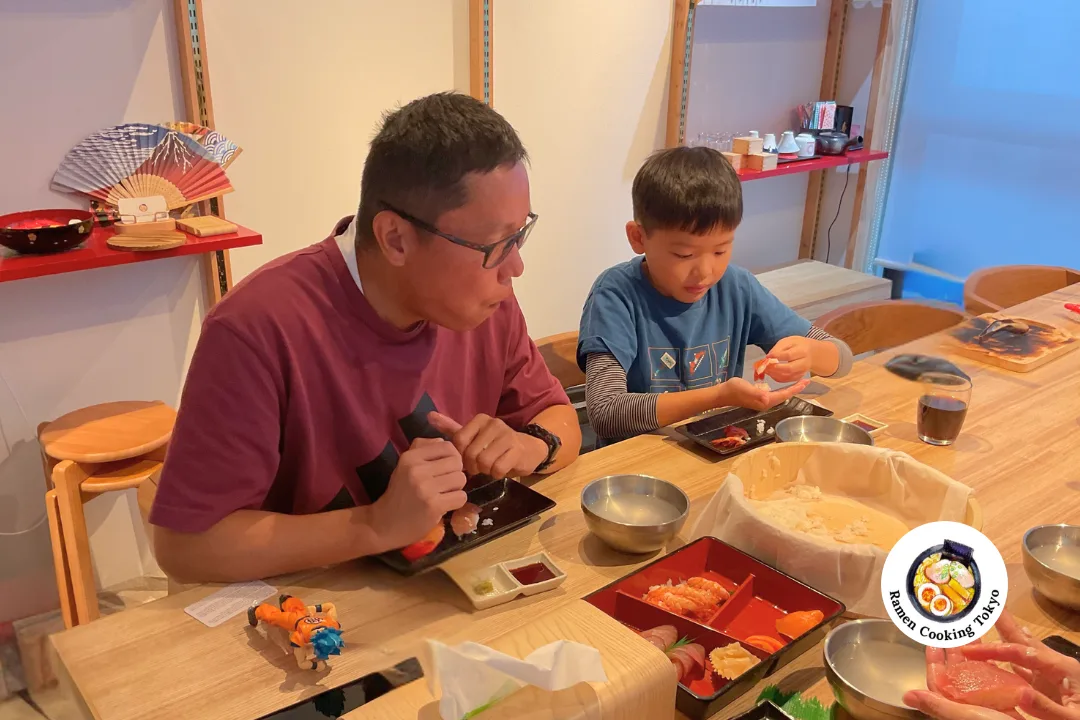
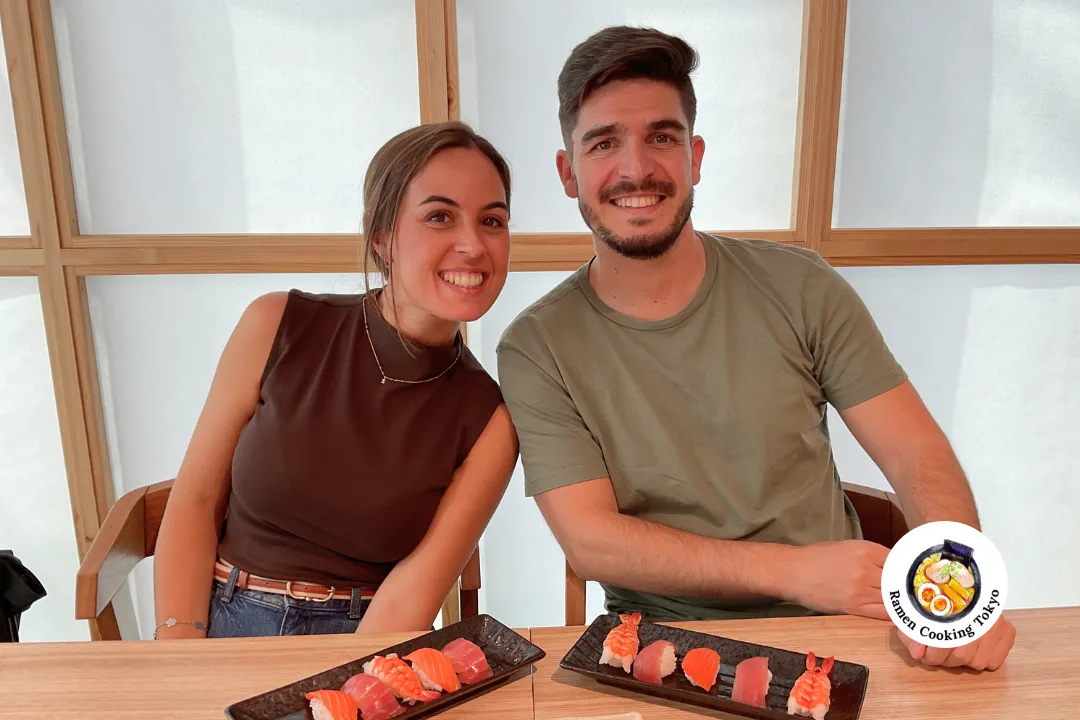
Reading about akazu is one thing. Standing at a counter in Tokyo, shaping warm sushi rice with your own hands while someone explains how Edo ate it — that tends to stick.
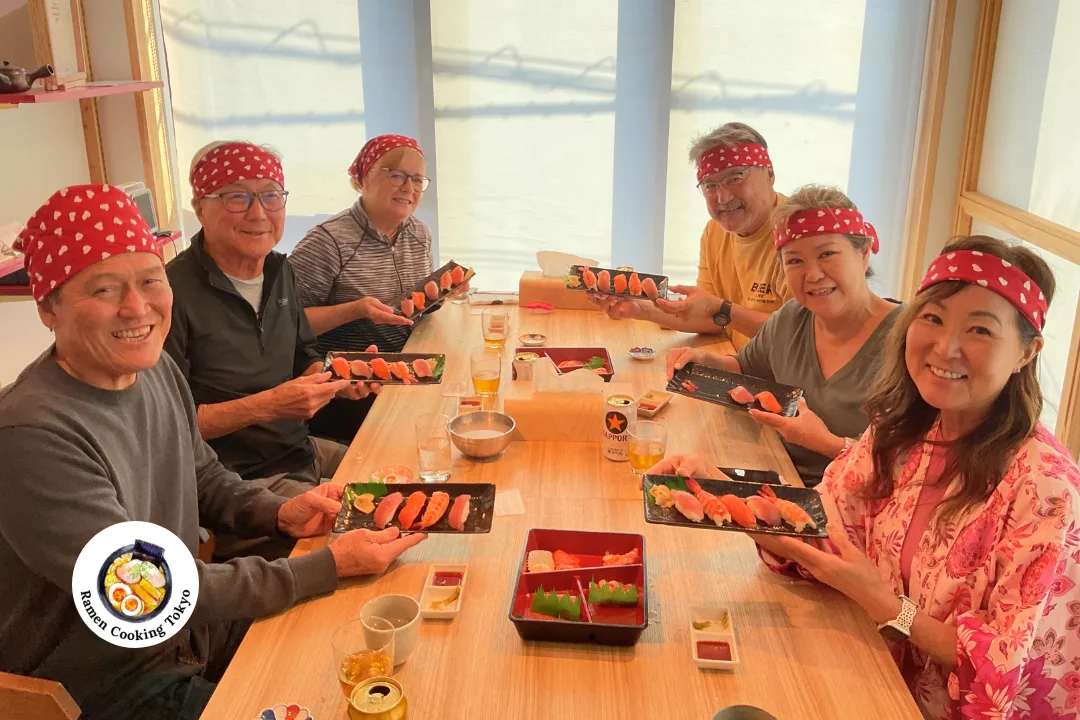
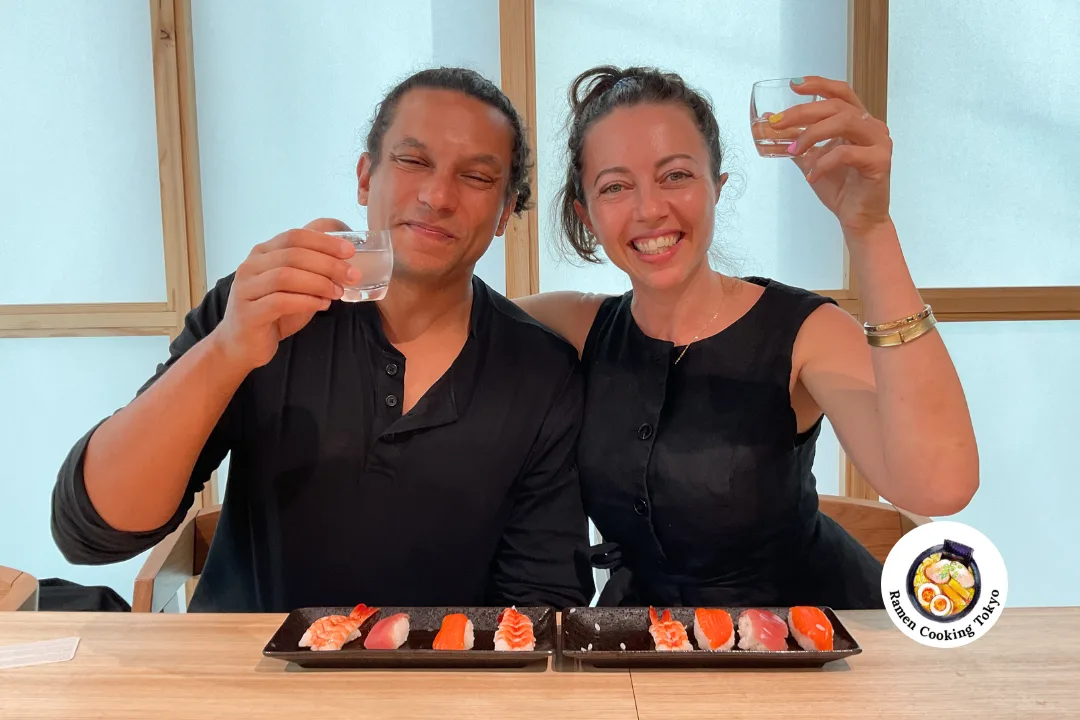
That’s what we do at Ramen Cooking Tokyo: a small-group class in Tsukishima where you hand-shape nigiri the traditional way (and make a bowl of Tokyo-style shoyu ramen from its broth up), with the history and trivia woven through the cooking. The questions in this article all came from guests standing exactly where you’d be standing.
Frequently Asked Questions
Why is some sushi rice red?
Reddish sushi rice is seasoned with akazu, a red vinegar made from aged sake lees. In the Edo period it was cheaper than rice vinegar and rich in umami, so it became the standard seasoning for Edo-style sushi. Most shops switched to clear vinegar after the war, and red vinegar has been coming back at traditional Edomae counters in Tokyo since the 2000s, for its mellow, rounded flavor.
Why did sushi get smaller over time?
Edo-period nigiri was much bigger than today’s — reconstructions put the rice at around 45 to 50 grams, against 10 to 20 now depending on the shop, though no Edo document records a weight. Pieces shrank gradually as sushi moved indoors, a process largely complete by the late Meiji era. The postwar rule that had shops exchange a customer’s go of rice for a set of ten pieces is where the ten-piece serving comes from, rather than the smaller size.
What does the word sushi actually mean?
Sushi originally described a sour taste. The earliest form, narezushi, was fish preserved in fermented rice, and the sourness of that fermentation gave sushi its name. The dish is written several ways in Japanese: the character that describes fish fermented with salt and rice, an older graph that in China meant a salted fish paste made without rice, and the common spelling today, a phonetic substitution that caught on because the characters look auspicious.
Was sushi originally street food?
Yes. In the Edo period, nigiri sushi was fast food sold from open-air street stalls. Customers stood, picked up a piece or two with their fingers, dipped it in soy sauce, and moved on. Sushi only moved indoors to counters and restaurants later, and the price and formality rose with it.
What toppings did the first nigiri sushi use?
Almost nothing was served raw. Without refrigeration, Edo sushi masters cured, marinated, simmered, or vinegared everything: soy-marinated tuna, vinegared kohada, simmered anago, boiled shrimp, and rolled omelet. Serving fish completely raw on nigiri only became common in the modern era, once refrigeration made it safe.
Why is wasabi placed between the rice and the fish?
Edo sources give one reason: wasabi cut the smell of the fish. Its pungent compound does slow microbes in the laboratory, but that is modern science rather than the Edo rationale, and the dab on a single piece was never doing the work of a refrigerator. It was not universal either — fatty toppings such as tuna were often served with Japanese mustard or grated daikon instead.
Related Guides
- Sushi classes in Tokyo: how to choose the right one — an honest guide to every type of class
- The best ramen-and-sushi class in Tokyo for people who want both — what a combo class actually includes
- The complete history of ramen — the same deep-dive treatment, for the other half of your bowl