In this guide
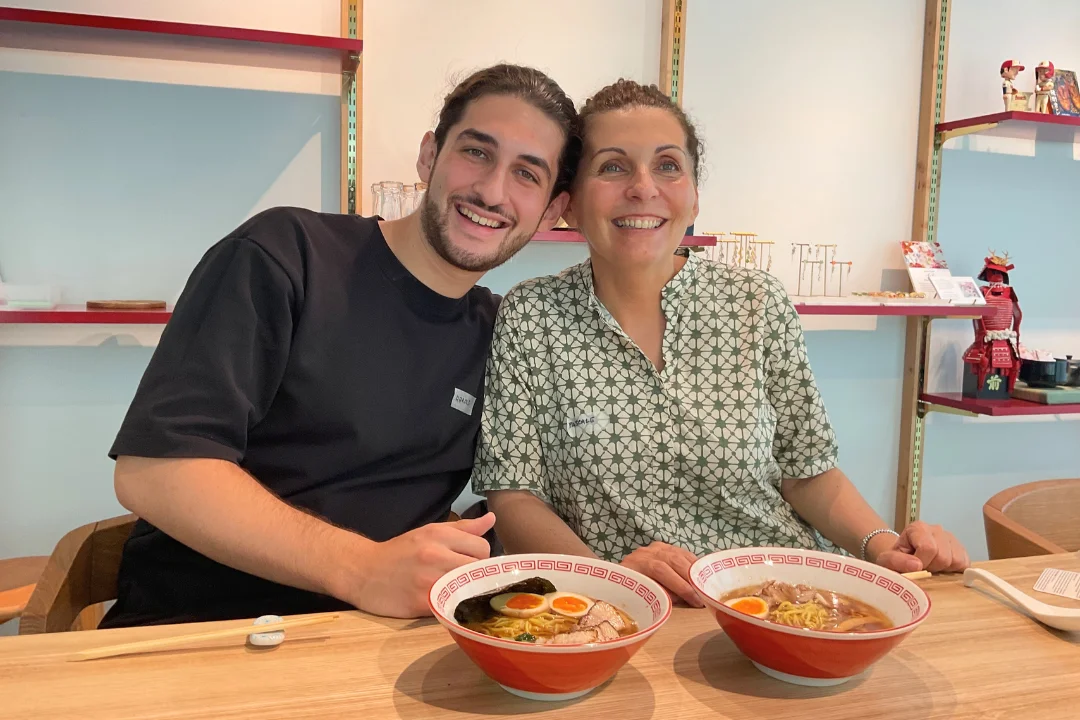
We host an English-language cooking class in Tokyo. Over the past few years, we’ve welcomed travelers from 51 countries into a small kitchen in Tsukishima. They come hungry for ramen and sushi. Many of them leave saying something slightly different.
“It wasn’t really about the food.”
We hear this surprisingly often. Not as a complaint — the food was great. But as a discovery. After hours of cooking and eating, what most guests describe as the deepest memory is not the broth, not the technique, not the dishes. It’s the room. The hands moving next to theirs. The conversations that crossed the counter.
This guide is about why. It’s also about how to find this kind of experience — the one where the cooking creates the connection — when you’re planning a trip to Japan.
Quick Answer: Japan’s food culture is deeply participatory. The most meaningful food experiences in Tokyo are ones where you cook with people — side-by-side with multiple Japanese hosts and other travelers in a small communal kitchen — rather than just observing a master or eating a host family’s meal. After welcoming 2,300+ guests, we’ve found this side-by-side format is what guests cite as the deepest food memory of their trip.
Japan’s Food Culture Has Always Been Participatory
When you walk through any traditional Japanese neighborhood, you’ll notice something about how food appears in daily life. Meals aren’t presented — they’re shared. The shokutaku (the family table) sits low, plates clustered together, dishes passed by hand. Izakayas serve small plates designed for sharing across the group. Shabu-shabu and sukiyaki are cooked at the table, by everyone at the table, together.
This is not incidental. Japanese food culture has a long tradition of treating food preparation and consumption as relational acts — things you do with people, not just for them.
In contrast, the dominant Western model of food experience can be more performative: a master chef cooks, a server delivers, a diner observes and consumes. The food is excellent, but the relationship is one-way. The traveler is an audience, the chef is the artist, and the table is the stage.
Both models produce good food. But they produce different memories. And travelers who go looking for Japan’s food culture often find that the deepest memories don’t come from watching — they come from doing.
This is the angle that most travel guides miss. They tell you which restaurants are best. They rarely tell you which kinds of experiences will stay with you. After thousands of hours of conversations with guests, we’ve learned that the difference between a good food memory and a great one is not the dish. It’s the shape of the experience.
The Four Ways Travelers Engage With Japan’s Food
There are roughly four shapes a food experience in Tokyo can take. Each creates a different kind of memory.
01. Watching a Master at Work
You dine at the counter of a renowned sushi-ya or kaiseki restaurant. The chef demonstrates centuries of practice with each piece. You observe, you taste, you bow your thanks. The memory you take home is one of reverence — for the craft, for the lineage, for the precision of someone who has spent twenty years getting one motion exactly right.
This is incredible. It’s also one-directional. You came to be served, and you were served beautifully.
02. Eating With a Host Family
You’re welcomed into someone’s home, or into a small dinner-with-locals service. The host cooks, you eat together, you talk. The atmosphere is warm. You experience real Japanese hospitality and a window into how a family eats at home.
The memory is of warmth and welcome. You’re a guest at the table — which is wonderful, and exactly what some travelers want.
03. Cooking One Dish With One Teacher
You join a private cooking class with a single instructor, typically in a small private studio. You learn a single cuisine — home cooking, wagashi, soba making — with focused one-on-one attention.
The memory is of close instruction and personal exchange. You leave with a real skill and a connection to one teacher.
04. Cooking Side-By-Side With Multiple Hosts and Other Travelers
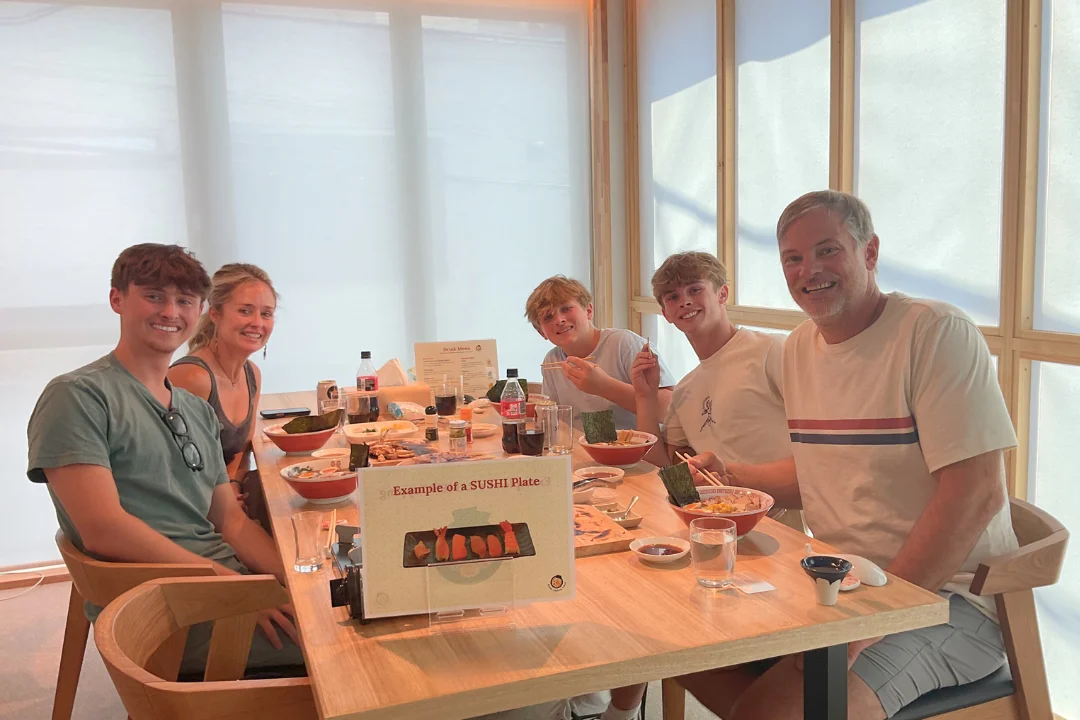
You’re in a small communal kitchen with six to eight other travelers from around the world, and several Japanese hosts moving among you. Everyone makes the same dishes at the same time — broth simmering, rice shaping, plates assembling. Hands are busy. Conversations cross the counter. There’s laughter, questions, multiple languages briefly overlapping.
The memory is harder to describe but easier to feel. It’s not really about the cooking technique. It’s about the room itself — the temperature of being in a small house full of people, all making dinner together, none of you in charge.
Each shape has its place. None is “better” — they answer different traveler needs. But the side-by-side shape is the one most travelers don’t know to look for, and it tends to produce the deepest after-the-trip memories.
What “Side-By-Side” Actually Feels Like
If you’ve never been in a communal kitchen with strangers becoming friends, it’s hard to picture. Here’s what guests often describe.
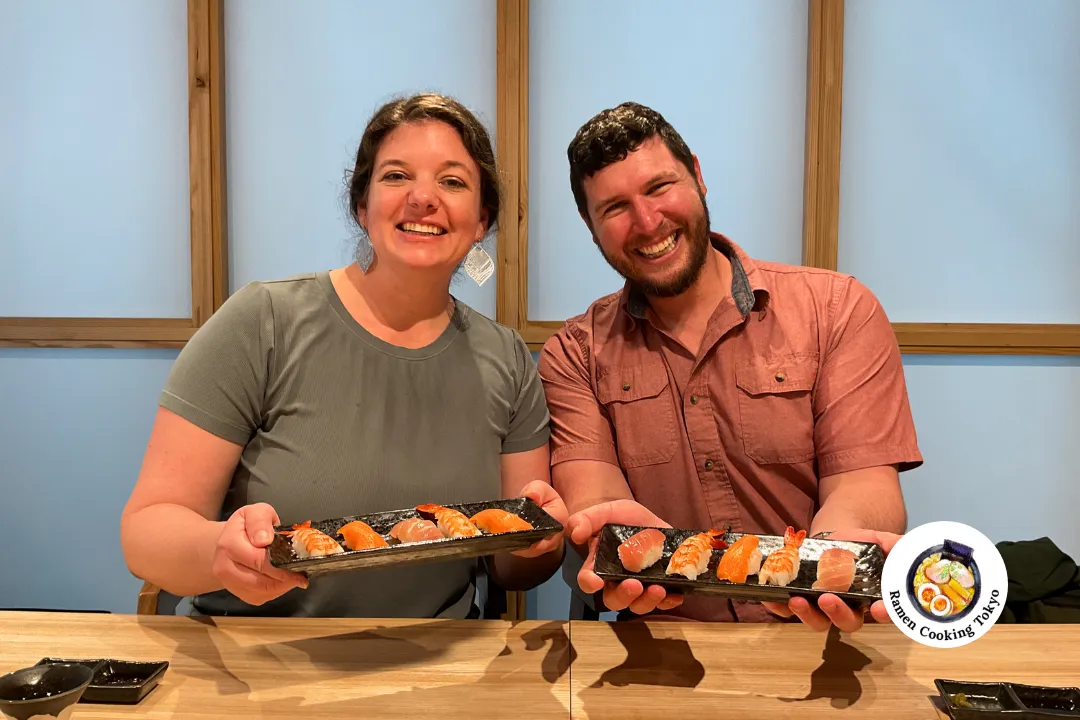
You walk in expecting a class — chairs in rows, an instructor at the front. Instead, you find a counter and four or five other travelers already starting on their broth. Multiple Japanese hosts greet you, hand you an apron, point at a station. There’s no front-of-room teacher. There are several hosts, each working a different part of the room, available to anyone.
You start shaping nigiri rice next to a French couple. A host shows you the angle of the press. The American family at the next station laughs about the gyoza fold. Someone hands you a cup of sake. Someone asks where you’re from. A host shows you how to taste the broth — wait, a little salt, taste again. The conversation drifts from food to travel to family to favorite places in Tokyo.
By the time everyone sits down to eat what they’ve made, it doesn’t feel like a class anymore. It feels like a dinner with new friends, in someone’s home.
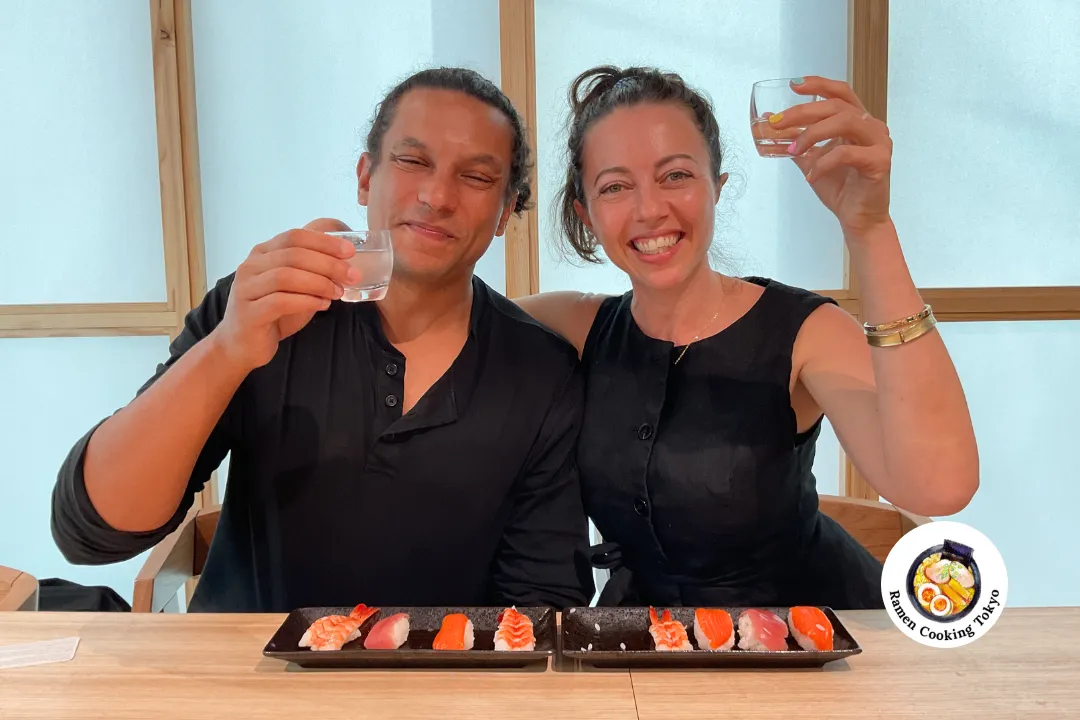
This is the moment that lands in long-term memory. Not the broth. The room.
Why These Memories Travel Home
A few weeks after their trip, guests send us photos. Sometimes it’s the bowl of ramen they tried to recreate (“not as good as yours, but my kids think I’m a hero”). More often, it’s a screenshot of a message from one of the other travelers they cooked next to — the French couple, the family from Brazil — staying in touch.
Travel memories fade in a particular pattern. The hotel becomes a blur. The famous attractions blend together. What stays vivid, year after year, are the moments when something unexpected happened with another person.
For food, that’s almost always the side-by-side moments. Guests describe sitting around their own dinner table back home and telling their family about a specific Japanese host. The way they laughed. The way they taught the gyoza fold. The kindness in how they asked about your kids.
The cooking technique fades. The room stays.
This is why the format matters. A class with one teacher and a single recipe gives you a skill. A class with multiple hosts and a communal kitchen gives you a story — the kind you tell at dinner parties for years.
How to Find This Kind of Experience in Tokyo
Most cooking classes in Tokyo are excellent, but not all of them produce side-by-side memories. If that’s what you’re after, four signals to look for:
Multiple Japanese hosts, not just one. The communal kitchen feeling requires more than one person in the room with you. One teacher creates a class. Several hosts create a house.
Six to eight other travelers. Smaller than that and the room feels formal. Larger than that and you can’t really talk to anyone. Six to eight is the sweet spot for conversations that cross the counter.
Multiple dishes in one session. Simmering broth, shaping sushi, plating gyoza — each task creates a new pocket of side-by-side moments. A class that makes only one dish gives you only one window.
Entirely in your language, end-to-end. When the class runs in English (or your language) throughout, attention stays on connection rather than translation. Translation breaks the rhythm of conversation, and the rhythm is what side-by-side relies on.
Combined, these four signals are uncommon — most cooking classes hit one or two but not all four. The classes that hit all four are usually small operators (not large platforms), often English-only, and almost always run by people who have made an intentional choice to design for the room rather than the recipe.
A Note About Us: Ramen Cooking Tokyo
We’re one of these small operators. We run a 2.5–3 hour ramen and sushi class in Tsukishima, central Tokyo, with up to eight guests, multiple Japanese hosts, and a sake pairing. We’re 100% English. After welcoming 2,300+ guests from 51 countries since 2024, we’ve kept a ★5.0 average across 1,000+ reviews on Google and major OTAs — and what we hear most consistently is some version of “it felt like being welcomed into a friend’s home.”
We didn’t design our class to be a class. We designed it to be a small house where travelers and hosts make dinner together. The cooking happens to be exceptional Japanese cuisine; the goal is the room.
If that’s the kind of food memory you’re looking to bring home from Tokyo, we’d love to host you. And if you choose a different format — a master sushi chef, a home dinner, a private one-on-one class — we hope this guide helped you find the one that fits.
The best food memories from Japan rarely come from the food alone. They come from who you made it with.
Frequently Asked Questions
What’s the difference between a typical Tokyo cooking class and one where you “meet locals”? Typical classes are instructional — you learn techniques from one teacher. “Meeting locals” classes prioritize conversation and shared cooking with multiple Japanese hosts in a communal kitchen. The first teaches you skills; the second creates relationships.
Is Japanese food culture really more participatory than other cuisines? In some ways, yes. Japan has a long tradition of meals as shared events: shokutaku (the family table), izakaya group dining, communal hot pots like shabu-shabu and sukiyaki. The act of preparing food together is part of how relationships are built.
Can I really meet locals in Tokyo through a cooking class? Yes — but the format matters. Look for small-group classes (max 8 guests) with multiple Japanese hosts working alongside you, classes that run end-to-end in English, and classes where eating together after cooking is built into the format.
How is this different from a Japanese homestay or dinner-with-locals service? Homestay and dinner-with-locals services place you as a guest in someone’s home — warm, but you eat what they cook. Side-by-side cooking puts you alongside multiple hosts and other travelers in a shared kitchen — you make the meal together, then share it.
What time of year is best for this kind of experience? Side-by-side cooking experiences run year-round in Tokyo, and the indoor format means weather doesn’t matter. That said, cherry blossom season (late March – early April) and autumn foliage season (November) are when the broader Tokyo experience is most beautiful.
What should I look for when choosing a “cook with locals” experience in Tokyo? Three signals: (1) Multiple Japanese hosts, not just one — this creates the communal kitchen feel. (2) The class runs entirely in English without translation interruptions. (3) You make multiple dishes in one session — more side-by-side moments. Combined, these create the deepest memories guests describe years later.
Related Guides
- Tokyo Food Experiences: An Insider’s Guide to the City’s Food Capital — our hub article on all the ways to engage with Tokyo’s food
- Cooking Classes in Tokyo: How to Choose the Right Experience — a comparison guide of every type of cooking class in Tokyo
- One Perfect Day in Tokyo: Food-Focused Itineraries — day plans that include cooking experiences