In this guide
Tokyo has more sushi classes than any traveler could ever take. Search “sushi class Tokyo” and you’ll find short workshops near Senso-ji, market tours that start at dawn, private sessions with chefs who trained for decades, and combo classes that fold sushi together with ramen and sake. They are not all the same experience, and the right one depends entirely on you.
This guide isn’t us guessing what we think you want to hear. We run one of these classes — Ramen Cooking Tokyo, in Tsukishima — and since 2024 we’ve welcomed 2,300+ guests from 51 countries. We won’t pretend we’ve personally taken every other class in this guide, and we won’t rank experiences we haven’t done. What we’ll give you is how to think about the choice: the five types of sushi class in Tokyo, who each one fits, and what each one asks you to trade.
Quick Answer: Tokyo offers five main types of sushi classes, ranging from about ¥6,000 to ¥30,000+ per person. Most travelers choose between a sushi-only short class (about 90 minutes, mostly in Asakusa) and a combo class that pairs sushi with ramen and sake (2.5–3 hours). Asakusa and Tsukishima are the main areas. If you’re choosing a sushi class in Tokyo, the rest of this guide lays out when each type fits you and when another type fits better.
The table below is compiled from each provider’s public website and OTA listings as of June 2026. We haven’t taken every class — confirm details directly with each provider before booking.
| Type | Duration | Price Range | Group Size | Where |
|---|---|---|---|---|
| Sushi-Only Short Class | 1–2h | ¥6,000–13,000 | 4–20+ | Asakusa, Shibuya |
| Market Tour + Sushi | 3–4h | ¥12,000–20,000 | 4–12 | Tsukiji, Toyosu |
| Sushi + Ramen Combo | 2.5–3h | ¥18,000–20,000 | 4–8 | Tsukishima |
| Private Masterclass | 2–3h | ¥18,000–30,000 | 1–8 | Shibuya, Meguro, Minato |
| Sushi Academy / Course | half-day to multi-day | ¥30,000+ | varies | Shinjuku, Tsukiji |
Prices and details may change. We recommend checking each provider’s website for the most current information.
Want to compare against other kinds of cooking classes in Tokyo too — wagashi, soba, home cooking? See our complete guide to cooking classes in Tokyo.
The 5 Types of Sushi-Making Class in Tokyo
Sushi-Only Short Class (about 90 minutes, ¥6,000–13,000)
This is the most common format and the easiest to fit into a packed itinerary. You’ll learn the basics of shaping nigiri and rolling maki in a single short session. Asakusa is the hub — operators like Sushi Making Japan (around ¥13,000) run frequent classes near Senso-ji, and there are several smaller workshops nearby.
You’ll enjoy this if: your time in Tokyo is tight, sushi is the one thing you want to make, and you’d rather keep the rest of your day free.
The trade-off: ninety minutes usually means one dish and a faster pace. Drinks like sake are often not included, and larger operators can seat twenty or more guests at once, which feels more like a workshop than a kitchen.
Market Tour + Sushi Class (3–4 hours, ¥12,000–20,000)
These start with a guided walk through a fish market — usually the Tsukiji Outer Market or Toyosu — where you learn to read the ingredients before you cook with them. Then you head to a kitchen and make sushi with what you’ve seen. It’s the most context-rich option: you come away understanding not just the technique but the supply chain behind it. Operators in this family include Tsukiji-area cooking studios that pair a morning market visit with a hands-on class.
You’ll enjoy this if: you love market culture and want the story behind the fish, not only the hands-on part.
The trade-off: it’s a half-day commitment, and the second half can feel long after a morning on your feet. Markets also have closing days — Tsukiji’s outer market is quietest on Sundays and some Wednesdays — so timing matters.
Sushi + Ramen Combo Class (2.5–3 hours, ¥18,000–20,000)
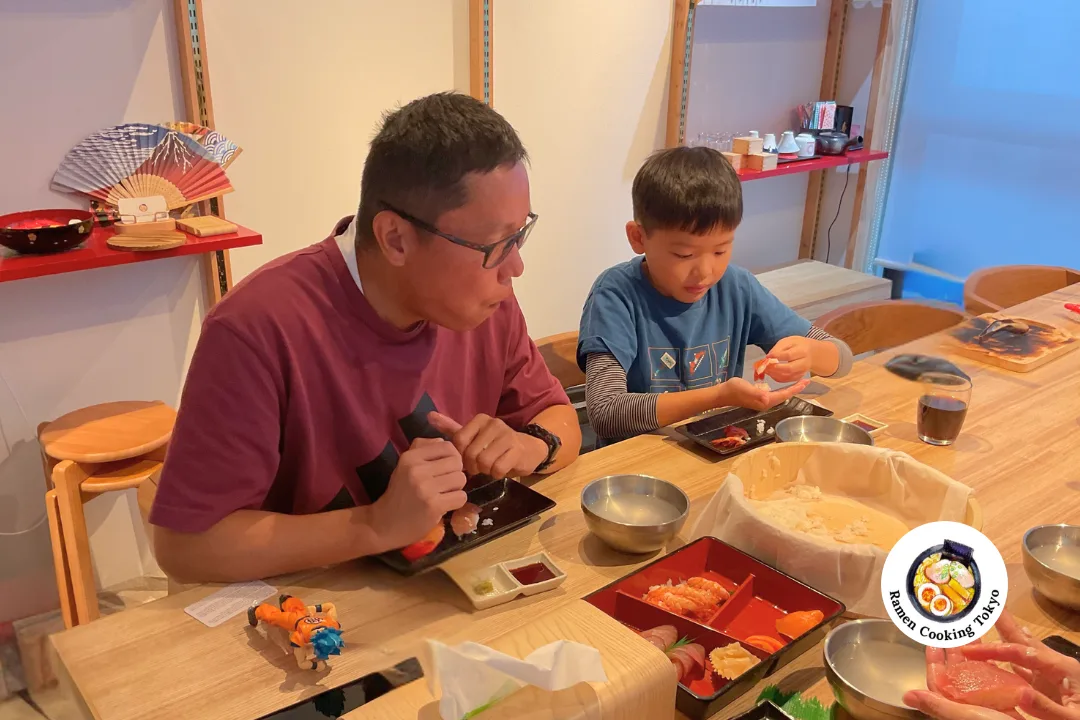
This is the type we run, so we’ll be transparent. In a combo class you make nigiri sushi and a bowl of ramen in the same session, usually with a sake tasting alongside. It’s for travelers who don’t want to choose between two of Japan’s best-known dishes, and who treat the class as the meal itself rather than a quick workshop. It tends to feel less like a lesson and more like an afternoon in someone’s kitchen.
Worth knowing: a true ramen-and-sushi combo is rare in Tokyo. Many classes that call themselves combos pair ramen with gyoza rather than sushi — for example Baba Ramen in Meguro (roughly ¥20,000–24,000) teaches ramen and gyoza. If learning ramen and sushi together is what you’re after, there are only a handful of options, and we’re one of them. (We run ramen and sushi as our standard, and also offer a ramen-and-gyoza course and a three-way ramen-sushi-gyoza combo.)
You’ll enjoy this if: you want to learn both dishes in one sitting, you’d like a drink pairing built in, and you’re traveling as a couple, family, or group where tastes differ. One guest summed up why people pick this format: “We learned how to make delicious ramen and sushi, but this experience became so much more than just cooking.”
The trade-off: it costs more, and it runs longer. If ninety minutes of sushi is genuinely all you want, a combo class is more than you need.
We are one of the operators in this type. If a combo class sounds like your fit, here are the ten reasons travelers choose us — in their own words — plus a closer look at why making both ramen and sushi in one class works so well, and how each dish arrives with its own sake pairing.
Private Sushi Masterclass with a Career Chef (2–3 hours, ¥18,000–30,000)
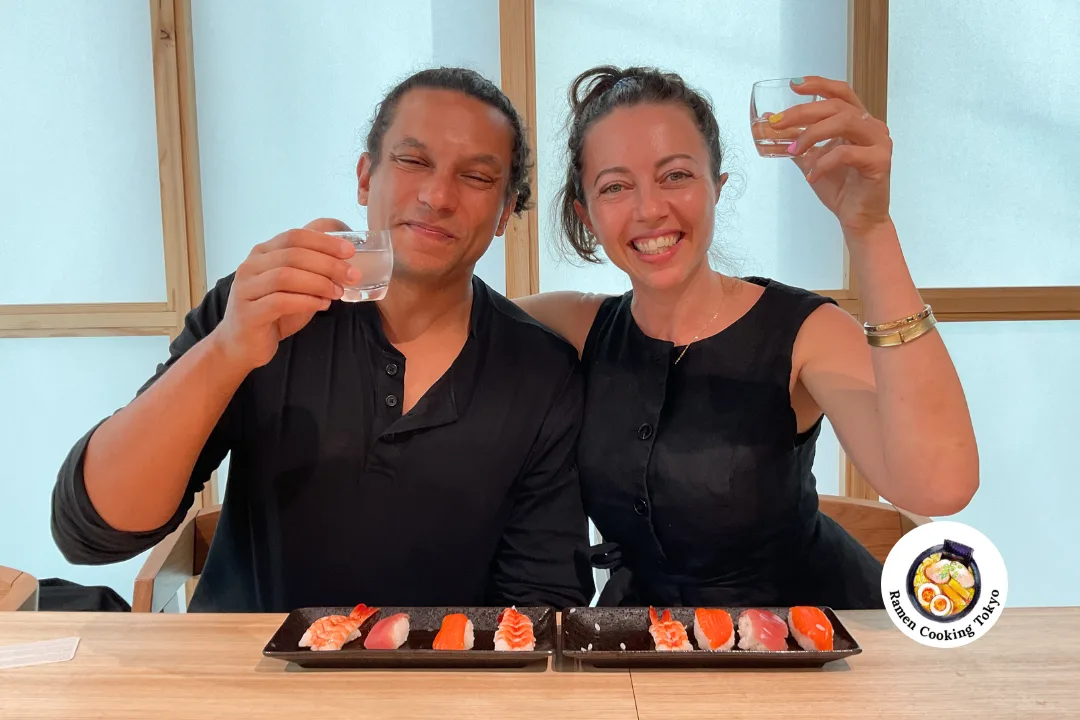
If you want depth over breadth, a private sushi class — a session with a working or retired chef — adapts entirely to your level. NOBU Sushi Making Class Tokyo (around ¥19,500, advertised as taught by a chef with 40+ years of experience) and operators like NonTouristyExperience serve this intent — quiet, focused, often one-on-one or just the two of you.
You’ll enjoy this if: you want serious technique, you’re marking a special occasion, or you simply prefer an intimate setting over a group.
The trade-off: it’s at the higher end of the price range, slots are limited, and the best chefs book out weeks ahead.
Sushi Academy / Professional Course (half-day to multi-day, ¥30,000+)
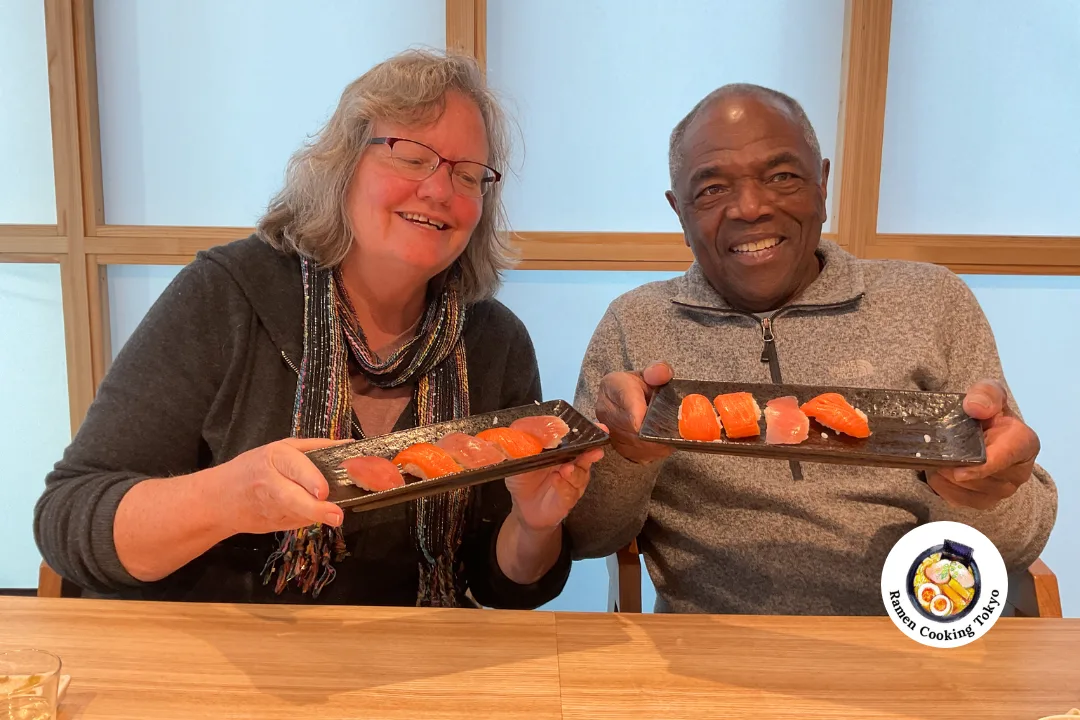
At the far end is professional training. Tokyo Sushi Academy (sushischool.jp) runs courses taught in English by working chefs, from half-day intensives to multi-week programs aimed at people who want to cook sushi seriously — or open a business one day.
You’ll enjoy this if: your ambition goes beyond a holiday memory and into real skill-building.
The trade-off: it’s a different kind of commitment in time and money, and it isn’t designed as a traveler’s activity. If you just want a memorable afternoon in Tokyo, this is more than you’re looking for.
How to Choose the Right Sushi Class for You
Whether you search for a “sushi making class” or a “sushi cooking class,” they’re the same thing — hands-on instruction in shaping nigiri and rolling maki. Strip the choice back to three questions and it gets simple.
1. How much time do you have? Ninety minutes points to a sushi-only short class. Half a day opens up a market tour. Two and a half to three hours is the sweet spot for a combo class or a private masterclass.
2. Who are you traveling with? Solo travelers and couples have the most flexibility — any type works. Couples, including anyone planning a date, anniversary, or honeymoon, often choose a combo class for the shared, relaxed pace and the built-in sake pairing. Families and mixed groups, where one person wants sushi and another wants ramen, also tend to do best with a combo class, because everyone is doing something they actually want at the same time.
3. Sushi only, or a full meal? If you want to make one thing and move on, a short class or a market tour is ideal. If you want the class to be your lunch or dinner — with a drink pairing and more than one dish — a combo class is built for that.
| If you are… | Consider… |
|---|---|
| Short on time | Sushi-only short class (Asakusa) |
| A market-and-culture lover | Market tour + sushi |
| A couple or family wanting variety | Sushi + ramen combo |
| After serious technique or a special occasion | Private masterclass |
| Building real skill | Sushi academy / course |
How Much Does a Sushi Class in Tokyo Cost?
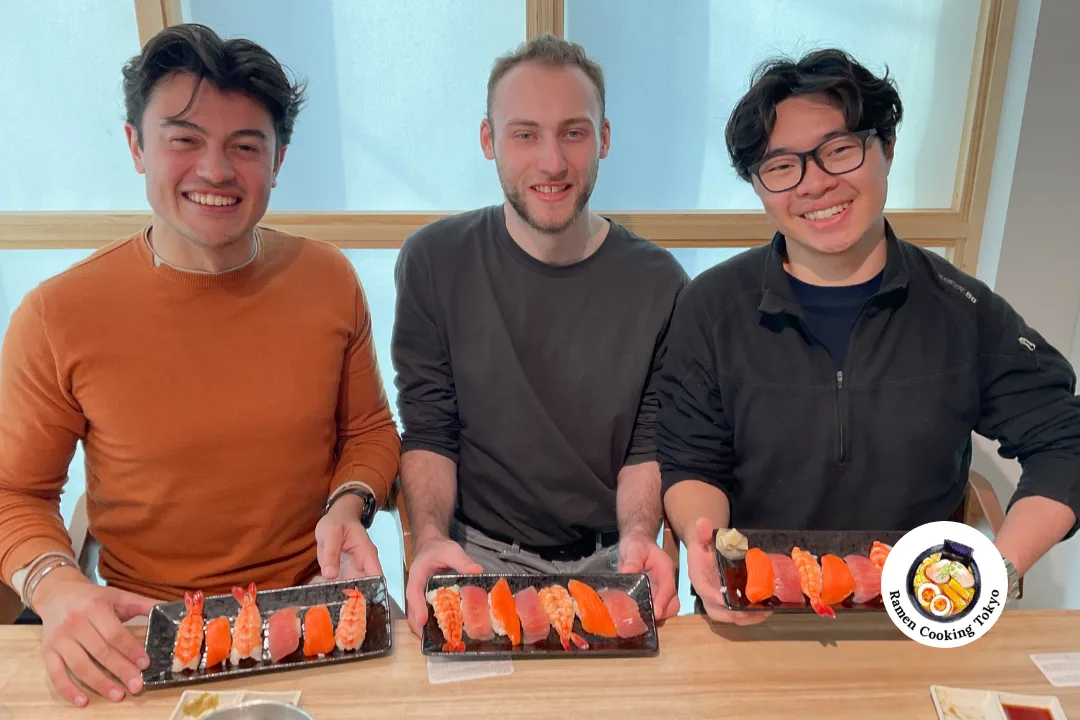
There’s no single best sushi class in Tokyo, and there’s no single price — what you pay depends on four things.
Duration and number of dishes. A 90-minute, one-dish workshop sits at the low end (¥6,000–13,000). A 2.5–3 hour class where you make more than one dish, with a drink pairing, sits higher (around ¥18,000–20,000).
What’s included. Sake, beer, photos, and take-home recipe notes all add to the price. A class that looks cheaper up front may not include the drinks you’ll end up buying anyway, so compare what’s actually in the price.
The chef and the format. A private session with a career chef costs more than a group workshop, because you’re paying for one person’s full attention rather than sharing it across a room.
Whether there’s a market tour. Classes that begin with a guided market walk run longer and cost more — you’re paying for half a day, not ninety minutes.
The cheapest class isn’t automatically the best value, and the most expensive isn’t automatically the best experience. The best sushi class in Tokyo is simply the one that matches your time, your group, and your appetite.
What to Look for Before Booking
A short checklist we’d share with a friend planning their trip:
English level. “English-friendly” and “100% English” are different things. If you want to follow every step, confirm which one a class actually offers.
Group size. Eight or fewer feels like a small kitchen; twenty or more feels more like a workshop. Neither is wrong — just know which kind of room you’re booking.
What’s included. Some classes are sushi and nothing else. Others include a drink pairing, photos, or recipe notes to take home. Check whether sake or other drinks are part of the price or an add-on.
Dietary needs. Sushi classes are harder than most to adapt. Raw fish is central, and vegetarian, vegan, or halal options are limited across the board. If you have restrictions, ask specifically before you book rather than assuming.
Location versus your hotel. Asakusa is the busiest hub; Tsukishima sits in central Tokyo near Tsukiji and Ginza; some operators are further out. A class that’s a long train ride away can eat into your day.
Where Sushi Classes Are Located in Tokyo
Asakusa. The densest cluster of sushi-only short classes, in the old downtown around Senso-ji. Most are a few minutes’ walk from Asakusa Station, so it’s easy to pair a morning class with the temple, Nakamise shopping street, and a riverside walk. This is the natural home of the quick 90-minute format.
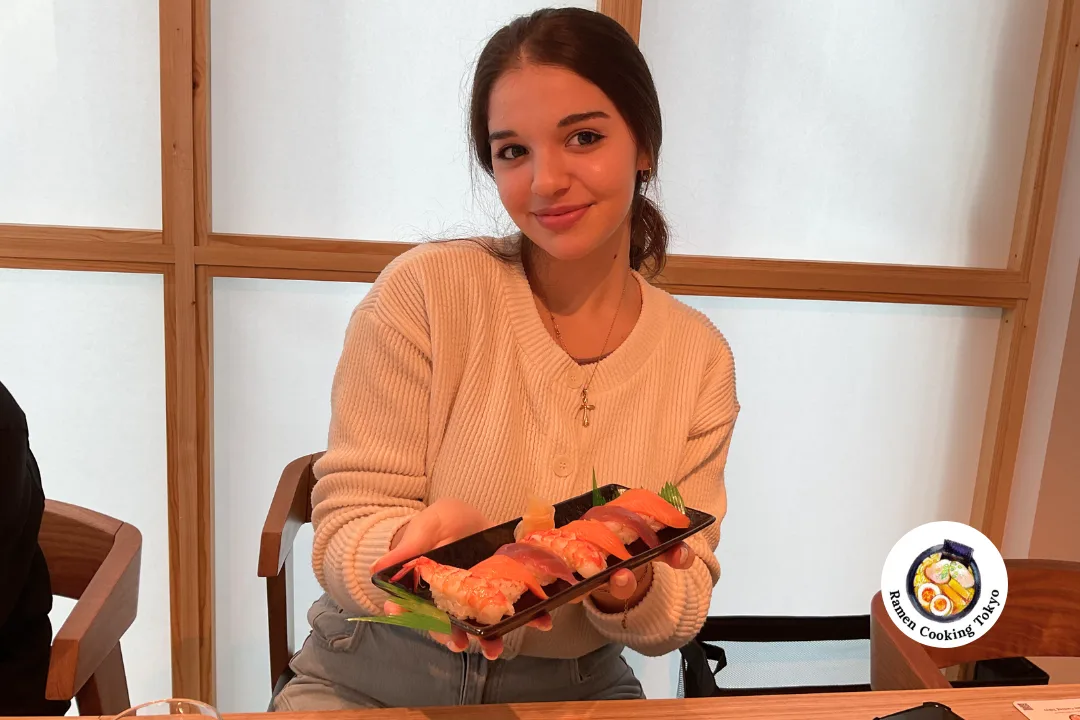
Tsukishima and Tsukiji. Central Tokyo, a short walk apart, sitting right beside the city’s most famous fish district. Tsukishima is a quiet residential neighborhood of narrow lanes — the kind of Tokyo most visitors don’t see. Being next to Tsukiji gives a sushi class here a natural connection to where the fish comes from, and teamLab Planets is about 20 minutes away by subway and on foot. This is where you’ll find us; if you’re staying nearby, our walking guide from Tsukishima to Ginza maps the route.
Shibuya and Hiroo. Home to some of the higher-priced and private operators, convenient if you’re staying on the west side of the city and want to combine a class with shopping or nightlife.
Beyond the center. A few well-regarded operators sit further out toward Adachi or Toyosu. They can be excellent value — just factor in the travel time from your hotel, since a class an hour away can take a bigger bite out of your day than the price suggests.
A Note About Us: Ramen Cooking Tokyo
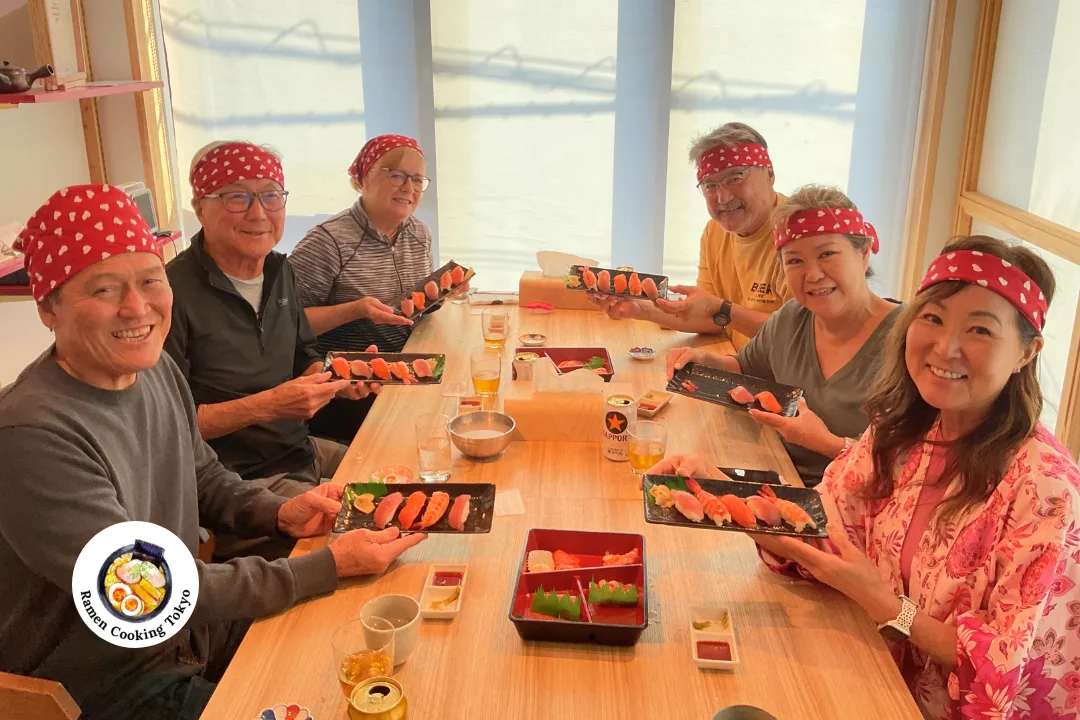
We’ve been transparent throughout this guide, so let us be equally clear about what we offer. Ramen Cooking Tokyo is a sushi-and-ramen combo class (Type 3 above). We don’t run a sushi-only class — if that’s specifically what you want, the Asakusa short-class operators are a better fit, and we’d rather point you there than talk you into ours.
| Detail | Information |
|---|---|
| What you’ll make | Ramen with broth from scratch + nigiri sushi by hand (our standard). Also offered as ramen + gyoza (same price), or a three-way ramen-sushi-gyoza combo (¥30,000 per person) |
| Drinks included | A sake pairing matched to each dish (three types), unlimited Japanese beer, soft drinks |
| Price | ¥20,000 per person (all-inclusive; the three-way combo is ¥30,000) |
| Duration | 2.5–3 hours |
| Group size | Maximum 8 guests |
| Language | 100% English |
| Schedule | 10:00 AM – 1:00 PM or 2:00 PM – 5:00 PM |
| Location | HAUS Tsukishima, 2nd Floor — 4 min walk from Tsukishima Station, near Tsukiji, Ginza, and teamLab Planets |
| Rating | ★5.0 with 1,000+ reviews across Google, TripAdvisor, and booking platforms |
| Cancellation | Free cancellation 24+ hours before |
Two things specific to our class. First, we run three formats: ramen and sushi (our standard), ramen and gyoza at the same price, or all three together — ramen, sushi, and gyoza (¥30,000 per person). Second, rather than a single tasting on the side, each dish is served with its own sake from the three-type set, chosen to match what you’ve just made. Guests often tell us this dish-by-dish pairing is something they haven’t come across in other classes.
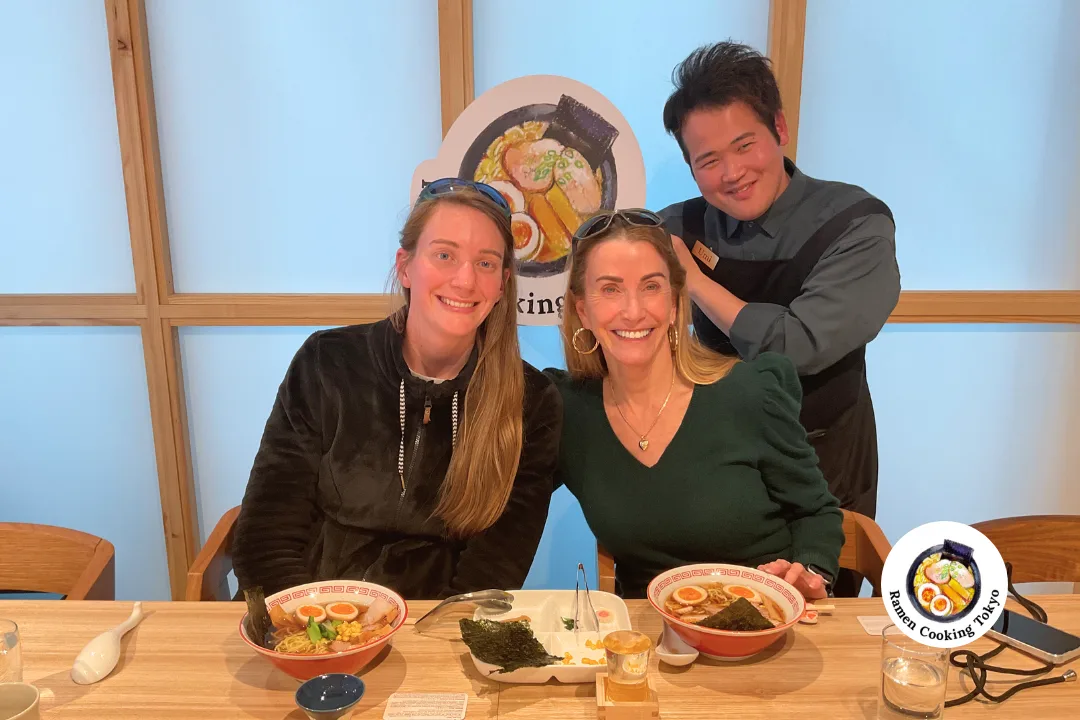
What guests tell us most often, across our reviews, is that the cooking is only half of it. In their reviews they describe the sushi the way one guest put it — “This helped me understand exactly what the sushi chefs in a restaurant are doing” — and then they describe the room: “From the very first moment, they made us feel not like guests, but like friends welcomed into their home.” That’s the part we care most about. The class is built around our tagline, “Beyond Cooking — Feel the Connection,” and we measure success not by how perfect the nigiri is, but by whether you leave feeling like you spent an afternoon with people, not just at an event.
Featured In
Our class has been featured by an independent travel publication:
- Japan Web Magazine — Things to Do in Tsukiji & Tsukishima (editorial feature)
Dietary notes: We can accommodate guests who prefer not to eat raw fish (a seared option is available) and those who don’t eat pork (a chicken broth alternative). If you’re vegetarian, please contact us before you book (ideally at least 48 hours before the class) and we’ll check whether we can accommodate you. It isn’t always possible, and online booking can’t take vegetarian requests. We’re currently unable to accommodate vegan or halal diets.
Who it’s for: couples and families who want variety, first-time visitors who want both iconic dishes in one sitting, and anyone who’d rather spend an afternoon in a small kitchen than a large workshop. If that’s you, see our romantic food experiences for couples and cooking classes for kids in Tokyo, or read what omotenashi means to us.
Review quotes in this guide are drawn from our public Google reviews and lightly edited to replace individual instructor names with “our host” or “the team,” out of respect for the people who teach each class.
Frequently Asked Questions
Can complete beginners take a sushi class in Tokyo? Yes. Most sushi classes for travelers, including ours, are built for people who have never made sushi before. A host walks you through each step, from seasoning the rice to shaping nigiri by hand.
Do I need to like raw fish to enjoy a sushi class? Not necessarily. You can still learn to shape rice and assemble nigiri, and many classes — including ours — can offer a seared option for guests who prefer not to eat raw fish. Ask before booking.
How much does a sushi class in Tokyo cost? Roughly ¥6,000 to ¥30,000+ per person. Short sushi-only workshops sit at the lower end; combo classes with ramen and sake, and private masterclasses with a career chef, sit at the higher end.
Can kids join a sushi class in Tokyo? Many classes welcome children, usually around age 5 and up. Hand-shaping nigiri is approachable for younger guests. Check each class for age requirements, and consider a private booking if you’re traveling with very young children.
Should I book a sushi class in advance? Yes, especially for small-group classes. Popular slots can fill 1–2 weeks ahead, and 3–4 weeks during cherry blossom season, Golden Week, October–November, and the year-end holidays.
What’s the difference between a sushi class and a sushi-making tour? A class is usually a single indoor cooking session. A tour adds a market walk to choose ingredients first, then cook — so it takes longer and depends on market opening days.
Are sushi classes in Tokyo available in English? Many are. Classes for international visitors typically run in English, but “English-friendly” and “100% English” are different. Confirm before booking if it matters to you.
Ready to Choose Your Sushi Class in Tokyo?
Whichever type fits you, book ahead — the best small-group slots go first. If a sushi-and-ramen combo is your kind of afternoon, we’d love to host you.
Related Guides
- Cooking classes in Tokyo: how to choose the right experience — the complete guide across every type, not just sushi
- The best ramen-and-sushi class for people who love both — a closer look at the combo we run
- Ramen with dish-by-dish sake pairing — how a sommelier matches sake to each course
- Top 10 reasons travelers choose Ramen Cooking Tokyo — in guests’ own words
- Romantic food experiences for couples in Tokyo
- Best cooking classes for kids in Tokyo
- Walking guide from Tsukishima to Ginza
- What omotenashi means at Ramen Cooking Tokyo
- A graduation trip to Tokyo: 8 experiences to build around — an honest, Tokyo-focused guide for graduates, friends, and families